Articles
Get the Fragletter
New fragrance stories and picks in your inbox. Unsubscribe anytime.
New fragrance stories and picks in your inbox. Unsubscribe anytime.
New fragrance stories and picks in your inbox. Unsubscribe anytime.
New fragrance stories and picks in your inbox. Unsubscribe anytime.
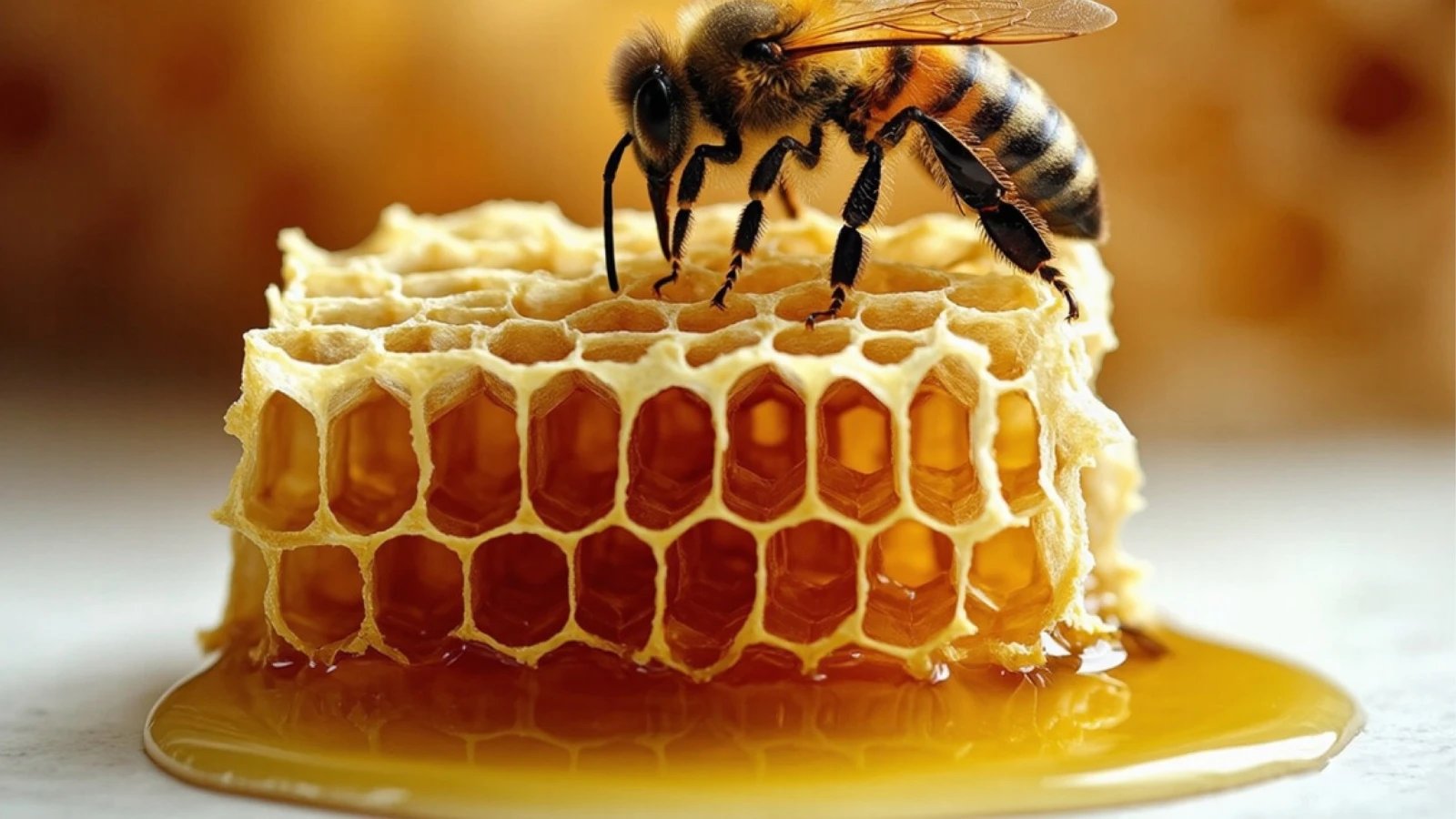
Thick and golden honeycomb with a slow drip sliding off the edge.
Now be honest: did you just smell it? Warm, waxy, a little floral? Nothing actually reached your nose. Your brain filled it in all by itself. And that tiny trick is one of the most powerful tools in beauty and fragrance marketing today.
Ask people how they choose a perfume and almost everyone gives the same answer: by the scent, obviously.
In a YouGov survey of UK perfume users from October 2025, 86% said the scent itself is what most influences their purchase. Only 7% said packaging or design plays a role.
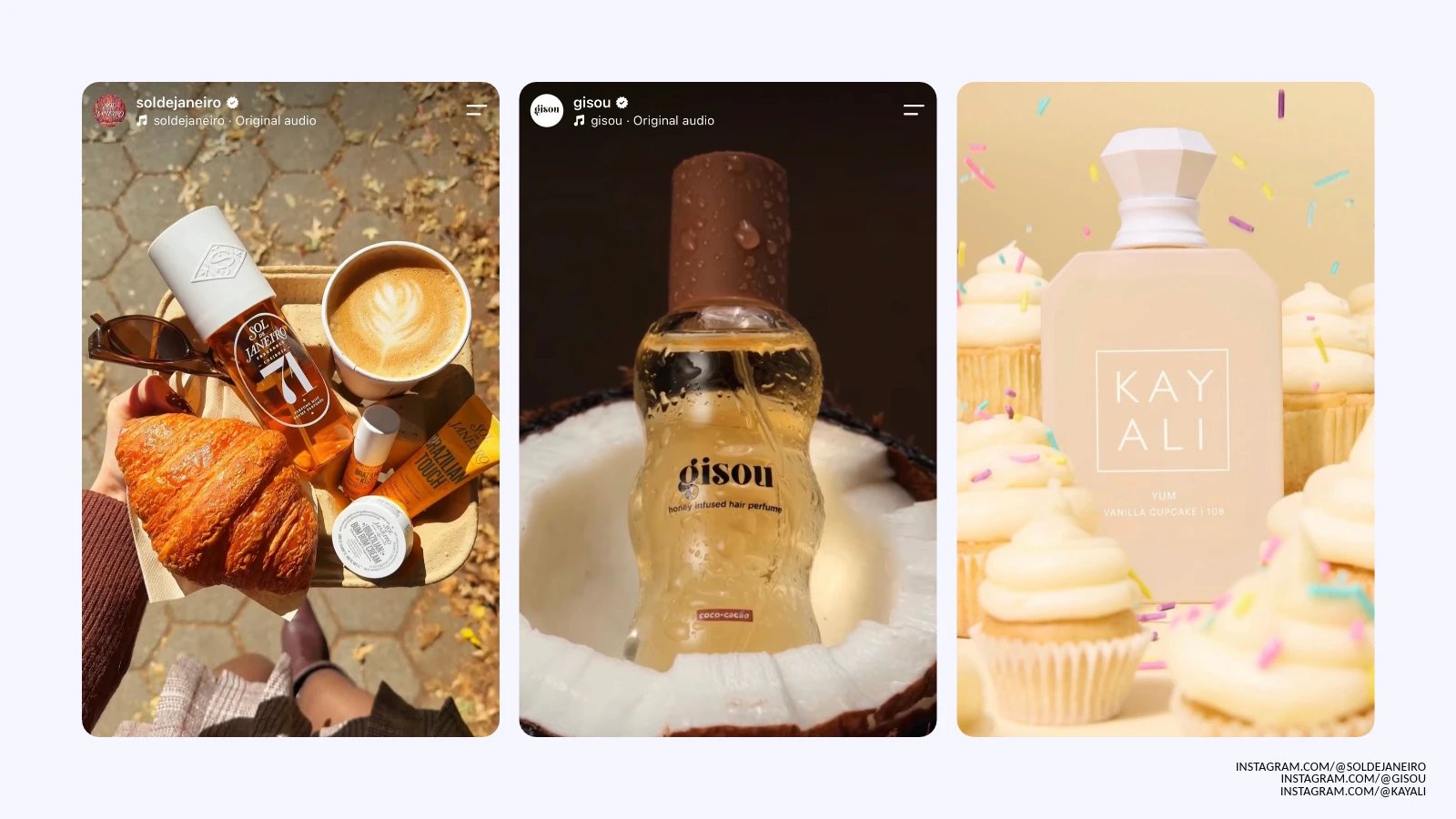
And yet. How many bottles in your collection did you buy without smelling them first? A gelato-coloured bottle on your feed. A creator saying it smells like a vanilla latte. A campaign shot of glossy cherries. Click, add to cart.
We think our nose is in charge. Very often, our eyes made the decision before our nose got a vote.
In 2014, marketing researchers Aradhna Krishna, Maureen Morrin and Eda Sayin gave this phenomenon a name: smellizing, imagining a smell that isn't actually there.
In their experiments, people looked at ads for chocolate cake and freshly baked cookies. Those who were asked to imagine the smell while looking at the picture salivated more and ate more of the cookies afterwards. The twist: imagining the smell only worked when there was a picture. Without a strong image, nothing happened.
In other words, a good photo doesn't just show you a product. It hands your brain the raw material to build the scent itself.
The bottle plays tricks too. Oxford professor Charles Spence, one of the world's leading researchers on how our senses influence each other, found that the weight of the packaging and the saturation of its colour both changed how intense people judged a fragrance to be. A heavier, richer-coloured bottle can "smell" stronger before you've even lifted the cap.
Once you know the trick, you see it everywhere.
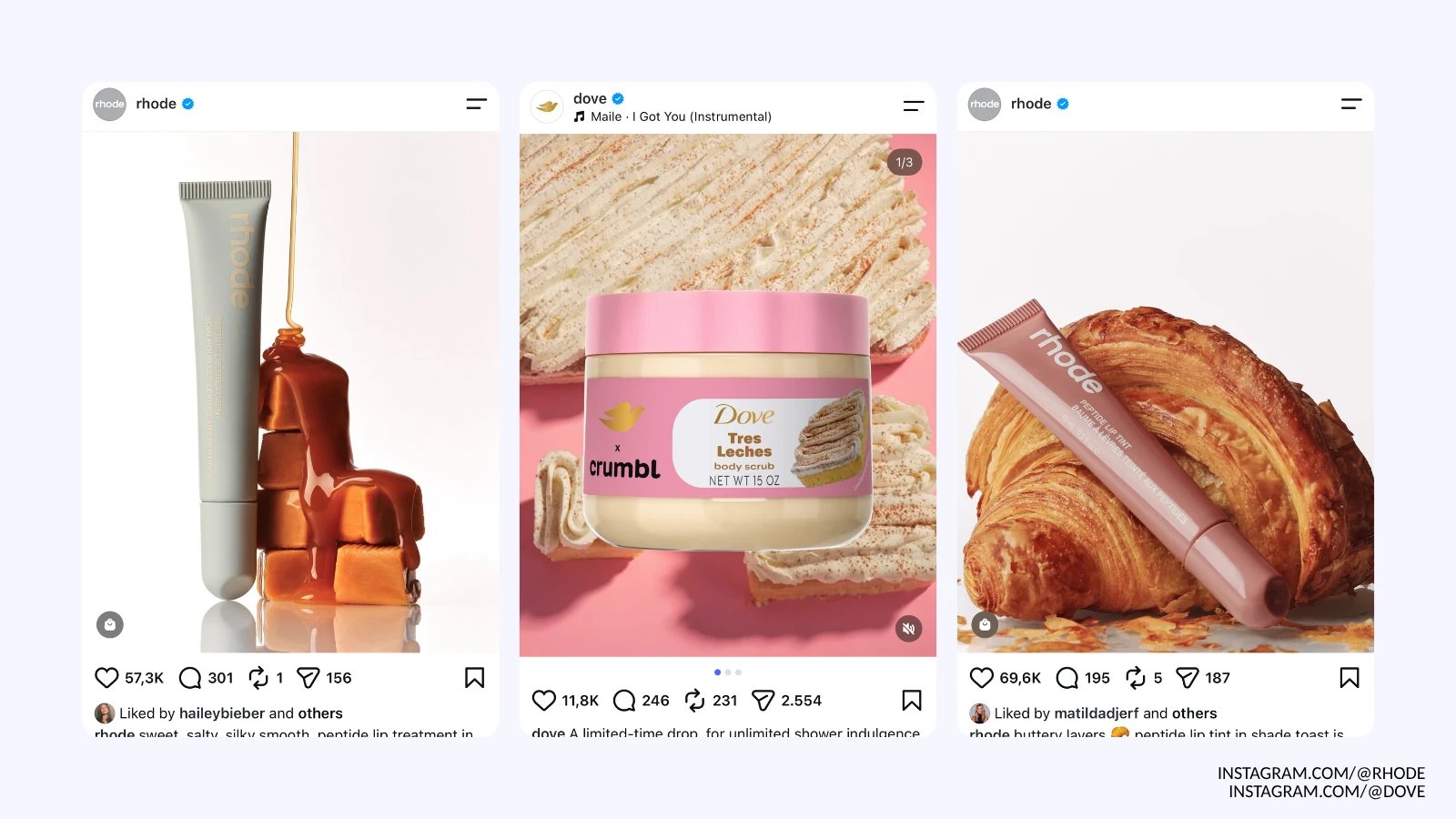
Skincare does it too: Rhode pairs its products with whipped cream, while Summer Fridays plays with lip and latte combos, marketing that makes people literally hungry. And it's not only beauty brands. Dove teamed up with Crumbl cookies, Native with Dunkin' Donuts, and Auntie Anne's released a pretzel-scented perfume. If it looks edible, someone will want to wear it.
The dessert era isn't over, but it's growing up. Fragrance houses are predicting that gourmands will shift from sugary sweet towards more savoury territory, with Roasted Nuts, Rice, Sesame and Milk accords leading the next wave.
So if your feed is about to fill up with steaming rice, toasted sesame and glasses of milk instead of macarons, now you know why.
We're not above it either. When we introduced the Botanical Scent Primers from Hernas Beauty on our Instagram, we surrounded the bottles with ripe peaches, a swirl of whipped cream, a split coconut, a vanilla pod and fresh tea leaves.
You couldn't smell a single drop. But you probably knew exactly what Peach Melba, Solar Accord and Tea Ceremony were going for. That's smellizing at work.
Smellizing isn't the enemy. It's half the fun of fragrance. But a few habits will save your wallet from the next pretty bottle:
 Gisou
 Kayali Fragrances
 Sol de Janeiro
 Lost Cherry