Articles
Hol dir den Fragletter
Neue Duftgeschichten und Empfehlungen in deinem Postfach. Jederzeit abbestellbar.
Neue Duftgeschichten und Empfehlungen in deinem Postfach. Jederzeit abbestellbar.
Neue Duftgeschichten und Empfehlungen in deinem Postfach. Jederzeit abbestellbar.
Neue Duftgeschichten und Empfehlungen in deinem Postfach. Jederzeit abbestellbar.
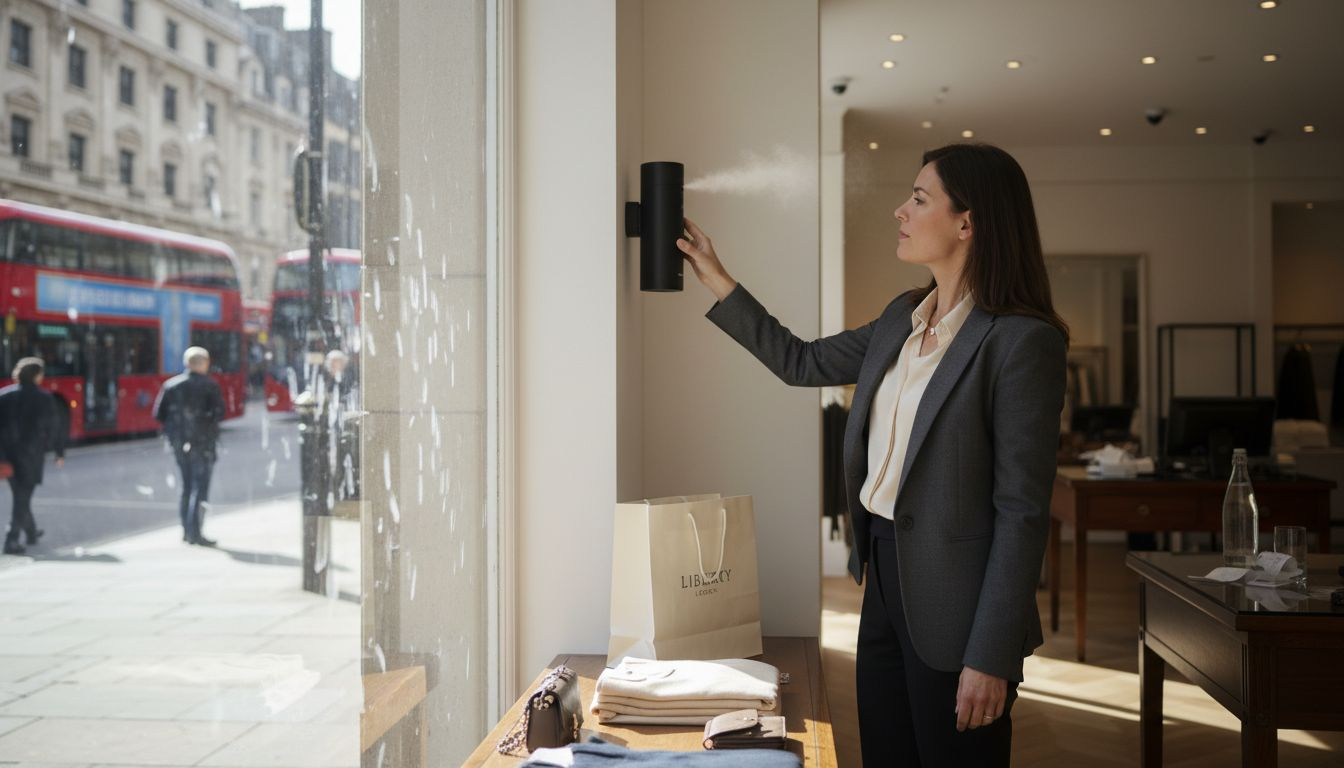
The nicest thing in most shops isn't on the shelves. It's in the air, and somebody paid for it. Scent marketing lifts retail sales by 11% and customer satisfaction by 20%, and it works because smell reaches the limbic brain before your judgement gets a vote.
Scent marketing is the deliberate use of fragrance to make you feel something and then buy something. That's the honest description. It isn't odour control with better PR — the point is to build a pleasant association and let it do the selling, and the numbers brands cite for it are an 11% sales boost and a 20% improvement in customer satisfaction.
The reason it works is unglamorous biology. Your olfactory system wires straight into the limbic region, the emotional and memory centre of your brain, so a smell arrives as a feeling before it arrives as information. Walk into a scented shop and your brain has begun building associations before you've consciously noticed there's a fragrance at all.
That direct route from nose to limbic brain is why a fragrance can drop you into a specific memory faster than a photograph of the same afternoon.
Brands treat this as free real estate, and they're not wrong to. What they get out of it:
If you collect perfume, this is worth sitting with. Some of what you think of as taste was installed by a diffuser in a shop you liked.
Smell breaks the rules the other senses follow. Sight and sound get routed through the thalamus before they reach the decision-making parts of your brain; scent skips the queue and lands in the limbic system directly. The emotion beats the conscious thought to the finish line. That's the entire mechanism.
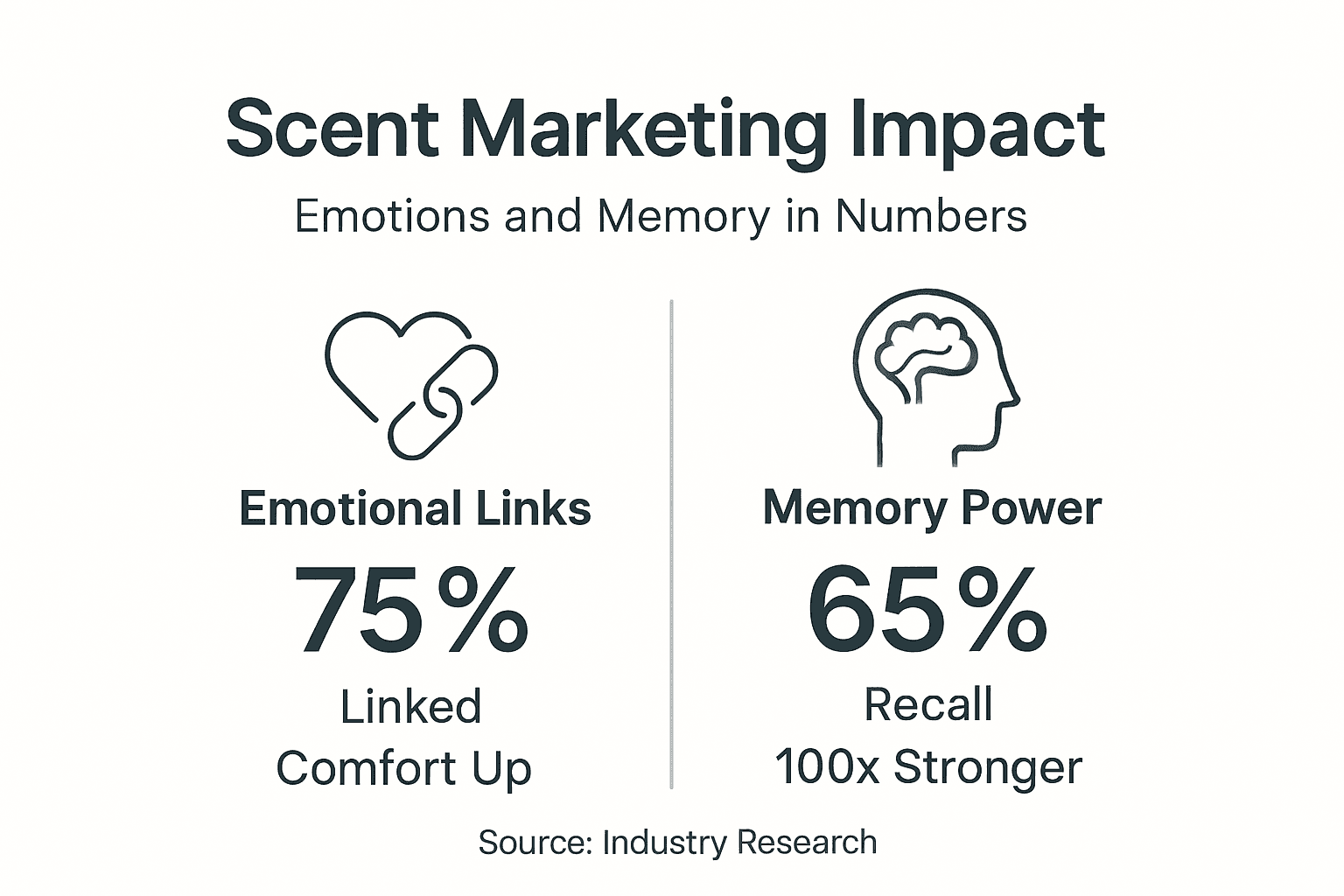
Research links 75% of daily emotions to smell, and rates scent 100 times more memorable than what you see or hear. Which is why a perfume can hand you a person or a place from years ago without being asked. Brands didn't invent that vulnerability. They just built a budget line around it.
Scent Memory Superiority: People recall scents with 65% accuracy after one year, compared to just 50% visual recall after three months.
The purchasing effect is measurable rather than mystical. A pleasant fragrance nudges your brain into releasing dopamine and other feel-good neurotransmitters, and a good mood is a generous mood. Value looks better from inside it.
What that mood does to your behaviour:
None of this makes you a mark. It does mean the room is quietly arguing with you, and recognising the argument is most of the defence. It also explains why some perfume counters feel welcoming and others feel like a chemist's.
There are two approaches worth naming, and they're not equally serious.
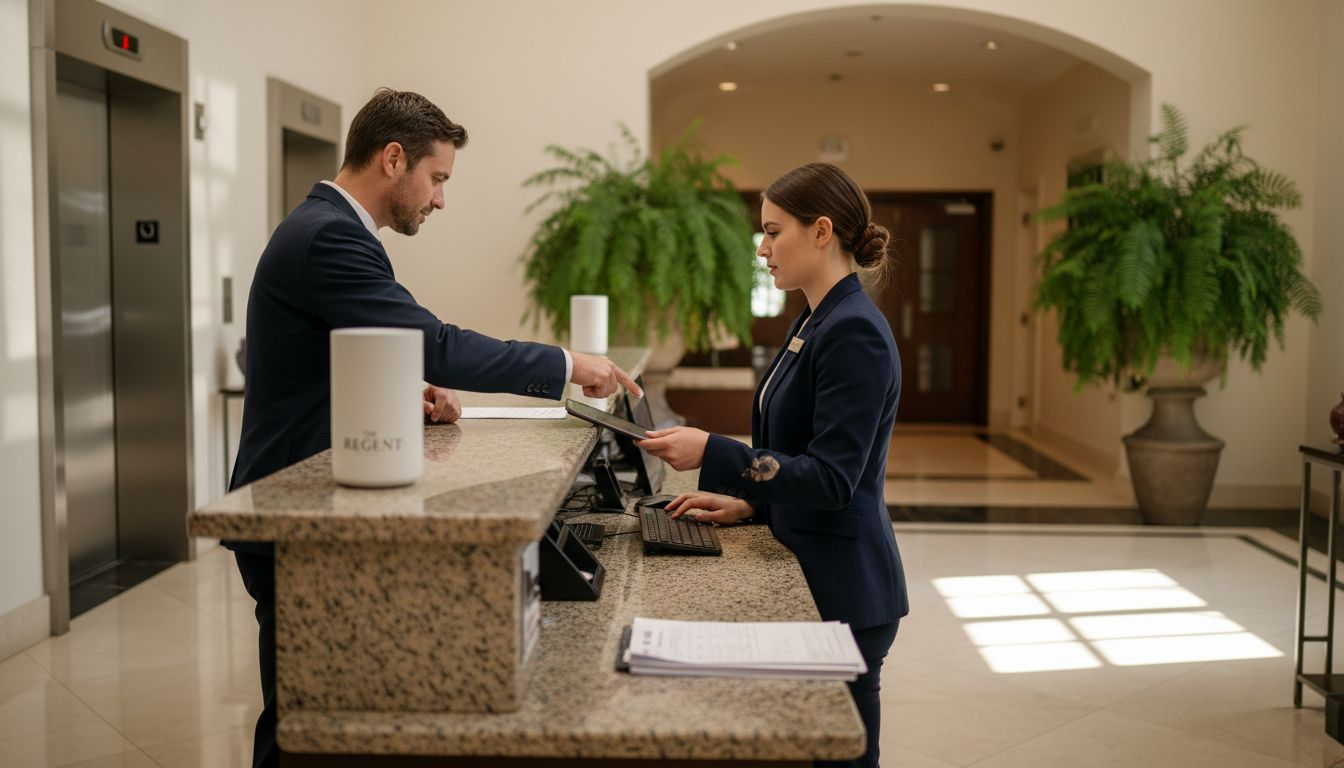
Ambient scenting diffuses something pleasant through a space to improve the mood in it. No brand identity attached — the fragrance is furniture. Hotels, shopping centres and department stores lean on it. Done well it's invisible. Done badly it's a taxi air freshener at scale, and you can smell the cost-cutting.
Scent branding is the harder, better version: a bespoke fragrance made for one brand and used consistently until it becomes shorthand for the place. Luxury hotels and high-end retailers spend real money on scent branding examples precisely because a signature is defensible and a generic pleasant smell isn't.
Signature scent branding reaches 65% recognition rates, which is the whole argument for the higher spend. Meet that smell again somewhere unrelated and the brand surfaces uninvited, along with how you felt last time.
Where you'll run into each:
Once you know the difference, you can tell who's investing and who's plugging something in. Both want the same thing from you.
Here's the finding luxury brands least enjoy: complicated doesn't win. Your brain processes simple scents more efficiently, and that ease reads to you as pleasure. Research across 400+ shoppers found simple scents like citrus outperforming complex blends on both sales and customer experience.
Citrus is the obvious winner and it earns it. Clean, quick to read, already tied in your head to cleanliness and energy — there's nothing to decode, so there's nothing to resist. Notice how often clothing shops smell faintly of it. That's not an accident of the ventilation.
Pro Tip: Next time you shop, pause to identify the ambient scent. Simple, recognisable fragrances indicate strategic scent marketing designed to enhance your experience without overwhelming your senses.
What brands actually screen for:
Cognitive fluency is the principle underneath it, and it's why effective scent choices skew familiar rather than clever. Easy to process reads as safe, and safe reads as good. The perfume equivalent of a well-lit room.
This stopped being a perfume-counter tactic a long time ago.
Where it turns up:
Retail stores, hotels, restaurants, gyms and spas all report measurable gains in customer satisfaction and sales after putting scent marketing in. The estate-agent trick is the crude end of it — everyone's heard of that one, which rather blunts it.
Luxury hotels do it best, and it's not close. One fragrance, diffused through lobbies, lifts and rooms, repeated until it's inseparable from the experience of staying there. Encounter it somewhere else months later and the whole trip comes back, which is exactly the point.
The behavioural effect is blunt: scented retail spaces hold people around 15 minutes longer than unscented ones, and longer visits mean fuller baskets. Restaurants placing scent near the door report more foot traffic during the quiet hours.
If you buy perfume, this should reframe a few of your shopping memories. The rooms you enjoyed being in were engineered to be enjoyed.
Most of what people believe about this is a decade out of date.
Misconception: Scent marketing simply masks unpleasant odours. Reality: Odour control matters, but the serious work uses fine fragrance grade scents to build identity and positive association, not to cover anything up.
Misconception: Scent has negligible impact on purchasing decisions. Reality: 59% of consumers spend more time and money in scented retail environments. That's not a mood effect, that's a till effect.
Misconception: Complex, sophisticated scents work best for luxury brands. Reality: Simple, easily processed fragrances beat complex blends across every market segment. Expensive-smelling and effective aren't the same brief.
Misconception: Scent marketing only affects immediate sales. Reality: 65% of consumers hold onto scent-brand associations for over a year, which makes it a retention tool as much as a conversion one.
Misconception: Only perfume and cosmetic retailers benefit. Reality: Hotels, gyms, car showrooms and estate agents are all in, with results.
Strip the myths away and scent marketing is an evidence-based strategy, not atmospheric decoration. That's precisely why it deserves more scepticism than it usually gets.
The pleasant smell in the shop you love is a line item. Somebody chose it, tested it and costed it against your basket size.
The sales bump is the least interesting part. The long game is memory.
Your brain files scent memories in the same region that handles emotion and long-term recall, so fragrance gets stored alongside the feeling rather than next to it. Run into a signature scent months after your last visit and the association arrives fully formed, before you've decided anything.
What that buys a brand:
The retention figure is the headline: 65% of consumers keep scent-brand associations within 12 months, well beyond visual recall rates. That durability is what justifies the spend, and it's why the cheap approach — a pleasant generic diffused everywhere — is a waste of money by comparison.
Scent builds a bridge between brand and customer that rational evaluation never crosses, which is either brilliant marketing or slightly unnerving, depending on your mood.
Fragrance and hospitality brands get the strongest version of this. A hotel signature becomes something guests try to buy for the house. Perfume brands with consistent counter scents build rooms where browsing feels easy, so you come back for the new releases.
Your favourite shop may have earned your loyalty with the product. It may also have bought a chunk of it wholesale, by the litre.
Knowing the trick doesn't spoil it. It just means you're choosing rather than responding.
How to spot it:
Pro Tip: Before making a purchase, step outside the scented environment for a few minutes. This break allows you to evaluate your purchase intent without the emotional influence of strategic fragrance, ensuring decisions align with actual needs.
That wash of comfort in a hotel lobby has a supplier. The urge to keep walking round a clothing shop may be citrus doing its job. Neither feeling is fake — it just wasn't entirely yours to begin with.
The uncomfortable part is what this does to taste. Pleasant experiences in scented spaces shape which fragrance families feel right to you, and repeated exposure trains your nose towards particular profiles. If you've never worked out why you keep reaching for the same style, some of the answer is retail.
So when evaluating perfumes, account for the room. A fragrance tested in several contexts tells you far more than one sampled in a shop built to flatter it. Writing fragrance reviews after wearing perfumes in different settings is the cheapest way to separate the perfume from the atmosphere it was sold in.
You can enjoy a beautifully scented space and still recognise it as persuasion. Both at once.
The verdict: scent marketing is legitimate craft, and the brands doing it properly — one signature, kept simple, used consistently — are worth more of your respect than the ones plugging a diffuser in and calling it identity. But it's designed to reach you before you've had a chance to think, which makes keeping your own record the only real counterweight. Fragplace gives you tools to discover and track fragrances that actually suit you, rather than the ones a shop made you feel good in.
Start with the reviews from other enthusiasts, who've smelled these things somewhere other than a perfume hall. Then learn to pin down your own impressions with our fragrance review guide, because vocabulary is what turns a vague good feeling into a decision you can defend. Explore notes, compare impressions and build a collection you chose on purpose.
Scent marketing is the strategic use of fragrance in retail and hospitality to influence how customers feel and behave. It exploits the direct line between your olfactory system and your limbic brain to attach good feelings to a brand. It isn't air freshening — it's a costed investment with business outcomes attached.
It shapes your preferences through emotion and memory, usually below conscious awareness. A perfume retailer running a signature counter scent is building a room where sampling feels relaxed rather than pressured, and relaxed customers sample more. That affects which fragrances you try, how long you spend trying them, and what you leave with.
Two main ones: ambient scenting for general atmosphere, scent branding for identity. Ambient scenting uses broadly likeable fragrances such as citrus or vanilla to improve mood and comfort. Scent branding commissions a bespoke fragrance that becomes part of the brand, hitting 65% recognition rates and buying loyalty through a signature nobody else can use.
Yes, once you're looking for it. Watch for the same fragrance across multiple branches, scent that's clearly diffused rather than incidental, and smells that match the brand's positioning a little too neatly. Then check your own reaction on the way in — an unearned lift in comfort or energy is usually the giveaway.
| Point | Details |
|---|
| Sales Impact | Scent marketing increases retail sales by 11% and boosts customer satisfaction by 20% through strategic fragrance deployment. |
| Emotional Connection | Scent triggers 75% of daily emotions and creates memories 100 times stronger than visual or auditory cues. |
| Recognition Rates | Signature brand scents achieve 65% recognition rates within 12 months, building lasting consumer loyalty. |
| Simple Effectiveness | Simple scents like citrus outperform complex blends due to easier mental processing and stronger positive responses. |
| Cross-Industry Use | Retail stores, luxury hotels, restaurants, and gyms deploy scent marketing to enhance experiences and drive purchases. |
| Aspect | Ambient Scenting | Scent Branding |
|---|
| Purpose | Enhance general atmosphere | Build unique brand identity |
| Fragrance Type | Pleasant, universally appealing | Custom, distinctive signature |
| Recognition Goal | Create comfort | Achieve 65% brand recall |
| Investment Level | Moderate | Substantial |
| Application | Broad retail spaces | Specific brand touchpoints |
| Scent Type | Processing Ease | Consumer Preference | Sales Impact | Examples |
|---|
| Simple (1-3 notes) | High | 68% positive | +14% sales | Citrus, vanilla, mint |
| Moderate (4-6 notes) | Medium | 52% positive | +8% sales | Floral blends, woody scents |
| Complex (7+ notes) | Low | 41% positive | +3% sales | Multi-layered compositions |