Articles
Hol dir den Fragletter
Neue Duftgeschichten und Empfehlungen in deinem Postfach. Jederzeit abbestellbar.
Neue Duftgeschichten und Empfehlungen in deinem Postfach. Jederzeit abbestellbar.
Neue Duftgeschichten und Empfehlungen in deinem Postfach. Jederzeit abbestellbar.
Neue Duftgeschichten und Empfehlungen in deinem Postfach. Jederzeit abbestellbar.
Die meisten Menschen lesen Parfüm nicht falsch, weil ihre Nase fehlerhaft ist. Sie lesen es falsch, weil sie eine zeitgesteuerte Komposition beim ersten Atemzug beurteilen und dann wieder gehen. Duftnoten sind kein Zutatenetikett – sie sind ein Zeitplan, und sobald man den Zeitplan lesen kann, hört die Wand aus Flaschen auf, eine Wand zu sein.
| Punkt |
|---|
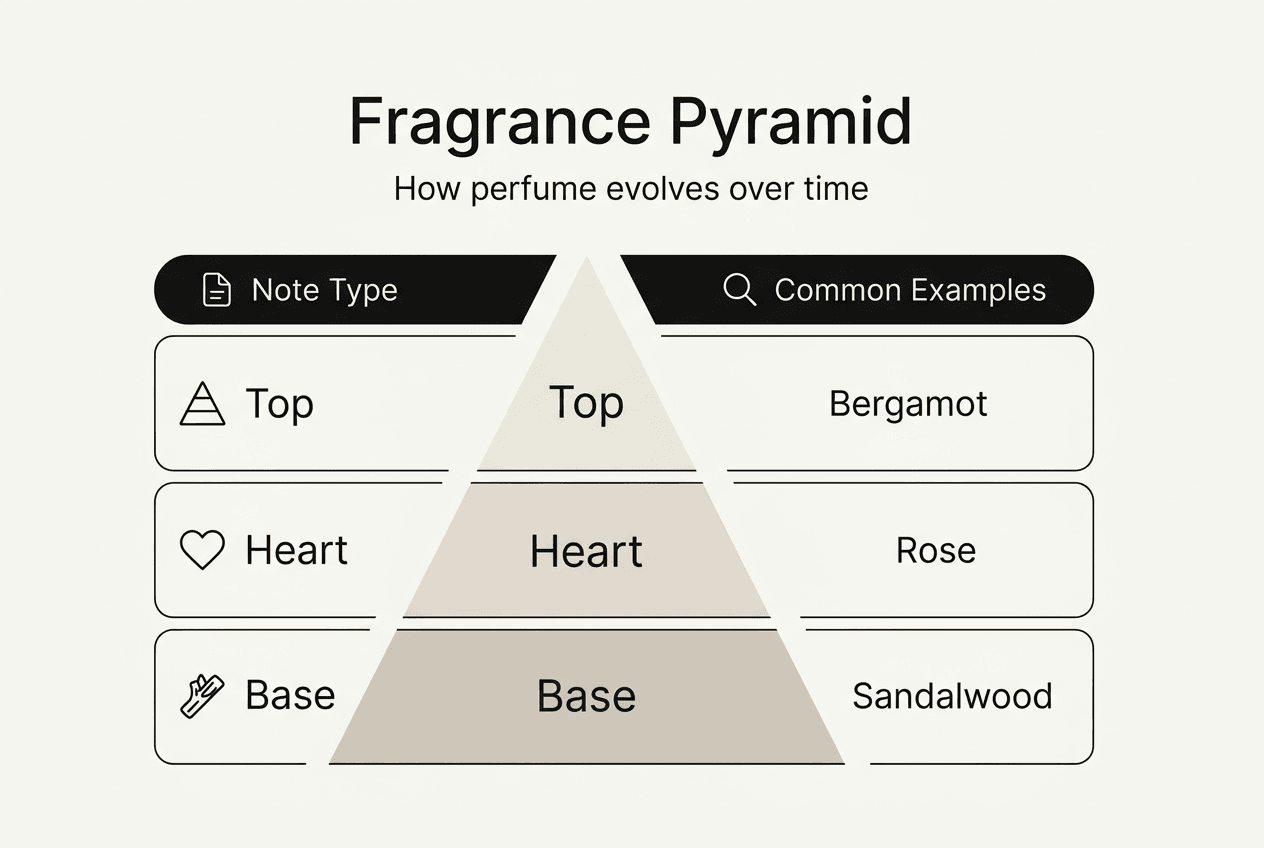
Die Pyramide ist zur Hälfte Chemie und zur Hälfte Marketingdiagramm, und sie ist immer noch das nützlichste mentale Modell, das Sie finden werden. Sie sortiert Noten nach Flüchtigkeit und Haltbarkeit: Kopfnoten (15-30 Minuten), Herznoten (2-4 Stunden), Basisnoten (6-8 Stunden oder länger). Leichte Moleküle verlassen zuerst, schwere bleiben zurück. Das ist der ganze Trick.
Kopfnoten sind der Handschlag. Bergamot und Zitrone, Kräuter wie Lavendel und Basilikum, leichte Früchte – hell und flüchtig, größtenteils innerhalb der ersten halben Stunde nach der Anwendung verschwunden. Sie sind so konzipiert, dass sie Sie in den ersten Sekunden am Counter ansprechen, weshalb Sie genau deshalb nicht auf ihnen kaufen sollten. Die Kurzform ist es wert, auswendig gelernt zu werden: Kopfnoten sind leicht und flüchtig wie Zitrusfrüchte und Kräuter; Herznoten sind der Kern mit floralen und würzigen Noten; Basisnoten sind langanhaltende Hölzer und Moschus.
Herznoten erscheinen, wenn die Eröffnung verbrennt, normalerweise nach 20 bis 30 Minuten, und halten mehrere Stunden. Florale Absolues, Gewürze, grüne Noten, einige Früchte – Rose, Jasmin, Zimt, Kardamom, Geranie. Dies ist die Schicht, die Ihnen sagt, zu welcher Familie das Parfüm tatsächlich gehört, und es ist die, bei der die meisten Menschen nie lange genug bleiben, um sie kennenzulernen.
Basisnoten sind der Ort, an dem das Geld hingeht. Hölzer wie Sandelholz und Zedernholz, Harze wie Amber und Benzoe, Moschus, Vanille und Patchouli – Moleküle, die schwer genug sind, um langsam zu verdampfen und tagelang auf einem Schal zu bleiben. Jeder, der ein Parfüm vor dieser Phase abtut, bewertet die Eröffnung, nicht das Parfüm.
| Notentyp | Typische Dauer | Häufige Beispiele |
|---|---|---|
| Kopfnoten | 15-30 Minuten | Bergamot, Zitrone, Lavendel, Basilikum, Grapefruit |
Mit etwas Unbekanntem, sprühen Sie einmal auf einen Duftbewertungsstreifen oder Ihr Handgelenk und achten Sie auf die Eröffnung – die Helligkeit, die Energie, die erste Bewegung, die sie macht. Akzeptieren Sie dann, dass Sie eine Seite von dem Ding gelesen haben.
Pro-Tipp: Widerstehen Sie der Versuchung, ein Parfüm ausschließlich nach Kopfnoten zu beurteilen. Herz- und Basisnoten benötigen Geduld, und ein Parfüm, das Sie beim Sprühen abgelehnt haben, kann sich bis zum Nachmittag in etwas verwandeln, das Sie wollen.
Die Notenerkennung ist eine trainierbare Fähigkeit, kein Geschenk, mit dem man geboren wird. Was sie braucht, ist Struktur und Timing, denn das, was Sie analysieren, verändert sich ständig, während Sie dort stehen und darüber entscheiden.
Beginnen Sie an einem neutralen Ort – keine Kochgerüche, keine Kerzen, keine aggressiv duftenden Reinigungsprodukte. Morgens sind in der Regel die besten Zeitfenster, wenn Ihre olfaktorischen Rezeptoren ausgeruht und reaktionsfähig sind.
Die Hautchemie ist wichtiger als die meisten Marketingangaben. Ihr pH-Wert, Feuchtigkeitsgehalt und natürliche Öle interagieren alle mit den Molekülen, weshalb der Signature-Duft eines Freundes bei Ihnen sauer werden kann. Blotter dienen der Struktur; die Haut ist für das Urteil.
Olfaktorische Ermüdung ist das eigentliche Hindernis bei langen Sitzungen. Ihre Nase passt sich kontinuierlicher Exposition an und Ihr Gehirn hört leise auf, darüber zu berichten, sodass Nuancen verschwinden, ohne dass Sie es bemerken. Machen Sie zwischen den Düften mindestens 10 Minuten Pause. Einige Fachleute empfehlen, Ihre eigene Haut oder Kleidung zu riechen, um zurückzusetzen, da die Vertrautheit hilft, das, was Sie wahrnehmen, neu zu kalibrieren.
Führen Sie ein Duftjournal über mehrere Tragezeiten – welche Noten wann auftraten, wie lange jede Phase hielt, was der Duft bei Ihnen auslöste. Es trainiert Ihre Nase und baut gleichzeitig eine persönliche Referenzbibliothek für zukünftige Parfümbewertungen auf, und es verhindert, dass Sie denselben Fehler zweimal machen.
Pro-Tipp: Verfolgen Sie pro Sitzung eine Notenfamilie, anstatt alle Zutaten auf einmal zu riechen. Eine Woche Zitrusfrüchte, dann eine Woche florale Düfte, dann Hölzer. Enger ist besser als gründlich, während Sie lernen.
Ein strukturierter Bewertungsprozess standardisiert, wie Sie bewerten, was der einzige ehrliche Weg ist, zwei Parfüms zu vergleichen, die Sie zwei Wochen auseinander gerochen haben.
Die Pyramide ist kein Gesetz, und viele zeitgenössische Parfümerien behandeln sie als optional. Lineare und sphärische Kompositionen lassen Noten koexistieren, anstatt sich anzustellen, sodass mehrere Dinge gleichzeitig registriert werden, anstatt abwechselnd.
Lineare Düfte behalten den gleichen Charakter vom Sprühen bis zum Trocknen. Es gibt keine Enthüllung, keinen dritten Akt – Sie erhalten die ganze Persönlichkeit sofort. Sammler neigen dazu, das als flach abzulehnen. Träger kaufen es weiterhin, weil ein Duft, der Sie in der dritten Stunde nicht überrumpelt, leicht zu leben ist, und synthetische Moleküle, die für stabile Flüchtigkeit entwickelt wurden, ermöglichen den Balanceakt.
Sphärische oder radiale Kompositionen präsentieren alle ihre Noten konzentrisch, ohne Hierarchie zwischen Kopf, Herz und Basis. In einem Moment fangen Sie die Zitrushelligkeit, im nächsten eine holzige Tiefe, und keiner ist zuerst oder zuletzt. Die Komplexität kommt von der Gleichzeitigkeit statt von der Abfolge, was diese Düfte zu den interessantesten macht, die man immer wieder riechen kann, und zu den schwierigsten, um sie einem Freund zu beschreiben.
Zirkuläre Düfte laufen: Sie durchlaufen die Mittel- und Basisphasen und kehren dann zu ihrer Eröffnung zurück. Die Kopfnoten sind so konzipiert, dass sie lange halten, und laufen neben dem Herz und der Basis, bevor sie sich Stunden später wieder behaupten.
Synthetika sind es, die all dies freischalten, indem sie Parfümeuren Kontrolle über Flüchtigkeit und Haltbarkeit geben, die natürliche Materialien nicht bieten können. Iso E Super, Ambroxan und Hedione erzeugen transparente, diffuse Effekte, die die Notengrenzen verwischen. Sie kündigen sich nicht an – sie verstärken alles, was neben ihnen steht, und tragen Charakter bei, den Sie nur bemerken, wenn er fehlt. So bauen moderne Parfümeure Dinge auf, die als eine Substanz gelesen werden, anstatt als drei übereinander gestapelte Schichten. Ob das als Fortschritt oder als Abkürzung zählt, hängt ganz von der Komposition ab.
Mehrere zeitgenössische Duftmerkmale spiegeln diese sich entwickelnden Strukturen wider:
Nichts davon macht das klassische Notenlesen obsolet. Es bedeutet nur, dass der Wortschatz sich dehnen muss, und die Menschen, die mit aktuellen Parfümtrends Schritt halten, werden viel mehr über einen molekularen Hautduft sagen können als „er riecht sauber“.
Wenn ein Duft Ihrer üblichen Analyse widersteht, stellen Sie bessere Fragen. Entwickelt er sich tatsächlich oder bleibt er stehen? Können Sie einzelne Noten herausziehen oder sind sie verschmolzen? Die Antworten sagen Ihnen, was der Parfümeur anstrebte, was eine großzügigere Art ist, eine Flasche zu beurteilen, als zu entscheiden, dass sie langweilig ist.
Jeder stößt auf dieselben Wände, einschließlich Menschen, die das seit Jahrzehnten tun. Olfaktorische Ermüdung stumpft Ihre Reaktion auf kontinuierliche Gerüche ab, und komplexe Materialien weigern sich, in ordentliche Kategorien zu passen – weshalb Methode hier Talent übertrifft.
Olfaktorische Ermüdung, oder Nasenblindheit, ist das Aufgeben Ihrer Rezeptoren gegenüber einem konstanten Reiz, damit Ihr Gehirn nach neuen Informationen Ausschau halten kann. Sie setzt innerhalb von Minuten ein. Das ist der Mechanismus hinter jedem enttäuschenden Einkaufserlebnis, bei dem das vierte Parfüm nach nichts roch.
Notenverwirrung kommt aus mehreren Richtungen. Viele natürliche Materialien tragen Hunderte chemischer Komponenten, sodass sie sich einem einwortigen Etikett widersetzen – Rosenabsolute enthält über 400 Verbindungen, einige fruchtig, einige würzig, einige grün, und welche Facette Sie bemerken, verschiebt sich mit Kontext und Konzentration. Dann gibt es das Benennungsproblem: Parfümeure verwenden routinemäßig Materialien, die nichts mit dem zu tun haben, was sie genannt werden. „Erdbeere“ ist fast immer ein synthetisches Molekül anstelle von Fruchtextrakt, und es riecht sauberer und heller als jede echte Erdbeere.
Ungeduld richtet mehr Schaden an als alles andere. Fünf Dinge in fünf Minuten zu sprühen, jedes in Sekunden zu beurteilen und sich dann zu fragen, warum sie alle verschwommen sind – das ist keine Bewertung, das ist Einkaufen mit den Augen.
Praktische Lösungen verbessern Ihre Fähigkeiten zur Notenerkennung:
Ihre persönlichen Assoziationen färben alles, und das ist in Ordnung. Jemand, der am Meer aufgewachsen ist, nimmt marine Noten wahr, an denen andere einfach vorbeigehen. Ein Bäcker erkennt sofort den vanille-almond Charakter von Tonka. Diese Verbindungen sind keine Kontamination – sie sind der Grund, warum Ihre Noten es wert sind, aufgeschrieben zu werden, anstatt sie aus einer Datenbank zu kopieren.
Bedingungen verschieben das Ziel ebenfalls. Wärme erhöht die Flüchtigkeit, sodass ein Sommertrage und ein Wintertrage desselben Parfüms tatsächlich unterschiedliche Ereignisse sind. Feuchtigkeit verändert Projektion und Haltbarkeit. Verstopfung, Allergien und Stress verändern Sie. Zu wissen, welche Variable im Spiel war, verhindert, dass Sie die Flasche beschuldigen.
Pro-Tipp: Halten Sie ein kleines Glas mit Kaffeebohnen dort, wo Sie testen. Das Riechen von Kaffee zwischen den Parfüms gibt Ihrer Nase einen neutralen, vertrauten Referenzpunkt – obwohl es auch kostenlos funktioniert, wenn Sie nach draußen gehen und frische Luft atmen.
Konsistenz schlägt Perfektion hier. Einige Sitzungen enden mit nichts als einem vagen Eindruck und dem Gefühl, dass Sie einen Nachmittag verschwendet haben. Ihre Nase lernt immer noch; es ist eine Fähigkeit wie jede andere, und sie verbessert sich durch Exposition statt durch Anstrengung.
Das Lesen von Noten wird am schnellsten schärfer, wenn Sie Ihre Eindrücke mit denen anderer Menschen abgleichen können. Fragplace gibt Ihnen die Werkzeuge dafür: Duftentdeckung, Sammlungstracking und eine Gemeinschaft von Menschen, die produktiv darüber streiten, wie eine Basis tatsächlich riecht.
Tauchen Sie ein in detaillierte Duftprofile, die die Notenzusammensetzungen aufschlüsseln, lesen Sie Bewertungen von Sammlern, die mit der Flasche gelebt haben, und fügen Sie Ihre eigenen Beobachtungen hinzu, während sich Ihre Nase schärft. Duft des Tages-Erinnerungen existieren aus einem Grund – Gewohnheiten schlagen Absichten – und exklusive Interviews lassen Sie Meisterparfümeure hören, die ihre eigene Argumentation erklären. Durchstöbern Sie Tausende von Düften mit vollständigen Notenanalysen, und die Muster in Ihrem Geschmack beginnen sich von selbst zu zeigen, normalerweise bevor Sie sie zugeben würden.
Hier ist das Urteil: Wenn Sie eine Gewohnheit nach dem Lesen dies ändern, machen Sie es mit der Anzahl der Parfüms, die Sie gleichzeitig testen. Drei oder vier, verteilt, Stunden später wieder besucht, aufgeschrieben. Diese einzige Änderung wird Ihnen mehr beibringen als jeder Leitfaden, einschließlich diesem. Beginnen Sie also mit den Notenanalysen zu Düften, um Ihre Referenzpunkte aufzubauen – dann protokollieren Sie, was Sie tatsächlich auf Fragplace riechen, und lassen Sie einige Monate Ihrer eigenen Notizen Ihnen sagen, was Sie mögen.
Kopfnoten sind die Eröffnung, die 15 bis 30 Minuten anhält – helle, flüchtige Dinge wie Zitrusfrüchte und Kräuter. Herznoten sind der tatsächliche Charakter des Parfüms, der nach 20 Minuten ankommt und zwei bis vier Stunden mit floralen und würzigen Noten anhält. Basisnoten sind das Fundament, das sechs bis acht Stunden oder länger mit Hölzern, Moschus und Harzen anhält. Wenn Sie sich nur an eine erinnern, denken Sie an die Basis: Es ist das, was die Menschen um Sie herum den größten Teil des Tages riechen.
Duftmoleküle haben unterschiedliche Molekulargewichte und Flüchtigkeitsraten, sodass die leichteren zuerst verdampfen, während die schwereren an Ort und Stelle bleiben. Diese gestaffelte Verdampfung ist der Fortschritt von Kopf zu Herz zu Basis. Ihre eigene Wahrnehmung trägt dazu bei – während sich Ihr olfaktorisches System an kontinuierliche Exposition anpasst, verblassen die lautesten Noten in Ihrem Kopf und ruhigere treten hervor.
Riechen Sie dieselben Düfte wiederholt in separaten Sitzungen und notieren Sie, was Sie jedes Mal erhalten; die Muster ergeben sich aus dem Protokoll, nicht aus einem einzigen Tragen. Bauen Sie eine Referenzbibliothek von Einzelnoten-Parfüms oder ätherischen Ölen auf, damit Sie lernen, wie jedes Material allein riecht. Standardisieren Sie Ihre Bewertungsmethode und machen Sie Pausen, bevor olfaktorische Ermüdung leise Ihre Notizen korrumpiert.
Olfaktorische Ermüdung ist das Desensibilisieren Ihrer Rezeptoren gegenüber kontinuierlicher Exposition, sodass Ihr Gehirn einen Reiz herausfiltert, den es für nicht mehr neu hält. Nuancen verschwinden zuerst: Noten scheinen zu verschwinden oder ihren Charakter zu verändern, während das Parfüm nichts dergleichen tut. Begrenzen Sie Sitzungen auf drei oder vier Düfte, machen Sie 10-minütige Pausen zwischen den Proben und setzen Sie auf etwas Neutrales wie Ihre eigene Haut zurück.
Nein, und zunehmend nicht. Moderne Parfümerie verwendet lineare Kompositionen, die während des Tragens einen Charakter beibehalten, sphärische Designs, die alle Noten gleichzeitig präsentieren, und zirkuläre Düfte, die zu ihrer Eröffnung zurückkehren. Fortschrittliche synthetische Moleküle ermöglichen dies, indem sie Parfümeuren Kontrolle über Flüchtigkeit und Haltbarkeit geben, die eine strikte sequentielle Progression nie geboten hat.
| Details |
|---|
| Duftpyramidenstruktur | Kopf-, Herz- und Basisnoten bilden die Entwicklung des Duftes über die Zeit, wobei jede Schicht sich in unterschiedlichen Intervallen offenbart |
| Notenerkennung erfordert Geduld | Die Identifizierung einzelner Noten erfordert wiederholte Riech-Sitzungen und Aufmerksamkeit dafür, wie sich Düfte im Laufe des Tages verändern |
| Moderne Parfümerie entwickelt sich weiter | Zeitgenössische Düfte erkunden lineare und sphärische Strukturen jenseits der traditionellen Pyramide und schaffen gleichzeitige Notenerlebnisse |
| Olfaktorische Ermüdung beeinflusst die Wahrnehmung | Ihre Nase passt sich kontinuierlichen Gerüchen an, was Pausen und sensorische Rücksetzungen erfordert, um eine genaue Notenerkennung aufrechtzuerhalten |
| Herznoten |
| 2-4 Stunden |
| Rose, Jasmin, Zimt, Geranie, Ylang-Ylang |
| Basisnoten | 6-8+ Stunden | Sandelholz, Vanille, Moschus, Amber, Patchouli |
| Strukturtyp | Notenentwicklung | Erfahrungseigenschaften | Häufige Anwendungen |
|---|
| Traditionelle Pyramide | Sequentiell von Kopf zu Herz zu Basis | Klare Evolution über Stunden | Klassische Parfümerie, formelle Düfte |
| Linear | Konsistent während des Tragens | Stabiler, vorhersehbarer Duft | Moderne minimalistische Parfüms, Arbeitsplatzdüfte |
| Sphärisch | Gleichzeitige Notenpräsentation | Vielschichtige, erkundbare Komplexität | Nischenparfümerie, künstlerische Kompositionen |
| Zirkulär | Kehrt zu den Eröffnungsnoten zurück | Zykliche Eindrücke | Innovative zeitgenössische Veröffentlichungen |