Articles
Recebe a Fragletter
Novas histórias e escolhas de fragrâncias na tua caixa de entrada. Podes anular quando quiseres.
Novas histórias e escolhas de fragrâncias na tua caixa de entrada. Podes anular quando quiseres.
Novas histórias e escolhas de fragrâncias na tua caixa de entrada. Podes anular quando quiseres.
Novas histórias e escolhas de fragrâncias na tua caixa de entrada. Podes anular quando quiseres.
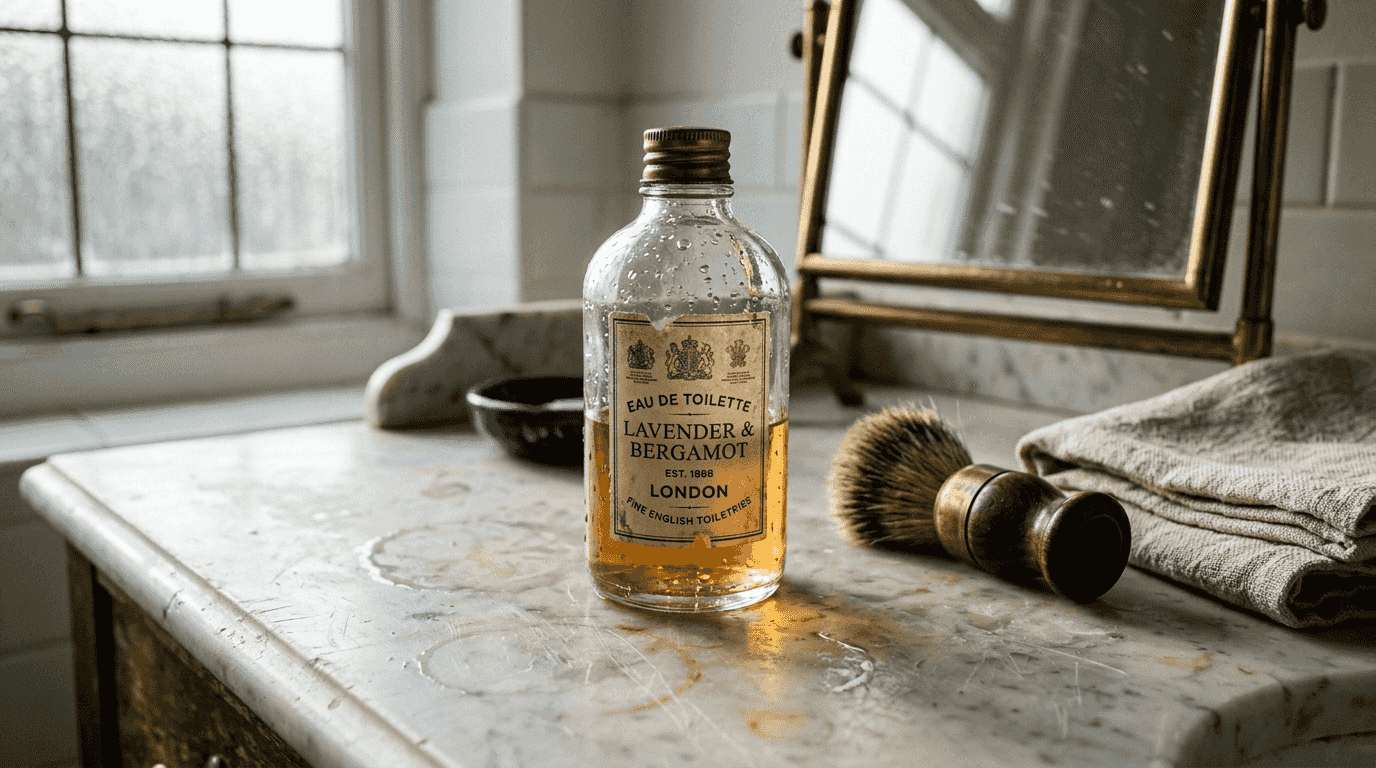
Eau de toilette has the worst name in perfumery. It doesn't mean toilet water in the porcelain sense — it means grooming water, and that mistranslation has quietly cost the category respect for decades. Here's what the label on the bottle actually tells you, and what it doesn't.
The literal English translation is 'grooming water', or 'toilet water' if you want the version that makes people wince. All the confusion sits in the French word 'toilette', which described the act of grooming and preparing oneself long before it described plumbing. It comes from 'faire sa toilette' — 'to get ready', or 'to freshen up' — a daily ritual practised by French aristocracy and the middle classes throughout the 18th and 19th centuries.
Back then, eau de toilette was a skin tonic: alcohol, water, and light aromatic compounds like citrus essences. Women and men applied it after washing to feel invigorated and lightly scented through the day. It was never built to compete with the heavy, oil-based perfumes kept for evening — that was the entire point of it. And that split between everyday freshening water and concentrated perfume is the ancestor of every concentration label on the shelf today.
What changed the category was chemistry. As distillation improved and synthetic aromatic compounds arrived in the 20th century, eau de toilette stopped being a tonic and became a fragrance category with real structure, whilst keeping its historical bias towards lightness and freshness. That heritage explains why EDT still leans on bright, volatile top notes instead of the weight you get from heavier fragrance concentrations.
The short version of how it got here:
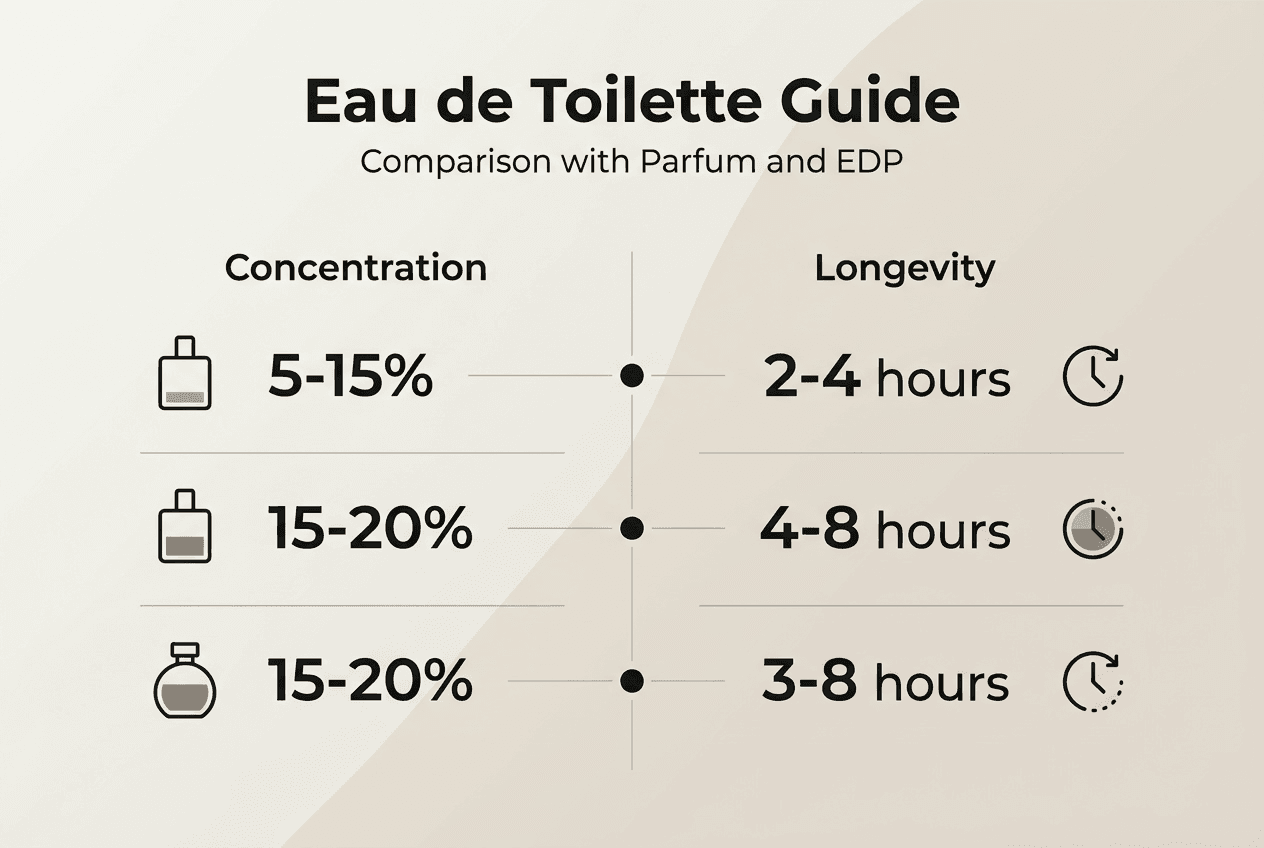
Eau de toilette typically contains 5-15% aromatic compounds, which parks it between eau de cologne and eau de parfum. That range is enormous, and it's the source of most arguments about the category — a 6% formula and a 14% formula wear the same three letters and behave nothing alike. The alcohol and water base pushes scent out fast, firing top notes on contact whilst the middle notes take their time. It's a concentration built for being noticed at conversational distance and nowhere further.
Concentration decides how long a fragrance stays detectable on your skin. EDT lasts approximately 2-4 hours, though body chemistry, climate and application method all move that number. Eau de parfum carries more aromatic oil, evaporates more slowly, and stretches wear time to 4-8 hours or beyond. Parfum and extrait formulations last longest and cost considerably more, because concentration of precious ingredients is exactly what you're paying for.
| Fragrance type | Concentration range | Typical longevity | Common uses | | --- | --- | --- | | Parfum/Extrait | 20-30% | 6-8+ hours | Special occasions, evening wear, signature scenting | | Eau de parfum | 15-20% | 4-6 hours | Daily wear, professional settings, moderate projection | | Eau de toilette | 5-15% | 2-4 hours | Casual wear, daytime use, warmer weather | | Eau de cologne | 2-5% | 1-2 hours | Refreshing splash, post-exercise, light freshening |
Duration isn't the whole story. Lower percentages put the weight on volatile top notes and the first impression; higher ones give base notes room to finish the argument. EDT openings tend to be bright — citrus, green or aquatic — and they grab you quickly. The heart arrives within 15-30 minutes, florals or spices doing the work of defining character. The base shows up, but politely: gentle warmth rather than the depth a parfum can afford.
Pro Tip: Layer your eau de toilette over unscented or complementary body lotion to buy yourself more time. Apply the lotion first so the fragrance molecules have a moisturised base to cling to. You can also run a matching eau de parfum alongside it — the lighter concentration for daytime, the EDP for the evening.
What the percentage actually buys you:
Fresh, bright profiles dominate EDT because that's what the concentration flatters. Bergamot, lemon and grapefruit appear in EDT openings so consistently that citrus is practically the category's house style, delivering instant refreshment and energy. Floral hearts of rose, jasmine or lily get coded feminine; lavender and aromatic herbs get coded masculine. Those labels are marketing convention, not instruction, and you should ignore them the moment a scent works for you. What sits underneath is genuine: these choices track EDT's origins as grooming water, favouring cleanliness and vitality over sensual depth. Approachable, then. If you want a fragrance that argues with you, this isn't the concentration to shop.
EDT earns its place in everyday and casual wear through restraint. The lighter concentration won't corner your colleagues in an open-plan office or your fellow passengers on a packed train. Warm climates favour it too, since heavy perfumes turn cloying in heat where a lighter formulation stays refreshing. And the shorter longevity flips into an advantage if you like scent flexibility — you get to change your mind between a morning meeting and an evening out.
Common fragrance notes in eau de toilette and what they contribute:
Application matters more with EDT than with anything stronger, because you have less material to work with. Follow these practices:
Pro Tip: Choose eau de toilette when you're building a fragrance wardrobe on a budget. The lower concentration means lower prices, so you can own several scents for different moods instead of sinking everything into one parfum. EDT is also the sensible way to explore, letting you test various aromatic profiles without a serious financial commitment.
EDTs take well to layering, and that's where the concentration stops feeling like a compromise. A citrus EDT under a woody eau de parfum gives you dimension that neither has alone. Matching scented body lotions, shower gels or hair mists from the same collection reinforce the fragrance without adding sharpness. Some enthusiasts blend different EDTs outright, which works occasionally and produces something muddy the rest of the time — you need to understand note compatibility and proportions before you try it.
A concrete example helps. White musk EDT formulations are the category in miniature: soft musk against light florals and powder, clean and undemanding. Some people find that boring. That's fair, and it's also the point — this is a style designed to be worn rather than discussed.
Every difference between these three flows from one variable: how much fragrance oil is in the bottle. Longevity, projection, price and appropriate context all follow from that single number. EDT is the light option for daily wear, eau de parfum brings intensity when you need presence, and parfum is the one you save for occasions.
A few things should drive your choice:
Concentration also changes how the notes unfold. EDT front-loads volatile top notes that hit fast and fade, leaving a simpler heart and base behind, which is why EDT compositions read brighter and more straightforward than eau de parfum types that develop intricate middle phases and linger. Parfum is where you get the perfumer's full intent — oud, ambergris or aged patchouli dominating a dry down that refuses to quit.
Sillage is the trail you leave behind you, and it isn't the same thing as strength. EDT's sillage stays within arm's reach, which is scent for your own benefit rather than everyone else's. Eau de parfum announces you as you walk in. Parfum is the odd one: enormous longevity, surprisingly close sillage, because the oily texture keeps it near the skin. That distinction matters more than most people realise in offices and small rooms.
So which one? If you like variety and change scent with your mood, EDT's price and shorter wear time make experimenting cheap. If you want one fragrance to carry a full workday without reapplication, eau de parfum is the better buy and it isn't close. Parfum is for people who care about the artistry and accept the pricing that comes with it. Plenty of collectors keep all three and pick by situation, which is the least dogmatic answer available.
There's a value argument worth analysing too. Parfum costs more per millilitre, but you use less per application, and over a year the gap narrows more than the shelf price suggests. EDT needs reapplying and hands you the freedom to switch scents at lunchtime. Work out which of those you'd actually use before deciding which is better value for you.
Here's the verdict. Eau de toilette is the smart purchase if you want several fragrances rather than one, if you live somewhere hot, or if you work somewhere that quietly punishes projection — and it's the wrong purchase if you're buying a single signature scent you'll wear from breakfast to midnight, because 2-4 hours won't cover that day. Buy the concentration that matches your schedule, not the one with the higher number. Fragplace is built for working that out: notes, perfumers, brands and community reviews across every concentration level.
Start by browsing thousands of fragrances to shortlist EDTs that suit your taste, read what other enthusiasts made of them, and add your own verdicts. Then go one level deeper and read the profiles of the perfumers behind those compositions — once you can spot a signature hand across several bottles, you stop shopping by label and start shopping by author.
Grooming water. The French 'toilette' refers to the ritual of getting ready, so the phrase describes a light fragrance you apply while preparing yourself — bathroom plumbing has nothing to do with it, despite what the English translation suggests.
Generally 2-4 hours, shifting with your body chemistry, the climate and how you apply it. Plan on reapplying during the day if you want continuous scenting, and don't blame the bottle when you need to.
Everyday, comfortably. The subtle projection and fresh character suit professional settings, casual outings and daytime activities. For a formal evening, a stronger concentration will hold up better.
Yes, and it's one of the best things about the concentration. Pair your EDT with matching lotions, or wear it under a richer eau de parfum for added complexity and longevity. Keep the pairings related — clashing accords cancel each other out.
EDT contains 5-15% fragrance oils against eau de parfum's 15-20%, so it reads noticeably lighter. That gap changes projection, longevity, and how much of the fragrance you keep smelling on yourself versus how much reaches everyone else.
| Point | Details |
|---|
| Meaning and origin | Eau de toilette translates to 'grooming water' from French daily freshening rituals, not bathroom-related products |
| Fragrance concentration | Contains 5-15% aromatic compounds, lighter than eau de parfum and parfum formulations |
| Typical longevity | Lasts approximately 2-4 hours on skin, requiring reapplication throughout the day |
| Best applications | Ideal for daytime wear, professional settings, and warmer climates due to subtle projection |
| Scent characteristics | Features fresh top notes like citrus and florals, creating light and refreshing aromas |
| Comparison factor | Eau de toilette | Eau de parfum | Parfum |
|---|
| Concentration | 5-15% oils | 15-20% oils | 20-30% oils |
| Longevity | 2-4 hours | 4-6 hours | 6-8+ hours |
| Price range | Most affordable | Moderate | Premium |
| Projection | Subtle to moderate | Moderate to strong | Strong, intimate |
| Best for | Daytime, casual, warm weather | Versatile daily wear | Evening, special events |
| Note emphasis | Bright tops, light hearts | Balanced development | Rich bases, depth |