Articles
Fragletter पाएँ
नई फ़्रेगरेंस कहानियाँ और चुनिंदा सुझाव आपके इनबॉक्स में। कभी भी सदस्यता छोड़ सकते हैं।
नई फ़्रेगरेंस कहानियाँ और चुनिंदा सुझाव आपके इनबॉक्स में। कभी भी सदस्यता छोड़ सकते हैं।
नई फ़्रेगरेंस कहानियाँ और चुनिंदा सुझाव आपके इनबॉक्स में। कभी भी सदस्यता छोड़ सकते हैं।
नई फ़्रेगरेंस कहानियाँ और चुनिंदा सुझाव आपके इनबॉक्स में। कभी भी सदस्यता छोड़ सकते हैं।
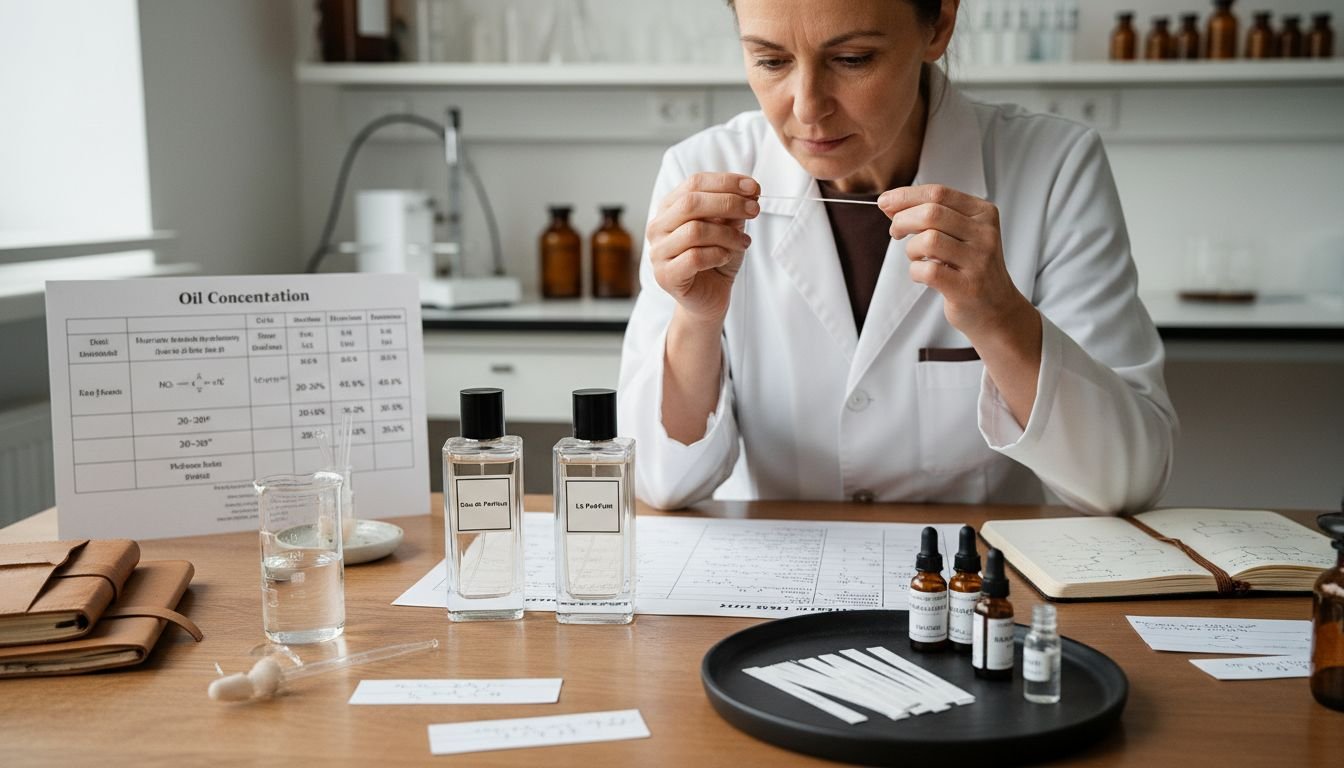
The concentration printed on the bottle is the most misread number in perfumery. Le Parfum contains up to 40 percent pure fragrance oils, making it far more concentrated than Eau de Parfum, which typically ranges from 15 to 20 percent. That gap changes how a scent behaves on you — but it doesn't automatically make the pricier bottle the better one.
The two names sound like marketing. The numbers behind them aren't.
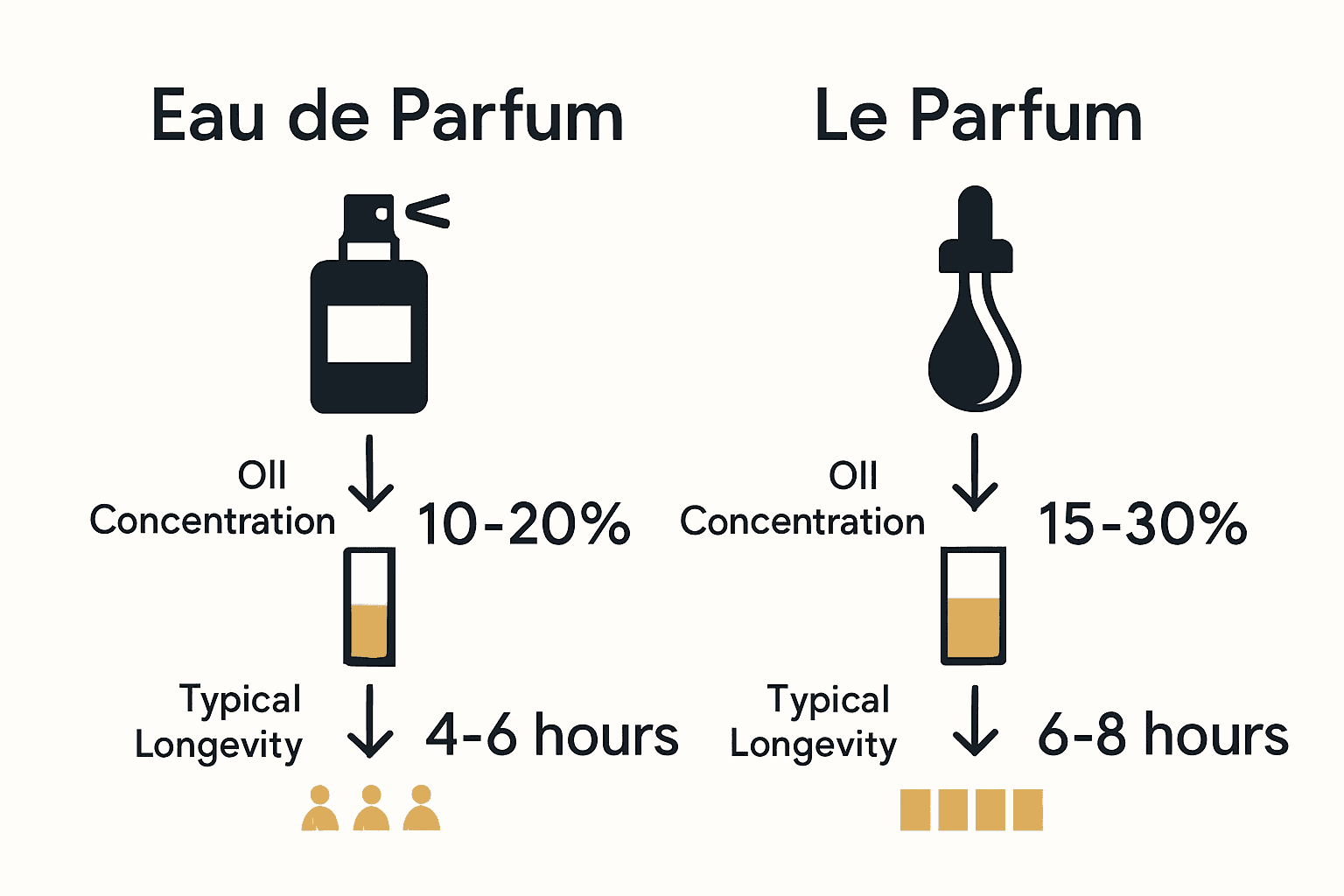
According to Vogue, Eau de Parfum typically contains between 15% and 20% fragrance oils. That's the concentration most houses build their flagship release around, and there's a reason for it: strong enough to survive a working day, restrained enough that the room doesn't turn against you. Le Parfum (or Extrait de Parfum) sits higher, at 20% to 40% of pure fragrance oils. Same idea, denser pour.
Explore our guide on understanding fragrance layers if you want the mechanics of how those layers stack up. The practical difference is one of behaviour, not of quality. Eau de Parfum pushes outward and gets noticed at conversational distance. Le Parfum sits closer to the skin and stays there, which sounds like a straight upgrade until you're wearing one in an open-plan office at nine in the morning.
Here's the part the price ladder obscures: concentration is not a grade. A brilliant Eau de Parfum will beat a mediocre extrait every time, and plenty of extraits exist because there was a rung free at the top of the range. Read the percentage as information about how a fragrance moves, not as a mark out of ten.
Longevity is the number everyone quotes and the number that misleads most.
According to Vogue, Eau de Parfum, containing 15% to 20% fragrance oils, typically lasts up to six hours — enough for the working day, not always enough to carry you into dinner. Parfum or Extrait de Parfum, at 20% to 40% oil concentration, can persist throughout the entire day. On paper that settles the argument. It shouldn't. Oil percentage tells you how much material is in the bottle, not which materials: a citrus-led extrait can still burn off before a resin-heavy Eau de Parfum, because some notes are simply built to disappear.
Explore our guide on fragrance types to see how concentration plays out across different fragrance families. Higher concentration doesn't just mean louder. It means slower.
If you've ever been disappointed by an extrait that seemed to do nothing for the first hour, that's usually why — you were waiting for a shout that was never coming.
Know the oil percentage before you buy and you'll stop blaming your skin for choices the formula made for you.
Most people get this wrong at the moment of spraying, not at the moment of buying.
According to Vogue, Eau de Parfum delivers powerful aromas perfect for important occasions or romantic evenings. Sillage — the French term for how a fragrance diffuses around the wearer — is where the two concentrations part company. Eau de Parfum leaves a trail somebody can follow across a room. Parfum builds a denser bubble that stays near the body and only pays off for people who get close to you.
Learn more about fragrance nuances if you want better language for what you're smelling. Application has to change with the concentration, and this is the step people skip. Eau de Parfum typically requires 2-3 sprays. Parfum demands the opposite instinct: one carefully placed drop is the entire proposition, which makes it the smarter choice in a meeting room, a lift, or anywhere the ventilation is poor.
An honest warning. Heavy-handed extrait is one of the quickest ways to become the colleague people discuss when you leave the room. If you're moving up to the extrait of a fragrance you already own in Eau de Parfum, cut your spray count first, then decide whether it's too much.
The advice to "save it for special occasions" quietly ruins more bottles than it protects.
According to Vogue, Eau de Parfum is ideal for spritzing before an important occasion or romantic evening, and that flexibility is the whole argument for it. Professional settings, daytime events and casual gatherings all suit its moderate projection and lasting power. It's the concentration you can wear without doing a risk assessment first.
Parfum is the opposite proposition, and it earns its place at weddings, gala events, black-tie dinners and the kind of intimate occasion where being smelled properly is the point. Where Eau de Parfum carries, Parfum concentrates. One drop does more work than three sprays of anything lighter.
But don't romanticise the wait. A precious extrait that sits in a drawer for eighteen months is a fragrance you're not enjoying, and top notes don't improve while you hold out for an occasion that deserves them. If you want a scent wardrobe, build it around what your week actually looks like: lighter concentrations for the days you have, your densest bottle for the nights you'll remember.
Value and price stop tracking each other at the top of the range.
According to Vogue, Parfum represents the pinnacle of luxury, commanding higher prices due to its superior concentration and longer-lasting scent. Some of that premium is real — more oil in the bottle costs more to make. Some of it is positioning, and you're paying for the box, the cap and the shelf it sits on. Eau de Parfum is the sensible compromise, and it's where most of the genuinely good buying happens: strong performance at a price that lets you own more than one fragrance.
Collectibility is the other half of the conversation. Rare Parfum editions, particularly limited releases and vintage formulations, can appreciate significantly in value, which is why serious collectors treat certain extraits as assets rather than accessories. Just be clear with yourself about which game you're playing. Buying for resale and buying to wear pull in opposite directions, and a sealed bottle you never open smells of nothing at all.
Eau de Parfum remains the better foundation for a collection you use. The extrait is the reward, not the starting point.
So, the verdict. If you're buying one bottle, buy the Eau de Parfum — the performance is enough for daily life, the price leaves room for a second fragrance, and you're far less likely to overapply it. Buy Le Parfum when you already know the scent, already love it, and want it denser and closer for evenings that warrant it. Upgrading blind to an extrait you've never smelled is how expensive mistakes end up on the resale market.
Two things worth doing next. First, look up the fragrance you're considering on Fragplace.com and read what people say about each concentration before you commit to the pricier one. Then post your own take on Fragplace.com — the community's notes on sillage and application are how most of us learn which bottles are worth the jump.
Concentration, mostly. Eau de Parfum typically contains 15% to 20% fragrance oils, which gives you a balanced scent with real staying power. Le Parfum runs 20% to 40%, so it reads denser and more luxurious — closer to the skin, harder to ignore up close.
Choose Eau de Parfum for daily wear, professional settings and casual occasions — its moderate projection and lasting power get you through the day without dominating a room. Keep Le Parfum for weddings and gala dinners, where a more pronounced, luxurious scent is the entire point.
Eau de Parfum typically lasts up to six hours, which covers a working day. Le Parfum can last all day thanks to its higher concentration of fragrance oils. Skin and weather move those figures, so treat them as guidance rather than a guarantee.
The occasion, how long you want the scent to hold, and what you're prepared to spend. Want one fragrance for everyday use? Eau de Parfum is the buy. Want something more concentrated and luxurious for a handful of nights a year? That's what Le Parfum is for.
| Point | Details |
|---|
| Fragrance Concentration Matters | Eau de Parfum typically contains 15%-20% fragrance oils, lasting up to six hours, while Le Parfum comprises 20%-40%, lasting all day for a more luxurious experience. |
| Sillage and Strength Differences | Eau de Parfum creates a noticeable aura with moderate projection, while Le Parfum provides an immersive scent bubble that demands careful application. |
| Use Cases This Matters | Eau de Parfum is ideal for daily wear and versatile settings, while Le Parfum is suited for special occasions requiring deeper fragrance impact. |
| Value and Collectibility | Le Parfum is generally more expensive due to its luxury positioning, whereas Eau de Parfum offers a quality experience at a more accessible price point, appealing to a wider range of collectors. |