Articles
Get the Fragletter
New fragrance stories and picks in your inbox. Unsubscribe anytime.
New fragrance stories and picks in your inbox. Unsubscribe anytime.
New fragrance stories and picks in your inbox. Unsubscribe anytime.
New fragrance stories and picks in your inbox. Unsubscribe anytime.
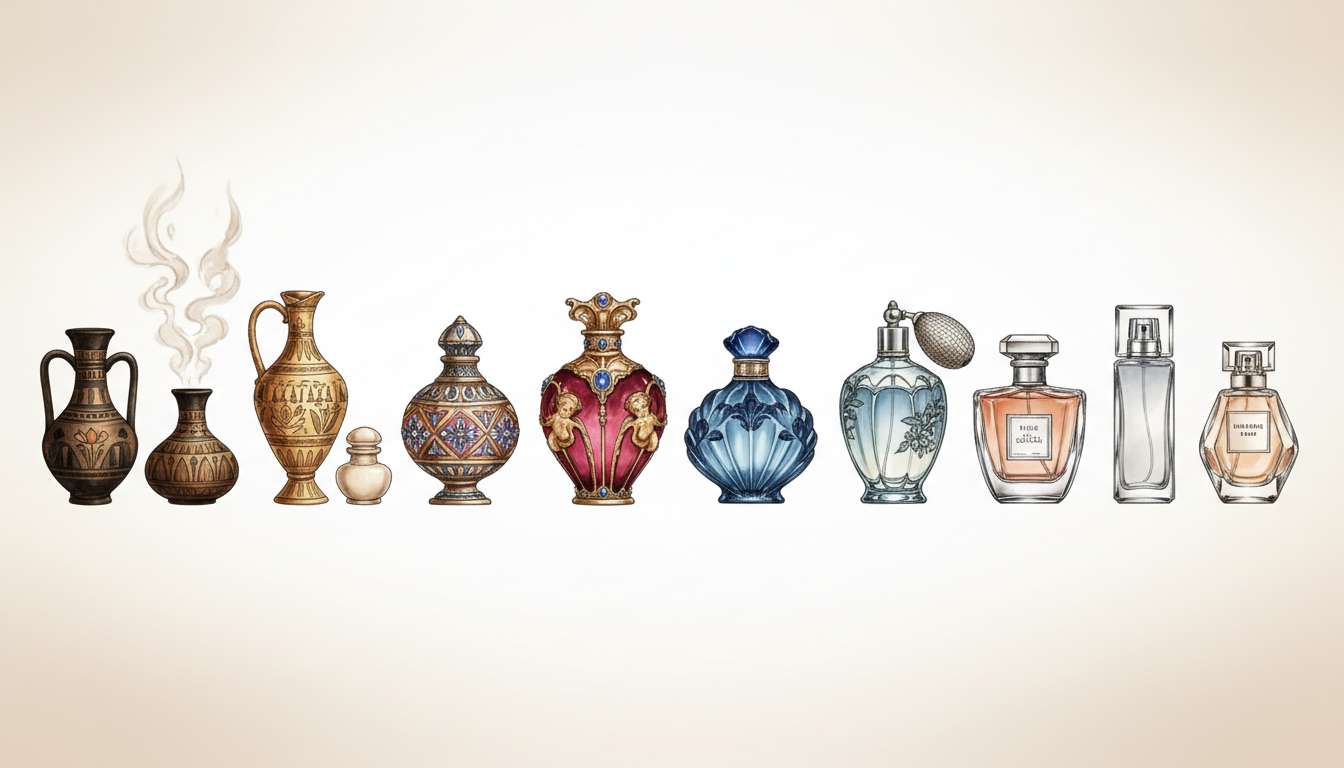
Perfume didn't start as a luxury good. It started as smoke sent up to gods who were assumed to be paying attention, and the trade has spent centuries quietly forgetting that. Almost everything you think of as modern — abstraction, synthetics, obsessive note-nerdery — was argued out long before your first bottle.
Scent and the sacred began as the same thing. In Mesopotamia — modern-day Iraq — priests burned aromatic resins like and to communicate with the gods. These weren't luxuries; they were spiritual infrastructure, believed to carry prayers from the mortal realm to the heavens. The word "perfume" comes from the Latin per fumum — "through smoke" — which gives you the whole origin story in two words.
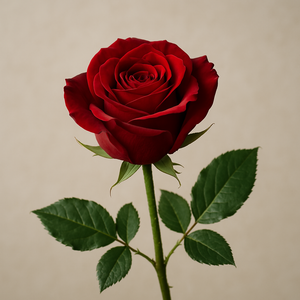
Egypt is where it became a craft with technique behind it. The ancient Egyptians were arguably the first true perfumers in history, building scented oils and unguents from , , myrrh and — for the temple, and for ordinary daily life. Cleopatra famously soaked the sails of her ship in rose water before meeting Mark Antony, so her arrival was announced by scent before sight. Call that the first fragrance campaign. It still outclasses most of them.
Then there's Kyphi, a blend of frankincense, myrrh, and wine-soaked raisins, burned at sunset in temples across the Nile Valley. It was believed to induce sleep, soothe anxiety and bring vivid dreams — a scent with a stated job, which is more than most bottles manage now. The formula was revered enough to be carved into the temple walls at Edfu and Philae, preserving the earliest known perfume recipes for eternity.
Nobody did, and the question is the wrong one. But the earliest known chemist in history was a woman named Tapputi, a Mesopotamian perfume-maker mentioned in a cuneiform tablet dating to around 1200 BCE. She developed techniques for distilling and filtering aromatic substances — methods that would form the foundation of perfumery for millennia. She gets a footnote where she's owed a chapter.
The Greeks took Egypt's love of fragrance and moved it off the altar and onto the body. Greek athletes anointed themselves with scented oils before competitions, and physicians like Hippocrates prescribed aromatic treatments for illness, making perfume one of the earliest forms of aromatherapy.
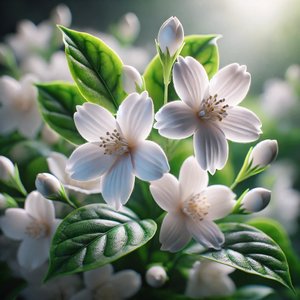
They favoured floral and herbal material: , , and marjoram. They also advanced enfleurage — pressing flowers into fats to capture their scent — which artisan perfumers still use, and which is one of the few ancient methods that survived contact with modern chemistry intact.
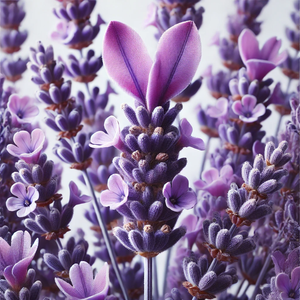
Rome had no interest in restraint. Romans perfumed their bodies, their homes, their horses, even their military flags. Emperor Nero reportedly spent the equivalent of millions on roses for a single banquet, where mechanical ceilings showered guests with petals and perfumed water. Roman women bathed in scented oils of — the word comes from the Latin lavare, meaning "to wash". If you want a precedent for fragrance as conspicuous spending, it's here. Not on social media.
The fall of Rome in 476 CE ended the run. As Europe went into the Dark Ages, perfumery moved eastward, where it picked up its most important upgrade.
This is the biggest single leap in the story, and it isn't close. Arab and Persian chemists made the breakthrough that everything since has merely refined: steam distillation.
In the 9th century, the Persian polymath Ibn Sina — known in the West as Avicenna — perfected the process of distilling petals into rose water, creating the first true essential oil extraction. It let perfumers capture the pure essence of a flower without the heavy animal fats earlier methods depended on.
Arab perfumery prized materials that are still cornerstones today: (agarwood), , , and . They travelled the Silk Road and the Incense Route, which made fragrance one of the most valuable commodities in the medieval world. Worth remembering the next time a designer house prints "oud" on a label and delivers a rumour of it.
Houses like , founded in the Sultanate of Oman, still work from that Arabian heritage, with compositions that don't apologise for their density. That's a warning as much as a recommendation: if you want a fragrance that sits quietly on you, this school isn't it.
Perfume came back to Europe through the Crusades and the trade networks of Renaissance Italy, and the city of Grasse in southern France became the perfume capital of the world — a title it still holds.
The cause was unglamorous: leather. In the 16th century Grasse was known for tanneries producing fine gloves, and the gloves smelled terrible. Italian-born Catherine de' Medici, Queen of France, demanded hers be perfumed, and an industry followed the complaint. Grasse's tanners became perfumers, and the surrounding fields of , and became the raw material of a fragrance empire.
By the 18th century, perfume was central to European aristocratic life. At Versailles, Louis XV's court was nicknamed la cour parfumée — the perfumed court — where a different fragrance was required for each day of the week. It reads as glamour now; at the time it was mostly a masking exercise. This period also produced the first modern eau de cologne, a light, citrus-forward blend built on , created by an Italian perfumer in Cologne, Germany, in 1709. Every fresh blue bottle on the shelf today is descended from it.
The 19th century turned a craft into a science. Organic chemistry made it possible to synthesise aromatic molecules in the laboratory, which freed perfumers from total dependence on naturals and handed them a palette nature couldn't supply.
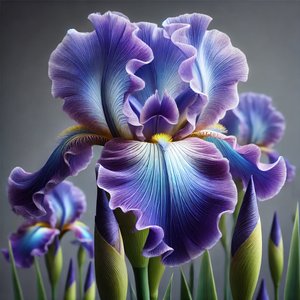
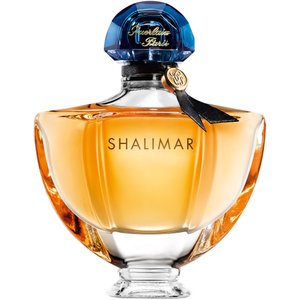
The house of , founded in Paris in 1828, sits at the centre of that shift. Aimé Guerlain created in 1889, widely considered the first modern perfume, by combining naturals like and with synthetics like coumarin and — abstract rather than imitative of nature. If you still think naturals are automatically the superior material, that argument has been losing since 1889. Later, Jacques Guerlain created in 1925, a groundbreaking oriental built on , and that remains an icon. Fair warning: if your idea of vanilla comes from modern gourmands, that incense-and-iris reading will land as smoke, not dessert.
Then came the release that reset the field. In 1921, launched , the first perfume to prominently use aldehydes — synthetic molecules that gave it an ethereal, abstract sparkle nothing else had. Ernest Beaux built it, and it broke the convention that a perfume should smell like an identifiable flower. It smelled like perfume itself, and that idea has been copied more than any other in the industry.
The early 20th century also brought , which claimed heritage dating to 1760 — note the word claimed, and treat heritage marketing accordingly — and the rise of fragrance as a pillar of fashion house branding. launched Miss Dior in 1947, tying perfume to haute couture. That's the business model the entire industry still runs on.
The second half of the 20th century put perfume in everyone's hands. Designer scents went global — 's , 's — and took seriously made scent to millions of wearers worldwide. Both are also victims of their own reach: Sauvage has become a signature-scent cliche, and Acqua di Giò invented a template that's been photocopied ever since. and pushed the blur between fashion and fragrance further, building scent identities as recognisable as their clothes.
By the early 2000s the pushback arrived. Niche perfumery — small-batch and ingredient-led — started challenging the mass-market designers. Buyers went hunting for rare materials like , and natural , valuing craftsmanship over celebrity endorsements. Houses like built international cult followings on exactly that. The honest caveat: niche has since become a price tier as much as a philosophy, and plenty of expensive bottles are thin under the packaging.
Online communities, review platforms and social media democratised scent education and turned perfume from a passive purchase into an active hobby. Enthusiasts now analyse note pyramids, compare varieties and argue about natural versus synthetic with the seriousness wine drinkers bring to terroir. One correction to the culture: the note pyramid gets more reverence than it has earned. It's a marketing document, not a formula.
Artificial intelligence is in the studio too. AI-assisted tools can analyse thousands of ingredient combinations and consumer preferences to suggest novel compositions, though the final creative decisions still rest with human noses. Good. Suggestion isn't taste, and a system optimising toward what already sold was never going to produce the next Jicky.
Sustainability is reshaping the supply chain, with brands investing in lab-grown molecules and ethical sourcing for precious materials like and . Biotechnology is making it possible to recreate extinct flowers and endangered woods without environmental harm, and that's the genuinely exciting part of the next chapter — not the marketing around it.
Personalisation is the other frontier. Advances in scent profiling and on-demand blending promise fragrance tailored to individual body chemistry and preference, a return of sorts to the bespoke perfumery of Renaissance royalty. Stay sceptical until the results justify the questionnaire.
What's certain is the appetite. Our love affair with scent is as old as civilisation itself and shows no sign of fading. From the smoke of ancient temples to the AI-designed molecules ahead, perfume stays one of the most intimate and powerful things a person can put on.
The verdict, if you want this history on skin rather than on a page: is where perfume stopped copying nature, is where it stopped pretending to, and is the blueprint every warm, resinous bottle has borrowed from since. Nearly everything after those three is variation.
Start with one of them on Fragplace. Then follow the raw materials back — , , — through the centuries that made them worth arguing about.
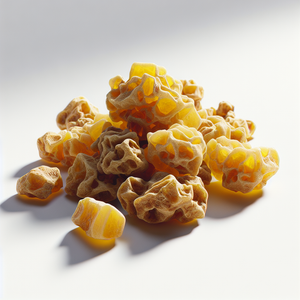 Frankincense
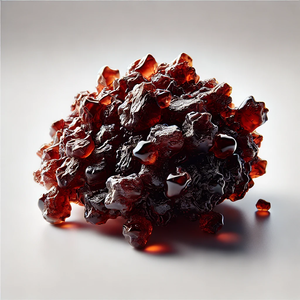 Myrrh
Myrrh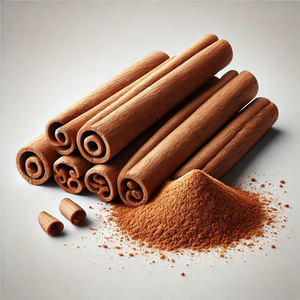 Cinnamon
 Rose
Rose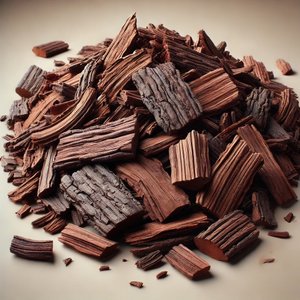 Sandalwood
 Guerlain
 Lavender
 Iris
Iris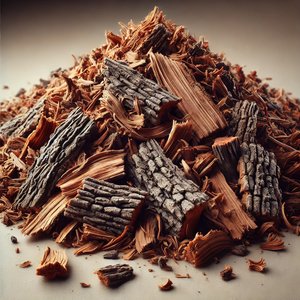 Agarwood (Oud)
 Jasmine
 Chanel
 Tom Ford
 Yves Saint Laurent
 Patchouli
 Dior
Dior Creed
Creed Vanilla
 Musk
Musk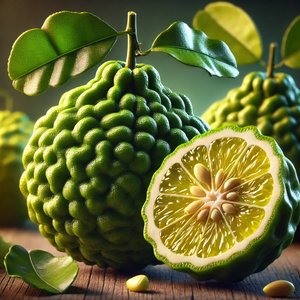 Bergamot
 Amouage
 Cedarwood
 Giorgio Armani
 Shalimar Eau de Parfum
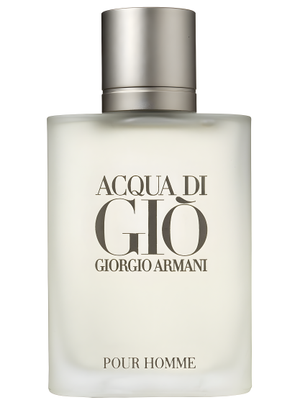 Acqua Di Gio
 Amber
Amber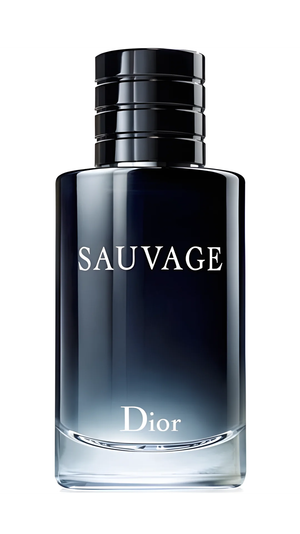 Sauvage
 Jicky
Jicky Incense
 Chanel No 5 Eau de Parfum