Articles
Get the Fragletter
New fragrance stories and picks in your inbox. Unsubscribe anytime.
New fragrance stories and picks in your inbox. Unsubscribe anytime.
New fragrance stories and picks in your inbox. Unsubscribe anytime.
New fragrance stories and picks in your inbox. Unsubscribe anytime.
Gendered perfume marketing has been running on fumes for a decade, and collectors clocked it first: over half of discerning fragrance collectors worldwide now prefer unisex scents. British buyers and collectors on every continent aren't choosing genderless blends to play it safe — they're choosing them because the good ones are simply more interesting than the pink-or-blue alternatives. Here's what deserves your money in 2025, and what's mostly noise.
Unisex isn't a scent style. It's the absence of an instruction — the juice stays what it is, and the box stops telling you who's allowed to wear it.
What matters is what perfumers do with that freedom. Fragrance is a personal art form, and once a brief drops the gender requirement, a composition can follow the materials instead of the demographic.
Fragrance notes that traditionally appeared gender specific now sit side by side without anyone blinking. Rose in a masculine, leather in a feminine: those were commercial rules, never olfactory ones.
The house recipe for the category is well established — balanced aromatic profiles, neutral sillage, and ingredients that read across gender spectrums, usually built on sandalwood, cedar and musk with more mobile top and middle notes above them. That spine works. It's also why so many launches billed as genderless end up smelling like siblings. Neutrality is easy; character is the hard part, and it's the only reason to buy.
Collecting unisex fragrances allows individuals to:
Top tip: Sample several compositions side by side and judge how each behaves on your own skin, not what the advertising says it's for.
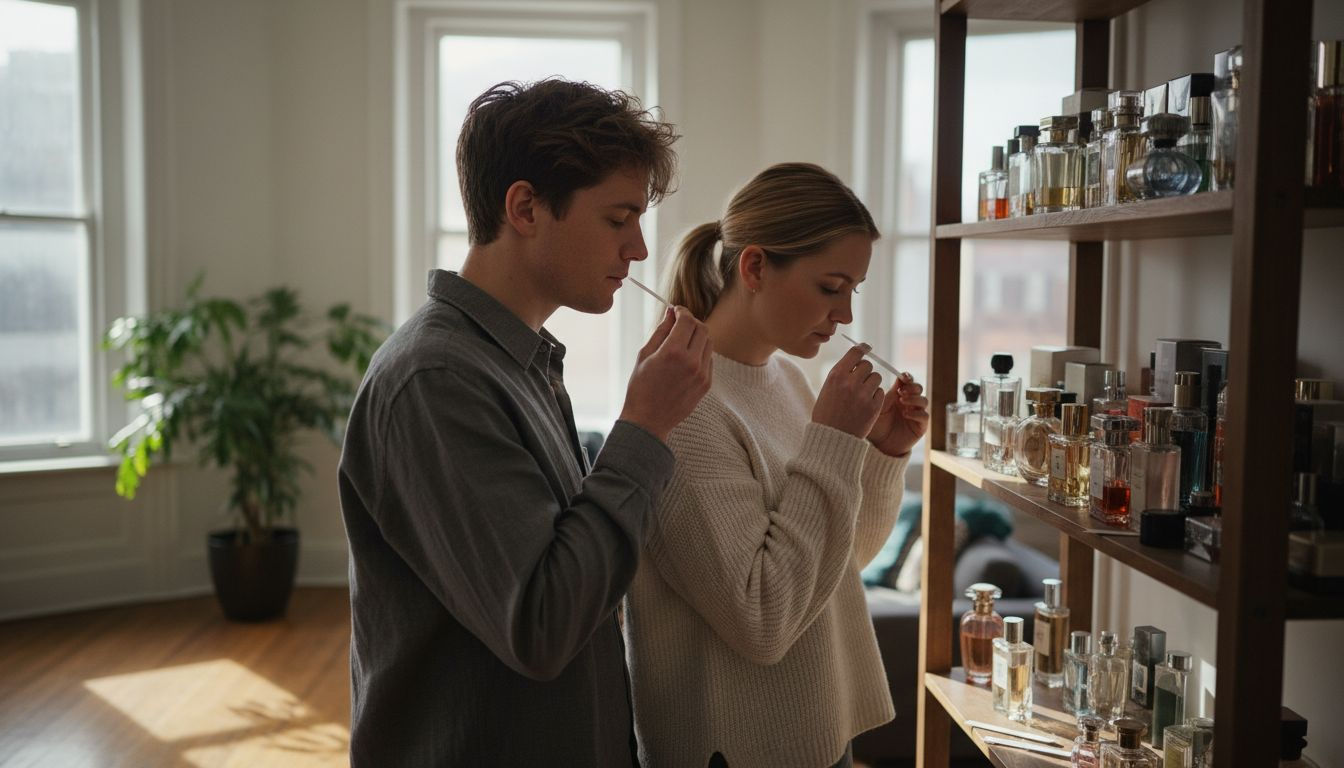
A signature scent isn't found by walking into a shop and spraying eight blotters. It's found by narrowing, deliberately, until one bottle keeps winning.
Perfumers have long recommended essential techniques for fragrance selection that turn random sampling into something closer to method. Learning how notes behave on your skin is the whole game.
Key Considerations for Signature Scent Selection:
Body Chemistry Matters
Body temperature, pH and your own natural scent all change how a formula develops. A fragrance that reads plush on one person can turn thin or sour on another. That's why the blotter lies and skin doesn't.
Spray small amounts on pulse points — wrists and neck — and give it several hours before passing judgement. Two fragrances per session, no more. Push past that and your nose stops discriminating, which is how people end up buying the loudest thing on the counter.
Emotional Connection is Crucial
Technical merit gets you a decent perfume. It doesn't get you a signature. Ask what you want the thing to do for you: sharpen you up, or settle you down. That intention is a far better filter than any gender label on the packaging.
Pro tip: Keep a fragrance journal tracking how each scent behaves on your skin. Your memory of a drydown is worse than you think.
Citrus spent years typecast as the cheap opening act — the bit that evaporates before anyone notices. In 2025 it's the headline, and it's the most genuinely genderless category on the shelf.
Perfumers are building innovative citrus fragrance profiles with unexpected botanical nuances and sustainable extraction methods, which keeps the fruit alive well past the first ten minutes.
Emerging Citrus Fragrance Characteristics:
The more interesting shift is regional. Japanese yuzu and Mediterranean blood orange are displacing the default lemon and bergamot, and the difference is real: yuzu brings a green, slightly bitter edge, blood orange a fleshier sweetness. Both give a composition somewhere to go that plain bergamot never did.
Sustainability and Innovation
Environmentally conscious extraction and support for local citrus growers now sit alongside the aroma as part of the pitch. Treat it as a genuine plus rather than the reason to buy — a badly built scent doesn't improve because the fruit was sourced responsibly.
Global Citrus Trends
Expect citrus to dominate unisex collections this year. It moves between the office, a weekend and an evening without recalibrating, which is a rare thing. The honest caveat: citrus rarely lasts. If you want presence at hour six, this isn't the family to lean on.
Pro tip: Try citrus compositions at different points in the day. What sparkles at nine in the morning can read flat by late afternoon.
Woods were sold as masculine for decades on nothing more than habit. Sandalwood is creamy and sweet; cedar is dry and pencil-sharp. Neither has a gender.
Contemporary perfumers are reimagining classic woody notes by pushing sandalwood and cedar against floral and spice accords. That contrast is what stops a woody scent turning into furniture polish — the florals lift it, the spice keeps it from going sleepy.
Characteristics of Next Generation Woody Fragrances:
Sustainability and Ethical Production
Responsibly sourced wood extracts matter more here than in most families, given how much pressure the raw materials have been under. Houses that name their sources deserve the credit.
Global Woody Fragrance Trends
The 2025 woody market has moved decisively towards inclusivity, softening the old deep earthy undertones with more nuanced material around them. If you've always found woods too austere, the current crop is friendlier. If you liked the austerity, some of these will feel sanded down.
Pro tip: Test woody compositions across different daily contexts. A wood that works at a desk can feel heavy-handed in a warm room.
Aquatics earned their bad reputation honestly in the nineties: one calone accord, repeated forever. The 2025 versions are a different proposition.
Perfumers are reimagining oceanic fragrance profiles with marine mineral notes rather than generic sea breeze. Sea salt, zinc accord and marine botanical extracts give the genre grit and shadow — salt adds a skin-like saltiness, zinc a cold metallic edge that keeps things from going soapy.
Emerging Aquatic Fragrance Characteristics:
Sensory Landscape of Marine Fragrances
The better modern aquatics blend oceanic minerals with earthen and botanical undertones, which is what gives them a middle and an end rather than a bright opening and nothing after. Sustainability and emotional resonance now shape the design brief alongside the aroma itself.
Global Aquatic Fragrance Trends
The direction of travel is complexity and mindfulness: freshness with something introspective underneath. Worth saying plainly — this family remains the easiest to get wrong, and a lazy aquatic still smells like a hotel bathroom. Buy the ones with mineral depth, skip the rest.
Pro tip: Apply a small amount to pulse points and watch it over several hours. The layers in a good aquatic only show up late.
Layering is either the most creative thing you can do with a collection or the fastest way to ruin two perfectly good bottles. The difference is planning.
Collectors can explore layering techniques that turn a shelf into a set of components. It works when you understand scent profiles, complementary notes and your own skin.
Essential Layering Principles:
Strategic Layering Techniques
Build from the bottom. A grounding fragrance with amber or sandalwood goes down first, then a contrasting citrus or light floral on top for lift. Two heavy scents stacked together don't make something richer, they make something muddy.
Practical Layering Guidelines
Order matters: heaviest to lightest, every time. Oils and body lotions make excellent first layers because they hold the sprays that follow. Adjust the ratios rather than the cast — one extra spray of the top layer changes the result more than swapping the bottle.
Body Chemistry Considerations
A combination that sings on someone else can collapse on you. There's no shortcut past patient trial and honest observation.
Pro tip: Document your layering experiments — exact combinations, ratios, and how each blend shifts through the day. The successful pairings are hard to reconstruct from memory.
Most collections aren't built. They accumulate — three near-identical woods and nothing to wear in August.
Start by browsing explore comprehensive fragrance selections with a gap in mind rather than a wishlist. A good collection covers ground; it doesn't repeat itself in slightly different bottles.
Essential Collection Building Principles:
Fragrance Family Diversity
Aim for four to six fragrances spread across distinct families — citrus, woody, floral, oriental, fresh and aquatic. That's enough for real coverage without duplication, and it forces you to answer the useful question before buying: what does this do that something on my shelf doesn't already?
Strategic Acquisition Approach
Quality over quantity, and it isn't close. Buy things with a point of view, ones that hold up alone and behave in a layer. Travel and sample sizes first — they cost little and they've saved plenty of collectors from an expensive full bottle they wore twice.
Emotional and Personal Resonance
Classification only takes you so far. Each bottle should mean something to you, or it becomes shelf decoration. Your collection is a narrative told in notes.
Pro tip: Log each acquisition with your impressions, layering potential and emotional associations. Patterns emerge, and they'll shape what you buy next.
Here's the whole argument condensed into one table.
If you take one recommendation from all of this: start with citrus. It's the category doing the most interesting work in 2025, it costs the least to get wrong, and the yuzu and blood orange compositions give you something with actual character rather than generic freshness. Add a wood next, for the days citrus can't carry, and layer the two before you spend on a third bottle.
Fragplace exists for exactly this stage — detailed fragrance information, honest reviews from people with nothing to sell you, and discussions with perfumers who know why a zinc accord works. Track your layering experiments, keep your journal in one place, and let daily scent reminders and new releases come to you.
Browse All Fragrances to find the gap in your collection, then join the community at Fragplace.com and see what other collectors made of it before you commit to a full bottle.
Look for balanced aromatic profiles, neutral sillage and ingredients that read universally. Sandalwood and citrus are the reliable building blocks — but insist on a composition that does something with them rather than just stacking them.
Apply testers to pulse points and follow them for several hours. Two fragrances per session, maximum. Beyond that your nose gives up and every judgement you make is worthless.
Spread across citrus, woody, floral and aquatic. Four to six fragrances from different families covers most occasions and moods without three of them doing the same job.
Heavier fragrance first as the base, lighter one on top. Then adjust the ratio — one more spray of the top layer shifts the result more than swapping in a different bottle.
Citrus blends and woody aromas are where the innovation is, both increasingly built on sustainable sourcing. Worth following, provided you buy the ones with character rather than the ones with the best story.
| Takeaway | Explanation |
|---|
| 1. Embrace unisex fragrances for personal expression | Unisex fragrances allow collectors to express their individuality without being confined by gendered marketing or societal norms. |
| 2. Understand your body chemistry when selecting scents | Individual skin chemistry affects how fragrances develop, making personal testing essential for finding your ideal scent. |
| 3. Create a balanced and diverse fragrance collection | A well-rounded collection should include various fragrance families, ensuring versatility and personal expression across different contexts. |
| 4. Experiment with layering to craft unique scents | Layering different fragrances can create personalised aromatic experiences, reflecting your mood and individual taste. |
| 5. Explore new citrus and woody blends for 2025 | Citrus and woody fragrances are trending in 2025, offering fresh, versatile options that resonate with contemporary fragrance collectors. |
| Category | Insight | Details |
|---|
| Unisex Fragrance Concept | Personal Expression | Fragrance transcends gender stereotypes reflecting individuality and art. |
| Selection Tips | Personal Chemistry | Test scents on pulse points to observe interaction and evolution. |
| Emerging Trends | Citrus Blends | Featuring rare varieties and sustainable production methods appealing to diverse preferences. |
| Woody Aromas | Innovative Profiles | Combining traditional and surprising notes for universally appealing fragrances. |
| Aquatic Scents | Sensory Evolution | Offering sophisticated profiles influenced by oceanic themes and sustainability. |
| Layering Techniques | Creative Combos | Combine scents strategically for unique personalised expressions. |
| Building Collections | Balanced Approach | Include diverse fragrance families and prioritise emotional resonance. |