Articles
Hol dir den Fragletter
Neue Duftgeschichten und Empfehlungen in deinem Postfach. Jederzeit abbestellbar.
Neue Duftgeschichten und Empfehlungen in deinem Postfach. Jederzeit abbestellbar.
Neue Duftgeschichten und Empfehlungen in deinem Postfach. Jederzeit abbestellbar.
Neue Duftgeschichten und Empfehlungen in deinem Postfach. Jederzeit abbestellbar.
Versace Eros ist der Duft, der dem Signature-Move entspricht, den die Hälfte des Raumes bereits kopiert hat – und die Frage nach EDP oder EDT ist der Punkt, an dem die meisten Käufer ins Stocken geraten. Fast 70 Prozent der Duftliebhaber sagen, dass die Unterschiede zwischen EDT und EDP die tägliche Nutzung und die Wahl des Anlasses direkt beeinflussen. Die beiden Flaschen sehen im Regal nahezu identisch aus, also hier ist, was sie tatsächlich trennt.
Eros wurde nie entwickelt, um subtil zu sein, und so zu tun, als ob, hilft ihm nicht. Der mediterran geprägte Kern besteht aus Minze, grünem Apfel und Tonkabohne – eine Kombination, die für einige Minuten hell wirkt, bevor die Tonkabohne es irgendwo üppig und süß zieht. Dieser Wechsel ist der gesamte Reiz. Das ist auch der Grund, warum die Linie so stark polarisiert: Die Leute tragen es entweder bis zum Ende oder können nicht in seiner Nähe sein.
Das EDT ist die leichtere Auslegung dieser Idee, mit schärferem Zitrus an der Spitze. Das EDP nimmt denselben Entwurf und verstärkt ihn – dichter, langsamer, eindringlicher in der Basis. Es ist wichtig, dies klar zu sagen: Es sind nicht zwei verschiedene Parfums. Es ist ein Parfum in zwei Volumina, also wenn der Minz- und Apfelauftakt Sie bereits abschreckt, wird das EDP es nicht retten. Viele Menschen streiten darüber, welche Version das "echte" Eros ist, und Sie werden feststellen, dass diese Diskussion in Duftdiskussionen geführt wird.
Bevor Sie sich festlegen: Besorgen Sie sich eine Probe oder einen Decant von beiden, anstatt blind 100 ml zu kaufen. Die Körperchemie bringt diese beiden bei manchen Menschen näher zusammen und bei anderen weiter auseinander, und das kann Ihnen kein Datenblatt sagen.
Die Konzentration ist hier die ganze Geschichte, und sie ist weit weniger mysteriös, als die Werbung es erscheinen lässt. Das Verständnis der Duftkonzentrationsstufen legt die Mechanik hinter den beiden Formulierungen dar.
Eau de Parfum liegt bei 15–20 % Duftölen. Deshalb hält es ein volleres, mehrschichtiges Duftprofil für 6–10 Stunden. Eau de Toilette liegt bei 5–15 %, was Ihnen einen helleren, dünneren Auftakt gibt, der normalerweise nach 3–5 Stunden nachlässt.
Mehr Öl bedeutet jedoch nicht nur lautere Düfte – es verändert auch, was Sie tatsächlich wahrnehmen. EDPs geben dem holzigen, orientalischen und moschusartigen Basismaterial Raum, sich zu entfalten, was sie für Abende und Räume, in denen Sie Präsenz zeigen möchten, geeignet macht. EDTs setzen den klaren Auftakt in den Vordergrund und treten dann zurück. Im Juli ist diese Kürze ein Merkmal. Im Januar ist es eine Belästigung.
Wenn Sie am Ende beide besitzen, ist es ein legitimer Trick, das EDT über das EDP zu sprühen: Sie bekommen den scharfen Auftakt zurück, ohne die Basis zu verlieren. Es ist ein personalisiertes Profil, das Sie je nach Tageszeit anpassen können.
Hier lebt die Geldfrage. Die Eau de Toilette hat eine Projektion von etwa 6 bis 8 Stunden, öffnet laut, bevor sie sich auf Vanille, Zedernholz und Vetiver niederlässt – eine Basis, die wärmer ist, als die Kopfnoten erwarten lassen. Die Eau de Parfum dehnt das auf 8 bis 10 Stunden aus und setzt stärker auf dasselbe Material, was je nach Raum entweder der Punkt oder das Problem ist.
Eine ehrliche Warnung: Die angegebenen Zahlen für das EDT schwanken. Gehen Sie nach den Konzentrationsrichtlinien und Sie sehen 3 bis 5 Stunden; gehen Sie danach, wie die Leute tatsächlich berichten, dass sie es tragen, und 6 bis 8 Stunden tauchen stattdessen auf. Behandeln Sie jede einzelne Zahl als Bereich, nicht als Versprechen.
Im Alltag ist die Trennung klar. Das EDT eignet sich für Büros, Tagespläne und warmes Wetter, wo ein schwererer Sprühstoß zu viel wäre. Das EDP ist das für Abende, formelle Anlässe und überall dort, wo der Duft leicht vor Ihnen ankommen soll. Sillage – die Spur, die Sie hinterlassen – bleibt in beiden stark, sodass Zurückhaltung beim Sprühen wichtiger ist als die Konzentration, die Sie gewählt haben.
Wo sprühen: Pulsstellen, Handgelenke und Nacken. Körperwärme tut die Arbeit, um die Basis über den Tag freizusetzen.
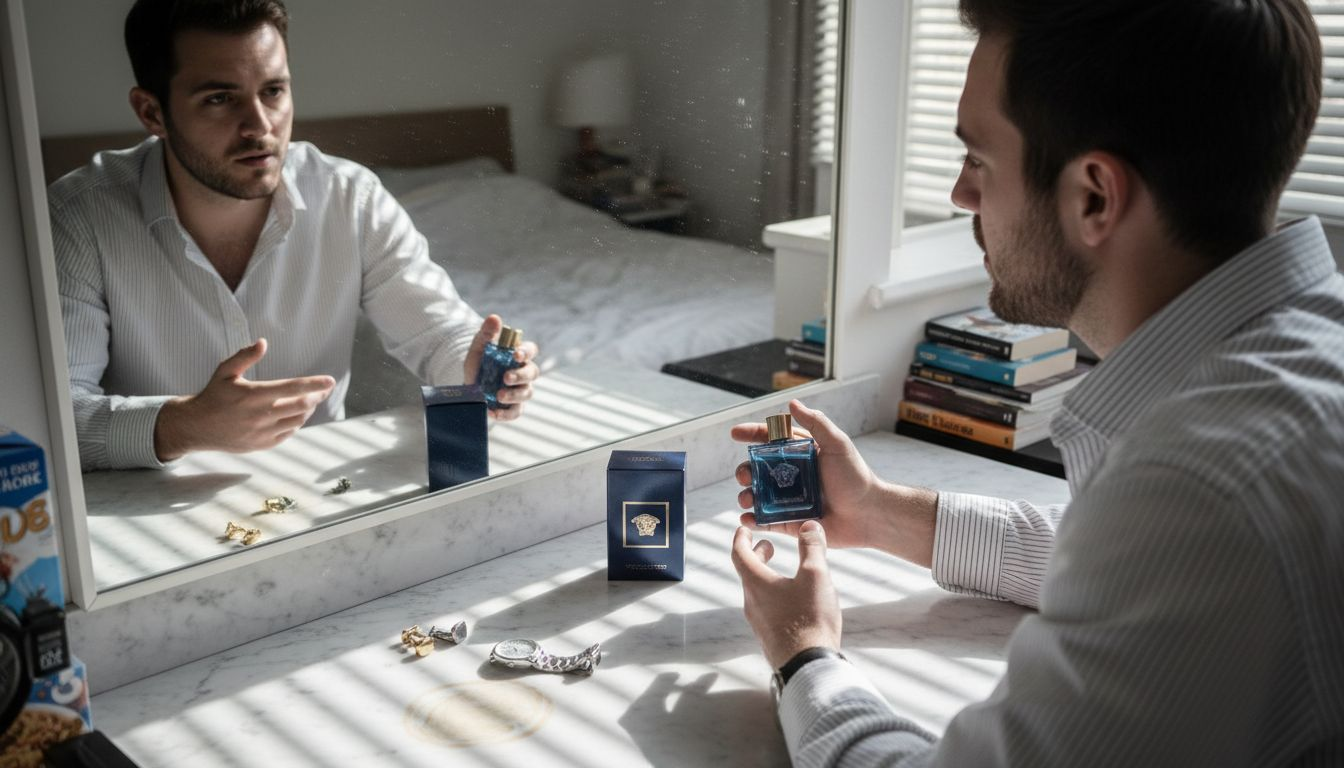
Dasselbe Flasche, zweimal – und es ist eines der erkennbarsten Objekte auf einem Herrentisch. Sowohl die Eau de Toilette als auch die Eau de Parfum kommen in dem identischen quadratischen Flakon aus tiefem türkisfarbenem Glas, mit dem Versace Medusa-Logo in der Mitte geprägt und auf dem goldakzentuierten Deckel wiederholt. Die Farbe verkauft viel.
Der Haken ist praktisch: Da die beiden visuell so nah beieinander liegen, sind sie leicht im Geschäft oder im eigenen Schrank zu verwechseln. Lesen Sie das Etikett, bevor Sie sprühen, und lesen Sie es erneut, bevor Sie bezahlen, denn das EDP hat den höheren Preis aufgrund seiner höheren Ölkonzentration.
Die Größen reichen von 50 ml, 100 ml und gelegentlich 200 ml für beide. Die 200 ml sind nur ein Schnäppchen, wenn Sie sich sicher sind – das ist viel Eros, mit dem man feststecken kann. Abgesehen von der Kennzeichnung und einem leichten Unterschied im Verpackungsgewicht gibt es nichts anderes, um sie visuell zu unterscheiden.
Probieren Sie es aus, bevor Sie die volle Größe kaufen. Es ist günstiger als eine Flasche, die Sie bereuen.
Hier ist die kurze Version, nebeneinander:
Beginnen Sie mit Ihrer Haut, denn sie entscheidet mehr als das Etikett. Ölige Hauttypen halten Düfte besser und projizieren sie weiter, sodass das EDT möglicherweise ausreicht. Wenn Ihre Haut trocken ist, ist das Eau de Parfum der klügere Kauf – der höhere Ölanteil gibt dem Duft etwas, an dem er haften kann.
Die Saison ist der nächste Filter, und es ist keine knappe Entscheidung. Das EDT ist für warme Monate gebaut, wo es frisch bleibt, anstatt in der Hitze schwerfällig zu werden. Das EDP verdient seinen Platz in kühlerem Wetter, wenn die tiefere Basis Mäntel und Innenluft hat, mit denen es arbeiten kann, anstatt gegen sie zu kämpfen.
Dann gibt es, wie Sie tatsächlich Ihre Woche verbringen. Wenn der Großteil Ihres Tragens am Schreibtisch stattfindet, ist die zurückhaltendere Projektion des EDT die rücksichtsvollere Wahl, und Ihre Kollegen werden Ihnen dafür danken. Wenn Sie einen Duft für Abende und Anlässe kaufen, bei denen es darum geht, bemerkt zu werden, ist das EDP die richtige Wahl. Die Körperchemie verwässert all dies immer noch – die Stoffwechselrate und Hormone beeinflussen, wie sich jeder Duft entwickelt – weshalb einige Menschen einen ganzen Tag mit dem EDT auskommen und andere das EDP benötigen, um über das Mittagessen hinauszukommen.
Geben Sie ihm Zeit. Machen Sie einen Patch-Test, lassen Sie es dann mehrere Stunden in Ruhe und sehen Sie, wo es landet, bevor Sie entscheiden.
Verwenden Sie dies, um Ihre Situation mit der richtigen Flasche abzugleichen:
Hier ist das Urteil. Wenn Sie eine Flasche kaufen und möchten, dass sie den Großteil des Jahres abdeckt, nehmen Sie das EDP – die zusätzlichen Stunden und die vollere Basis geben Ihnen mehr Parfum für Ihr Geld, und es bewältigt kaltes Wetter, das das EDT einfach nicht kann. Kaufen Sie stattdessen das EDT, wenn Ihr Tragen hauptsächlich tagsüber, hauptsächlich bei der Arbeit und hauptsächlich im Sommer stattfindet, oder wenn Sie bereits vermuten, dass Eros in voller Stärke zu süß für Sie ist. Und wenn Sie noch nie einen von beiden gerochen haben, kaufen Sie vorerst keinen. Dies ist ein polarisierender Duft, der ein bisschen zum Klischee des Signature-Duftes geworden ist, und genau deshalb ist es wert, ihn zu testen, anstatt dem Hype zu vertrauen.
Fragplace existiert für den Teil, der vor dem Kauf kommt: detaillierte Duftprofile, ehrliche Bewertungen und eine Community, die Ihnen sagt, wann etwas überbewertet ist. Notenanalyse und echte Benutzererfahrungen schlagen Schätzungen immer.
Beginnen Sie auf Fragplace und vergleichen Sie die beiden Eros-Profile nebeneinander, bevor Sie etwas ausgeben. Nehmen Sie dann Ihre Shortlist in die Duftdiskussionen und sehen Sie, was Leute, die beide Flaschen erlebt haben, zu sagen haben.
Konzentration und alles, was daraus folgt. Das EDP hat 15-20 % Duftöle für einen reicheren, langanhaltenden Duft; das EDT liegt bei 5-15 %, was Ihnen ein frischeres, leichteres Profil gibt, das schneller verbraucht wird.
Erwarten Sie 3-8 Stunden von der Eau de Toilette und 6 bis 10 Stunden oder mehr von der Eau de Parfum. Die Hautchemie und wie stark Sie es auftragen, werden beide Zahlen beeinflussen.
Die Eau de Toilette. Sie ist leichter und belebender, was Sie in lässigen Umgebungen und warmem Wetter wollen – das EDP kann um 9 Uhr morgens zu viel sein.
Ja, und das ist einer der besseren Gründe, beide zu besitzen. Die Kombination der beiden Konzentrationen gibt Ihnen ein personalisiertes, geschichtetes Profil, das Sie je nach Anlass und Stunde anpassen können.
| Punkt | Details |
|---|
| Duftvarianten | Versace Eros bietet zwei Haupttypen: Eau de Toilette (EDT) ist leichter und frischer, während Eau de Parfum (EDP) tiefer und langanhaltender ist. |
| Haltbarkeit und Nutzung | EDT hält typischerweise 3-8 Stunden, ideal für den täglichen Gebrauch in wärmeren Monaten; EDP hält 6-10 Stunden, geeignet für den Abendgebrauch und kältere Bedingungen. |
| Hautverträglichkeit | Ölige Hauttypen profitieren von der Haltbarkeit sowohl von EDP als auch von EDT, während trockene Haut EDP für eine bessere Haftung bevorzugen kann. |
| Testen vor dem Kauf | Es ist ratsam, beide Varianten auf Ihrer Haut zu testen, da die Körperchemie die Duftleistung erheblich beeinflussen kann. |
| Aspekt | Eau de Toilette (EDT) | Eau de Parfum (EDP) |
|---|
| Ölkonzentration | 5–15% | 15–20% |
| Haltbarkeit | 3–8 Stunden je nach Haut | 6–10 Stunden, oft länger |
| Duftintensität | Leichter, frisch, energetisch | Tiefer, reicher, intensiver |
| Ideale Saison | Frühling, Sommer, warmes Wetter | Herbst, Winter, kühlere Monate |
| Anlass | Tagsüber, lässig, Büro | Abend, formell, besonders |
| Typischer Preisbereich | Niedriger | Höher aufgrund der Konzentration |
| Lebensstilfaktor | Empfohlener Typ | Grund |
|---|
| Ölige Haut | EDT oder EDP | Beide halten gut, aber EDP bietet zusätzliche Haltbarkeit |
| Trockene Haut | EDP | Höhere Öle verbessern die Hauthaftung und -dauer |
| Heißes Wetter | EDT | Leichter Duft verhindert überwältigende Projektion |
| Formelle Anlässe | EDP | Stärkeres Profil eignet sich für abendliche und gesellschaftliche Anlässe |