Articles
Hol dir den Fragletter
Neue Duftgeschichten und Empfehlungen in deinem Postfach. Jederzeit abbestellbar.
Neue Duftgeschichten und Empfehlungen in deinem Postfach. Jederzeit abbestellbar.
Neue Duftgeschichten und Empfehlungen in deinem Postfach. Jederzeit abbestellbar.
Neue Duftgeschichten und Empfehlungen in deinem Postfach. Jederzeit abbestellbar.
Der "Nase" ist der romantischste Beruf in der Duftbranche und zugleich der am meisten missverstandene. Mehr als 1.500 britische Parfümeure prägen globale Dufttrends, und ein großer Teil dieser Arbeit geschieht innerhalb von Einschränkungen — Chemie, Vorschriften, ein Brief, der von jemandem im Marketing verfasst wurde. Hier ist, was der Beruf tatsächlich von einer Person verlangt und warum es die Produkte beeinflusst, die letztendlich im Regal landen.
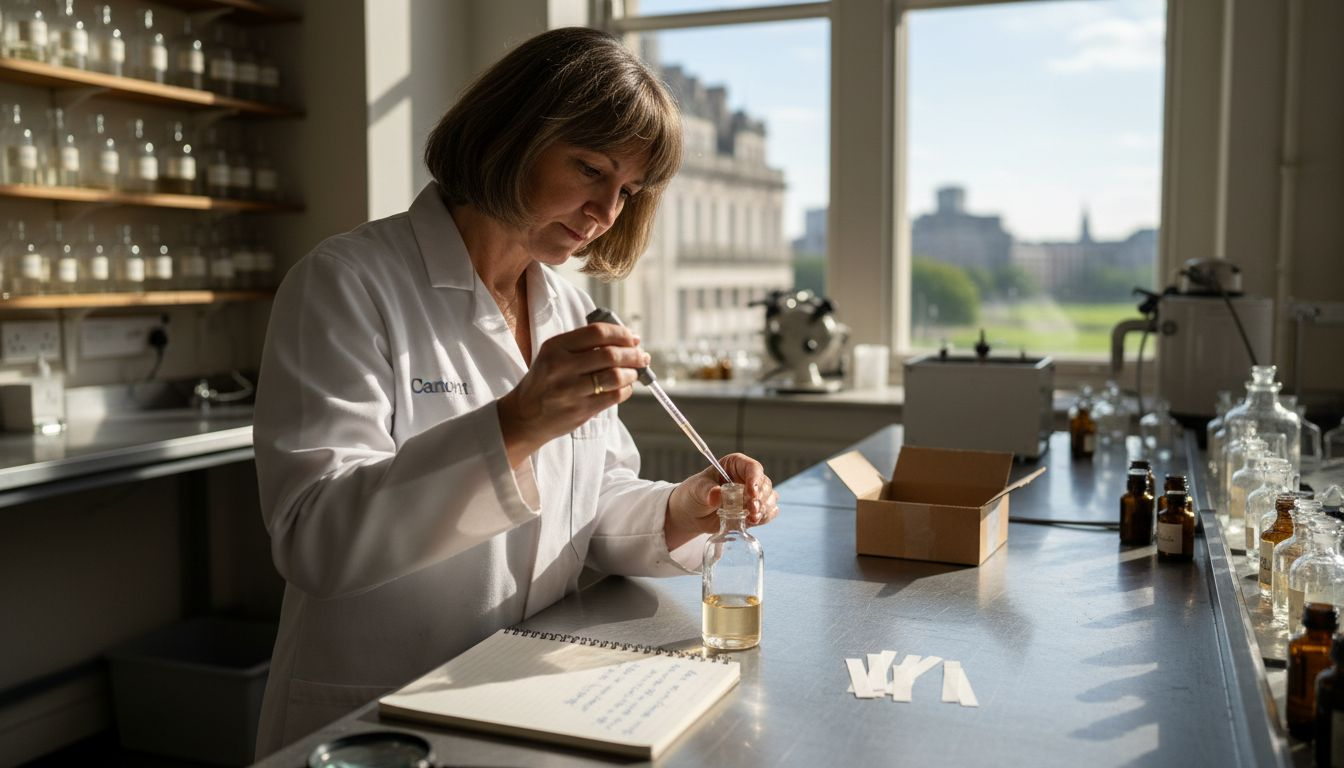
Jemanden als "Nase" zu bezeichnen, lässt den Beruf wie einen Partytrick erscheinen. Das ist er nicht. Ein Parfümeur arbeitet an der Schnittstelle zwischen Kunstfertigkeit und wissenschaftlicher Präzision und nutzt außergewöhnliche olfaktorische Fähigkeiten, um abstrakte Emotionen und sensorische Erfahrungen in aromatische Kompositionen zu verwandeln, die zusammenhalten — was ein funktionierendes Verständnis von Inhaltsstoffen, chemischen Wechselwirkungen und sensorischer Wahrnehmung erfordert, nicht nur guten Geschmack.
Die Karikatur des "angenehme Düfte mischen" tut dem Beruf keinen Gefallen. Chemie ist die Eintrittsvoraussetzung, denn ohne sie kann man nicht vorhersagen, wie aromatische Verbindungen interagieren und sich im Laufe der Zeit entwickeln. Der Rest der Woche ist weniger romantisch: Formulierungen entwickeln, Produkttests bewerten, mit Marketingteams zusammensitzen, um herauszufinden, ob ein Duft bei den Menschen ankommt, für die er gedacht ist. Die Ausbildung erfolgt in der Regel über eine spezialisierte Duftschule oder eine Lehre in einem großen Duftunternehmen, wo technische Fähigkeiten und künstlerischer Ausdruck als dasselbe Fach unterrichtet werden, anstatt als gegensätzliche.
Wo Parfümeure dies tun, variiert — multinationale Duftunternehmen auf der einen Seite, unabhängige Studios auf der anderen. Der Auftrag bleibt im Großen und Ganzen derselbe: Inhaltsstoffe im Detail recherchieren, mit neuartigen Kombinationen experimentieren, globale Dufttrends verfolgen und die Sicherheits- und Regulierungsstandards einhalten. Dieser letzte Punkt findet nie Eingang in die Markenstory, und er prägt mehr fertige Parfums, als Inspiration es je könnte. Wenige andere Rollen verlangen Kreativität, technisches Können und sensorische Sensibilität in einer Person.
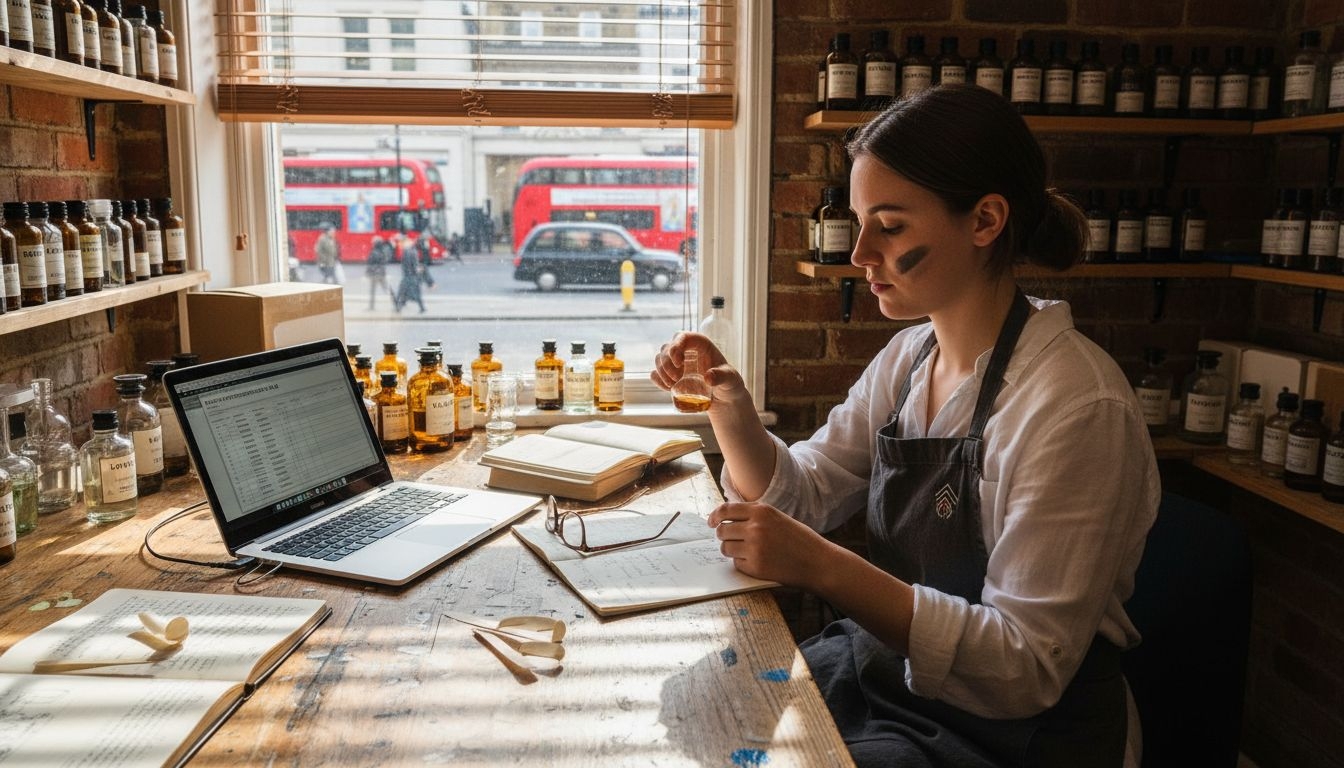
Pro-Tipp: Systematisch probieren und aufschreiben. Verfolgen, wie einzelne Noten über die Stunden interagieren und sich verändern — dieses Protokoll lehrt dich weit mehr als jede einzelne spektakuläre Flasche.
Hier gibt es keine einzige Leiter, und die Version, die sich die Leute vorstellen — Talent entdeckt, Genie folgt — existiert kaum. Die meisten Wege beginnen mit einer spezialisierten Ausbildung, oft einem anspruchsvollen Programm in Chemie, Biologie oder einem speziellen Karriereweg in der Parfümerie. Dann wählst du deinen Kompromiss: Unternehmensstruktur oder den unternehmerischen Ansatz.
Unternehmensparfümeure sitzen in großen Duftunternehmen oder multinationalen Kosmetikunternehmen und entwickeln charakteristische Düfte für etablierte Marken. Die technische Hürde ist hoch und die diplomatische noch höher, denn die Arbeit besteht darin, einen komplexen Marketingbrief in etwas zu übersetzen, das wie eine Idee riecht. Unabhängige Parfümeure tauschen diese Sicherheit gegen kreative Freiheit und führen Nischenmarken oder beraten mehrere Kunden gleichzeitig. Andere spezialisieren sich — feine Düfte, funktionale Parfümerie für Haushaltsprodukte, therapeutische Duftkompositionen. Niemand warnt dich zu Beginn, dass funktionale Arbeit dort ist, wo viel des härtesten technischen Handwerks tatsächlich lebt.
Der Aufstieg ist hierarchisch: Zunächst Junior-Rollen, dann Senior-Parfümeur, dann Chefparfümeur, Duft-Kreativdirektor oder technische Forschung. Seitwärtsbewegungen sind ebenso möglich und oft klüger — Duftbewertung, Inhaltsstoffforschung, technischer Vertrieb, akademische Positionen in olfaktorischen Wissenschaften. Die Fachleute, die am weitesten kommen, verbinden wissenschaftliche Präzision mit einem echten Standpunkt zu komplexen aromatischen Kompositionen. Eines ohne das andere kommt zum Stillstand.
Die folgende Tabelle fasst typische Karrierewege und Arbeitsumgebungen für verschiedene Arten von Parfümeuren zusammen:
Pro-Tipp: Baue eine Referenzbibliothek auf und behandle sie wie ein Laborbuch — sammle Duftproben und dokumentiere dann ihre chemischen Zusammensetzungen und sensorischen Eigenschaften, anstatt dich auf dein Gedächtnis zu verlassen.
Inspiration ist der kleinste Teil davon. Die Parfümerstellung basiert auf einem tiefen Verständnis der Rohstoffe — was jeder tut, wie er sich neben den anderen verhält, wie er sich verändert — und wird erst dann zur emotionalen Erzählung. Lass die Materialien weg und du erhältst ein schönes Konzept, das nach nichts riecht.
Chemie ist nicht verhandelbar, denn stabile, harmonische Formulierungen hängen vom Verständnis molekularer Wechselwirkungen ab. Emotionale Intelligenz hat das gleiche Gewicht: Der Brief ist in der Regel eine Erinnerung, eine Stimmung oder eine kulturelle Erzählung, und jemand muss das in präzise aromatische Mengen umwandeln. Kreativität wird hier permanent durch regulatorisches Wissen gemildert, und wenn du das deprimierend findest, ist dies nicht der Beruf für dich. Die künstlerische Vision muss den Kontakt mit Sicherheitsanforderungen überstehen, nicht umgekehrt.
Dann gibt es den Teil, der in den schmeichelhaften Profilen weggelassen wird: Zusammenarbeit. Parfümeure arbeiten mit Marketingteams, Forschern und Kunden zusammen, und eine Komposition kann immer wieder überarbeitet werden, weil diese Parteien unterschiedliche Dinge wollen. Kommunikation und Anpassungsfähigkeit sind in diesem Raum keine weichen Extras — sie entscheiden, wessen Vision überlebt. Die stärksten Parfümeure verfügen gleichzeitig über technisches Wissen und menschliches Gespür, und letzteres fehlt oft.
Pro-Tipp: Baue deinen sensorischen Wortschatz bewusst auf — erkunde und dokumentiere Duftnoten, bis dein olfaktorisches Gedächtnis beginnt, subtile Nuancen und Kombinationen von selbst zu erkennen.
Dies ist der am wenigsten glamouröse Teil des Jobs und arguably der folgenreichste. Parfümeure arbeiten innerhalb eines dichten Rahmens von rechtlichen und regulatorischen Anforderungen, die Produktsicherheit, Schutz des geistigen Eigentums, Umweltverträglichkeit und Verbraucherschutz umfassen. Verantwortungsvolle Duftentwicklung bedeutet all das, nicht nur den ästhetischen Teil mit den danach angehefteten Vorschriften.
Der Schutz des geistigen Eigentums ist der Punkt, an dem Ethik wirklich unangenehm wird. Duftkompositionen benötigen sorgfältige Dokumentation und möglicherweise Patentschutz, und Fachleute müssen eine Grenze zwischen einer innovativen Formulierung und einer abgeleiteten ziehen — eine Grenze, die der Markt nie scharf ziehen wollte. Ethische Beschaffung hat sich von der Sprache in Pressemitteilungen zu einer Erwartung entwickelt, wobei die Branche auf nachhaltige Beschaffung, transparente Lieferketten und umweltverantwortliche Materialauswahl hinarbeitet. Das bringt strenge Regeln für die Gewinnung natürlicher Inhaltsstoffe, die Entwicklung synthetischer Verbindungen und die vollständige Rückverfolgbarkeit von Duftkomponenten mit sich.
Die Verbrauchersicherheit hat Vorrang vor allem anderen. Strenge Testprotokolle, umfassende Kennzeichnungsanforderungen und strikte Einhaltung internationaler Sicherheitsstandards sind nicht verhandelbar, Punkt. Parfümeure müssen auf potenziell allergene Verbindungen achten, die Konzentrationsniveaus der Inhaltsstoffe genau richtig einstellen und transparent darüber sein, was sich in der Flasche befindet. Tierversuchsfreie Produktion, verantwortungsvolle Umweltpraktiken und ehrliche Kommunikation über Inhaltsstoffe und Herstellung werden jetzt proaktiv gefordert, anstatt höflich angefragt zu werden — und die Marken, die all dies als Marketingproblem behandelt haben, sind jetzt die, die umherirren.
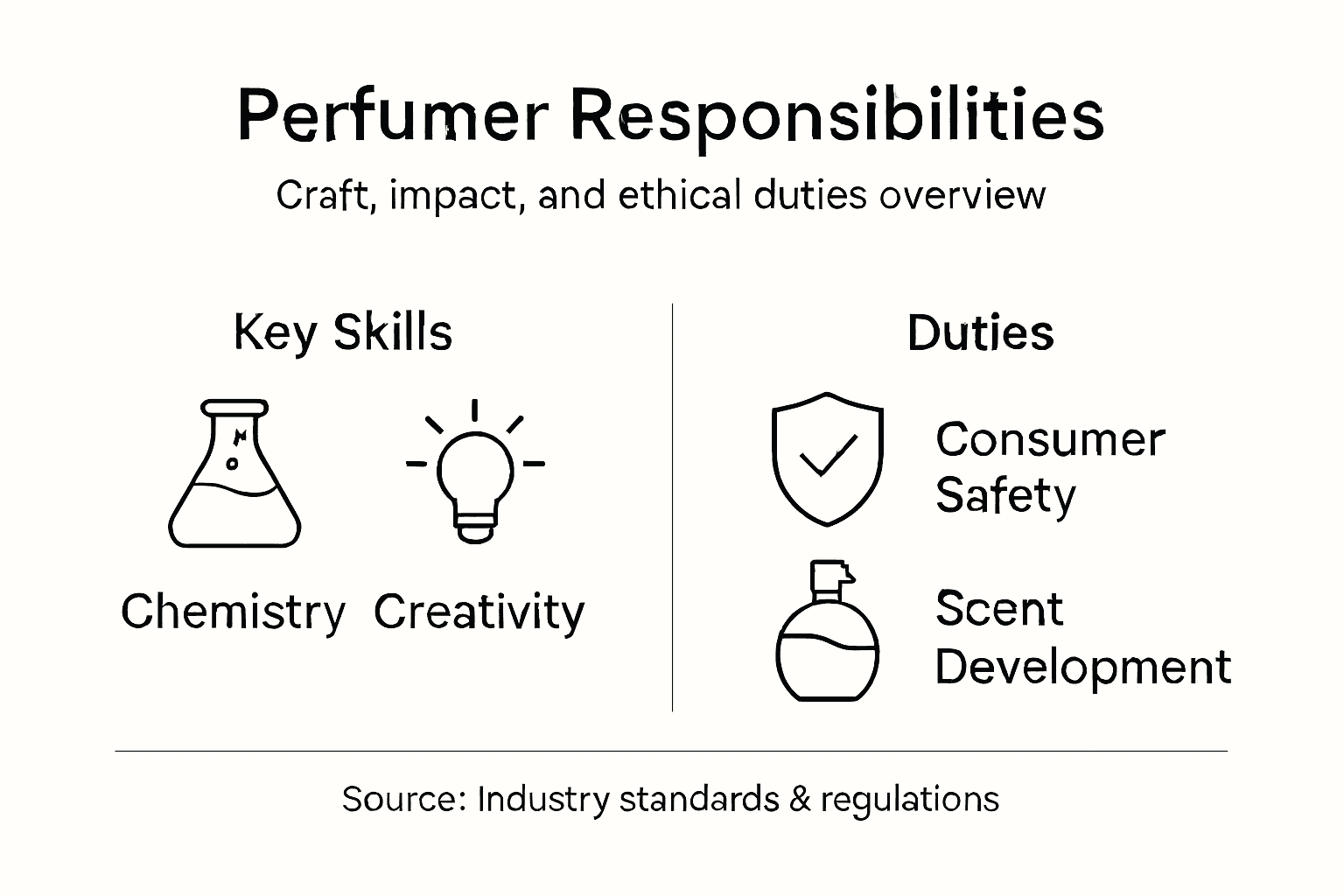
Hier ist eine Übersicht über die wichtigsten ethischen und regulatorischen Überlegungen, die die Parfümindustrie beeinflussen:
Pro-Tipp: Führe ein Dokumentationssystem, das die Herkunft der Inhaltsstoffe, Sicherheitszertifizierungen und ethische Compliance für jede Komposition, die du entwickelst, verfolgt. Diese Unterlagen später nachträglich zu erstellen, ist eine Qual.
Der Druck auf Parfümeure heute ist strukturell, nicht kreativ. Das Management nachhaltiger Lieferketten ist zur entscheidenden Sorge geworden, und der ökologische und wirtschaftliche Druck schreibt Produktionsmethoden um, die jahrzehntelang nicht hinterfragt wurden. Kreative Ambitionen, kommerzielle Lebensfähigkeit und Umweltverantwortung müssen jetzt in derselben Formel in Einklang gebracht werden.
Die Erwartungen der Verbraucher haben sich stark verändert, und der Job hat sich entsprechend erweitert. Kulturelle Vielfalt, sich verändernde Marketinglandschaften und schnelllebige Vorlieben verlangen alle eine Anpassungsfähigkeit, die ältere Karrieremodelle nie gefordert haben. Der Schutz des geistigen Eigentums ist ebenfalls komplizierter geworden, da Formulierungen geschützt werden müssen, während die Marke den globalen Marktdynamiken nachjagt. Digitale Kanäle haben sowohl Reichweite als auch Lärm in gleichem Maße hinzugefügt — mehr Möglichkeiten, mit Käufern zu sprechen, mehr Möglichkeiten, kopiert zu werden.
Umweltverträglichkeit ist das größte dieser Probleme und das mit den wenigsten einfachen Antworten. Verantwortungsvolle Beschaffung, Reduzierung der ökologischen Auswirkungen und Transparenz in den Lieferketten sind jetzt grundlegende Erwartungen. Parfümeure werden gebeten, die globalen Umweltstandards zu verstehen, innovative nachhaltige Technologien zu unterstützen und ihre Verpflichtungen glaubwürdig zu erklären — was eine andere Fähigkeit ist. Es erfordert eine Sichtweise auf die Duftentwicklung, die langfristige ökologische und soziale Folgen berücksichtigt, und viele in der Branche holen immer noch auf.
Pro-Tipp: Baue einen Nachhaltigkeitsrahmen für deine eigenen Kompositionen auf — dokumentiere den ökologischen Fußabdruck jedes Inhaltsstoffs und kartiere alternative Beschaffungen, bevor du dazu gezwungen wirst.
Hier ist das ehrliche Urteil: Parfümerie belohnt Geduld über Flair. Wenn du zur Kunst hingezogen wirst, studiere die Materialien und die Einschränkungen — die Beschaffung der Inhaltsstoffe, die Sicherheitsarbeit, die Briefings — denn dort werden die interessanten Entscheidungen getroffen, und das trennt einen charakteristischen Duft von einem kompetenten.
Beginne auf Fragplace mit den Düften, die du bereits besitzt — lies ihre Noten, lies die Bewertungen und baue den Wortschatz auf, bevor du etwas anderes kaufst. Arbeite dann durch Parfümeure und folge den Namen hinter den Flaschen, zu denen du immer wieder zurückkehrst. Du wirst den Hausstil schnell erkennen, und dein Kaufverhalten wird dadurch präziser.
| Punkt | Details |
|---|
| Rolle eines Parfümeurs | Parfümeure verbinden Kunstfertigkeit und wissenschaftliche Präzision, was umfangreiches Wissen in Chemie und sensorischer Wahrnehmung erfordert, um ansprechende Düfte zu kreieren. |
| Karrierewege | Die Möglichkeiten reichen von Unternehmenspositionen in großen Duftunternehmen bis hin zu unabhängigen Beratungsrollen, wobei die Karriereentwicklung zu spezialisierten oder leitenden Positionen führt. |
| Kreativer Prozess | Erfolgreiche Parfümerie erfordert ein Gleichgewicht zwischen technischen Fähigkeiten, emotionaler Intelligenz und Zusammenarbeit, um abstrakte Konzepte in greifbare Düfte zu verwandeln. |
| Ethische Verantwortlichkeiten | Parfümeure müssen komplexe rechtliche und ethische Standards navigieren, wobei der Fokus auf Verbrauchersicherheit, nachhaltiger Beschaffung von Inhaltsstoffen und transparenter Kommunikation liegt. |
| Typ des Parfümeurs | Primärer Arbeitsplatz | Grad an kreativer Freiheit | Häufige Verantwortlichkeiten |
|---|
| Unternehmensparfümeur | Großes Duftunternehmen oder Marke | Mäßig | Entwicklung von Markendüften, Befolgung von Briefings |
| Unabhängiger Parfümeur | Persönliches Studio oder Beratung | Hoch | Erstellung von Nischendüften, Kundenarbeit |
| Technischer Parfümeur | Forschungslabor oder Hersteller | Niedrig bis Mäßig | Inhaltsstofftests, Sicherheitsanalysen |
| Nischenparfümeur | Kleines Boutique- oder eigenes Unternehmen | Höchste | Innovation einzigartiger Kompositionen |
| Verantwortungsbereich | Hauptfokus | Geschäftsauswirkungen |
|---|
| Inhaltsstoffbeschaffung | Ethische und nachhaltige Versorgung | Ruf und langfristiges Vertrauen auf dem Markt |
| Geistiges Eigentum | Schutz der Duftformel | Verhindert Nachahmung, sichert Marktexklusivität |
| Verbrauchersicherheit | Allergenkontrolle, Kennzeichnung | Rechtliche Einhaltung, reduziert Rückrufrisiko |
| Umweltstandards | Umweltfreundliche Produktion | Gewährleistet globalen Marktzugang, reduziert Fußabdruck |