Articles
Hol dir den Fragletter
Neue Duftgeschichten und Empfehlungen in deinem Postfach. Jederzeit abbestellbar.
Neue Duftgeschichten und Empfehlungen in deinem Postfach. Jederzeit abbestellbar.
Neue Duftgeschichten und Empfehlungen in deinem Postfach. Jederzeit abbestellbar.
Neue Duftgeschichten und Empfehlungen in deinem Postfach. Jederzeit abbestellbar.
Parfum ist kein Luxusabzeichen, das auf die teurere Flasche geklebt wird. Es ist eine Konzentration, und das Wort stammt vom lateinischen per fumum, "durch Rauch" — eine Erinnerung daran, dass die Kategorie als Ritual und nicht als Einzelhandel begann. Lernen Sie, was das Etikett tatsächlich verspricht, und Sie werden aufhören, Extrait-Geld für eine Stärke zu zahlen, die Sie nie wollten.
Per fumum. Durch Rauch. Bevor jemand etwas sprühte, war Duft etwas, das man verbrannte, und dieser Ursprung erklärt mehr über die Parfümerie, als die meisten Markenbeschreibungen es schaffen.
Duft hatte eine Aufgabe. Alte ägyptische Priester und der Adel verwendeten Parfums in religiösen Zeremonien und Bestattungsriten und als Symbol für göttliche Verbindung — näher an der Liturgie als an der Körperpflege. Mesopotamische Kulturen integrierten aromatische Substanzen in ihre spirituellen und medizinischen Praktiken und betrachteten den Geruch als Kanal zwischen dem Menschlichen und dem Göttlichen. Jede Region entwickelte ihre eigenen Techniken und ihre eigene Philosophie der Duftkreation, weshalb die Parfümerie nie eine klare Tradition geerbt hat.
Der nützliche Teil sind nicht die Trivia. Es ist, dass Duft immer Identität und Status neben Freude getragen hat, und ein modernes Parfum handelt immer noch genau davon. Sie kaufen Bedeutung ebenso wie Material, und es hilft zu wissen, wann Sie es tun.
Experten-Tipp: Betrachten Sie die alte Ritualursprungsgeschichte einer Marke als Kontext, nicht als Beweis für Qualität — ein Haus kann Tausende von Jahren Geschichte anrufen und Ihnen trotzdem eine dünne Formel verkaufen.
Der Unterschied liegt in der Konzentration der Duftöle, und alles andere folgt daraus. Parfum, auch bekannt als Extrait de Parfum, ist die konzentrierteste Form, typischerweise 20-40% reine Parfümessenz. Eau de Parfum liegt bei etwa 15-20%.
Hier liegt der Fehler: Mehr Öl bedeutet nicht mehr Volumen. Parfum bleibt in der Regel nah an der Haut und öffnet sich langsam, indem es seine Schichten über mehrere Stunden enthüllt. Eau de Parfum dringt stärker vor und ist sofortiger wahrnehmbar, mit etwas kürzerer Haltbarkeit — genau deshalb eignet es sich gut für den täglichen Gebrauch. Wenn Sie möchten, dass ein Raum Sie vom Eingang aus registriert, kann das Extrait das falsche Werkzeug sein.
Wählen Sie also nach Absicht und nicht nach Prestige. Langsame Entwicklung und Nähe oder Reichweite und Unmittelbarkeit. Ihre Hautchemie und die Umgebung entscheiden den Rest.
Experten-Tipp: Wenn Sie bereits das Eau de Parfum besitzen, betrachten Sie das Extrait als eine andere Trageweise und nicht als direkte Aufwertung — Sie tauschen Projektion gegen Intimität.
Die Konzentration ist der größte Einzelhebel dafür, wie ein Duft wirkt. Der Prozentsatz der Duftöle bestimmt, wie lange und wie intensiv ein Parfum auf der Haut hält, und die Leiter reicht von der leichtesten Cologne bis zum intensivsten Parfum.
Konzentrationsstufen sind typischerweise wie folgt organisiert: Cologne (2-4% Duftöle), Eau de Toilette (5-15% Duftöle), Eau de Parfum (15-20% Duftöle) und Parfum/Extrait (20-40% Duftöle). Intensität, Komplexität und Dauer steigen, je höher man geht.
Lesen Sie die Zahl als Spezifikation, nicht als Versprechen. Die Qualität der Inhaltsstoffe, die molekulare Zusammensetzung und Ihre eigene Hautchemie beeinflussen alle das Ergebnis, und die Wechselwirkung zwischen Duftmolekülen und den natürlichen Ölen Ihrer Haut verleiht jedem Träger eine leicht unterschiedliche Signatur. Zwei Personen mit derselben Konzentration können deutlich unterschiedliche Tragezeiten und Projektionen haben. Ein sorgfältig hergestelltes Eau de Toilette wird ein faules Eau de Parfum in den Schatten stellen.
Hier ist ein Vergleich der Hauptduftkonzentrationen und ihrer typischen Leistung:
Experten-Tipp: Kaufen Sie niemals eine Konzentration blind aufgrund der Zahl allein — tragen Sie es auf Ihrer Haut und beobachten Sie, wie es sich über mehrere Stunden entwickelt, bevor Sie sich festlegen.
Die meisten Sammlungen scheitern am Überkauf, nicht am Unterkauf. Fünf Flaschen, nach denen Sie greifen, schlagen zwanzig, die Sie aus Schuldgefühlen rotieren.
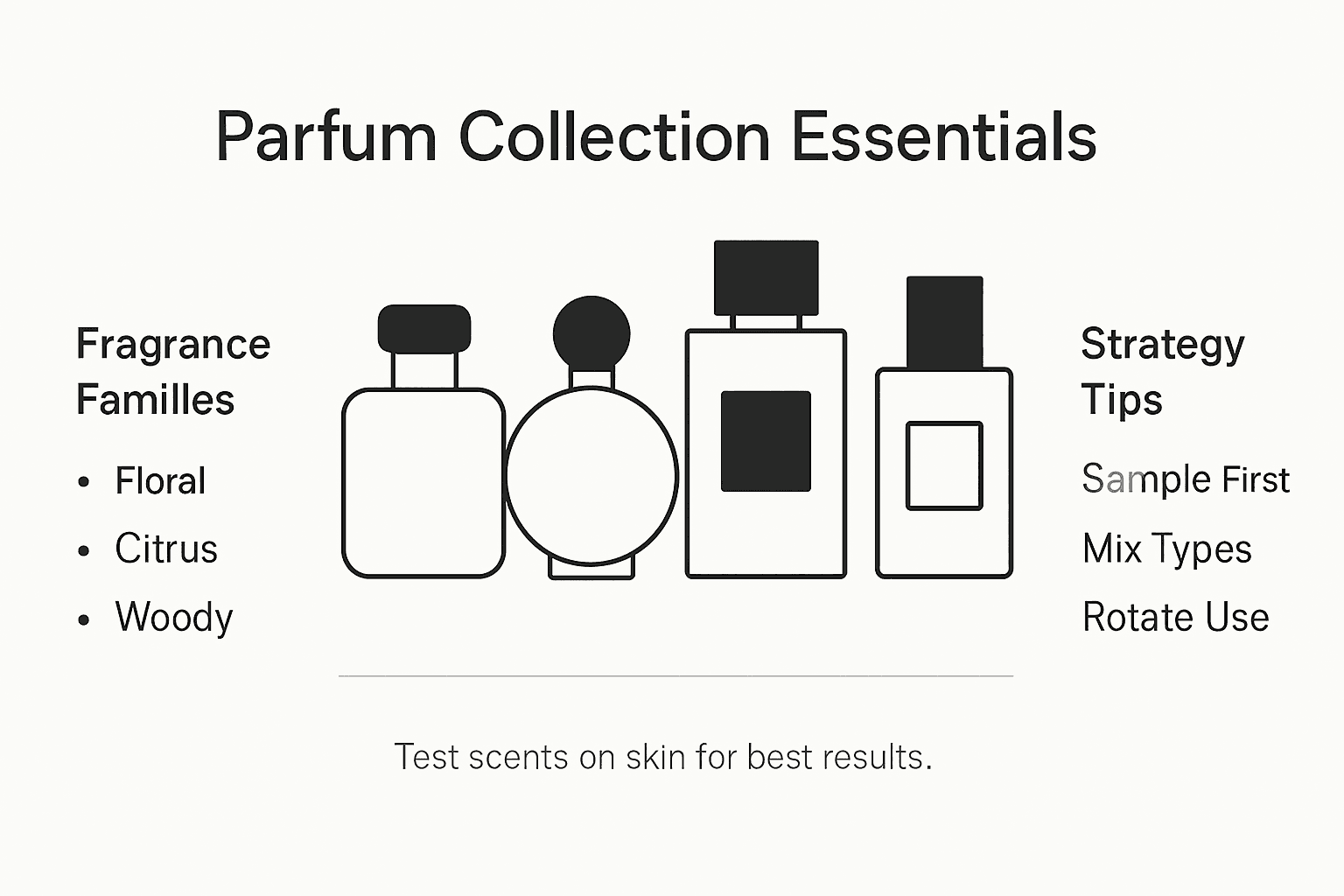
Arbeiten Sie zuerst durch die Duftfamilien, dann durch die Konzentrationen. Orientalisch, holzig, blumig, frisch und gourmand verhalten sich jeweils unterschiedlich auf Ihnen, und zu wissen, zu welchem Sie immer wieder zurückkehren, spart mehr Geld als jeder Rabattcode. Anlass, Saison und Stimmung erledigen den Rest der Filterung.
Ein Kleiderschrank braucht Vielfalt, nicht Wiederholung. Halten Sie etwas, das zu einem intimen Abendereignis passt, und etwas, das sich in einem professionellen Tagesumfeld gut verhält, und widerstehen Sie dem Kauf von drei Variationen des Duftes, den Sie bereits tragen. Wenn Ihr Regal fünf nahezu identische Amber enthält, haben Sie keine Sammlung — Sie haben eine Gewohnheit.
Experten-Tipp: Kaufen Sie Proben oder Reisegrößen, bevor Sie volle Flaschen kaufen. Es ist der günstigste Weg herauszufinden, dass das Parfum, von dem Sie überzeugt waren, nichts für Sie tut.
Einige Mythen über Parfum überleben rein, weil sie schmeichelhaft zu glauben sind.
Der erste ist, dass ein höherer Preis bessere Qualität bedeutet. Das tut er nicht — die Leistung von Parfum hängt viel mehr von der Formulierungstechnik ab als von den Kosten der Flasche. Der zweite ist, dass natürliche Inhaltsstoffe automatisch sicherer oder effektiver sind als synthetische. Fachmännisch hergestellte synthetische Moleküle können stabiler, konsistenter und potenziell sicherer sein als ihre natürlichen Gegenstücke, und so zu tun, als wäre es anders, ist Marketing und nicht Chemie.
Der hartnäckigste Mythos ist die Universalität: die Idee, dass ein Duft bei jedem gleich riecht. Körperchemie, Haut-pH, Ernährung und sogar die Umgebungstemperatur verändern, wie sich ein Parfum entwickelt und projiziert. Die Flasche, die Ihr Freund nicht aufhören kann zu empfehlen, kann bei Ihnen ganz anders wirken, weshalb der blinde Kauf aufgrund der Begeisterung eines anderen ein Glücksspiel ist.
Diese Tabelle hebt häufige Mythen über Parfum und die faktische Realität dahinter hervor:
Experten-Tipp: Beurteilen Sie ein Parfum nicht nach seinem ersten Eindruck. Tragen Sie es einige Stunden auf der Haut, bevor Sie entscheiden — die ersten zehn Minuten sind der unaufrichtigste Teil eines jeden Duftes.
Für die meisten Menschen an den meisten Tagen ist Eau de Parfum der bessere Kauf von beiden: Es projiziert mehr, kostet weniger und verlangt weniger vom Anlass. Greifen Sie zu Parfum, wenn Sie einen Duft möchten, der nah bleibt und sich langsam entfaltet, und wenn die Umgebung diese Art von Zurückhaltung belohnt. Alles, was Ihnen darüber hinaus gesagt wird — über Preis, der Qualität signalisiert, oder natürliche Inhaltsstoffe, die synthetische übertreffen, oder eine Flasche, die bei jedem gleich riecht — können Sie getrost ignorieren.
Beginnen Sie mit der Konzentration eine Stufe darunter und lesen Sie Was ist ein Eau de Parfum? Verständnis der Duftschichten, um zu sehen, wie sich die Schichten aufbauen, bevor Sie Extrait-Geld ausgeben. Bringen Sie dann Ihre Shortlist zu Fragplace, wo Notizen, Bewertungen und die damit verbundenen Argumente Ihnen mehr über eine Flasche erzählen als das Etikett jemals könnte.
Der Begriff 'Parfum' stammt von dem lateinischen Ausdruck 'per fumum', was 'durch Rauch' bedeutet und seine historische Verbindung zu aromatischen Ritualen in verschiedenen Zivilisationen widerspiegelt.
Parfum ist eine konzentriertere Duftform, die 20-40% reine Parfümessenz enthält, während Eau de Parfum eine Konzentration von 15-20% hat. Parfum hält länger und entwickelt im Laufe der Zeit komplexere Noten, sitzt aber auch näher an der Haut, weshalb Eau de Parfum oft die praktischere Wahl für den täglichen Gebrauch ist.
Die Duftkonzentrationen sind wie folgt organisiert: Cologne (2-4% Duftöle, bis zu 2 Stunden Haltbarkeit), Eau de Toilette (5-15%, 2-5 Stunden), Eau de Parfum (15-20%, 4-8 Stunden) und Parfum (20-40%, 6-12 Stunden). Betrachten Sie diese Zeiträume als Richtlinien, nicht als Garantien — Ihre Haut hat ein Mitspracherecht.
Erforschen Sie zuerst verschiedene Duftfamilien und verfeinern Sie dann nach Anlass, Saison und Stimmung. Schließen Sie Düfte ein, die zwischen den Umgebungen wechseln, und hören Sie auf, nahezu Duplikate des Duftes zu kaufen, den Sie bereits tragen.
| Punkt | Details |
|---|
| Historische Bedeutung von Parfum | Parfum hat tiefe kulturelle Wurzeln und dient als Medium für Kommunikation und spirituelle Praktiken in alten Zivilisationen. |
| Konzentrationsunterschiede | Parfum enthält eine höhere Konzentration an Duftölen im Vergleich zu Eau de Parfum, was die Haltbarkeit und das sensorische Erlebnis beeinflusst. |
| Aufbau einer Duftsammlung | Eine vielfältige Parfumsammlung erfordert das Verständnis von Duftprofilen und persönlichen Vorlieben basierend auf Anlass und Stimmung. |
| Parfummythen | Viele Mythen über Parfum, wie die Annahme, dass der Preis gleichbedeutend mit Qualität ist, werden durch die Bedeutung der Formulierung und der individuellen Körperchemie in der Duftleistung widerlegt. |
| Dufttyp | Ölkonzentration | Haltbarkeit auf der Haut | Typische Verwendung |
|---|
| Cologne | 2-4% | Bis zu 2 Stunden | Erfrischend, lässig |
| Eau de Toilette | 5-15% | 2-5 Stunden | Alltag, leichtere Trageweise |
| Eau de Parfum | 15-20% | 4-8 Stunden | Täglicher oder abendlicher Gebrauch |
| Parfum (Extrait) | 20-40% | 6-12 Stunden | Besondere Anlässe |
| Mythos | Realität |
|---|
| Höherer Preis bedeutet bessere Qualität | Qualität hängt von der Formulierung ab, nicht vom Preis |
| Natürliche Inhaltsstoffe sind immer sicher | Synthetische können sicherer und stabiler sein |
| Duft ist für jeden gleich | Duft verändert sich mit der Haut jedes Einzelnen |
| Nur Frauen tragen Parfum | Parfum ist geschlechtsneutral und unisex |
| Stärkere Düfte passen zu allen Anlässen | Intensität sollte zur Umgebung passen |