Articles
Recebe a Fragletter
Novas histórias e escolhas de fragrâncias na tua caixa de entrada. Podes anular quando quiseres.
Novas histórias e escolhas de fragrâncias na tua caixa de entrada. Podes anular quando quiseres.
Novas histórias e escolhas de fragrâncias na tua caixa de entrada. Podes anular quando quiseres.
Novas histórias e escolhas de fragrâncias na tua caixa de entrada. Podes anular quando quiseres.
There's a smell that stops you mid-step in summer — somewhere between a garden wall and the open sky, citrusy but not sharp, floral but never sweet. Chances are, you've been smelling neroli without knowing it.
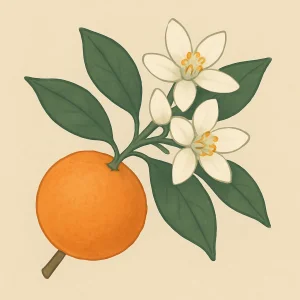
Neroli is extracted from the blossoms of the bitter orange tree (Citrus aurantium), through steam distillation. The flowers are hand-picked — almost always at dawn, before the heat opens them fully and the most volatile aromatic compounds escape. The major growing regions are Tunisia, Morocco, Egypt, and the Calabrian coast of Italy, where the bitter orange groves have been cultivated for centuries.
The name has a royal origin: Anne Marie de La Trémoille, the 17th-century Princess of Nerola, reportedly used the oil to scent her gloves and bathwater. It caught on. By the time the original Eau de Cologne was formulated in Cologne in the early 18th century, neroli was already one of its defining ingredients — alongside bergamot, lemon, and petitgrain. It has been in continuous use in fine perfumery ever since.
Here's what makes neroli interesting from a perfumer's perspective: the bitter orange tree provides three entirely distinct raw materials, and confusing them is one of the most common misunderstandings in fragrance.
Perfumers play all three against each other. A fragrance might lean on neroli for brightness in the top notes, layer in orange blossom absolute for floral weight in the heart, and use petitgrain to add an earthy, woody anchor in the drydown. The result is a more dimensional portrait of the bitter orange tree than any single material alone could produce.
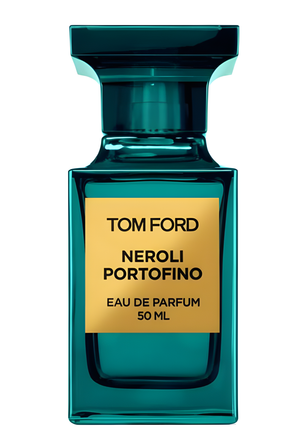
by Tom Ford is the boldest statement neroli has made in modern perfumery. Released in 2011, it put neroli at the center of a cinematic, almost theatrical composition — backed by bergamot, amber, and a cold, saline mineral quality that conjures the Ligurian coast at high noon. It's not a subtle fragrance. The sillage is substantial, the projection assertive. But it's a brilliant one: neroli here is confident, expansive, architectural. It proved that a note people associated with light, ephemeral colognes could anchor a fragrance with real presence.
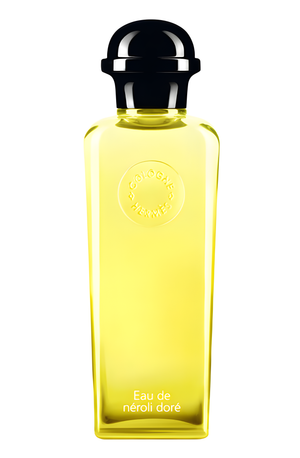
by Hermès takes the opposite approach. Part of the Hermès Colognes collection (under the direction of perfumer Jean-Claude Ellena), it treats neroli as something warm and enveloping rather than bright and sharp. There's turmeric in there, a golden, slightly earthy quality that lives up to the name — doré means gilded. It wears close to the skin, lasts considerably longer than you'd expect from a cologne concentration, and has a creaminess that suggests orange blossom absolute has quietly joined the formula without announcing itself. It is, in the best sense, a small fragrance: understated, intimate, designed to be discovered rather than broadcast.
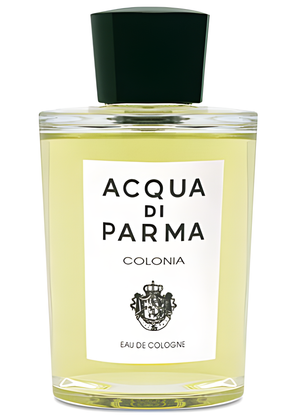
by Acqua di Parma has been around since 1916, which might make it sound like homework. It isn't. It remains one of the clearest expressions of the traditional Eau de Cologne structure — citrus top notes (lemon, bergamot, neroli), a lavender and rose heart, vetiver and sandalwood in the base — and it holds up because the proportions are exactly right. Neroli here functions the way good composition functions in a painting: you might not name it, but everything looks worse without it. It's the connective tissue between the sharp citrus opening and the warm, woody finish.
There's a real case to be made that neroli is more relevant now than it's been in decades. The dominant direction in fragrance culture is moving away from projection-first thinking — the monster sillage, the room-announcing presence — toward intimacy. Scents designed to reward the people close to you rather than make an impression across the room.
Neroli is naturally suited to this. It doesn't project through walls. It's a skin-close note, an invitation rather than a statement. It's also genuinely versatile across gender, season, and formality in a way that few notes manage: a neroli-forward fragrance works in a meeting and on a beach, in June and in October, on a twenty-year-old and on someone twice that age.
It's in some of the most expensive bottles in the world and in cheap colognes at the pharmacy — which is either a mark against it or proof that everyone is chasing something real. The note itself doesn't care about trends. It has been doing the same thing for three hundred years.
 Neroli
 Petitgrain
 Orange Blossom
 Acqua Di Parma Colonia
 Eau de Néroli Doré
 Neroli Portofino