Articles
Odbieraj Fragletter
Nowe historie i wybory zapachowe na Twojej skrzynce. Możesz wypisać się w każdej chwili.
Nowe historie i wybory zapachowe na Twojej skrzynce. Możesz wypisać się w każdej chwili.
Nowe historie i wybory zapachowe na Twojej skrzynce. Możesz wypisać się w każdej chwili.
Nowe historie i wybory zapachowe na Twojej skrzynce. Możesz wypisać się w każdej chwili.
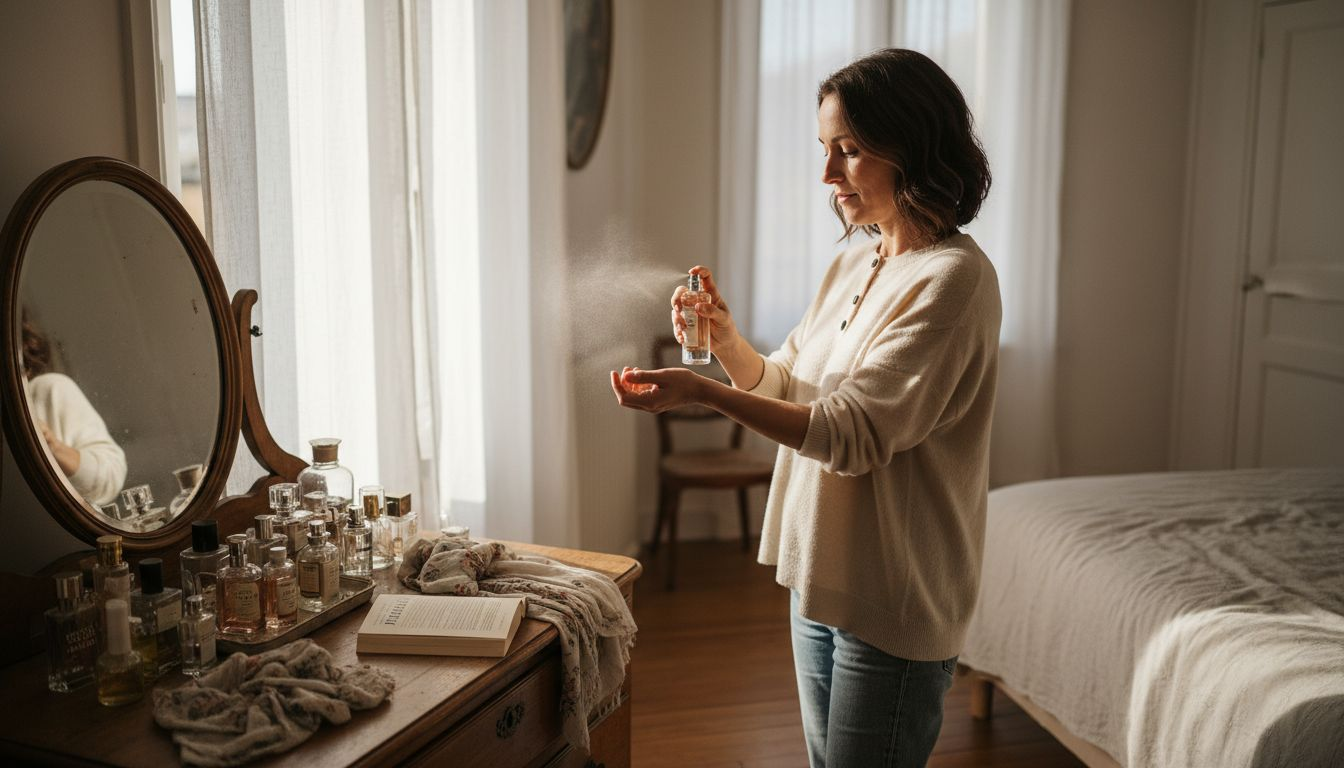
Most people wear one fragrance at a time because nobody ever told them they could do otherwise. Layering isn't a new trend — it runs from ancient oil rituals to modern artistic blends, and collectors have turned it into a playground. Do it with judgement and you end up wearing something nobody else has.
Layering means wearing two or more scents together on purpose, so the result reaches somewhere no single bottle does. You stop being the person who bought the perfume and start being the person who finished it.
The practice is far older than the marketing around it. Ancient layering traditions were simple scented oils applied to skin, chosen to say something about mood and personality. Those wearers already understood what a lot of modern buyers are only now working out: a scent doesn't have to be one flat thing.
In Middle Eastern fragrance culture, layering is a daily ritual rather than a weekend experiment. Combining several fragrances is simply how scent is worn there, and that has quietly shaped how millions of people apply perfume today.
What's different now is access. You're not stuck with the composition a perfumer signed off on — you get a say in the final result.
For enthusiasts, the appeal is practical as much as creative:
Layering turns passive fragrance wearing into active scent creation — consumer to maker.
Modern layering is a technical skill dressed up as a hobby. It means knowing how fragrance families behave together, recognising which pairs harmonise, and understanding that a heavy base in one bottle can swallow the top notes of another.
What it isn't: spraying three things at once and hoping. That gets you noise. Effective layering takes intent and some knowledge of what your skin does to a fragrance.
The best part of knowing where layering came from is realising the impulse is ancient. People have always wanted their scent to be theirs.
Pro tip: Begin with one fragrance over an unscented body moisturiser or oil from the same brand. You get the longevity benefit with no risk of clashing, and it teaches you the principle before you start combining bottles.
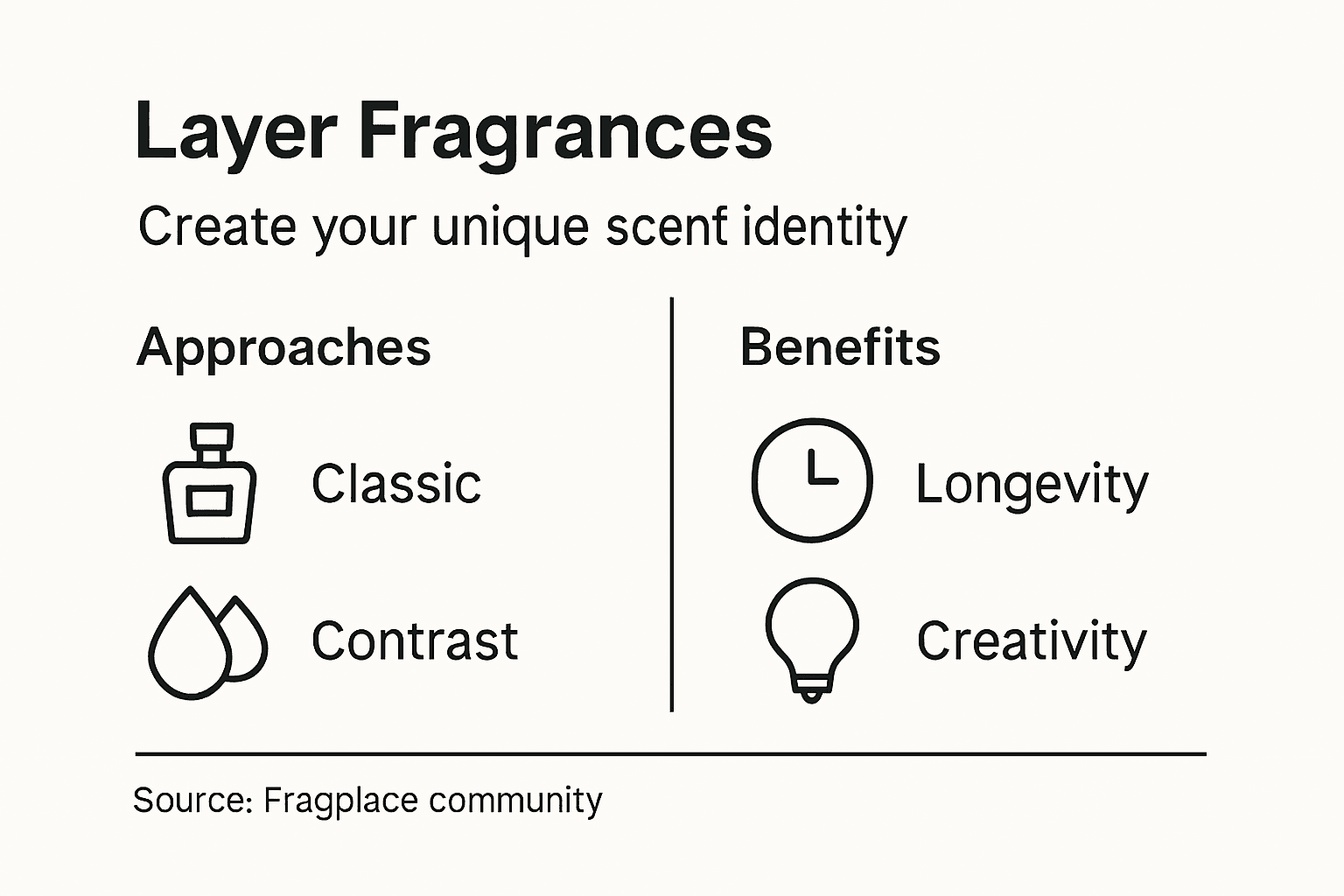
Not all layering is the same job. Pick the method that matches your collection and your nerve.
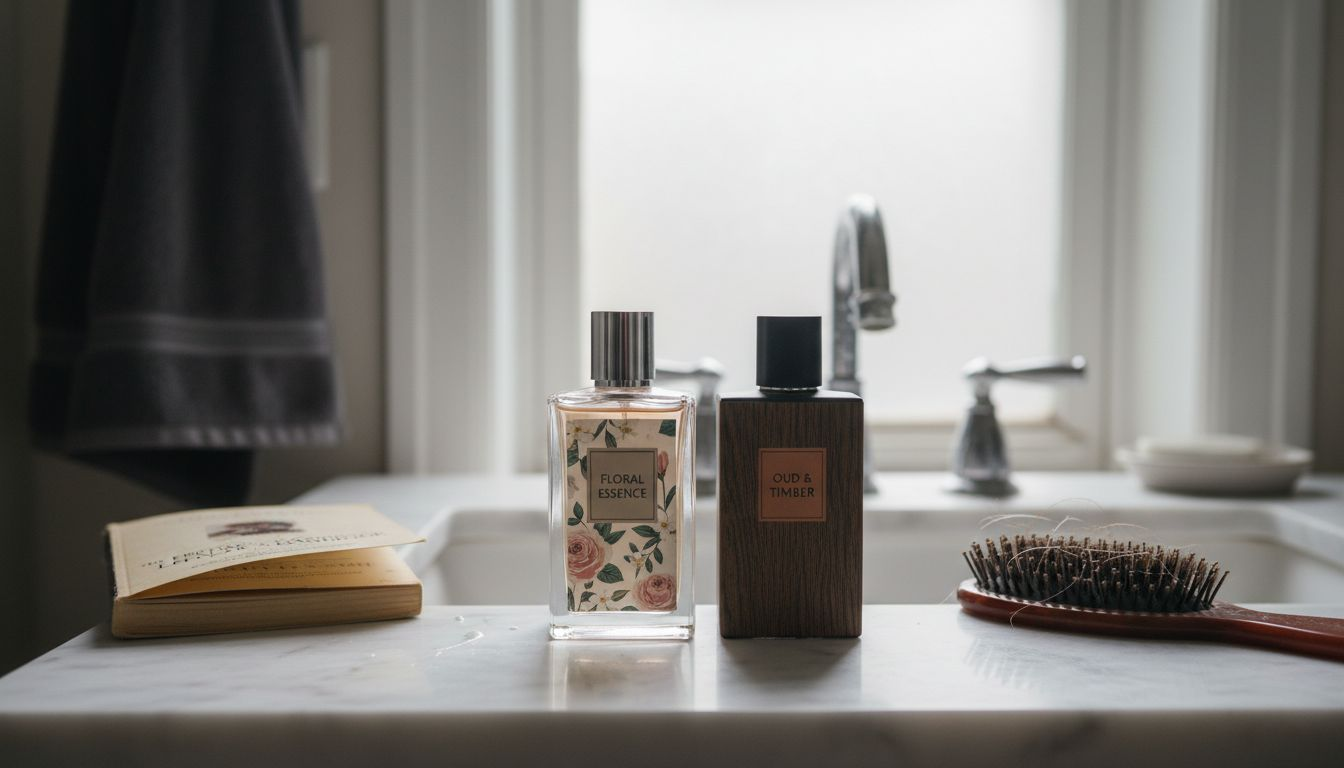
Spray your main fragrance, then a complementary one over the top. The second usually props up the base or throws some brightness at it.
Most collectors start here, and they should. Two bottles from the same family, or sharing a note or two, and you're done. Barely any planning required.
Two florals. Two woods. Two fresh compositions. Staying inside one family is the safest route to harmony instead of argument.
Shared DNA does the work for you. The result reads as one deliberate scent rather than two people standing too close together.
Now the interesting one: pair across families and see what happens. Fresh citrus over a warm amber sets up a tension the citrus alone never had.
It's also the method most likely to fail. That unpredictability is the whole draw for collectors who've grown bored of safe.
Start with an unscented or lightly scented moisturiser as the foundation, then build on it. The neutral canvas keeps anything from shouting.
This one gives you the most control over what dominates, and it anchors everything to skin, which buys you time.
Here is a quick comparison of fragrance layering methods and their ideal use cases:
Beyond method, there's scale:
The best layering approach is the one your knowledge and your collection can actually support.
Before you pair anything, learn to read what's in front of you: understanding how fragrances interact requires proper evaluation techniques. That's what turns a random spray into a decision.
Your taste will move. A pairing that sings in October can sit heavy by May, so treat your approach as something that grows with the collection.
Pro tip: Test on paper strips first — spray each fragrance onto the same strip, 30 seconds apart. It costs you nothing and saves you a whole day spent wearing a mistake.
Good pairings come from respecting the architecture of each fragrance rather than treating them as liquid in a bottle.
Work out the dominant notes in each one first. Top notes are gone within minutes, so judge a potential pairing on heart and base. That's what you'll actually be wearing.
Two fragrances blend best when they share at least one note family. Musk, amber or vanilla in both gives them an anchor and stops them competing.
They don't need to smell alike. They need one common thread, so your brain files them as a single composition.
A light eau de toilette under a concentrated eau de parfum is a waste of the eau de toilette. The stronger one wins every time.
Match concentrations. Two eau de toilettes, or two eau de parfums, and both bottles get a say.
Order matters more than most people think. Once you're understanding fragrance structure and concentration levels, the sequence becomes obvious: lighter first, heavier after.
Leave 30 seconds between applications so each one settles before the next arrives. Your nose will thank you too.
Spread the work across your body rather than dumping it all in one spot:
Layering well takes restraint, not more sprays.
Skin chemistry keeps rewriting the result. Something balanced at 8 AM can tip by noon as body heat and natural oils get involved.
Explore how skin chemistry and application points affect fragrance layering:
Give it time. Judge after 2-3 hours, not at the mirror — plenty of pairings only knit together once the notes have had a chance to merge.
Then write it down: which fragrances combined well, when you wore them, how the pairing moved.
Pro tip: Keep a blending journal — every pair you've tested, a harmony rating, and whether you'd repeat it. Dull advice, but it's the difference between a method and a guess once the collection grows.
Layering pays off for people who experiment carefully. It punishes everyone else, usually in public. Both sides are worth knowing.
Longevity is the obvious win. Where a single application might give you four hours, two complementary fragrances can push that to eight or beyond. Better value from bottles you already own.
Then there's control. Instead of accepting the perfumer's fixed composition as final, you tune the result to your mood and the season.
Over-layering and pairing incompatible scents are the usual culprits. Too much fragrance flattens your own nose and makes you a problem for everyone in the lift. Incompatible notes give you mud.
The subtler error is ignoring structure. Layer without thinking about how top, middle and base notes interact and you get a combination that opens beautifully and falls apart as the day goes on.
Fragrance sensitivity is real. Layering puts more fragrance compounds on your skin, and sensitive skin can object.
Then there's olfactory fatigue. Your nose gives up on a constant scent after 15 minutes or so, and layering can speed that adaptation up. You'll swear the whole thing has vanished while everyone near you still smells it clearly. Trust the clock, not your nose.
Key benefits and risks:
Layering rewards the people who understand fragrance architecture and practise restraint.
Layering works once you know your fragrances alone. Learn how each behaves on your skin before you ask two of them to cooperate.
Start small. One spray of each covers most combinations. You can always add. You can't subtract.
The collectors who get the most from it treat layering as a running experiment rather than a single attempt: document, adjust, repeat.
Pro tip: Try any new combination on a small patch first — the inner wrist will do — and give it two hours before you commit to wearing it out.
If you take one thing from this: start with the family blend or base-building, one spray of each, and judge it hours later rather than seconds later. It's the least glamorous route and the one most likely to give you something you'd wear twice. Contrast pairings are more fun and far more likely to get washed off before lunch — worth trying, but not on a day that matters.
Fragplace is where the guesswork gets shorter: note breakdowns, reviews, and people arguing productively about which families sit together and which don't. Look up your two candidates before you spray them, not after.
Check your next pairing on Fragplace before it goes anywhere near your skin. Then post the combination that worked and let the community tell you what to try next.
Wearing two or more scents together on purpose, so the result has more depth and reads as your own signature rather than something straight off a shelf.
It stretches longevity, adds complexity, gives you room for personal expression, and gets more out of the bottles you already own instead of buying new ones.
The Classic Approach, the Fragrance Family Blend, the Contrast Method and the Base-Building Technique. Begin with the first two; the Contrast Method is where things get unpredictable.
Make sure they share a note family, match their intensities, apply lighter before heavier, and test on paper strips before your skin gets involved.
| Point | Details |
|---|
| Fragrance Layering | Combining multiple scents creates a personal and unique scent signature, enhancing depth and complexity. |
| Historical Roots | This practice originates from ancient traditions where scent was used to express individuality and mood. |
| Methods of Layering | Approaches include classic layering, fragrance family blending, contrasting scents, and base-building techniques, each catering to different preferences. |
| Risks and Benefits | Layering offers extended longevity and personal expression but requires careful consideration to avoid overwhelming scents and skin reactions. |
| Layering Method | Best For | Complexity Level | Typical Result |
|---|
| Classic Approach | Beginners | Low | Enhanced depth |
| Fragrance Family Blend | Harmony seekers | Medium | Cohesive profile |
| Contrast Method | Adventurous collectors | High | Unique, bold scent |
| Base-Building | Longevity enthusiasts | Medium | Lasting, flexible trail |
| Multiple Layering | Experts | High | Complex, evolving scent |
| Factor | Influence on Layering | Best Practice |
|---|
| Skin Chemistry | Alters note development | Test combinations first |
| Application Area | Modifies scent projection | Use strategic placement |
| Fragrance Intensity | Balances final aroma | Match concentration type |
| Time of Day | Changes scent evolution | Judge after hours |