Articles
Odbieraj Fragletter
Nowe historie i wybory zapachowe na Twojej skrzynce. Możesz wypisać się w każdej chwili.
Nowe historie i wybory zapachowe na Twojej skrzynce. Możesz wypisać się w każdej chwili.
Nowe historie i wybory zapachowe na Twojej skrzynce. Możesz wypisać się w każdej chwili.
Nowe historie i wybory zapachowe na Twojej skrzynce. Możesz wypisać się w każdej chwili.
The stronger-version myth is the most expensive misunderstanding in fragrance buying. An EDP and an EDT of the same scent are often built differently note by note, so one can suit you while the other misses completely. Here's what actually separates them, and how to choose without wasting money on a bottle you'll leave on the shelf.
Start with oil percentage, because everything else follows from it. Eau de parfum typically contains 15-20% fragrance oil concentration, whereas eau de toilette contains 5-15%, making EDP richer and more potent. Strength is the least interesting thing that changes.
Alcohol runs the other way. EDT holds more of it, and alcohol is volatile — it flashes off, pushes scent outwards fast, then leaves. EDP pairs higher perfume oil with less alcohol, so the release is slower and steadier. That trade shapes the whole wear.
More oil also means more material left to unfold. Heart and base molecules need hours to show themselves, and an EDP gives them that runway, which is why its dry down tends to read clearer. Alcohol is the courier, not the cargo — it disperses scent into the air, then it's gone.
Key concentration distinctions include:
If you want the composition side rather than the chemistry, understanding eau de parfum layers covers how an EDP develops compared with its EDT counterpart.
Hours are where most people feel the difference. Eau de parfum fragrances typically last 6-10 hours or more, compared to 3-6 hours for eau de toilette, correlating with their higher oil content. That gap decides whether you end up carrying a spare bottle in your bag.
Higher perfume oil concentration means more scent molecules clinging to skin and clothes, released gradually across a day or an evening. EDT's lighter load burns off faster, and warm conditions or dry skin speed that up.
Then your own skin muddies all of it. Oily skin holds fragrance longer than dry skin whatever the concentration, and humidity, temperature and how much you're moving around shift the result again. Treat every stated wear time — including the ones above — as a range rather than a promise.
Practical longevity considerations include:
If you want all day coverage from an EDT, plan for it: a travel atomiser costs less than upgrading the bottle. EDP usually holds without the top-up. Logging scent longevity data over a few weeks will tell you more about your own skin than any brand's claim.
This is the part shoppers underrate. Perfumers modify note composition so EDT and EDP deliver different experiences beyond concentration alone — they're siblings, not the same recording at two volumes.
EDP formulations lean into the heart and base notes that reward patience. Woody, resinous or oriental accords need time to bloom on skin, and the higher perfume oil concentration gives the whole pyramid room to develop.
EDT does the opposite, deliberately. Citrus, aquatic and green notes are built to land immediately, and a lighter concentration keeps that opening crisp. What you give up is evolution — an EDT often says most of what it has to say early.
Scent profile variations include:
Pro Tip: Sample both the EDT and the EDP of something you already love before assuming the EDP is the upgrade. The difference often surprises even experienced collectors.
It also means owning both versions of one scent is less indulgent than it sounds — they can serve genuinely different settings. Applying fragrance evaluation tips helps you put words to which profile you actually respond to.
Projection is how far a fragrance radiates from you. Sillage is the trail left behind. The alcohol-to-oil balance moves both, and it moves them in opposite directions.
Eau de toilette's higher alcohol content causes stronger initial projection during the first hour after application before fading faster. Ideal for a meeting you'll be in and out of. Less useful across a long dinner.
EDP builds more slowly, then holds. The sustained release from higher oil concentration gives you reliable sillage, but people notice it when they step into your space rather than from across a room. If you bought it expecting a room-filler, that can read as underwhelming. It isn't — it's a different design.
Projection and sillage factors include:
Set your expectations accordingly. Want presence now that fades gracefully? EDT. Want to still smell like yourself hours later? EDP. Reading independent fragrance reviews before you buy is worth the ten minutes, because real world performance rarely matches the press copy.
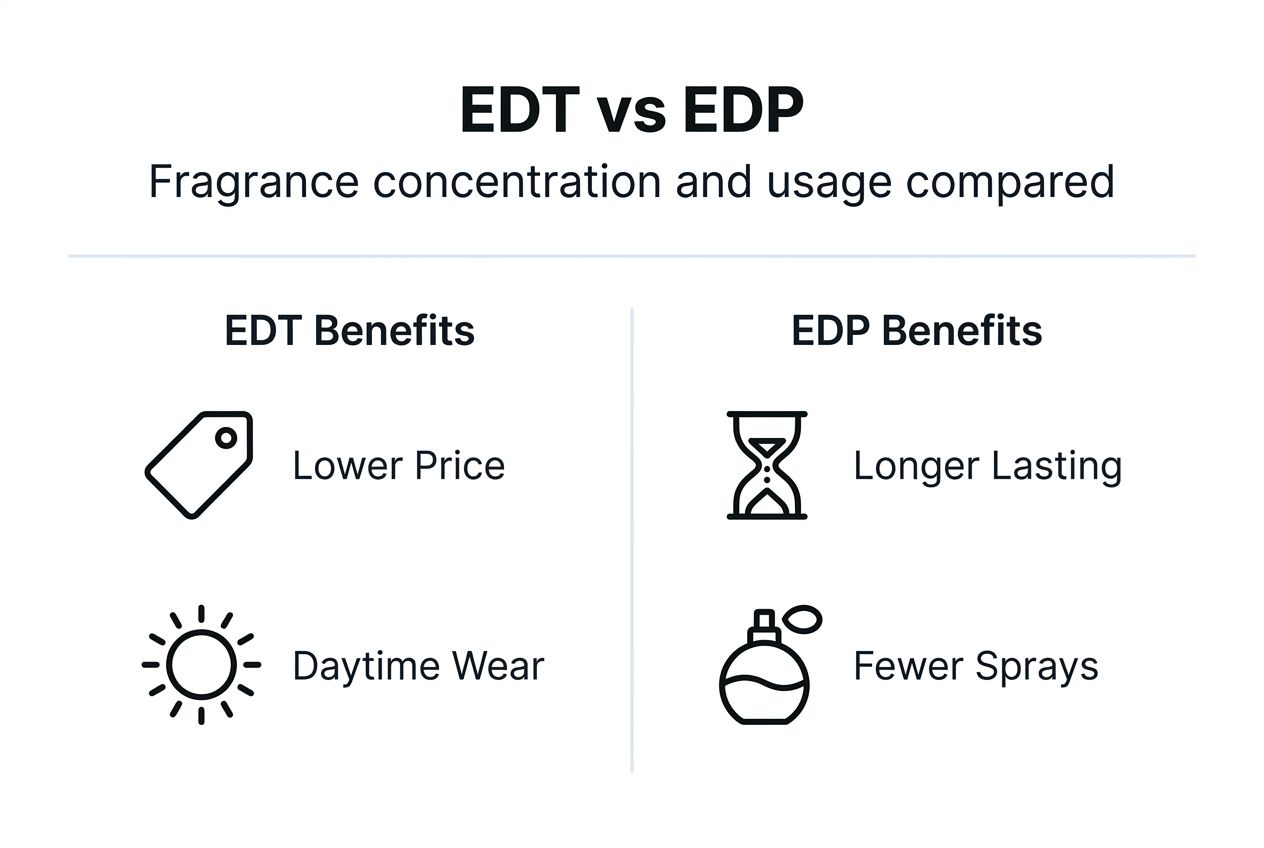
Price tracks concentration, though formulation complexity and intended use come into it too. Eau de parfum generally costs more per bottle but may offer better cost per spray due to longevity. Whether that maths works depends entirely on how often you reach for it.
EDT bottles typically cost 20-40% less than equivalent EDP sizes from the same fragrance line. That's real money if you're building range rather than depth, and range is the smarter first move for most people. You'll get through the bottle faster and apply more often. You'll also learn more about what you like.
Climate does more work here than buyers expect. EDT is best suited for warm weather, casual, and daytime wear, whereas EDP excels in cooler seasons and evening events. Heat drives scent off your skin; cold keeps it close.
Usage recommendations include:
Most collections tip too far one way, usually towards all EDP, bought on the assumption that stronger is better. A fragrance usage guidance strategy is a useful corrective if that sounds like your shelf.
Three myths do most of the damage.
The common misconception that EDP is simply a stronger EDT is incorrect; perfumers modify note composition making each a distinct experience. Buy the EDP expecting a louder copy of the EDT you love and you might not recognise it.
The second is that enough sprays make an EDT last like an EDP. They don't. More EDT buys you a bigger opening, but the alcohol evaporates at its own rate however much you apply, and there simply isn't the oil left behind to carry the hours.
The third is that price is a tax on strength. Rebalancing accords so a scent works at a different concentration is proper creative work, and master perfumers spend real expertise on it. That labour sits in the price alongside the raw materials.
Key clarifications include:
Know this going in and you'll buy fewer bottles you regret.
Four questions, in order. Answer them honestly and the choice usually makes itself.
Work out the hours you need. Ask yourself how long you want fragrance presence without reapplication. A ten-hour workday and a two-hour lunch aren't the same brief.
Decide which end of the pyramid you want leading. Fresh, bright top notes up front, or base notes surfacing slowly? Your answer points at a concentration on its own.
Factor in climate and time of day. Heat and daylight favour EDT's lighter presence. Cool seasons and evening occasions suit EDP's depth and persistence.
Do the cost per wearing maths, not the cost per bottle maths. If you wear one scent constantly, EDP's efficiency usually wins despite the higher upfront cost.
Pro Tip: Buy samples or decants before full bottles. Sample sets from online retailers and fragrance communities cost little, and one of them will save you from a bad 100ml decision.
Your preferences will drift across seasons, occasions and moods, which is the real argument for keeping both concentrations around rather than committing to one. Trust your nose over marketing claims and other people's ratings — this article included, wherever it disagrees with what you smell.
If you're buying one bottle, buy for the life you actually lead rather than the label that sounds like better value. Eau de parfum offers higher concentration, extended longevity, and deeper scent complexity suited for evening wear and cooler climates. Eau de toilette provides lighter, fresher scent ideal for casual daytime use and warm conditions.
Neither wins outright, and anyone telling you otherwise is selling something. Each serves a distinct purpose in a well rounded fragrance wardrobe.
Key decision factors include:
The recommendation, if you want one: an EDT for heat and daylight, an EDP for evenings and winter. Two bottles cover most of a year, and you'll wear both. Keep reading through fragplace fragrance resources if you want to go deeper than concentration.
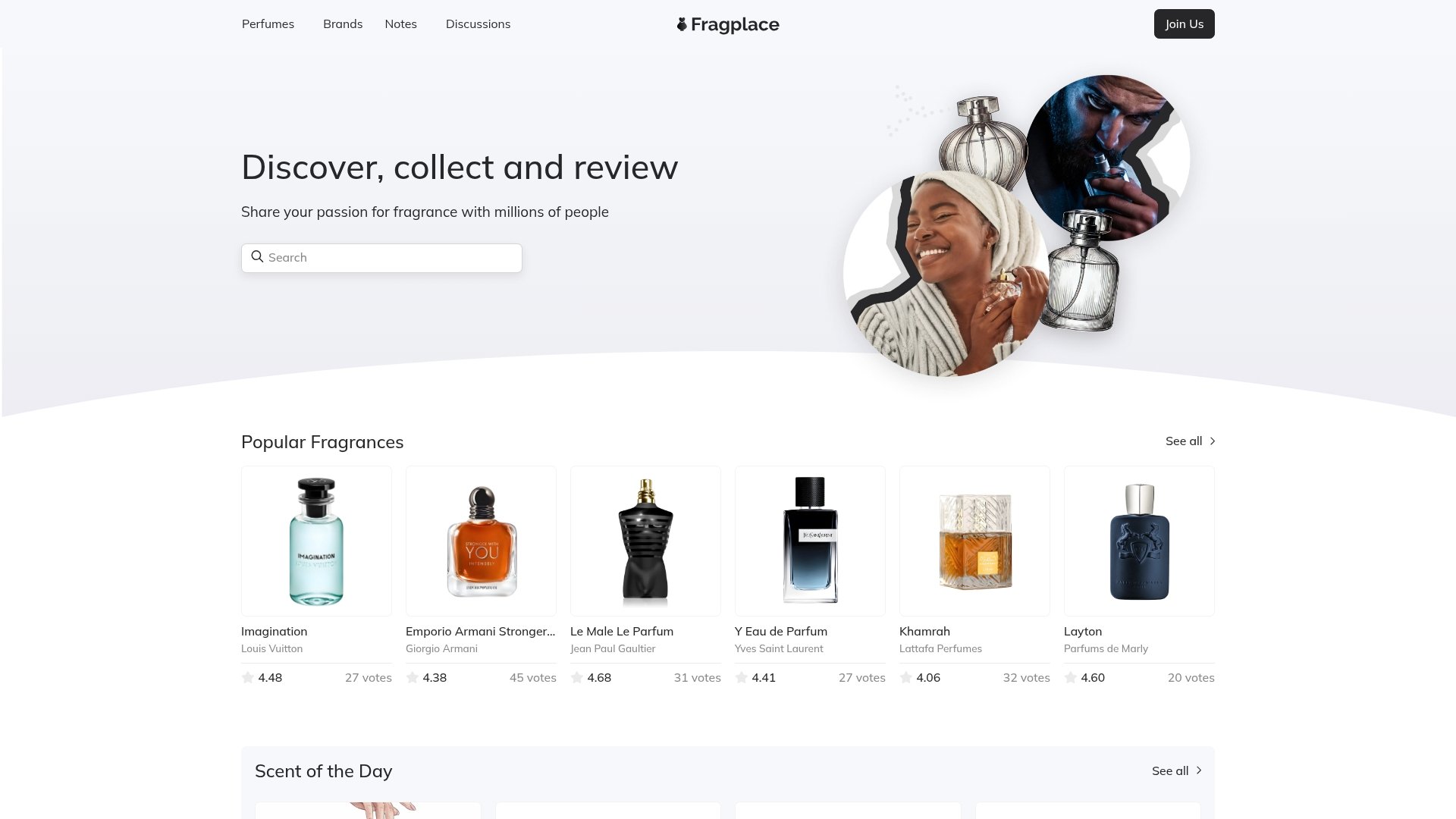
Two things worth doing next, now that the EDT and EDP distinction is clear. Fragplace helps you discover, review and track fragrances by concentration and scent profile, so the comparison happens before you spend.
First, browse our extensive fragrance database filtering by concentration type, longevity, and scent families, and read community reviews comparing the EDT and EDP versions of the same scent side by side. Second, read the perfumers profiles behind the bottles you're drawn to — knowing whose hand shaped a composition explains a lot about why its two concentrations diverge. Thousands of enthusiasts are already logging collections there. Your informed fragrance decisions start here.
Eau de parfum typically lasts 6-10 hours compared to eau de toilette's 3-6 hours. The higher oil concentration is the reason: more scent material stays on skin and releases gradually through the day. Your skin type will push those numbers either way.
Often, no. EDT and EDP versions differ in top, heart and base note emphasis because perfumers design them to be distinct — EDT highlighting fresh top notes, EDP showcasing deeper base notes. Sample the second version before assuming you'll love it as much as the first.
It depends on how often you wear it. EDP costs more upfront but needs fewer sprays and lasts longer, so the cost per wearing usually lands lower for daily wearers who like rich, complex scents. Reach for fragrance only occasionally and that maths stops working, which makes the EDT the better buy.
EDT excels in warm climates, outdoor activities, office environments, and any situation where subtlety is the point. Its fresh, light character suits daytime wear and reapplication without overwhelming the people around you. In a hot summer, it's the more considerate choice.
| Point | Details |
|---|
| Concentration matters | Eau de parfum contains 15-20% fragrance oil whilst eau de toilette holds 5-15%, affecting richness and performance. |
| Longevity differs significantly | EDP lasts 6-10 hours compared to EDT's 3-6 hours, reducing reapplication needs. |
| Scent profiles are distinct | Perfumers craft unique compositions for each type, not just diluted versions. |
| Usage context guides choice | EDT suits warm climates and daytime wear; EDP excels in cooler weather and formal events. |
| Value depends on use frequency | EDP costs more upfront but offers better cost per spray due to extended wear time. |
| Aspect | Eau de Toilette | Eau de Parfum |
|---|
| Typical Price | £40-80 per 100ml | £60-120 per 100ml |
| Longevity | 3-6 hours | 6-10 hours |
| Scent Intensity | Light to moderate | Moderate to strong |
| Best Climate | Warm, humid conditions | Cool, dry conditions |
| Ideal Occasions | Daytime, casual, office | Evening, formal, dates |
| Reapplication | Often needed | Rarely needed |