Parfum vs Eau de Parfum: Complete Fragrance Guide
02 Dec 2025
Over half of british fragrance shoppers admit confusion when choosing between parfum and eau de parfum. This choice is more than just picking a pretty bottle. The concentration and quality of your scent directly shape how long it lasts and how it feels throughout the day. Understanding these differences helps you select a fragrance that fits your lifestyle, delivering both value and a memorable impression.
Table of Contents
- Defining Parfum and Eau de Parfum
- Fragrance Concentrations and Longevity Explained
- Scent Profiles, Performance, and Wearability
- Usage Occasions and Application Tips
- Comparing Costs, Value, and Availability
Key Takeaways
Defining Parfum and Eau de Parfum
When exploring the intricate world of fragrances, understanding the nuanced differences between parfum and eau de parfum becomes essential for enthusiasts and casual wearers alike. These terms, while seemingly similar, represent distinct concentrations of aromatic compounds that significantly impact a fragrance's character, longevity, and sensory experience.
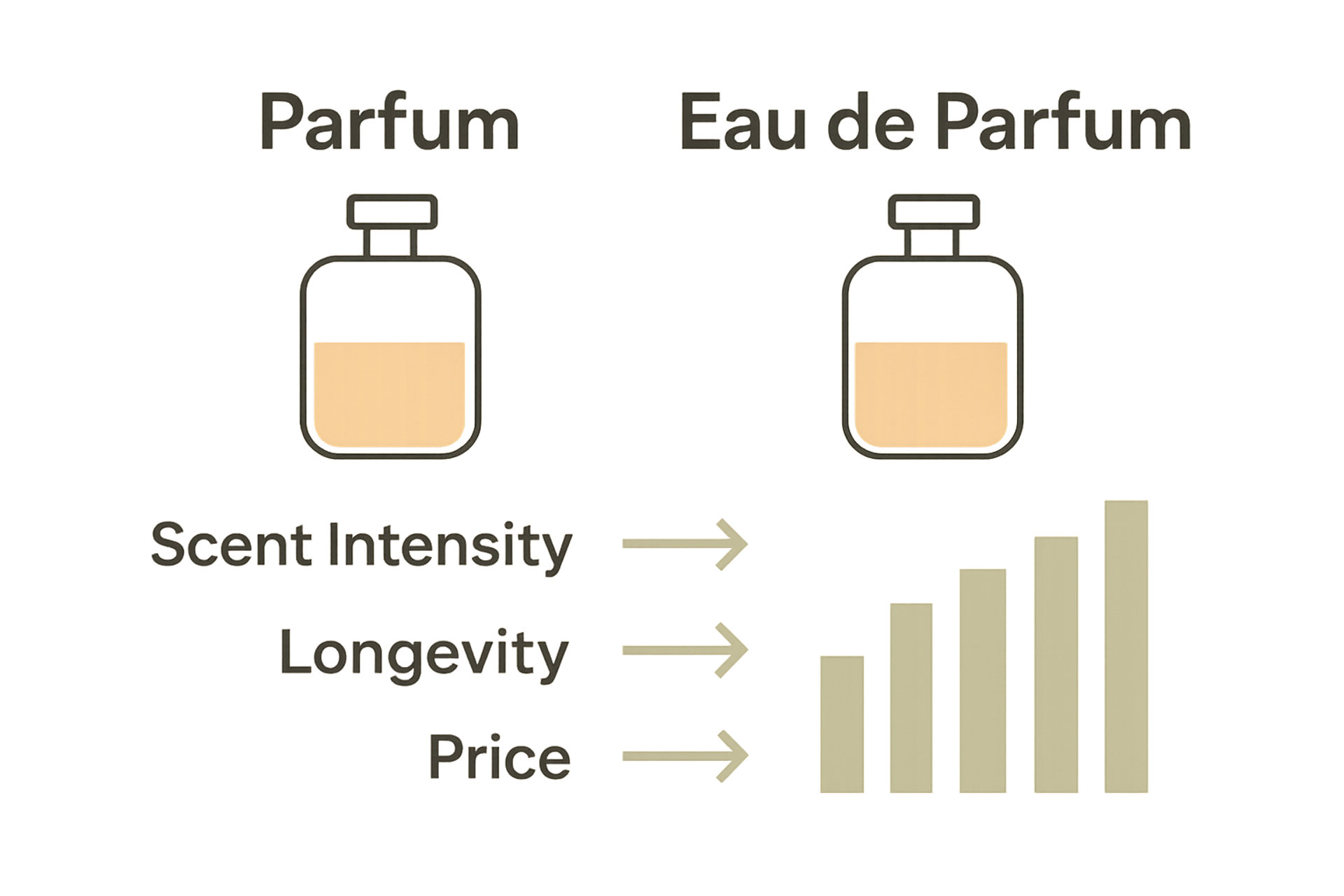
According to fragrance concentration research, parfum (also known as extrait de parfum) represents the most concentrated fragrance variant, containing 20-30% pure aromatic compounds. This high concentration translates into exceptional depth, remarkable staying power, and an intensely rich olfactory profile. In contrast, eau de parfum offers a slightly lighter composition, typically containing 15-20% fragrance concentration, which provides a balanced approach between potency and wearability.
The subtle distinctions between these fragrance types extend beyond mere concentration percentages. Parfum tends to be more expensive due to its superior ingredient density and complexity, often requiring minimal application for profound sensory impact. Eau de parfum, by design, provides a more versatile wearing experience - less overpowering yet still delivering substantial fragrance performance. Fragrance enthusiasts often select between these variants based on personal preference, occasion, and desired olfactory projection. When exploring essential eau de parfum types, understanding these fundamental differences becomes crucial for making informed purchasing decisions.
Ultimately, the choice between parfum and eau de parfum represents a personal journey of sensory exploration. While industry standards provide general guidelines, individual skin chemistry, environmental conditions, and personal taste play significant roles in determining the most suitable fragrance concentration for each unique wearer.
Fragrance Concentrations and Longevity Explained
Understanding the subtle nuances of fragrance concentrations is crucial for perfume enthusiasts seeking the perfect scent experience. The complexity of perfumery extends far beyond simple liquid in a bottle, involving intricate formulations that determine a fragrance's potency, longevity, and overall performance.
International fragrance standards reveal a fascinating spectrum of concentration levels that directly influence a perfume's character. Typically, fragrance concentrations range from delicate 3% formulations to rich 40% extracts, with each percentage point representing a significant shift in sensory experience. Concentration levels fundamentally dictate how long a scent will persist on the skin and the intensity of its aromatic projection.
According to comprehensive research, fragrance longevity varies dramatically across different concentration levels. Detailed fragrance analysis demonstrates that parfum extracts can maintain their olfactory presence for an impressive 8 to 24 hours, while eau de parfum typically endures approximately 4 to 5 hours. This variation stems from the precise ratio of aromatic compounds to alcohol and other base ingredients.
The intricate world of fragrance concentrations presents a nuanced landscape where scientific precision meets artistic expression. Factors such as molecular composition, ingredient quality, and individual skin chemistry interact dynamically, ensuring that no two fragrance experiences are precisely identical. Perfume enthusiasts must consider not just concentration, but also personal preferences, skin type, and intended wearing environment when selecting their ideal scent profile.
Scent Profiles, Performance, and Wearability
The world of fragrances represents a complex interplay between scientific formulation and artistic expression, where scent profiles emerge as unique sensory landscapes that transcend simple olfactory experiences. Each fragrance concentration carries its own distinctive character, nuanced by intricate molecular interactions and carefully selected ingredients.
International fragrance research reveals that scent performance is not merely about concentration, but a sophisticated blend of chemical composition and individual interpretation. While parfum tends to present a richer, more concentrated experience, eau de parfum offers a more versatile approach that adapts seamlessly to various wearing contexts. The performance characteristics of these fragrances depend on multiple factors, including molecular weight, volatility of aromatic compounds, and the precise ratio of essential oils.
According to professional fragrance analysis, parfum typically manifests as a heavier, more intense formulation designed for minimal application. Its oily composition allows for deeper skin penetration and prolonged olfactory projection. Eau de parfum, conversely, provides a more balanced wearing experience - lighter and more approachable, yet still maintaining substantial aromatic depth. This versatility makes it particularly suitable for individuals seeking a fragrance that transitions effortlessly between different social and professional environments.
Ultimately, selecting the ideal fragrance concentration becomes a deeply personal journey. Skin chemistry, wearing occasion, personal preference, and environmental conditions all interact dynamically to influence one's ultimate scent experience. Perfume enthusiasts must approach this selection with both scientific curiosity and artistic sensibility, understanding that the perfect fragrance is not just about strength, but about creating a harmonious olfactory expression that resonates with individual identity.
Usage Occasions and Application Tips
Navigating the intricate world of fragrance application requires both technical understanding and artistic intuition. The selection of fragrance concentration plays a pivotal role in determining appropriate usage scenarios, transforming a simple scent into a sophisticated olfactory statement.
Professional fragrance guidelines reveal nuanced recommendations for applying different fragrance concentrations. Parfum, with its intense composition, demands a minimalist approach - typically requiring just one or two subtle dabs on specific pulse points. These strategic application zones - including wrists, neck, and behind the ears - leverage body heat to gently diffuse the fragrance, creating an intimate and long-lasting sensory experience.
According to international fragrance standards, the choice between parfum and eau de parfum extends beyond mere concentration, encompassing social context and personal expression. Formal evening events often call for the rich, concentrated essence of parfum, while daytime professional settings might benefit from the more understated projection of eau de parfum. Application techniques become critical, with experts recommending gentle dabbing rather than aggressive spraying to preserve the delicate molecular structure of the fragrance.
Ultimately, fragrance application is a deeply personal art form. Skin chemistry, environmental conditions, and individual preferences intertwine to create unique olfactory experiences. Perfume enthusiasts are encouraged to experiment, understanding that the perfect application technique transforms a mere scent into a personal signature - a subtle yet powerful expression of individual style and sophistication.
Comparing Costs, Value, and Availability
The economic landscape of fragrances represents a complex ecosystem where concentration levels directly influence pricing, accessibility, and perceived value. Perfume enthusiasts must navigate a nuanced marketplace that balances quality, intensity, and financial investment.
Professional fragrance research reveals that parfum consistently commands premium pricing due to its exceptional concentration of aromatic compounds. This heightened pricing reflects not just the quantity of fragrance oils, but the intricate craftsmanship and molecular complexity required to create such intense olfactory experiences. A typical parfum might cost three to five times more than its eau de parfum counterpart, representing a significant investment for serious fragrance collectors.
According to international fragrance standards, eau de parfum emerges as the most strategically positioned concentration, offering an optimal balance between availability and affordability. These formulations provide substantial longevity and projection while remaining accessible to a broader range of consumers. Retailers and boutiques typically stock a more extensive selection of eau de parfum variants, reflecting their versatile appeal and consumer-friendly pricing structure.
Ultimately, the decision between parfum and eau de parfum transcends mere financial considerations. Discerning fragrance enthusiasts must weigh multiple factors: personal budget, intended usage, skin chemistry, and individual olfactory preferences. While parfum represents the pinnacle of fragrance concentration, eau de parfum offers a compelling compromise - delivering sophisticated scent experiences without requiring substantial financial commitment.
Discover Your Perfect Fragrance Match at Fragplace
Choosing between parfum and eau de parfum can feel overwhelming when considering intensity, longevity, and occasion suitability. You want a scent that truly resonates with your identity while offering excellent performance and value. Understanding terms like "concentration levels" and how they influence wearability is key but applying that knowledge alone is not enough to find your ideal fragrance.
Fragplace offers a unique, fragrance-centric community where you can explore detailed scent profiles, read authentic reviews, and participate in lively discussions with fellow enthusiasts. Whether you seek the deep richness of parfum or the versatile charm of eau de parfum, our platform supports you every step of the way with expert insights and real user experiences.
Explore the world of fragrances with Fragplace today.
Experience the difference confident fragrance choices make. Visit Fragplace to start your discovery journey. Engage with enthusiasts, uncover new releases, and learn how to personalise your scent collection with ease. Your perfect parfum or eau de parfum awaits.
Frequently Asked Questions
What is the difference between parfum and eau de parfum?
Parfum, or extrait de parfum, contains a higher concentration of aromatic compounds (20-30%) compared to eau de parfum, which has 15-20%. This affects their intensity and longevity.
How long do parfum and eau de parfum last on the skin?
Parfum can last anywhere from 8 to 24 hours, while eau de parfum typically endures for approximately 4 to 5 hours.
How should I apply parfum and eau de parfum for the best results?
Parfum should be applied sparingly to pulse points, such as the wrists and neck, to enhance its intimate scent profile. Eau de parfum can be sprayed more generously but should also be applied to pulse points for optimal performance.
Why is parfum more expensive than eau de parfum?
Parfum is more expensive due to its higher concentration of fragrance oils, which requires more complex formulation and craftsmanship, resulting in a richer olfactory experience.