How to Find Your Perfume Scent: Expert Step-by-Step Guide
04 Dec 2025
Every british perfume enthusiast knows the search for a signature scent can feel endless. Nearly 90 percent of people struggle to identify the perfect fragrance that fits their personality and style. The world of perfume is vast, shaped by science and personal experience, and every step matters, from understanding your preferences to wearing a scent through a busy day. This guide reveals practical steps and insider tips to help you discover a fragrance that feels unmistakably you.
Table of Contents
- Step 1: Identify Your Fragrance Preferences
- Step 2: Explore Popular Scent Families
- Step 3: Sample Perfumes In-Store and Online
- Step 4: Test Fragrances On Your Skin
- Step 5: Evaluate Scents Over Time
Quick Summary
Step 1: Identify your fragrance preferences
Discovering your unique fragrance personality requires understanding how your body chemistry and personal traits influence scent selection. Scientific research suggests that perfume choices are deeply personal and interconnected with individual characteristics, with body chemistry playing a significant role in how fragrances interact with your natural scent.
To effectively identify your fragrance preferences, begin by exploring your sensory experiences and personality. The psychological dimensions of fragrance selection reveal that your emotional responses and character traits can guide your perfume choices. Start by reflecting on scents that evoke positive memories or emotions. Do warm vanilla notes remind you of cosy afternoons? Do citrus fragrances energise you? Pay attention to these instinctive reactions.
A practical approach involves sampling multiple fragrance families without commitment. Visit perfume counters and request tester strips, experiencing different scent profiles such as floral, woody, oriental, and fresh. Observe how each fragrance makes you feel not just through smell, but through the emotional landscape it creates. Your ideal perfume will resonate with your inner self an extension of your personality that feels authentically yours.
Step 2: Explore popular scent families
Understanding fragrance families is crucial for discovering your perfect perfume match. Scent classifications help simplify the complex world of fragrances, categorising perfumes into distinct groups that reflect their core aromatic characteristics. These families serve as a roadmap for navigating the extensive landscape of fragrances.
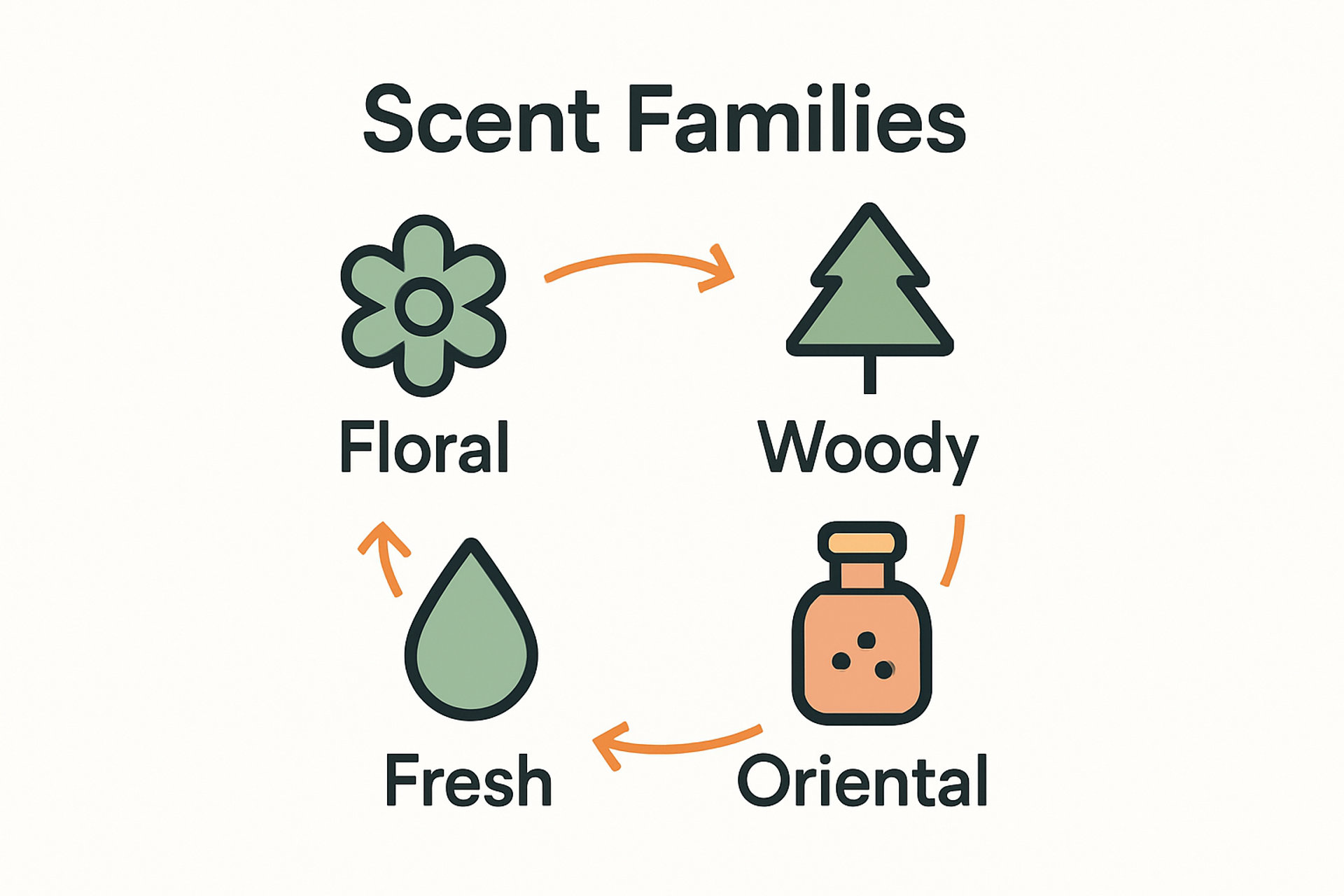
Traditionally, perfumes are divided into four primary families: floral, oriental, woody, and fresh. Each family carries unique personality traits and emotional resonances. Research indicates that warm spicy notes are particularly popular in unisex fragrances, while floral notes tend to dominate womens perfumes. When exploring these families, pay attention to how different scent profiles make you feel. Floral fragrances might evoke romantic sentiments, woody scents could inspire confidence, oriental perfumes may feel mysterious, and fresh fragrances often provide an energetic burst.
To truly understand these families, visit fragrance counters and request sample strips. Experience each scent family systematically sample a floral rose perfume, a woody sandalwood essence, an oriental amber fragrance, and a fresh citrus cologne. Note your emotional and physical reactions tracking which scents feel most authentically aligned with your personality. Your goal is not just to smell pleasant but to find a fragrance that feels like an extension of yourself.
Step 3: Sample perfumes in-store and online
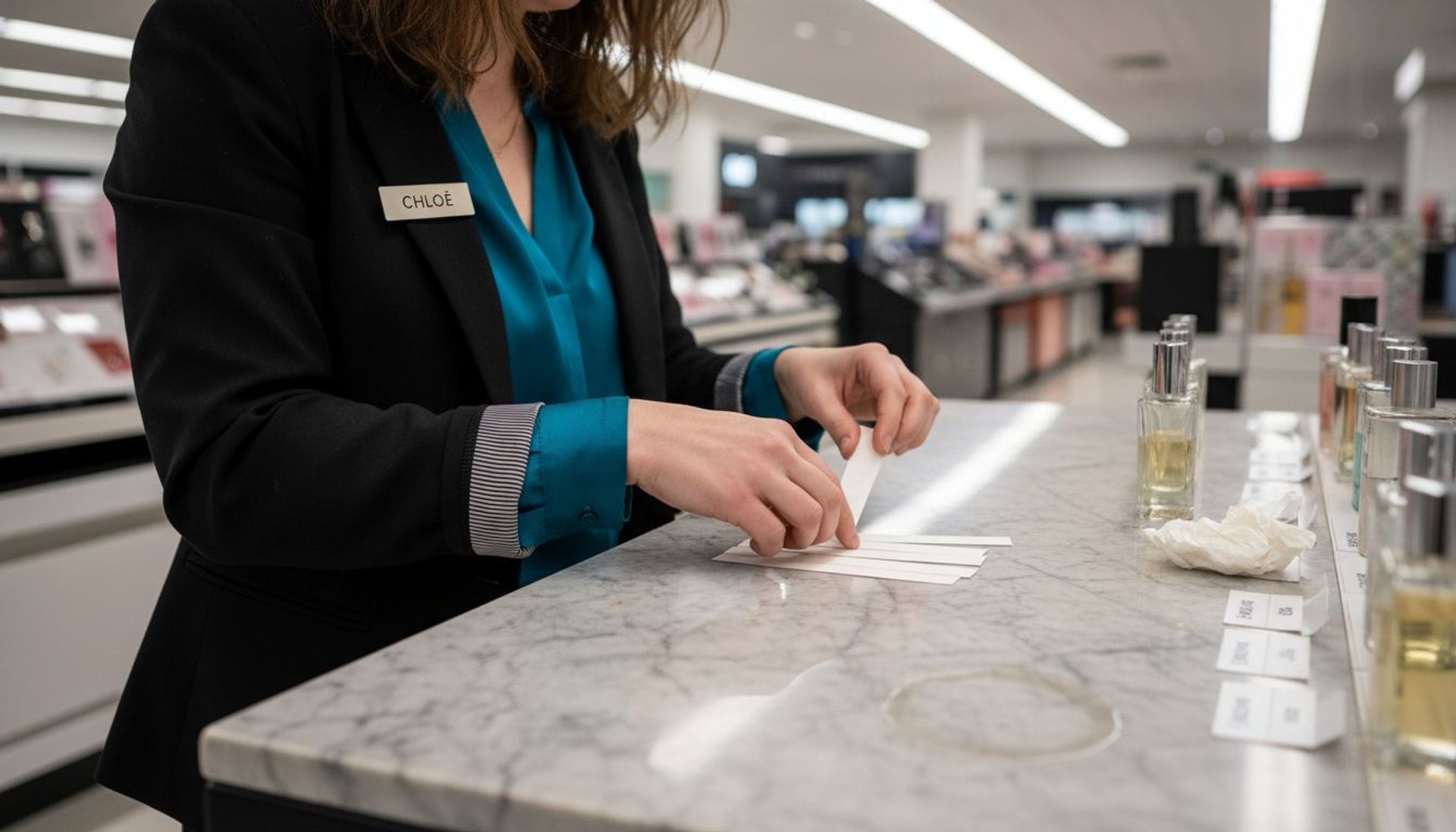
Testing perfumes is an art that requires strategy and patience. Expert recommendations suggest using blotter strips as your initial sampling technique, allowing you to explore fragrances without overwhelming your olfactory senses. This methodical approach helps you narrow down potential scents before committing to a full application.
In physical stores, approach sampling systematically. Start by requesting blotter strips from the fragrance counter and spray each potential perfume onto a separate strip. Hold the strips at a comfortable distance and allow the scent to develop for several moments. Avoid rubbing the strips together as this can alter the fragrance molecules and distort the true scent profile. Take notes on your immediate impressions noting the top notes that first greet your nose and how the scent evolves over time.
Online sampling requires a different strategy. Many fragrance websites offer sample sets or discovery kits that allow you to test multiple scents at home. Look for programmes that provide miniature vials or robust sample strips. When your samples arrive, apply them to your pulse points wrists, neck, inside elbows and observe how they interact with your unique body chemistry. Remember that a fragrance that smells intriguing on a strip might transform entirely when it meets your skin. Explore discussions about fragrance experiences to gain insights from other perfume enthusiasts and broaden your understanding of scent selection.
Step 4: Test fragrances on your skin
Testing perfumes directly on your skin is the ultimate way to understand how a fragrance truly performs. Scientific research confirms that fragrances interact uniquely with individual skin chemistry, revealing nuanced characteristics that cannot be detected through blotter strips alone. This personal interaction is crucial for finding a scent that feels authentically yours.
Select two or three potential fragrances from your initial sampling and apply small amounts to different pulse points. These warm areas wrists, neck, inside of elbows are ideal because body heat helps activate and radiate the fragrance molecules. Skin properties significantly influence how perfume molecules evolve and evaporate, meaning the same perfume can smell subtly different on each person. Wait at least 30 minutes after application to experience the fragrance's full development observe how the top notes transform into heart and base notes.
A professional tip wear the fragrance for a full day if possible. Note how the scent changes throughout different environments and activities. Does it remain pleasant during work? Does it complement your natural body chemistry? Some fragrances might smell wonderful initially but become overwhelming or fade quickly. Your goal is to find a perfume that feels like a natural extension of your personal style an olfactory signature that enhances rather than masks your inherent scent.
Step 5: Evaluate scents over time
Understanding how a fragrance evolves requires patience and strategic observation. Advanced analytical techniques confirm that fragrances have complex absorption and persistence patterns, making it crucial to evaluate a scent across different timeframes and environments. Your goal is to track how the perfume transforms from its initial application to its final lingering notes.
Chemical structure and product composition significantly influence how fragrances interact with individual skin, creating a unique sensory experience. Document your observations methodically note the initial top notes, how the fragrance shifts during midday, and its remaining character by evening. Pay attention to subtle changes most perfumes have three distinct phases initial burst, heart notes, and base notes that reveal themselves at different intervals.
Practical evaluation requires wearing the fragrance through a complete day cycle. Notice how it performs during different activities work, exercise, social interactions. Does the scent remain pleasant and consistent? Some perfumes might start wonderfully but become overwhelming or fade too quickly. Your ideal fragrance should feel like a natural extension of your personal chemistry an olfactory signature that subtly enhances your presence without dominating your sensory environment. Understand the nuanced world of fragrance layers to become a more discerning perfume enthusiast.
Unlock Your Signature Scent with Fragplace
Finding a perfume that truly reflects your personality and body chemistry can feel overwhelming. This expert step-by-step guide highlights the challenges of understanding fragrance families, sampling scents correctly, and evaluating how perfumes evolve on your skin. Many fragrance lovers struggle to decode their own preferences or find reliable places to explore and compare perfumes beyond initial impressions.
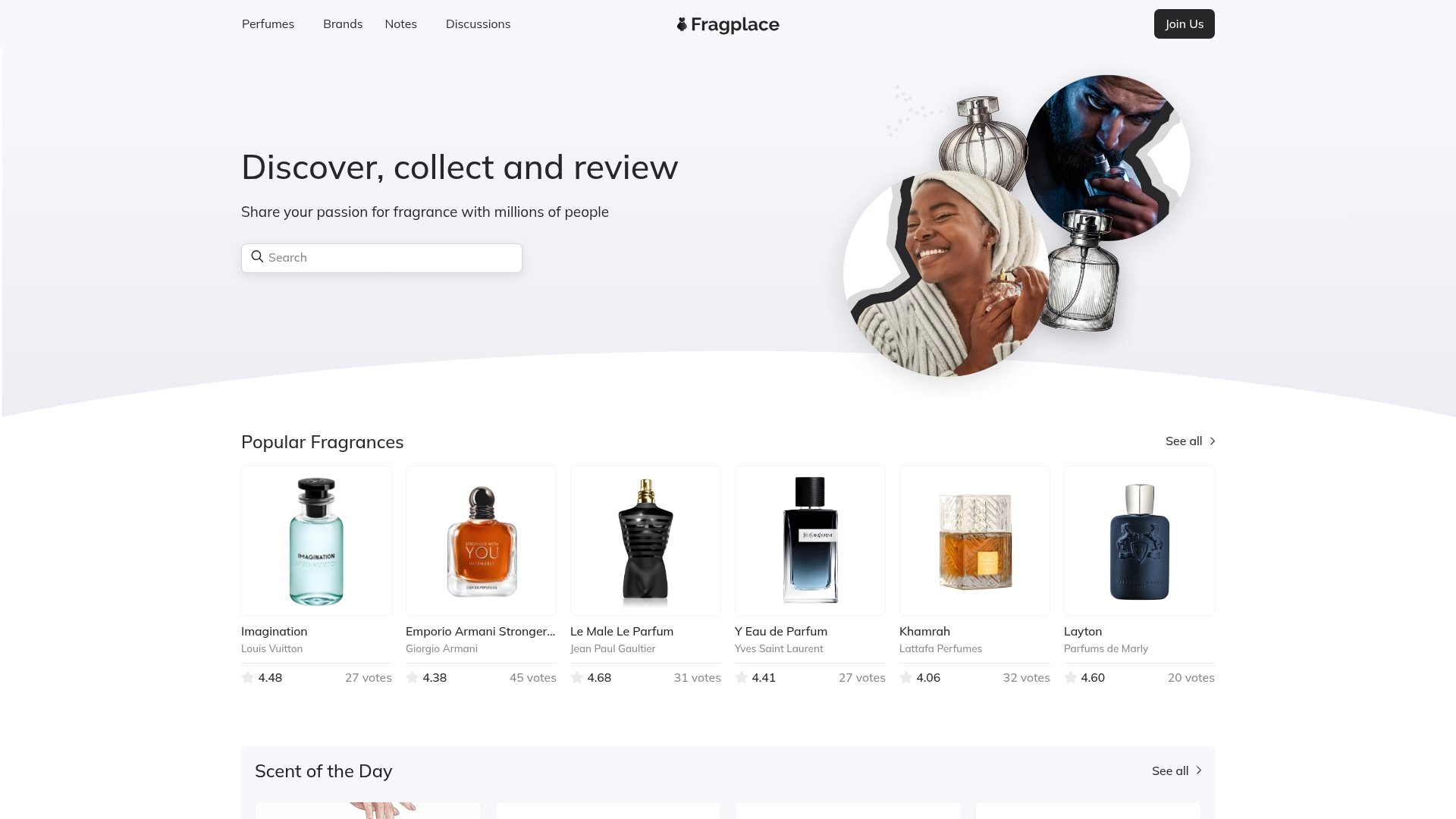
Fragplace.com offers the perfect solution to these challenges by providing a vibrant fragrance community and a comprehensive platform where you can:
- Discover detailed information about fragrance notes, perfumers, and brands
- Read and share authentic reviews from fellow enthusiasts
- Participate in insightful discussions to refine your scent knowledge
Ready to deepen your fragrance journey and confidently select scents that feel like an extension of you? Visit Fragplace now to explore popular fragrances, join passionate discussions, and access tools designed to help you evaluate perfumes over time. Don’t wait to transform your scent discovery experience into something personal and enjoyable.
Start your olfactory adventure today at Fragplace and see how every fragrance tells your unique story.
Frequently Asked Questions
How do I identify my personal fragrance preferences?
To identify your personal fragrance preferences, reflect on scents that evoke positive feelings or memories. Consider what types of aromas, such as sweet vanilla or refreshing citrus, energise you, and explore these reactions in your selection process.
What are the main fragrance families I should know about?
The main fragrance families include floral, oriental, woody, and fresh, each carrying distinct characteristics. Familiarise yourself with these classifications by sampling different perfumes from each family to see how they resonate with your personal style.
How should I properly sample perfumes in-store?
When sampling perfumes in-store, begin by requesting blotter strips to assess multiple scents without overwhelming your senses. Spray each fragrance onto a separate strip, let the scent develop, and take notes on your initial impressions to help narrow down your options.
Why is it important to test perfumes on my skin?
Testing perfumes on your skin is essential because fragrances interact uniquely with each individual's body chemistry. Apply selected scents to warm pulse points and observe how the fragrance evolves over time to ensure it aligns with your personal style.
How can I evaluate a fragrance over time after sampling?
To evaluate a fragrance over time, wear it throughout an entire day and note its performance in different environments and activities. Track the scent's evolution from initial application to its lasting notes, helping you determine if it's the right fit for you.
What should I do if a fragrance smells good at first but changes on my skin?
If a fragrance smells good initially but transforms unfavourably on your skin, reconsider your selection. Test other samples that might complement your body chemistry better, and aim to find a scent that maintains its pleasant aroma throughout the day.