Articles
Ricevi la Fragletter
Nuove storie e selezioni di fragranze nella tua casella di posta. Puoi disiscriverti quando vuoi.
Nuove storie e selezioni di fragranze nella tua casella di posta. Puoi disiscriverti quando vuoi.
Nuove storie e selezioni di fragranze nella tua casella di posta. Puoi disiscriverti quando vuoi.
Nuove storie e selezioni di fragranze nella tua casella di posta. Puoi disiscriverti quando vuoi.
La maggior parte delle recensioni di profumi è intrattenimento travestito da evidenza. Quelle che valgono i tuoi soldi mostrano il loro lavoro: cosa è stato spruzzato, in quali condizioni e se le precedenti valutazioni del recensore si sono rivelate corrette. Questa è la robustezza, ed è più rara di quanto suggeriscano le valutazioni a stelle.
Un punteggio su cinque è un verdetto con il lavoro cancellato. La robustezza è il lavoro — e tiene insieme tre cose invece di lasciare che una rappresenti tutte e tre.
Alla sua base, la robustezza coinvolge tre dimensioni critiche di valutazione:
Il lato scientifico richiede un'analisi metodica, e i ricercatori riconoscono che una valutazione affidabile deve tenere conto della chimica della pelle, delle variazioni di temperatura e delle differenze percettive individuali. Ignorare questi fattori significa non aver recensito un profumo. Hai descritto il pomeriggio di una persona.
I quadri di valutazione strutturati non sono lì per drenare il piacere da questo. Esistono affinché la decima recensione di un recensore significhi la stessa cosa della sua prima, che è l'unico modo in cui un lettore può confrontare qualsiasi cosa.
Consiglio utile: Documenta le tue impressioni sensoriali attraverso diverse sessioni di indossamento prima di impegnarti in un giudizio — le prime impressioni invecchiano male.
Non ogni recensione sta cercando di fare lo stesso lavoro. Giudica una in base agli standard di un'altra e finirai per essere deluso da entrambe.
Tre tipi principali di recensioni di profumi dominano l'ecosistema di valutazione delle fragranze:
I formati continuano a cambiare. Ora esistono valutazioni specializzate per i profumi solidi, che necessitano di criteri propri perché il comportamento fisico del prodotto ha poco a che fare con una formulazione liquida.
Ogni tipo guadagna il suo posto. Le recensioni esperte ti danno l'architettura, le recensioni dei consumatori ti dicono come una fragranza sopravvive a un tragitto, e i panel sensoriali eliminano la lusinga. Leggi una in isolamento e stai ottenendo un terzo del quadro.
Ecco come i tre si confrontano:
Consiglio utile: Controlla più tipi di recensioni prima di acquistare — i divari tra di esse sono solitamente dove si trova la verità.
Chiunque può scrivere con sicurezza. Molti meno possono scrivere con un curriculum, e questa è l'unica cosa che vale la pena pesare.
Le caratteristiche chiave che determinano la credibilità di un recensore includono:
I modelli di valutazione dell'esperienza ora vanno oltre, utilizzando tecniche computazionali per analizzare la variabilità delle recensioni e prevedere la qualità delle valutazioni. Leggono schemi storici e sfumature linguistiche piuttosto che conteggi di stelle, che è un miglior indicatore di utilità rispetto ai numeri dei follower.
La fiducia non deriva dal fatto che un recensore sia positivo o negativo. Deriva dalla profondità — contesto fornito, impressioni sensoriali spiegate, incertezze ammesse. Se non riesci a capire perché qualcuno ha raggiunto il suo verdetto, non puoi prenderlo in prestito.
Consiglio utile: Leggi il catalogo di un recensore, non solo la recensione davanti a te. I modelli ti dicono più di qualsiasi singolo verdetto.
La rigorosità non è un tratto della personalità. È una lista di controllo a cui qualcuno è disposto a essere sottoposto.
Le caratteristiche chiave di un processo di revisione robusto includono:
Le linee guida di valutazione standardizzate svolgono qui il lavoro poco glamour. Trasformano un'impressione soggettiva in qualcosa che un'altra persona può controllare, che è l'intero scopo di pubblicare una recensione piuttosto che tenere un diario.
La linea su cui falliscono la maggior parte delle recensioni entusiastiche è il pregiudizio. Campioni non divulgati, relazioni con i marchi, il costo affondato di una bottiglia costosa — tutto ciò piega un verdetto, e nulla di tutto ciò si mostra a meno che il recensore non lo dica. L'onestà intellettuale è la caratteristica più difficile di questa lista e quella che conta di più.
Consiglio utile: Costruisci una lista di controllo personale per le recensioni che rispecchi gli standard di valutazione professionale, poi applicala anche quando adori il profumo.
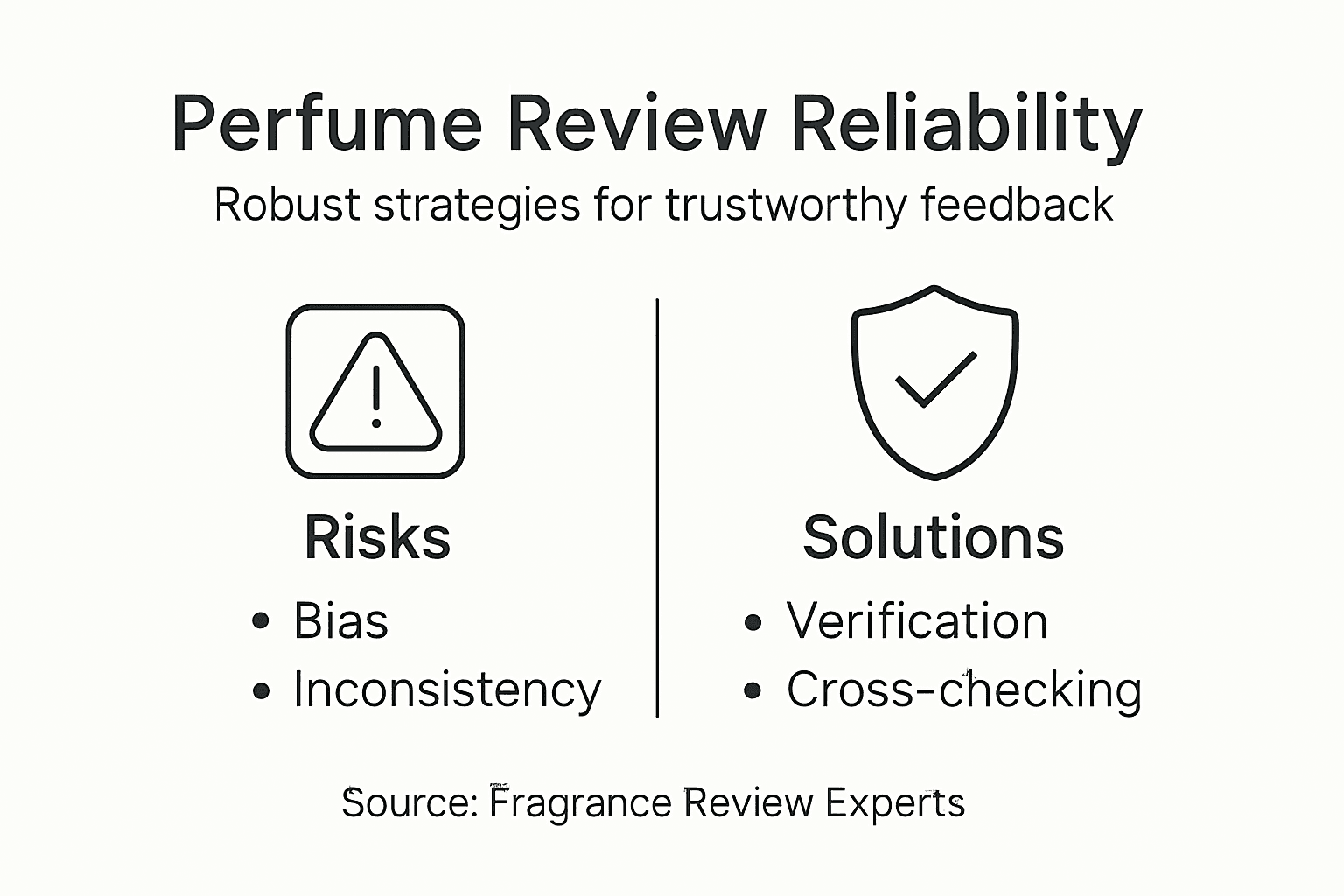
Qui è dove le recensioni di fragranze online diventano brutte. I modi di fallimento sono prevedibili, il che è una buona notizia: puoi imparare a riconoscerli.
I rischi chiave e le potenziali insidie nelle recensioni di profumi includono:
I sistemi di verifica aiutano. Autenticare le identità dei recensori e incrociare le esperienze non eliminerà ogni falso, ma aumenta il costo di scriverne uno, e questa è la maggior parte della battaglia.
Il resto spetta alla comunità. La selezione deve essere rigorosa, il dissenso deve essere benvenuto e la retorica promozionale deve essere riconosciuta per ciò che è. Un forum in cui ogni uscita è un capolavoro è un canale di marketing che indossa un badge.
Strategie che spostano le probabilità a favore del lettore:
| Sfida Rilevata | Strategia di Affidabilità | Beneficio Atteso |
|---|---|---|
| Contenuti falsi o manipolati |
Consiglio utile: Rimani scettico per abitudine — incrocia diverse recensioni e controlla il contesto dietro ciascuna prima di fidarti di esse.
Se cambi un'abitudine dopo aver letto questo, smettila di leggere le recensioni per la conclusione e inizia a leggerle per le condizioni. Prendi la struttura dalle recensioni esperte, il controllo della sanità mentale dai panel sensoriali e la realtà quotidiana dalle recensioni dei consumatori — poi sconta chiunque non ti dica dove si trova. Un recensore che ammette che una fragranza non ha funzionato per lui vale dieci che amano tutto, e lo stesso vale per la piattaforma che le ospita.
Inizia leggendo le analisi delle note e le recensioni verificate dalla comunità su Fragplace.com, dove gli amanti dei profumi casuali e i conoscitori discutono negli stessi thread. Poi scrivi una recensione tu stesso — dichiara le tue condizioni, nomina ciò che ti ha deluso e dai al prossimo lettore qualcosa su cui può agire.
Significa che la recensione tiene insieme tre cose contemporaneamente: analisi chimica obiettiva, valutazione sensoriale soggettiva e valutazione delle prestazioni contestuali. Lasciare cadere anche solo una di esse significa avere un'opinione, non una valutazione.
Cerca trasparenza dell'identità, coerenza delle recensioni, analisi dettagliata e prestazioni storiche di recensioni utili e accurate. Se questi mancano, il tono sicuro sta facendo tutto il lavoro.
Recensioni esperte, basate sull'analisi chimica; recensioni dei consumatori, basate sull'esperienza personale; e valutazioni dei panel sensoriali, che forniscono valutazioni controllate e oggettive. Usale per domande diverse.
Costruisci una lista di controllo personale per le recensioni che rispecchi gli standard di valutazione professionale, documenta sistematicamente le tue esperienze sensoriali e incrocia diverse recensioni piuttosto che quella che concorda con te.
| Punto | Dettagli |
|---|
| Robustezza nelle Recensioni | La robustezza comprende analisi oggettiva, valutazione soggettiva e valutazione contestuale delle fragranze per una comprensione completa. |
| Tipi di Recensioni | Le recensioni esperte si concentrano su dettagli scientifici, le recensioni dei consumatori evidenziano esperienze personali e i panel sensoriali forniscono analisi imparziali. |
| Credibilità del Recensore | Valutare la credibilità del recensore implica esaminare il loro background, coerenza e analisi dettagliata per garantire intuizioni affidabili. |
| Migliorare l'Affidabilità | Implementare sistemi di verifica e metodi standardizzati per migliorare la credibilità e la trasparenza delle recensioni di profumi. |
| Tipo di Recensione | Focus Principale | Approccio di Valutazione | Valore Unico |
|---|
| Recensione Esperta | Analisi chimica e tecnica | Professionale, scientifico | Rivela la struttura tecnica della fragranza |
| Recensione del Consumatore | Impressioni personali ed emotive | Esperienza individuale | Mostra la praticità d'uso quotidiana |
| Panel Sensoriale | Valutazione di gruppo metodica | Test controllati, alla cieca | Offre intuizioni collettive e imparziali |
| Sistemi di verifica dei recensori |
| Maggiore fiducia nelle opinioni pubblicate |
| Incoerenze nei campioni | Metodi di raccolta standardizzati | Valutazioni più rappresentative |
| Distorsione del contesto | Richiedere la divulgazione del contesto della recensione | Migliore interpretazione dei risultati |