Articles
Ricevi la Fragletter
Nuove storie e selezioni di fragranze nella tua casella di posta. Puoi disiscriverti quando vuoi.
Nuove storie e selezioni di fragranze nella tua casella di posta. Puoi disiscriverti quando vuoi.
Nuove storie e selezioni di fragranze nella tua casella di posta. Puoi disiscriverti quando vuoi.
Nuove storie e selezioni di fragranze nella tua casella di posta. Puoi disiscriverti quando vuoi.
There is a moment in every fragrance lover's education when a single bottle changes the way you understand perfumery. For many people today, that bottle was the 1995 creation by — a lavender and vanilla-soaked sailor that somehow managed to feel both retro and radically new. The man behind that breakthrough was a 25-year-old ISIPCA graduate named , and the story of where he went next is the story of modern luxury perfumery.
Kurkdjian did not begin with his own house. For more than a decade after Le Mâle, he worked as a freelance perfumer — a ghost of sorts, lending his nose to brands who would carry others' names. He composed dozens of creations that filled department stores while his own name stayed tucked in tiny press dossiers. In the industry, everyone knew who he was. Outside it, almost no one did.
That changed in 2009 when he opened in Paris — a house explicitly built around his name, his aesthetic, and a direct dialogue with the person wearing the fragrance. The opening salvo was : a sheer, sun-warmed musk built on white florals and clean woods. It was the scent of freshly laundered linen, elevated into something you'd want to wear to a dinner party. In a market cluttered with the dense, opaque orientals then trending, it read as quietly radical.
Nothing in Kurkdjian's career prepared the market for what came next. In 2015, he bottled a combination of , jasmine, and into a red flacon and named it after the most prestigious crystal manufacturer in France. was originally a limited commission for Baccarat's 250th anniversary — a private luxury object, never intended for wide release.
The public disagreement with this plan has become one of perfumery's better recent stories. BR540 was too good to stay exclusive. Kurkdjian opened it to general release, and it swiftly became the fragrance everyone was either wearing, trying to place on someone else's skin, or searching for the name of. Today it is arguably the most imitated fragrance of the last decade, and a significant reason why floriental amber structures — warm, airy, metallic — dominate so much of the mainstream market.
The followed in 2017, pushing the concentration up and dialling the metallic-amber edge into something richer and more enveloping. If the original is the first sip, the extrait is the whole glass.
It would be easy to reduce Kurkdjian to a single bottle, and lazy. The man has built one of the most internally coherent fragrance houses in operation today. demonstrates what he does with heavier materials — rose and oud pulled into something vanillic and confectionery rather than the dry, austere registers that oud usually occupies. It is oud for people who want to be wrapped in it rather than announced by it.
His approach across the collections follows this logic: take a note with centuries of olfactory meaning, strip away the convention, and find a new way in. Lavender, usually the workhorse of masculine freshness, becomes something architectural in his hands. Even the aquatics — Aqua Universalis, Aqua Celestia, Aqua Vitae — feel like light studies rather than the standard blue-soapy freshness that the category usually offers. Each one reads as a different quality of sunlight rather than a variation on clean.
Francis Kurkdjian was appointed creative director of Dior Parfums in 2021 — a role that marks a particular kind of arrival. The house of Sauvage, the most commercially successful men's fragrance in the world, now answers to his nose. It is a strange symmetry: a man who once ghost-wrote blockbusters now gets his name on the door.
What makes his work endure is a commitment to wearability without boredom. Kurkdjian designs fragrances as emotional spaces rather than catalogues of ingredients. You don't smell Baccarat Rouge 540 and think: saffron, jasmine, cedarwood. You think: warmth. Softness. The feeling of being somewhere nicer than where you are.
That is, ultimately, what perfumery does at its best. And few people alive understand this better than .
 Jean Paul Gaultier
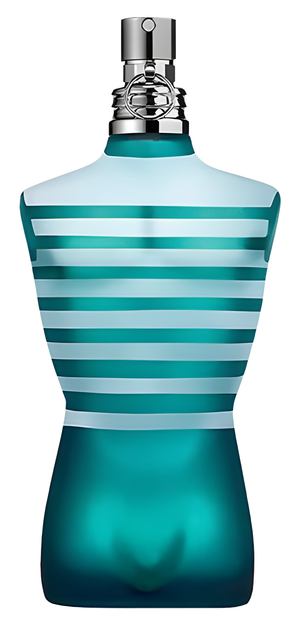 Le Male
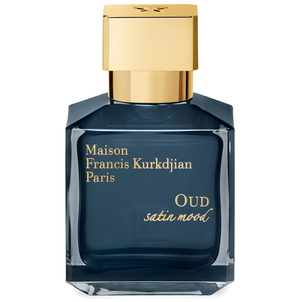 Oud Satin Mood
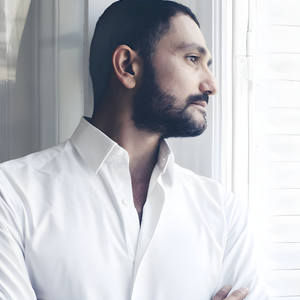 Francis Kurkdjian
 Maison Francis Kurkdjian
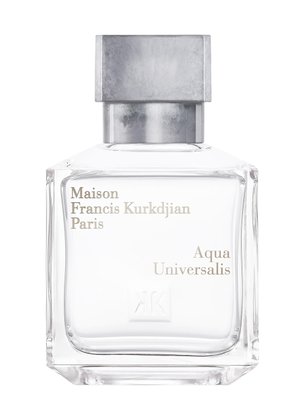 Aqua Universalis
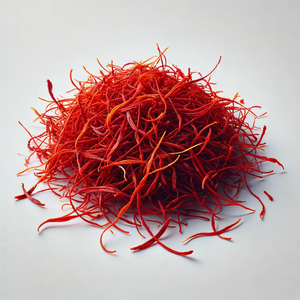 Saffron
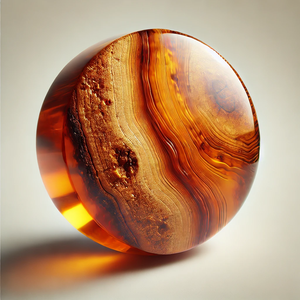 Amberwood
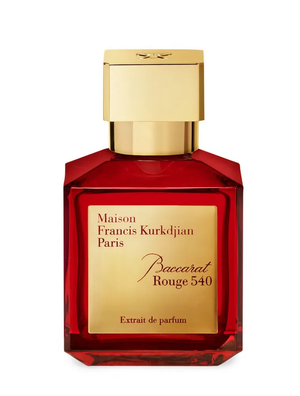 Baccarat Rouge 540 Extrait de Parfum
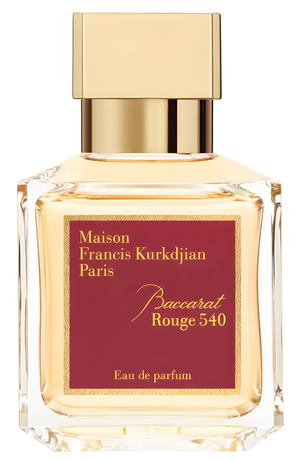 Baccarat Rouge 540