Articles
Ricevi la Fragletter
Nuove storie e selezioni di fragranze nella tua casella di posta. Puoi disiscriverti quando vuoi.
Nuove storie e selezioni di fragranze nella tua casella di posta. Puoi disiscriverti quando vuoi.
Nuove storie e selezioni di fragranze nella tua casella di posta. Puoi disiscriverti quando vuoi.
Nuove storie e selezioni di fragranze nella tua casella di posta. Puoi disiscriverti quando vuoi.
Most people don't fail to find a signature scent because their taste is bad. They fail because they shop for perfume like they're buying shampoo — a few sprays, one tired nose, decision made at the till. Nearly 90 percent of people struggle to identify the perfect fragrance that fits their personality and style, and most of that is method, not luck.
Start with what you already love, not with what's on the counter. Scientific research suggests that perfume choices are deeply personal and interconnected with individual characteristics, with body chemistry playing a significant role in how fragrances interact with your natural scent — a technical way of saying nobody can pick this for you.
The psychological dimensions of fragrance selection show that your emotional responses and character traits guide your choices, so treat your instincts as data rather than noise. Do warm vanilla notes remind you of cosy afternoons? Do citrus fragrances energise you? Those reactions are worth more than any sales pitch at the counter.
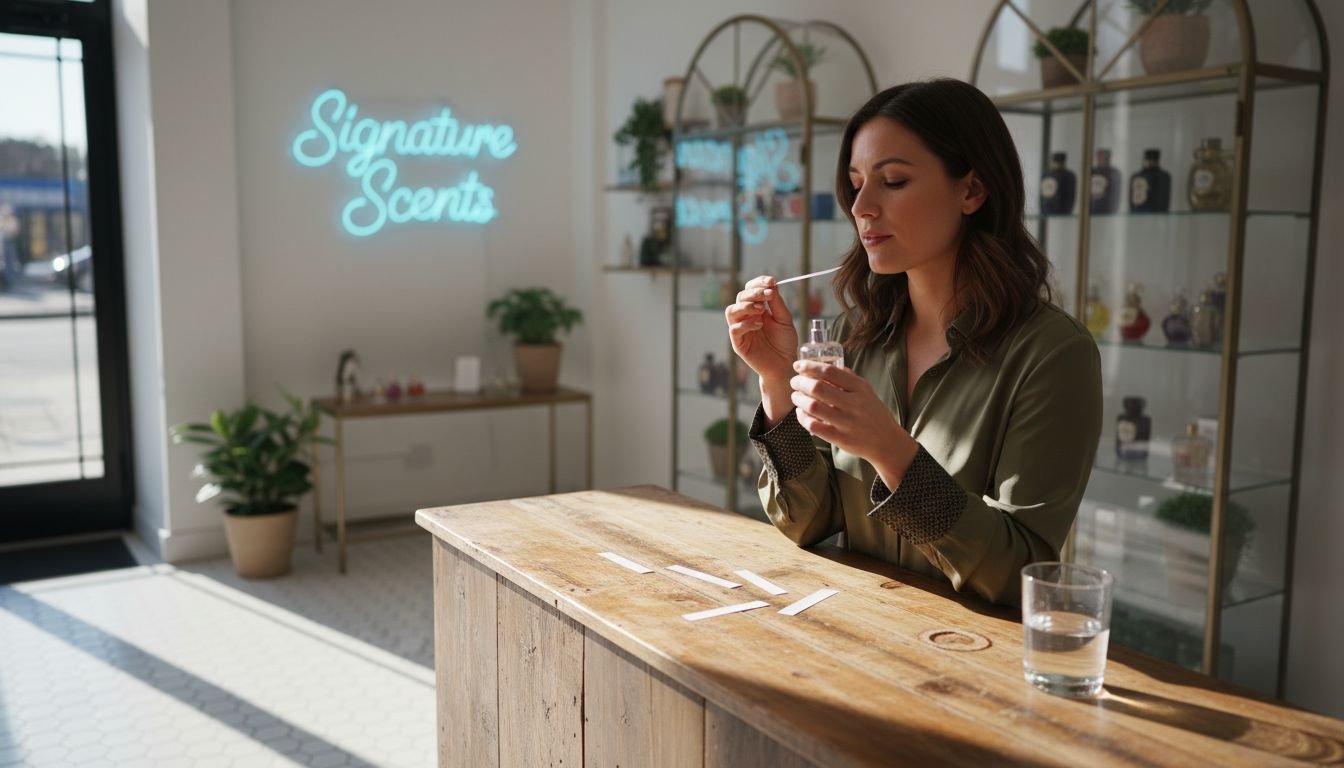
Then sample widely and commit to nothing. Ask for tester strips and work through floral, woody, oriental and fresh without buying a thing. Pay attention to the feeling a scent produces, not just whether it's pretty — plenty of forgettable perfumes are pretty. The one you want reads as an extension of you rather than a costume.
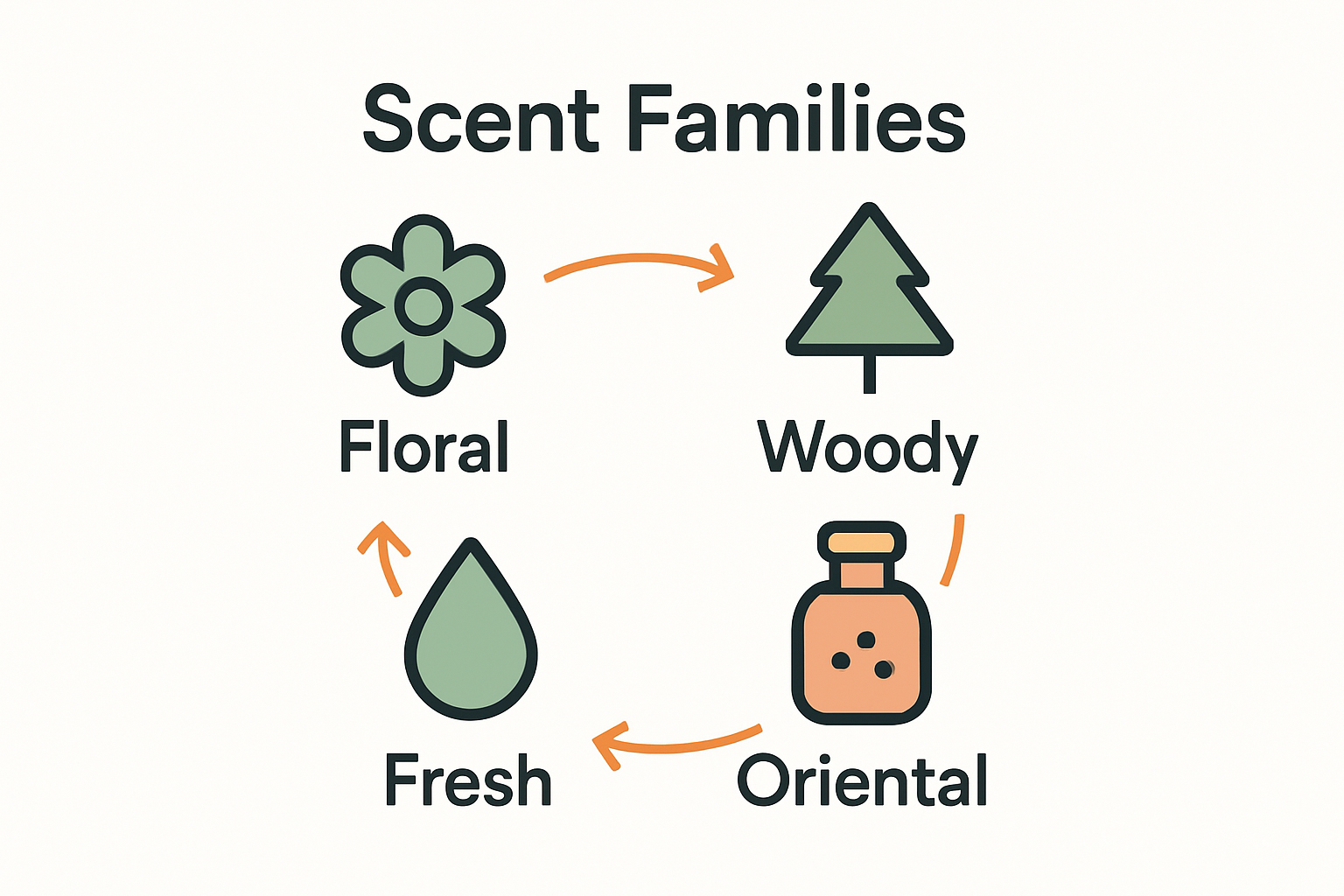
Fragrance families are a cheat sheet, not a cage. Perfumes are traditionally divided into four primary families — floral, oriental, woody and fresh — and working out which one keeps pulling you back narrows the field faster than any bestseller shelf. Research indicates that warm spicy notes are particularly popular in unisex fragrances, while floral notes tend to dominate women's perfumes; useful to know, and equally useful to ignore if neither is you.
Each family carries its own pull. Floral fragrances read as romantic, woody scents inspire confidence, oriental perfumes feel mysterious, fresh ones give an energetic burst. Tendencies, not rules. The genuinely interesting bottles usually sit between two families.
So go and test them systematically: a floral rose perfume, a woody sandalwood essence, an oriental amber fragrance, a fresh citrus cologne. One from each, on strips, at the counter. Note what each one does to you. The aim isn't to smell pleasant. The aim is recognition.
Blotter strips first, skin second — that order matters more than people think. Expert recommendations suggest using blotter strips as your initial sampling technique, and the reason is practical: your nose gives out long before your enthusiasm does.
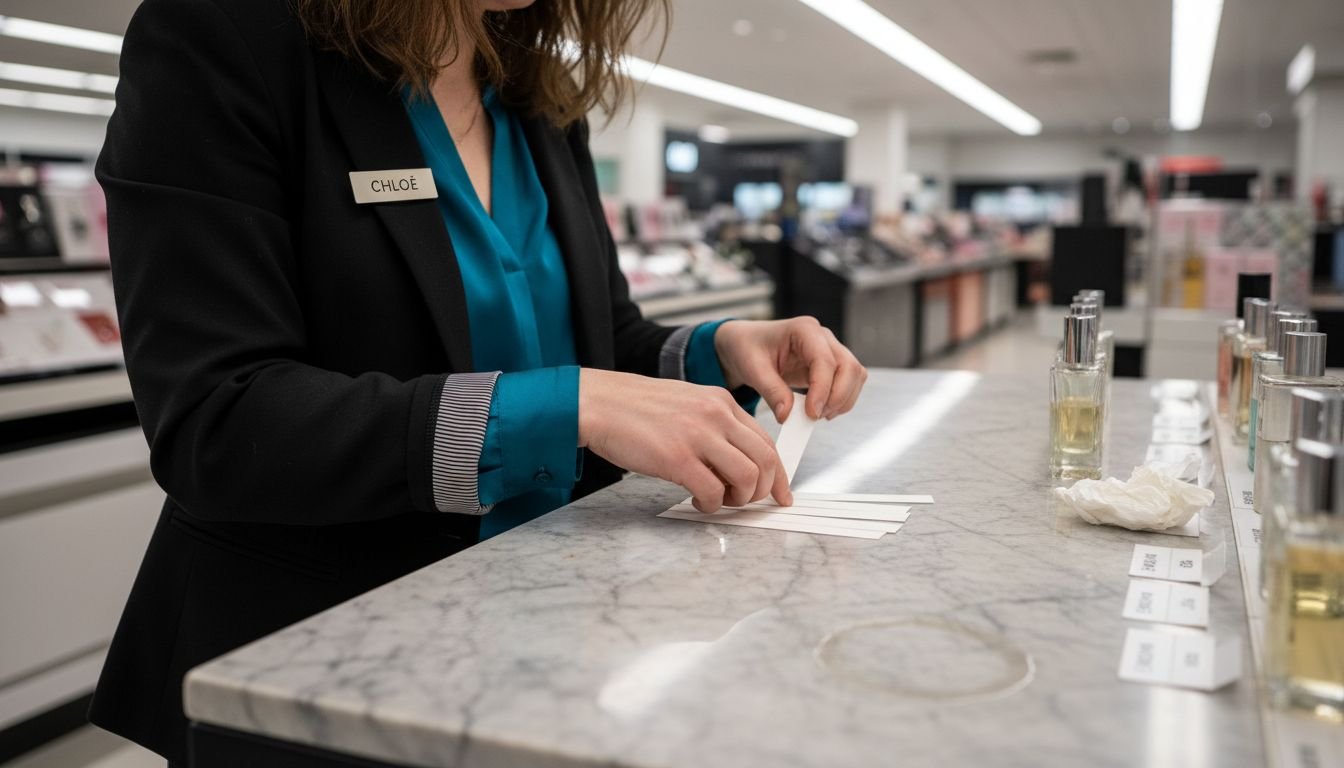
In store, spray each candidate onto its own strip, hold it at a comfortable distance and let it settle. Don't rub the strips together — it alters the fragrance molecules and distorts the true profile, so whoever taught you that habit was wrong. Write down your first impressions: the top notes that greet you, and how the scent moves a few minutes later. You'll have forgotten strip one by strip four otherwise.
Online is a different game. Many fragrance websites offer sample sets or discovery kits so you can test several scents at home, and the good ones send miniature vials or robust sample strips rather than a scented card. When they arrive, apply them to your pulse points — wrists, neck, inside elbows — and see what your body chemistry does to them. A fragrance that's intriguing on paper can become something else entirely once it's warm. Explore discussions about fragrance experiences to gain insights from other perfume enthusiasts and broaden your understanding of scent selection.
Paper flatters perfume. Skin tells the truth. Scientific research confirms that fragrances interact uniquely with individual skin chemistry, revealing nuances a blotter strip can't show, which is why a shortlist built entirely on strips so often disappoints.
Narrow it to two or three and apply small amounts to different pulse points. Wrists, neck, inside of the elbows — warm areas, because body heat activates and radiates the fragrance molecules. Skin properties significantly influence how perfume molecules evolve and evaporate, so the same bottle can smell subtly different from one person to the next. Wait at least 30 minutes before you judge anything. Top notes are the sales pitch; the heart and base are what you're actually buying.
Wear it for a full day if you can. Does it hold up at work? Does it still please you by late afternoon, or has it turned into something you'd rather apologise for? Some perfumes open beautifully and then either shout or vanish. Neither is a scent you'll reach for twice, and the point is to find one that behaves like your own presence rather than a mask over it.
A perfume you've smelled for ten seconds is a perfume you haven't smelled. Advanced analytical techniques confirm that fragrances have complex absorption and persistence patterns, so the only honest test runs across hours and environments.
Chemical structure and product composition shape how a fragrance behaves against individual skin. Keep notes, methodically: the opening, the shift around midday, whatever's left by evening. Most perfumes move through three distinct phases — the initial burst, heart notes and base notes — and the phase that deserves your attention is the one you'll be living inside for hours, not the one that seduces you in the first minute.
Give it a complete day cycle. Work, exercise, social interactions. A scent that's charming across a dinner table can be unbearable in a warm meeting room, and that's information you only get by wearing it. The bottle worth buying still reads as yours by evening, present without taking over the room. Understand the nuanced world of fragrance layers to become a more discerning perfume enthusiast.
Here's the verdict: the step almost everyone skips is the one that decides everything. Sampling is the fun part; living with a shortlisted fragrance for a full day before you pay for it is the dull part that saves you a shelf of barely-used bottles. If you take one thing from this guide, take that.
Fragplace.com is built for the part you can't do at a counter — the research before you commit:
Two things to do next. Start at Fragplace and look up the notes, perfumers and brands behind the bottles on your shortlist. Then Explore discussions about fragrance experiences and find out how those fragrances behave for people who've already lived with them — a far cheaper lesson than learning it at full retail price.
Chase memory. Scents that pull up a good feeling — sweet vanilla, a citrus that energises you — are pointing at where to look, so follow those reactions rather than the bestseller shelf.
Floral, oriental, woody, and fresh. Familiarise yourself by sampling a perfume from each and noticing which one you keep returning to; treat that as your starting point, not your ceiling.
Ask for blotter strips and use one strip per fragrance so you don't overwhelm your senses. Let each scent develop, write down your initial impressions, and build your shortlist from those notes rather than from memory.
Because fragrances interact uniquely with each individual's body chemistry, and a paper strip can't show you that. Apply your shortlist to warm pulse points and watch how each one evolves before deciding.
Wear it through an entire day and watch how it performs in different environments and activities. Track it from first spray to last traces — if it stops being pleasant by mid-afternoon, it isn't the one.
Let it go. Test other samples that suit your body chemistry better; a perfume that only works for twenty minutes is a bad buy at any price.
| Main Insight | Explanation |
|---|
| 1. Understand Your Fragrance Preferences | Reflect on your sensory experiences and how they connect to scents that evoke positive memories or emotions. |
| 2. Familiarise Yourself with Scent Families | Explore floral, oriental, woody, and fresh fragrance families to identify how they resonate with your personality. |
| 3. Test Perfumes Methodically | Use blotter strips to sample fragrances initially, taking notes on your immediate impressions before full application. |
| 4. Apply Fragrance on Skin | Test perfumes on your pulse points to see how they evolve with your body chemistry over time. |
| 5. Evaluate Fragrance Over Time | Wear the fragrance throughout the day to observe how it develops and remains pleasant in various activities. |