Articles
Ricevi la Fragletter
Nuove storie e selezioni di fragranze nella tua casella di posta. Puoi disiscriverti quando vuoi.
Nuove storie e selezioni di fragranze nella tua casella di posta. Puoi disiscriverti quando vuoi.
Nuove storie e selezioni di fragranze nella tua casella di posta. Puoi disiscriverti quando vuoi.
Nuove storie e selezioni di fragranze nella tua casella di posta. Puoi disiscriverti quando vuoi.
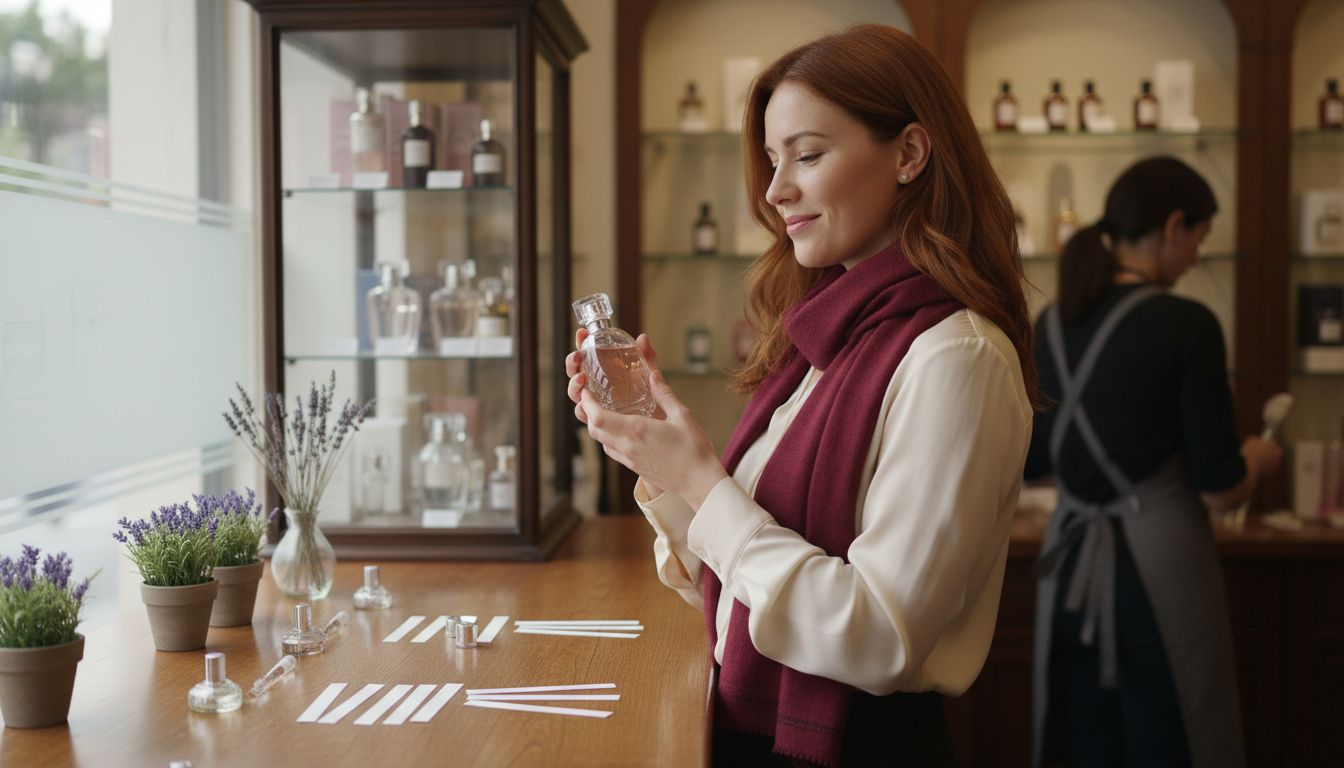
A signature scent isn't the bottle you like best under shop lights. It's the one still working on you four hours later, in the life you actually lead — a much harder test, given that up to 80 percent of perfumes smell different on each person's skin. Here's how to get there without a shelf of expensive mistakes.
Most people shop for a life they don't lead. The black-tie evening, the terrace in July, the version of themselves with somewhere to be at 9pm. Your signature has to survive Tuesday.
So start there. Where do you actually spend your hours — an office, a lecture hall, a building site, a school run? That question rules out more bottles than any note list will. Then work out what pulls you in: the cold citrus-and-marine end of things, or the warm spiced orientals that trade on a bit of drama. Unisex scent profiles are worth a look if you want something that moves between settings without needing to be explained.
Skin chemistry is the variable nobody can predict for you. Body temperature, natural oils and pH shift a perfume's character enough that two people wearing the same thing can read as strangers. Paper is a preview, not a verdict. Sample on skin, and watch the thing move through its opening burst, its heart, and whatever's still clinging at the end of the day.
Practical advice: Sample at different times of day and in different weather. A scent that behaves in a cool morning can turn on you by mid-afternoon.
The four-family map — Fresh, Floral, Oriental, Woody — is crude. Use it anyway, because it's the fastest way to stop buying at random.
Fresh covers the light, crisp end: citrus, marine and green notes, which is daytime and warm-weather territory. Floral runs from delicate rose through to jasmine with its elbows out. Oriental is the warm end — spices, vanilla, amber — and it's the family most likely to be too much at 9am. Woody grounds itself in sandalwood, cedar and patchouli, and tends to be the safest professional bet.
The interesting part is where the map breaks. Plenty of compositions sit across two families at once, and those hybrids are usually the ones that stop smelling like a category and start smelling like a person. Unisex fragrance examples are a good place to test that idea against your own taste.
Practical advice: Ask for samples from the family you're sure you dislike. The category you rule out on paper is often the one that suits your chemistry.
The four families at a glance:
A quick spritz at a counter tells you nothing except whether the opening is pleasant — and openings are engineered to be pleasant. Judge later.
Blotters come first, and they're for narrowing a shortlist rather than choosing from it. When you commit to skin, go to pulse points: inner wrists, neck, behind the ears, where body heat pushes the scent outward. Don't rub. Rubbing bruises the molecular structure and skips the progression you're trying to read. Let it settle, then leave it alone for hours. Different pulse points give slightly different readings of the same perfume, which is useful rather than annoying.
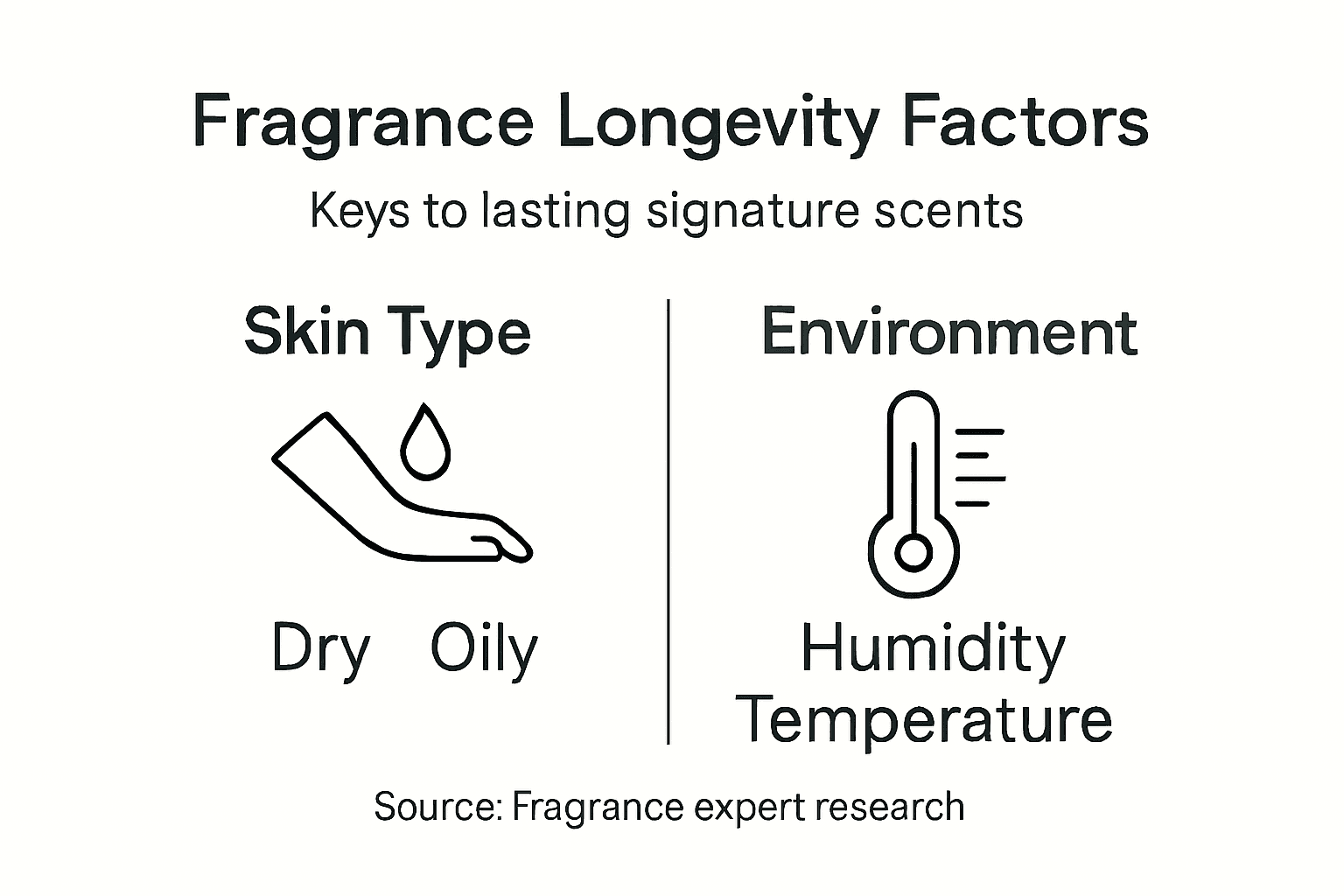
Environment does half the work here. Temperature, humidity and your own biochemistry all change how a composition unfolds, so a fragrance tested once in a warm shop has been tested once, in a warm shop. Some bloom in cool morning air. Others need afternoon heat before they make any sense at all.
Practical advice: Give it at least four hours before you decide. Anything less and you're judging the marketing.
Longevity is where most shortlists collapse, and where the expensive bottle sometimes loses to the cheap one.
Compare properly. Track each scent through its top, heart and base, and note two separate things: projection, meaning how far it carries off the skin, and staying power, meaning whether it's still there at all. They aren't the same measurement. Plenty of perfumes shout for an hour and then vanish; others sit quietly and only get interesting late in the day.
Then be honest about where you'll wear it. A heavy evening scent in an open-plan office is an imposition. A featherweight citrus across a long working day is money evaporating. Composition warns you in advance: heavy base notes, the woody and musky ones, hold on, while citrus and light floral tops are always first to go.
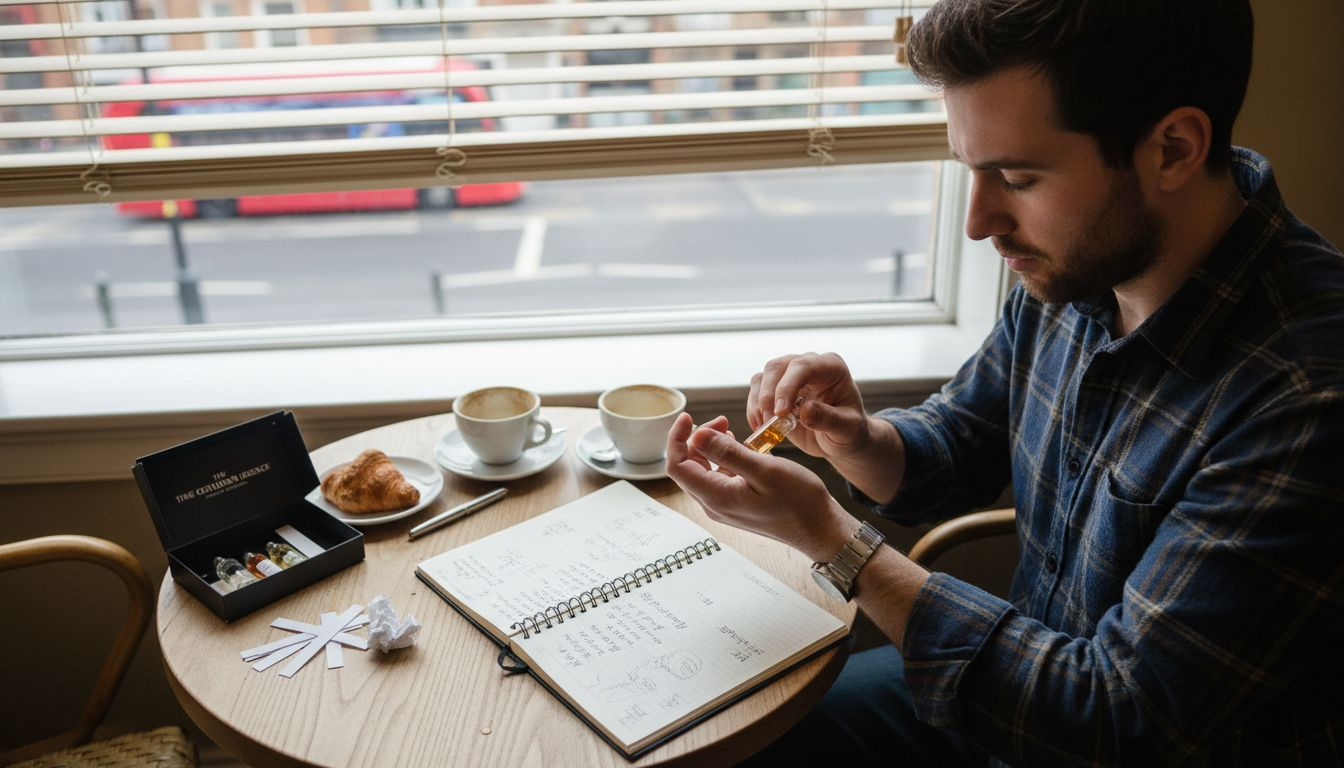
Practical advice: Keep a testing journal. Scent memory is unreliable, and after a few samples you'll be arguing with yourself about which one did what.
How the main factors stack up:
A first impression is attraction, nothing more. Signature scent selection is the slower business of checking whether the thing you like still holds up once it stops being new.
Wear your favourite properly, across the full range: workdays, evenings out, the ordinary quiet ones at home. A signature works when it stays recognisable through all three while still shifting a little with your chemistry. Pay attention to what colleagues and friends say unprompted, too — an unsolicited reaction is the closest thing to an objective reading you'll get.
Then be ruthless with yourself. Note projection, note longevity, and note whether you're still reaching for it or already eyeing the sample tray. Enthusiasm that fades once the novelty does was never a signature.
Practical advice: Two consecutive weeks, in multiple settings, before you call it. Most "signature" scents don't survive the second week.
The hard part isn't liking a perfume. It's working out whether the one you like suits the life you have, how it behaves six hours in, and whether the hype around it is doing more work than the juice. That's a question other people's noses can help with. Fragplace is built for exactly that: a community, a deep database, detailed notes and perfumer credits, honest reviews and discussions worth reading.
If you take one thing from all this, take the two-week rule. Nearly every fragrance regret is a bottle bought on an opening, and the openings are the part designed to sell you. Narrow the field first with 7 Essential Popular Unisex Scents 2025 for Everyday Wear, then bring your shortlist to Fragplace and let people who've lived with these bottles tell you what you're missing.
Work through the four families — Fresh, Floral, Oriental and Woody — with samples rather than opinions. The one you keep going back to, and that suits where you spend your days, is your starting point.
Fresh, Floral, Oriental and Woody. Learn the typical notes and occasions attached to each and you'll waste far less time standing in shops.
Apply to pulse points such as the inner wrists and neck, and let it develop without rubbing. Give it at least four hours before you judge it — the opening is the least honest part of any perfume.
Wear each candidate across several hours and track it through the top, heart and base notes. Keep a testing journal, because comparing perfumes from memory across different days is how people end up with the wrong bottle.
Wear it for at least two weeks across your normal contexts, not just the flattering ones. Watch how it fits your routine and how people react, then decide whether it reads as you.
| Key Insight | Explanation |
|---|
| 1. Assess your scent preferences | Understand your unique scent preferences and how they align with your lifestyle. |
| 2. Explore fragrance families | Familiarise yourself with perfume categorisations to find scents that resonate. |
| 3. Test perfumes on your skin | Apply fragrances directly to pulse points and observe how they evolve over time. |
| 4. Compare longevity of fragrances | Assess each perfume's lasting power and suitability for different occasions. |
| 5. Validate your chosen fragrance | Wear your selected scent in various contexts to ensure it aligns with your identity. |
| Fragrance Family | Typical Notes | Suitable Occasions | Perceived Personality |
|---|
| Fresh | Citrus, aquatic, green | Daytime, warm weather | Energetic, clean |
| Floral | Rose, jasmine, lily | Social events, romance | Elegant, feminine |
| Oriental | Amber, spices, vanilla | Evenings, special occasions | Sensual, sophisticated |
| Woody | Sandalwood, cedar, patchouli | Everyday, professional | Confident, grounded |
| Longevity Factor | Impact on Scent Duration | Example Influence |
|---|
| Skin Type | Oily skin holds scent longer | Dryness causes faster scent fading |
| Note Composition | Base notes last the longest | Musk and wood increase staying power |
| Application Area | Pulse points project better | Wrists and neck enhance longevity |
| Environmental Conditions | Heat intensifies evaporation | Hot weather shortens fragrance duration |