Cologne vs Eau de Parfum: Scent Strength and Longevity
23 Dec 2025
Most people are surprised to learn that over 80% of British fragrance buyers struggle to distinguish between Cologne and Eau de Parfum. The difference goes well beyond just a fancy label or a popular bottle. Understanding what makes each scent unique can change the way you shop, scent your skin, and express your personality. This guide unpacks how British preferences, concentration levels, and scent profiles all play a role in choosing the right fragrance for every occasion.
Table of Contents
- Defining Cologne and Eau de Parfum
- Fragrance Concentrations and Longevity Compared
- Notable Scent Profiles and Usage Scenarios
- Choosing the Right Option for Your Needs
- Common Myths About Perfume Labelling
Key Takeaways
Defining Cologne and Eau de Parfum
Fragrances exist in various concentrations, with Cologne and Eau de Parfum representing two distinct categories that differ significantly in their composition and sensory experience. At their core, these terms define the strength and longevity of a scent based on essential oil concentration.
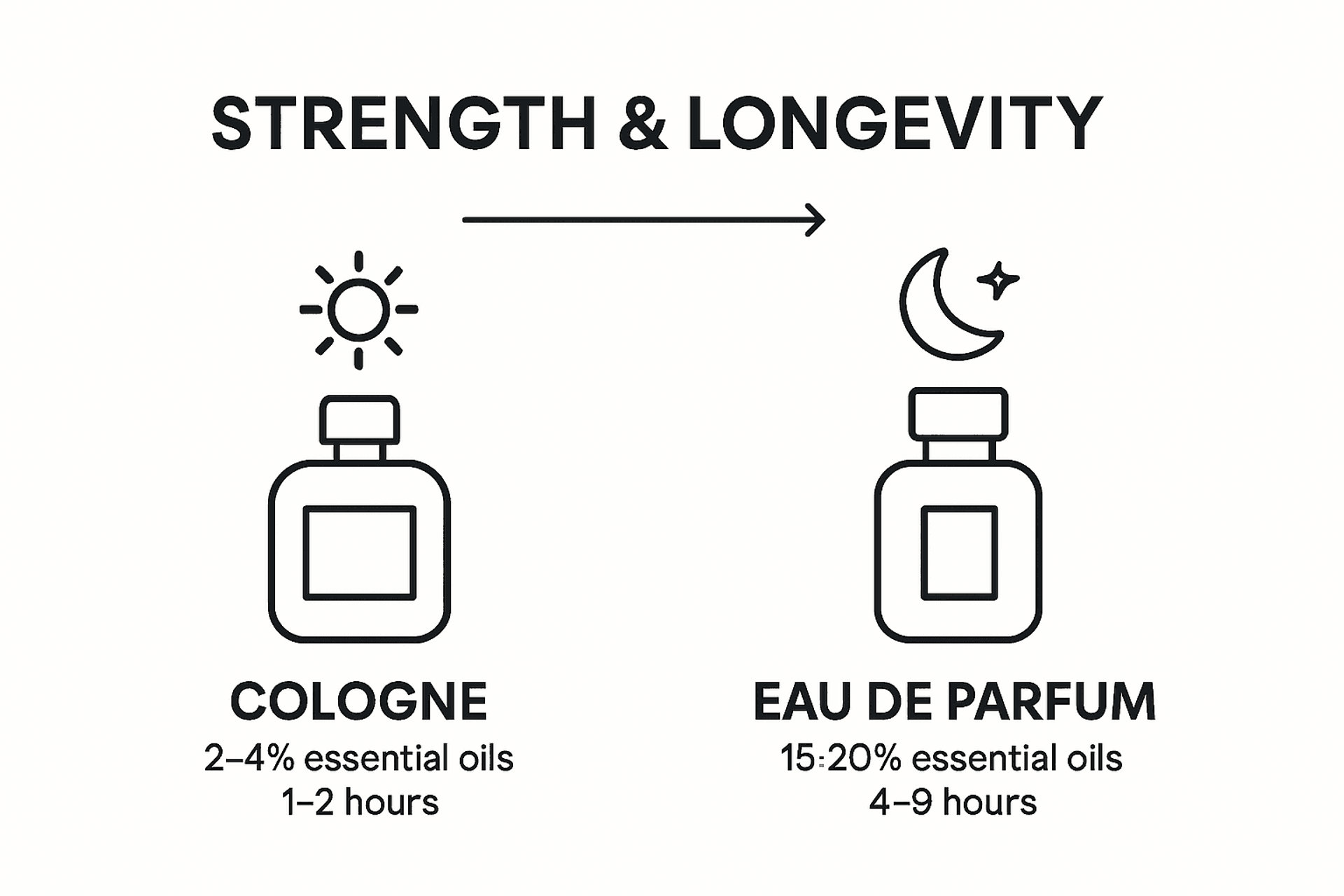
Cologne represents the lightest fragrance category, typically containing 2-4% essential oil concentration, resulting in a subtle and refreshing olfactory profile. Originally emerging from Cologne, Germany, this fragrance type traditionally features bright, zesty notes like citrus and herbs, making it perfect for casual daytime wear or warmer weather conditions. Its low oil percentage means the scent dissipates relatively quickly, often lasting between 1-2 hours on the skin.
In contrast, Eau de Parfum offers a more intense fragrance experience with 15-20% essential oil concentration, delivering a richer, more complex scent that lingers substantially longer. This higher oil content allows Eau de Parfum to maintain its aromatic character for 4-6 hours, providing wearers with a more persistent and nuanced fragrance profile. The increased concentration enables deeper, more sophisticated note developments, typically featuring base notes that unfold gradually throughout the day.
Pro Tip for Fragrance Selection: Consider your daily activities and personal preference when choosing between Cologne and Eau de Parfum. For quick, light refreshment, opt for Cologne; for lasting, sophisticated scent coverage, select Eau de Parfum.
Here is a concise comparison of Cologne and Eau de Parfum for easy selection:
Fragrance Concentrations and Longevity Compared
Understanding the nuanced relationship between fragrance concentration and longevity is crucial for selecting the perfect scent. Fragrance strength isn't merely about intensity, but a complex interplay of essential oil percentages, molecular composition, and individual skin chemistry that determines how a perfume performs throughout the day.
The concentration spectrum ranges from light Eau de Cologne to rich Eau de Parfum, with each category offering distinct performance characteristics. Fragrance enthusiasts can explore deeper insights into these variations by examining the precise oil percentages and their corresponding sensory experiences. Lower concentration fragrances like Cologne typically disperse quickly, providing a brief, fresh burst of aroma ideal for warm weather or casual settings. Conversely, higher concentration formulations such as Eau de Parfum maintain a more persistent presence, with complex notes that evolve subtly over several hours.
When comparing longevity, skin type and environmental factors play significant roles alongside concentration. Individuals with drier skin tend to experience shorter fragrance lifespans, while those with more natural oils might find scents clinging more tenaciously. Ambient temperature, humidity, and personal body chemistry can dramatically alter how a fragrance develops and persists, transforming even a standard Eau de Parfum into a uniquely personal olfactory experience.
This summary highlights key external factors shaping fragrance performance:
Pro Tip for Fragrance Performance: Layer your fragrance by using matching body products like unscented moisturiser before application to enhance longevity and create a more sustained scent profile.
Notable Scent Profiles and Usage Scenarios
Fragrances are not merely aromatic substances but complex sensory experiences that communicate personal style, mood, and occasion. The distinction between Cologne and Eau de Parfum extends far beyond concentration, encompassing nuanced scent profiles that serve different social and personal contexts.
Exploring the intricate world of fragrance types reveals how Cologne traditionally embodies light, effervescent characteristics. Typically composed of vibrant citrus, herbal, and crisp botanical notes, Cologne offers a refreshing and invigorating aroma ideal for daytime wear. Its delicate composition makes it perfect for casual settings, sporting events, workplace environments, and warm summer afternoons when a subtle, non-overpowering fragrance is desirable.
In contrast, Eau de Parfum presents a more complex and sophisticated olfactory landscape. With its higher essential oil concentration, this fragrance category delivers richer, more intricate scent profiles suitable for evening events, formal gatherings, and intimate social interactions. The deeper note structures often incorporate woody, oriental, or musky elements that unfold gradually, creating a more dramatic and lasting sensory experience. These fragrances tend to have remarkable depth, with base notes that can persist for several hours and evolve subtly against an individual's unique skin chemistry.
Pro Tip for Scent Selection: Match your fragrance profile to the specific occasion, considering both the concentration and the note composition to ensure you make the right aromatic impression.
Choosing the Right Option for Your Needs
Selecting the ideal fragrance is a nuanced decision that goes beyond mere personal preference, requiring careful consideration of multiple factors that influence scent performance and individual compatibility. Understanding your lifestyle, skin chemistry, and social contexts can transform fragrance selection from a random choice to a strategic personal statement.
Fragrance enthusiasts seeking personalised recommendations should first assess their daily environments and typical social interactions. For professionals working in close-quarters office settings, a subtle Cologne might prove more appropriate, offering a light, non-intrusive aromatic presence. Conversely, individuals frequently attending evening events, networking functions, or formal gatherings would benefit from the more sophisticated and persistent nature of an Eau de Parfum, which provides a more complex and memorable olfactory impression.
Physiological factors play a critical role in fragrance selection. Skin type, body temperature, natural oil production, and even dietary habits can dramatically influence how a scent develops and persists. Individuals with drier skin might find Eau de Parfum more advantageous, as its higher oil concentration helps the fragrance adhere more effectively. Those with naturally oily skin could experience faster scent dissipation, making the lighter Cologne concentration potentially more suitable for their unique body chemistry.
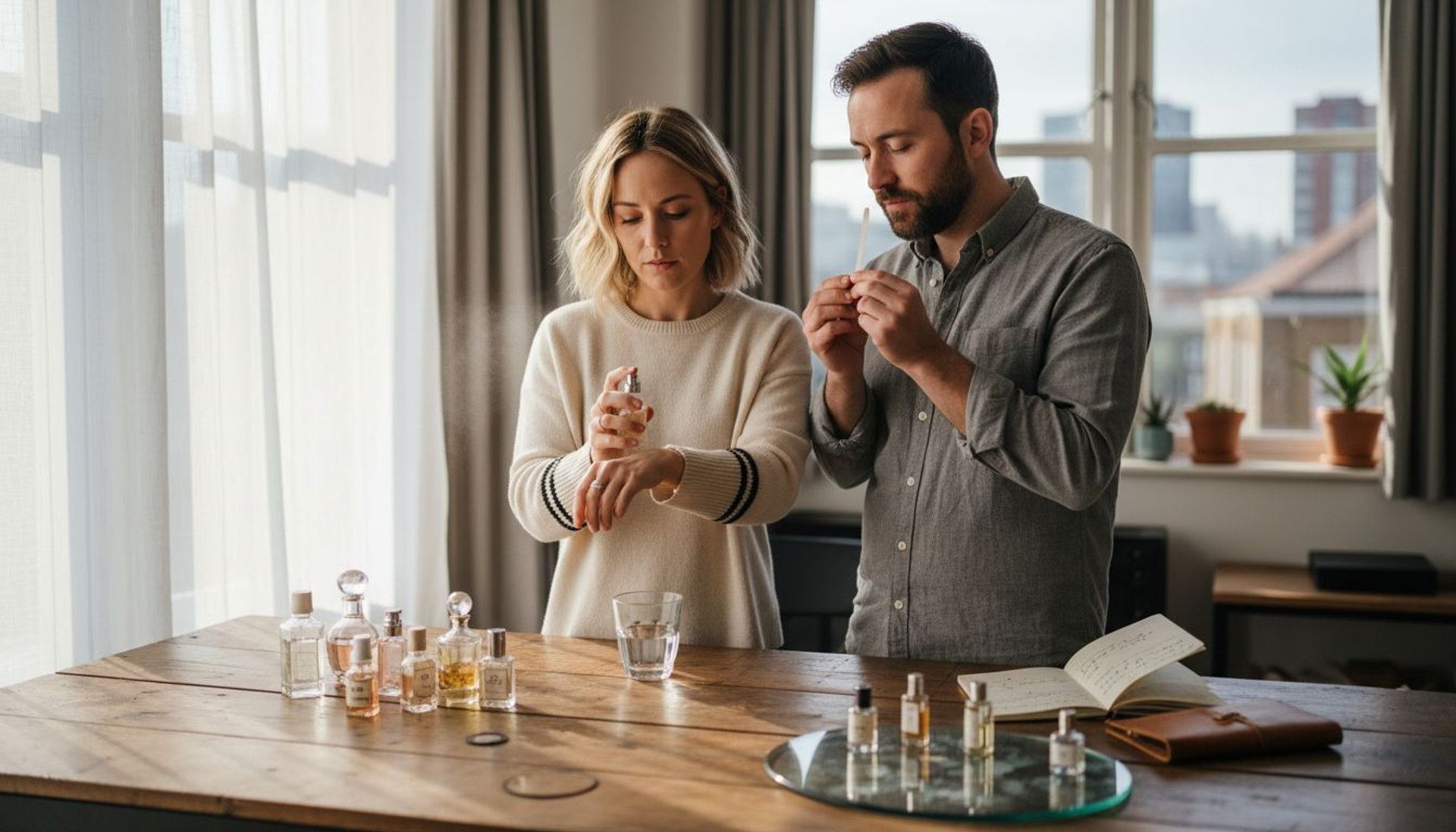
Pro Tip for Fragrance Matching: Always sample fragrances on your own skin and allow them to develop for several hours, as individual body chemistry can transform a scent's initial impression into a completely different olfactory experience.
Common Myths About Perfume Labelling
The world of fragrance nomenclature is riddled with misconceptions that can perplex even seasoned scent enthusiasts. Understanding the nuanced terminology helps consumers make more informed purchasing decisions and appreciate the subtle complexities of aromatic classifications.
Fragrance terminology has evolved significantly over time, challenging many long-standing assumptions about perfume labelling. One prevalent myth suggests that Cologne is exclusively a masculine fragrance category. In reality, the term originally referred to a specific concentration of essential oils, not a gendered product. This misconception stems from marketing strategies that have historically positioned lighter fragrances as predominantly male-oriented, when in fact, scent selection should be based on personal preference rather than restrictive gender boundaries.
Another widespread misunderstanding involves the perceived hierarchy of fragrances. Many consumers mistakenly believe that higher concentration automatically equates to superior quality, overlooking the nuanced art of fragrance composition. The truth is that concentration merely indicates oil content and longevity, not inherent artistic or olfactory superiority. Some exquisite fragrances with lower oil percentages can be just as sophisticated and complex as their more concentrated counterparts, demonstrating that true olfactory artistry transcends simple numerical measurements.
Pro Tip for Fragrance Understanding: Approach perfume selection with an open mind, recognising that labelling conventions are often more fluid and less definitive than marketing would suggest.
Discover Your Perfect Scent Match with Fragplace
Choosing between Cologne and Eau de Parfum can feel overwhelming when you consider factors like essential oil concentration, scent longevity, and your unique skin chemistry. Many fragrance lovers struggle to find a scent that not only suits their style but also endures through their daily activities. This article clearly highlights the challenge of balancing light freshness with lasting sophistication.
At Fragplace, we understand these nuances deeply. Our fragrance-centric platform empowers you to explore detailed scent profiles, compare popular fragrances, and learn from expert reviews and user experiences. Whether you seek the subtle vibrancy of Cologne or the complex depth of Eau de Parfum, our community offers invaluable insights to help you make informed choices tailored to your personal preferences and lifestyle.
Unlock the full potential of your fragrance journey by joining a passionate community that celebrates every facet of scent. Visit Fragplace.com now to browse in-depth perfume notes, participate in discussions, and discover new releases that align perfectly with your needs. Embrace confidence in your scent selection today and experience fragrance like never before.
Frequently Asked Questions
What is the difference between Cologne and Eau de Parfum?
Cologne typically contains 2-4% essential oil concentration, resulting in a light, refreshing scent that lasts 1-2 hours. In contrast, Eau de Parfum contains 15-20% essential oils, offering a richer fragrance experience that lasts 4-6 hours.
How should I choose between Cologne and Eau de Parfum?
Consider your daily activities and the setting. Cologne is ideal for casual, daytime wear, while Eau de Parfum is better suited for formal events and evenings due to its more intense scent.
How does skin type affect fragrance longevity?
Skin type plays a significant role in how long fragrances last. Oily skin typically retains scent longer, while dry skin can cause a fragrance to dissipate more quickly. Environmental factors like temperature and humidity also influence fragrance performance.
Can a lower concentration fragrance be just as sophisticated as a higher concentration one?
Yes, the sophistication of a fragrance isn't solely determined by its concentration. Many lower concentration fragrances can be complex and elegant, showcasing that quality and artistry in scent go beyond mere oil percentages.