Not all british fragrances are created equal and the difference can be surprising. The choice between Eau de Parfum and Eau de Toilette goes well beyond personal taste, shaping the strength and staying power of your signature scent. With Eau de Parfum sporting up to 15 percent aromatic compounds, fragrance lovers experience a richer and more memorable impression compared to lighter alternatives. Discover how choosing the right concentration can impact not just your daily routine but every social setting.
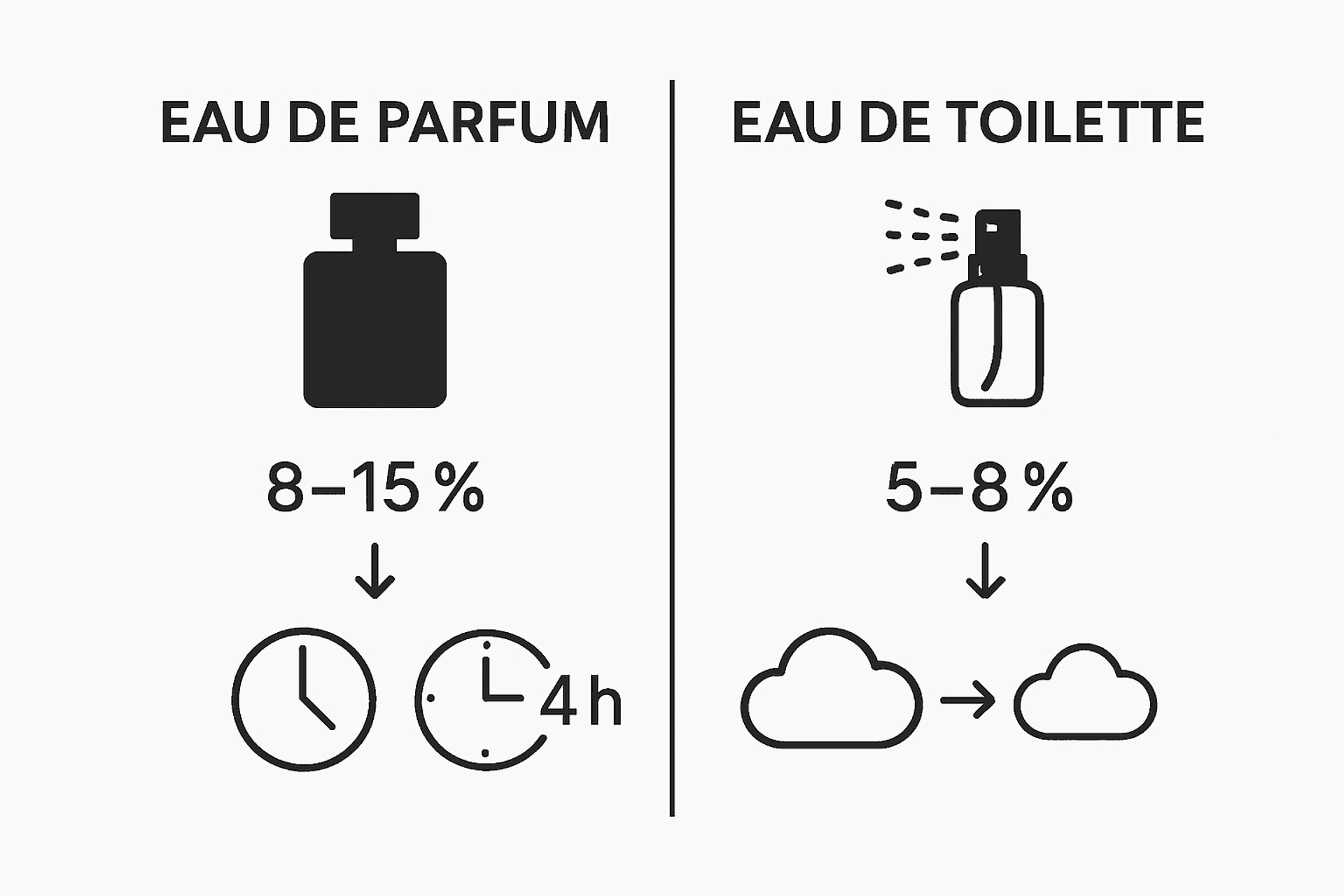
Eau de Parfum contains 8–15% aromatic compounds, providing higher intensity and longevity compared to Eau de Toilette, which has 4–8%.
Scent Layering Strategy
Experiment with different fragrance concentrations to create a personalised scent that suits various occasions and environments.
Choosing Based on Skin Type and Weather
Consider your skin type and climatic conditions when selecting fragrances; for instance, people with dry skin should opt for higher concentrations.
Debunking Perfume Myths
Higher concentration does not always mean better quality; individuals should test scents on their skin to gauge compatibility and performance.
Defining Eau de Parfum and Eau de Toilette
Fragrance concentrations are more than just technical details - they fundamentally determine how a scent performs on your skin. Eau de Parfum (EdP) and Eau de Toilette (EdT) represent two distinct fragrance categories with critical differences in potency and longevity.
According to scientific research, Eau de Parfum contains 8–15% aromatic compounds, creating a more intense and longer-lasting fragrance experience. Eau de Toilette, by comparison, features a lower concentration ranging from 4% to 8%, resulting in a lighter, more subtle scent profile. These concentration levels directly impact how long the fragrance remains detectable and its overall sensory impact.
The primary distinctions between Eau de Parfum and Eau de Toilette extend beyond mere percentage points. EdP typically offers deeper, more complex scent layers that evolve throughout the day, making it ideal for evening wear or special occasions. Eau de Toilette provides a more delicate fragrance perfectly suited for daytime use, offering a refreshing and understated aroma that doesn't overwhelm.
Pro Tip: Fragrance Selection Strategy: When choosing between Eau de Parfum and Eau de Toilette, consider your lifestyle, personal preferences, and the specific context - evening events demand more intense fragrances, while professional settings typically call for lighter, more subtle scents.
Key Differences in Scent Concentration
Fragrances are a complex art form, with scent concentration playing a pivotal role in determining their character and performance. Understanding the nuanced variations between different fragrance types helps enthusiasts make more informed choices about their olfactory selections.
Research reveals fascinating distinctions in fragrance oil percentages, demonstrating a clear hierarchy of intensity. Parfum represents the most concentrated form, containing 15–40% fragrance oils, while Eau de Parfum ranges between 15–20%, and Eau de Toilette spans 5–15%. These percentage differences translate directly into sensory experience - higher concentrations mean more pronounced scent projection, longer-lasting impressions, and more complex olfactory development throughout the day.
The concentration levels influence not just intensity, but also application strategy and wear duration. Higher concentration fragrances like Eau de Parfum tend to have remarkable staying power, often lasting 6-8 hours, whereas Eau de Toilette typically provides a lighter, more ephemeral experience lasting approximately 3-4 hours. This variance makes each concentration suitable for different occasions, personal preferences, and environmental contexts.
Pro Tip: Fragrance Layering Technique: Experiment with combining different concentration levels to create a personalised, long-lasting scent profile that adapts to your daily activities and environment.
Longevity, Projection, and Wearability Factors
Fragrance performance extends far beyond its initial application, involving complex interactions between scent concentration, skin chemistry, and environmental conditions. Understanding these intricate dynamics helps fragrance enthusiasts select and wear their preferred scents with greater precision and confidence.
Fragrance duration varies significantly across different concentration levels, revealing a nuanced spectrum of olfactory experiences. Parfum represents the pinnacle of longevity, offering an impressive 8 to 24 hours of scent presence, while Eau de Parfum provides a robust 4 to 5 hours of consistent fragrance projection. Eau de Toilette, by comparison, delivers a more subtle 2 to 3 hours of delicate aroma, making each concentration uniquely suited to specific social contexts and personal preferences.
Projection - the distance and intensity at which a fragrance can be detected - directly correlates with its concentration. Higher concentration fragrances like Eau de Parfum create a more pronounced olfactory envelope, radiating a stronger scent profile that announces one's presence more emphatically. Conversely, Eau de Toilette offers a more intimate, close-to-the-skin experience, perfect for professional environments or situations demanding a more restrained aromatic approach.
Pro Tip: Scent Layering Strategy: Consider building a versatile fragrance wardrobe that includes multiple concentration levels, allowing you to adapt your scent to different occasions, times of day, and personal moods.
Choosing the Right Fragrance for Your Needs
Selecting the perfect fragrance is an intimate journey that extends beyond mere scent preference, involving a nuanced understanding of personal style, occasion, and individual body chemistry. The concentration of a fragrance plays a pivotal role in this selection process, transforming a simple perfume choice into a sophisticated personal statement.
Fragrance concentration offers critical guidance when navigating the complex world of personal scent. Parfum remains ideal for those seeking maximum longevity and intensity - perfect for evening events, special occasions, or individuals who desire a powerful olfactory presence. Eau de Parfum provides a versatile middle ground, offering substantial projection and duration suitable for professional settings and social gatherings, while Eau de Toilette delivers a lighter, more understated aromatic experience appropriate for daytime wear and casual environments.
Beyond concentration, personal factors such as skin type, lifestyle, and individual body temperature significantly influence fragrance performance. Individuals with drier skin might prefer higher concentration fragrances, as these tend to adhere more effectively, while those with oily skin may find that lighter concentrations provide more consistent and balanced scent projection. Seasonal considerations also play a crucial role - heavier concentrations work brilliantly during cooler months, whereas lighter formulations shine in warmer climates.
This table clarifies how skin type, season, and projection influence fragrance performance:
Factor
Impact on Fragrance
Recommendation
Dry skin
Fragrance fades faster
Opt for higher concentration
Oily skin
Scent may project more
Consider lighter formulas
Cool weather
Slows evaporation
Prefer richer scents
Warm weather
Speeds up fading
Use lighter scents
High projection
Stronger scent bubble
Ideal for social events
Low projection
Subtle, intimate aroma
Best for office or close settings
The following table summarises how key fragrance concentrations suit different lifestyles and occasions:
Fragrance Type
Best For
Wear Duration
Common Settings
Parfum
Special evenings, formal events
8–24 hours
Gala, fine dining
Eau de Parfum
Daily versatility, social gatherings
4–8 hours
Office, dinner, concerts
Eau de Toilette
Daytime, casual wear
2–4 hours
School, sport, meetings
Pro Tip: Personal Scent Assessment: Sample fragrances on your skin and observe how they evolve over several hours, paying attention to initial notes, development, and overall longevity before making a final selection.
Common Myths About Perfume Strengths
In the intricate world of fragrances, misconceptions about perfume strengths persist, often leading consumers to make uninformed choices that compromise their olfactory experience. These myths can significantly impact how individuals select and wear their preferred scents, creating unnecessary confusion in an already complex landscape.
Perfume strength is not a simple matter of 'stronger is better', contrary to popular belief. Many individuals mistakenly assume that higher concentration automatically equates to superior quality or more sophisticated fragrance. In reality, each concentration level serves a distinct purpose, with nuanced applications ranging from intimate personal wear to formal social settings. A powerful Parfum might overwhelm in a professional environment, while an Eau de Toilette could provide the perfect subtle backdrop for a business meeting.
Another prevalent myth suggests that expensive fragrances with higher concentrations always perform better. This misconception overlooks the critical role of individual body chemistry, skin type, and environmental factors. Some people's skin may amplify lighter concentrations more effectively, while others might find heavy fragrances quickly become cloying or lose their complexity. The interaction between a fragrance and an individual's unique biochemistry is far more intricate than a simple linear relationship between price, strength, and performance.
Pro Tip: Concentration Compatibility Test: Always sample fragrances on your own skin and observe their evolution over several hours, understanding that your personal chemistry will ultimately determine a scent's true character and appeal.
Discover Your Perfect Fragrance Match With Fragplace
Choosing between Eau de Parfum and Eau de Toilette can feel overwhelming. You want a scent that fits your lifestyle, enhances your personal style and lasts just right throughout your day. This article reveals how concentration impacts fragrance longevity and projection but understanding how these differences actually smell on your skin can be a real challenge.
At Fragplace, we solve this by connecting you with a passionate community and detailed fragrance resources tailored for every scent lover. Explore user reviews to see how Eau de Parfum or Eau de Toilette perform in real life. Access expert insights on notes and wearability to guide your choice. Join lively discussions to share your experiences and find personalised recommendations. Don’t just guess—discover your ideal scent concentration now. Start your fragrance journey at Fragplace and transform how you experience perfumes today.
Frequently Asked Questions
What is the primary difference between Eau de Parfum and Eau de Toilette?
Eau de Parfum typically contains 8–15% aromatic compounds, making it more potent and longer-lasting than Eau de Toilette, which has a concentration of 4–8%. This affects how the scent evolves and how long it stays on the skin.
How long does Eau de Parfum last compared to Eau de Toilette?
Eau de Parfum usually lasts about 4 to 8 hours, while Eau de Toilette offers a shorter wear time of approximately 2 to 4 hours, making each suitable for different occasions.
Which fragrance type is better for daytime wear: Eau de Parfum or Eau de Toilette?
Eau de Toilette is generally better suited for daytime wear due to its lighter, more subtle scent, making it ideal for casual or professional environments, while Eau de Parfum is more intense and suited for evening events.
Can personal factors affect how a fragrance performs on my skin?
Yes, personal factors such as skin type, body temperature, and even environmental conditions can greatly influence how a fragrance lasts and projects. For instance, drier skin may benefit from higher concentrations, while oily skin may enhance lighter fragrances.