Articles
Fragletter पाएँ
नई फ़्रेगरेंस कहानियाँ और चुनिंदा सुझाव आपके इनबॉक्स में। कभी भी सदस्यता छोड़ सकते हैं।
नई फ़्रेगरेंस कहानियाँ और चुनिंदा सुझाव आपके इनबॉक्स में। कभी भी सदस्यता छोड़ सकते हैं।
नई फ़्रेगरेंस कहानियाँ और चुनिंदा सुझाव आपके इनबॉक्स में। कभी भी सदस्यता छोड़ सकते हैं।
नई फ़्रेगरेंस कहानियाँ और चुनिंदा सुझाव आपके इनबॉक्स में। कभी भी सदस्यता छोड़ सकते हैं।
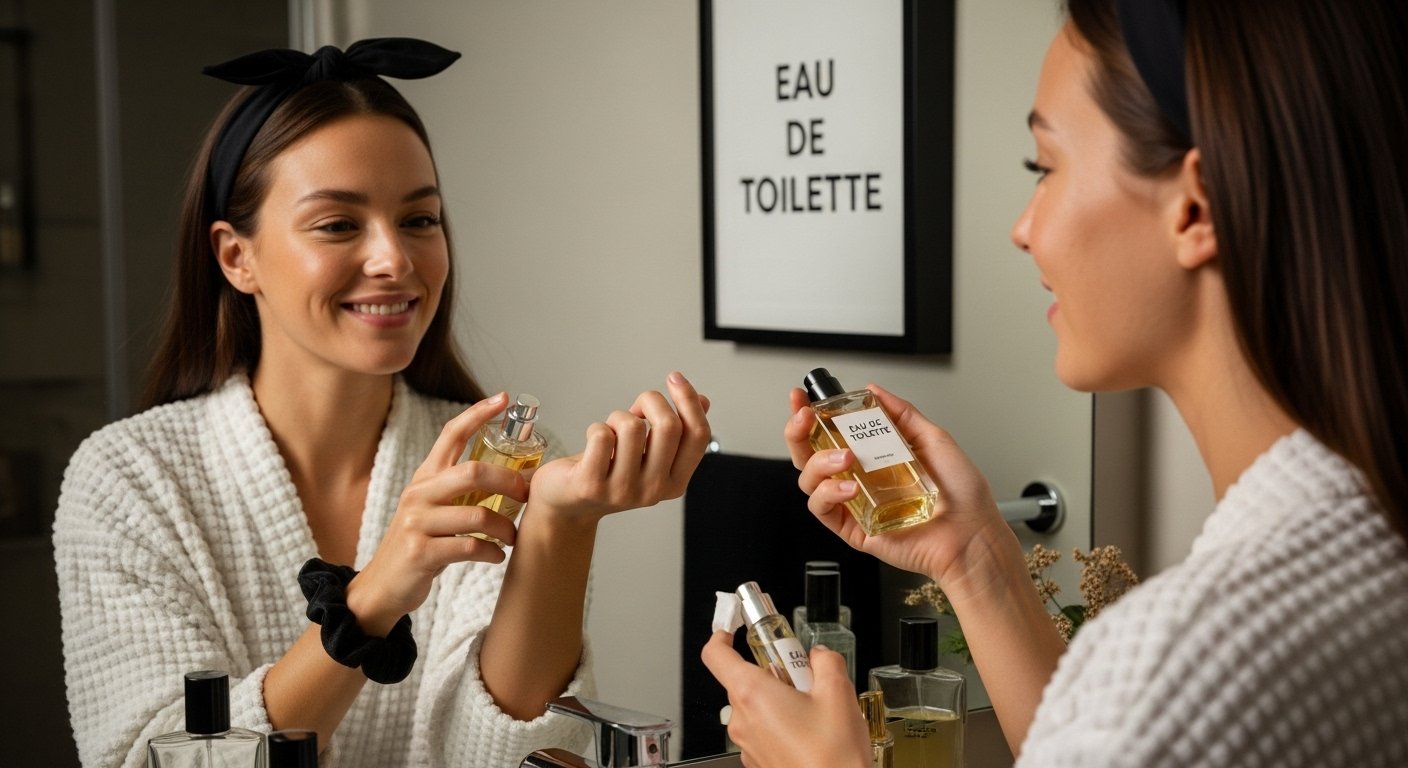
Eau de Toilette gets filed as perfume's watered-down cousin, which is exactly backwards. Eau de Toilette blends 5-15 percent pure fragrance essence, striking a balance that defines not just how long it lasts but the entire experience of wearing scent. That percentage isn't a shortfall — it's a decision about how a scent should behave in a room full of other people.
Strip away the marketing and an Eau de Toilette is a ratio. How loud it opens, how long it stays, how close it sits to you — all of it traces back to that one number, and the number is printed on the box.
An Eau de Toilette runs roughly 5-15% pure perfume essence dissolved in alcohol, which puts it above Eau de Cologne and below Eau de Parfum. The percentage of fragrance oils sets the strength, the staying power and the shape of the whole thing.
The typical composition breaks down as follows:
That's a lot of alcohol, and it's the point. It carries the opening up and out quickly, so an Eau de Toilette tends to make its case early and then settle in closer to the skin. Noticeable, rarely imposing.
Pulse points do the work — neck, wrists, behind the ears — because warmth keeps pushing the scent outward. Fragrance enthusiasts often explore different application techniques to get more out of a lighter concentration. Two to four hours is the honest expectation. If you need it past lunch, take the bottle with you.
According to Perfumer & Flavorist Magazine, the popularity of Eau de Toilette stems from its balanced approach to personal fragrance: enough projection to register, not enough to take over the lift. It's the format built for offices, daytime plans, and anyone who'd rather be remembered for something other than their perfume.
A house doesn't release an Eau de Toilette because it ran short of oils. It's a different edit of the same composition — and sometimes it's the better one.
In the taxonomy of perfumery, the Eau de Toilette is the hinge between light and heavy. This positioning lets perfumers write something complex and still expect you to wear it on a Tuesday. The medium concentration gives top, middle and base notes room to arrive in sequence instead of piling up at once.
What the format buys you:
Fragrance experts often explore the Eau de Toilette as the truce between what a perfumer wants to make and what a shop floor can sell. The intricacy survives; the volume gets dialled back.
According to Perfumer & Flavorist Magazine, the lighter formulation of Eau de Toilette allows perfumers to showcase the freshness or brightness of top and mid-notes more vividly. That's a real gain for citrus and fresh compositions. It's a real loss elsewhere: some oriental and woody scents are built on their base, and this concentration hands that weight back.
So the useful framing isn't weaker. It's tuned differently.
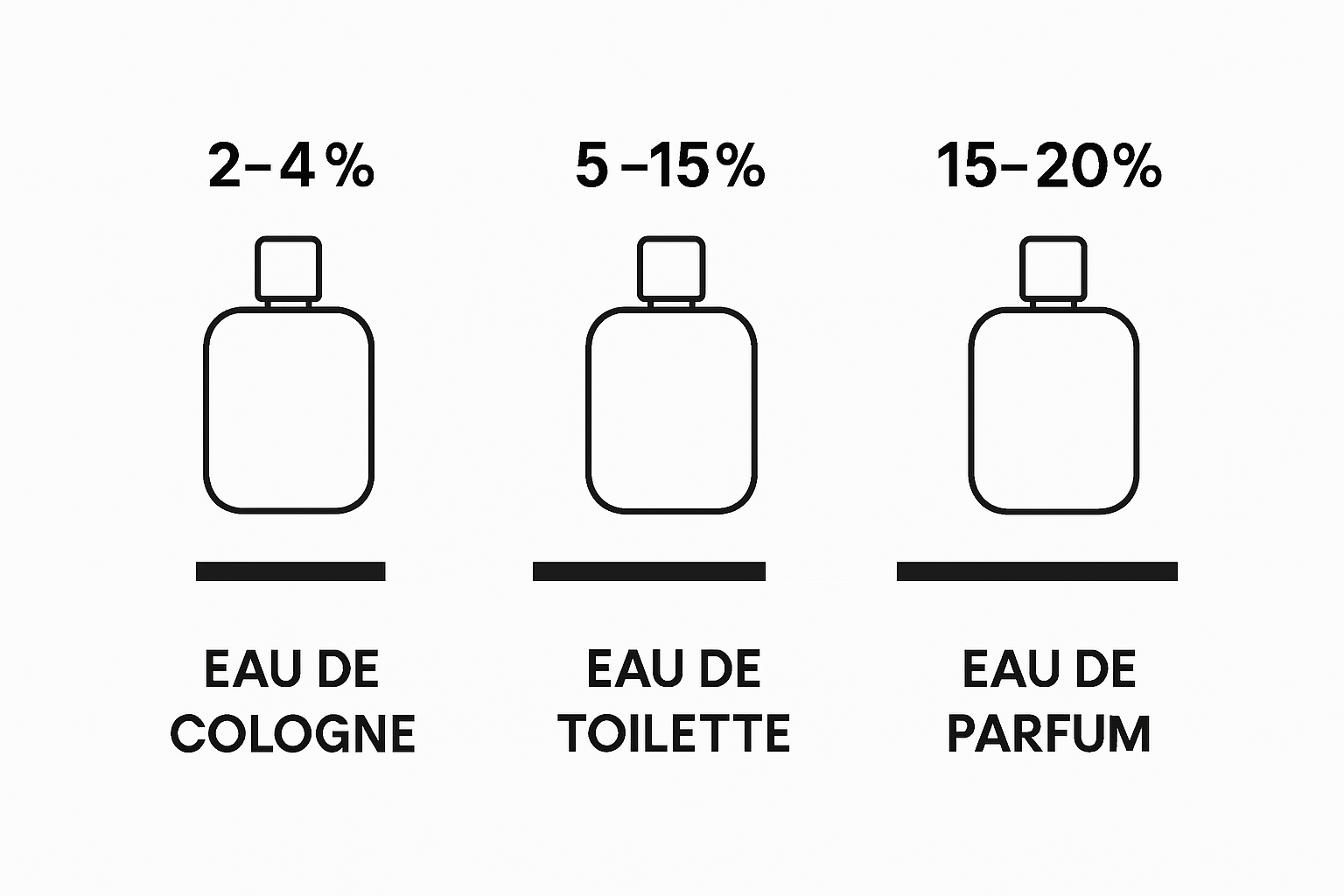
The concentration on the label tells you more than the campaign behind it ever will. Four formats, one variable.
Eau de Toilette occupies a strategic middle ground in the fragrance intensity spectrum, and the numbers show exactly where.
The gap between an Eau de Toilette and an Eau de Parfum of the same scent isn't only strength — it's pacing. The lighter version moves faster, shows its opening more clearly and steps back sooner, which is why it copes better with heat and close quarters than a heavier take on the same juice.
According to The Perfume Society, the primary differentiator lies in the alcohol and fragrance oil ratio. That ratio is why top and middle notes come through more sharply here than in a concentrated format: you get the melody before the bass line arrives.
Pick by situation, not by prestige. The heavier concentration isn't the better product. It's the louder one.
The table below lines the four formats up on concentration, typical longevity, and character.
Two words dominate every argument about this concentration, and most of those arguments come from confusing them. Longevity is time. Sillage is space.
Longevity describes how long a fragrance remains perceptible on the skin after initial application. For an Eau de Toilette that's usually 2-4 hours: a working morning, not a working day. The moderate oil load keeps the profile steady rather than dramatic.
Factors influencing Eau de Toilette longevity include:
Sillage is the trail — the aura left behind on the stairs. An Eau de Toilette usually keeps a moderate one: a scent bubble that registers at conversational distance and disappears at the far end of the table.
According to National Center for Biotechnology Information, due to its moderate concentration of aromatic compounds (5-15%), Eau de Toilette provides a balance between presence and discretion. That intimacy is an asset in an open-plan office and a limitation at a winter party. Know which room you're walking into.
The table below summarises what moves those two numbers, so you can judge how a bottle will behave before you commit to it.
Choosing well has less to do with taste than with room size and how long you'll be in it.
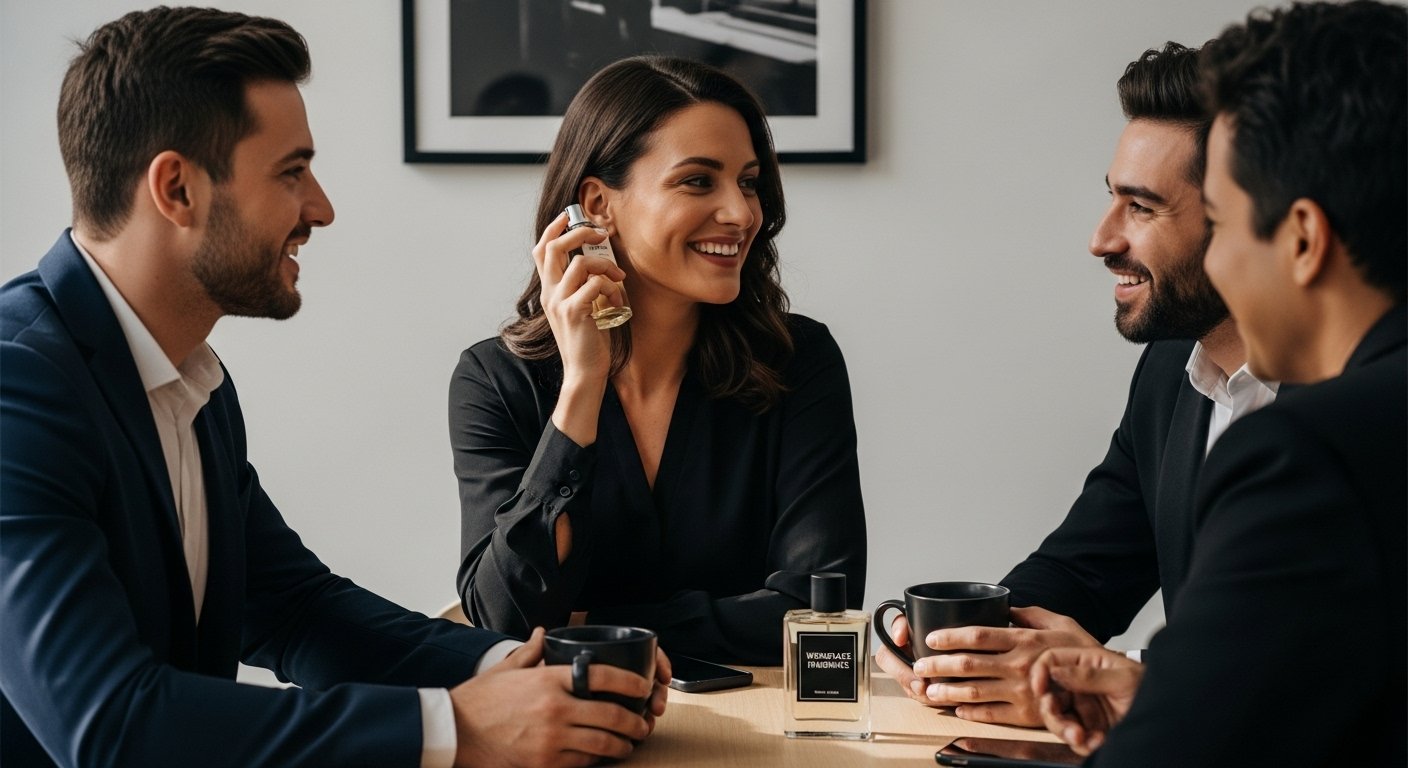
In professional settings, the choice of Eau de Toilette becomes a subtle yet critical element of personal branding. The bar is low and unforgiving: register at arm's length, never across the desk.
Key characteristics for professional Eau de Toilette selections include:
Evenings and weekends give you slack. That's where a bolder Eau de Toilette earns its place — the kind that would be a nuisance in a meeting room and a pleasure across a dinner table.
According to Perfumer & Flavorist Magazine, the adaptability of Eau de Toilette makes it particularly suitable for transitional environments, where you want something polished that doesn't do the talking for you. Daytime plans, weekend outings and informal gatherings reward a scent with a point of view and a short leash.
The verdict: for most people, most days, the Eau de Toilette is the version worth owning. It shows the top of a composition at its clearest, respects the people sharing your air, and costs less to get wrong. Buy the Eau de Parfum when you specifically want weight and hours — cold weather, long evenings, a scent whose base is the entire idea. Buy the Eau de Toilette for everything else and reapply without guilt.
Two things worth doing next. First, join the community of fragrance passionates and read what people report about lasting power on the bottles you're weighing up — real accounts beat marketing copy every time. Then follow Scent of the Day to see what people reach for on ordinary mornings, which is the truest test any Eau de Toilette gets.
An Eau de Toilette holds roughly 5-15% pure perfume essence dissolved in alcohol. That's lighter than the concentrated formats above it, which is exactly why it became the default for everyday wear.
Expect 2-4 hours. Skin chemistry, temperature and how you apply it will push that figure either way.
Oil load. An Eau de Toilette sits at 5-15%, an Eau de Parfum at 15-20%, so the first reads lighter and fades sooner while the second hits harder and holds longer.
Work, mainly — its discretion is the whole appeal. It carries fine into daytime plans and casual gatherings too. Save the loudest bottles for rooms you don't have to share.
| Takeaway | Explanation |
|---|
| Eau de Toilette has 5-15% fragrance essence. | This concentration is lighter than Eau de Parfum, offering a more subtle scent experience suited for daily wear. |
| Ideal for professional environments. | Its moderate sillage and soft projection make it perfect for workspaces where a subtle presence is preferred. |
| Lasts 2-4 hours on average. | Regular reapplication may be necessary throughout the day due to its lighter composition, ensuring fragrance remains fresh. |
| Choose based on social contexts. | Adapt fragrance choice to suit occasions, with lighter scents for work and bolder for social gatherings, balancing personal and environmental scents. |
| Eau de Toilette bridges fragrance types. | It serves as a versatile option between lighter Eau de Cologne and more intense perfumes, allowing for a rich scent experience. |
| Fragrance Type | Fragrance Essence (%) | Typical Longevity (hours) | Key Characteristics |
|---|
| Eau de Cologne | 2-4% | 1-2 | Feather-light, fresh, least intense |
| Eau de Toilette | 5-15% | 2-4 | Subtle, versatile, suitable for daily wear |
| Eau de Parfum | 15-20% | 4-6 | Stronger, longer lasting, more pronounced |
| Parfum/Extract | 20-40% | 6-8 | Most intense, lasts longest, rich scent |
| Factor | Influence on Longevity | Influence on Sillage/Projection |
|---|
| Skin Chemistry | Determines how long scent lasts | Can amplify or mute projection |
| Environmental Factors | Heat and humidity can shorten longevity | Airflow and temperature affect diffusion |
| Application Technique | Pulse points may prolong duration | Strategic application increases projection |
| Fragrance Composition | Base notes lengthen wear time | Volatile top notes affect immediate trail |
| Activity Level | Physical activity accelerates evaporation | Movement may enhance scent trail |