Articles
Fragletter पाएँ
नई फ़्रेगरेंस कहानियाँ और चुनिंदा सुझाव आपके इनबॉक्स में। कभी भी सदस्यता छोड़ सकते हैं।
नई फ़्रेगरेंस कहानियाँ और चुनिंदा सुझाव आपके इनबॉक्स में। कभी भी सदस्यता छोड़ सकते हैं।
नई फ़्रेगरेंस कहानियाँ और चुनिंदा सुझाव आपके इनबॉक्स में। कभी भी सदस्यता छोड़ सकते हैं।
नई फ़्रेगरेंस कहानियाँ और चुनिंदा सुझाव आपके इनबॉक्स में। कभी भी सदस्यता छोड़ सकते हैं।
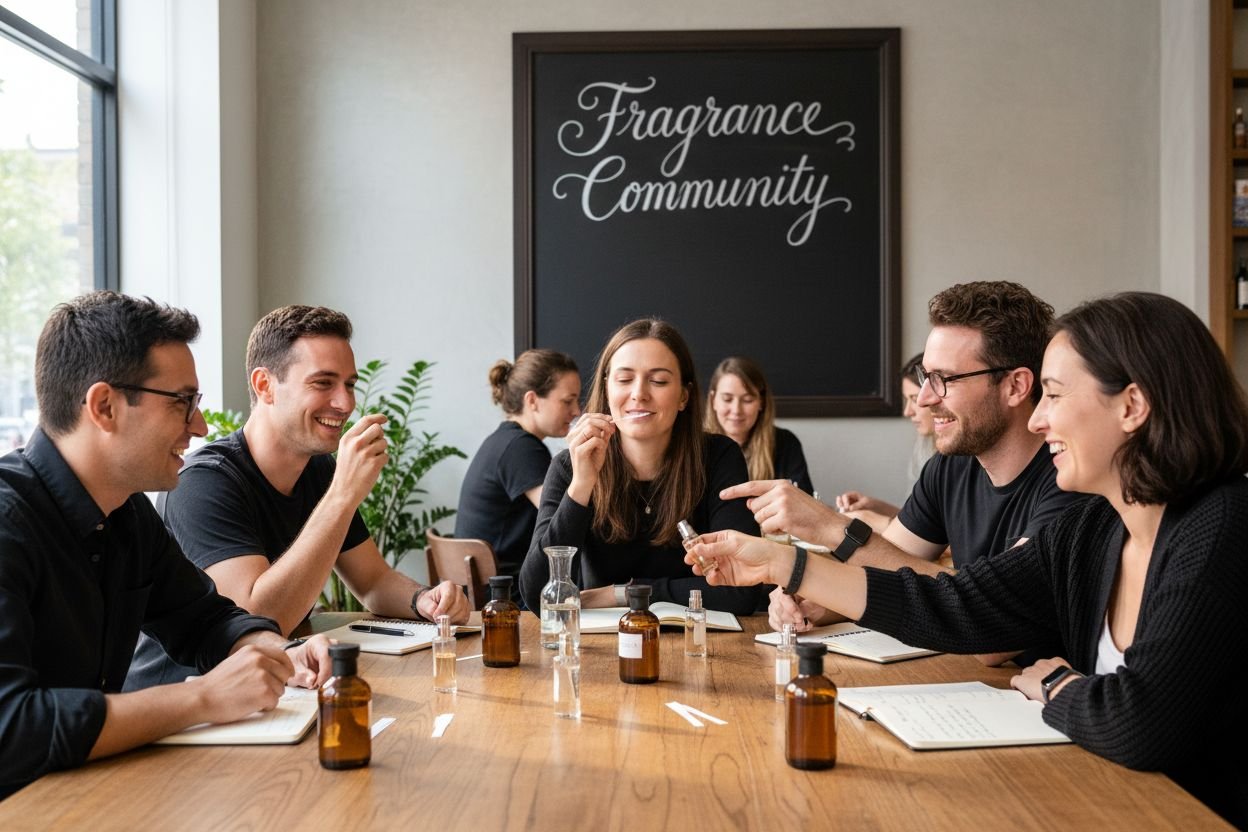
A fragrance community isn't a shopping forum with a bigger vocabulary. It's the closest most people get to a shared sensory language, a place where a bottle stops being a purchase and starts being a story someone tells about themselves. That shift is what keeps members around long after they've stopped buying.
Take the bottles away and the interesting part survives: people comparing how the same liquid landed on two different lives. That's a social ecosystem, not a product category. It's also why these groups outlast the trends that created them.
The whole thing runs on a shared sensory language. Members range from casual perfume wearers to serious collectors, and the gap between those two is the engine — the collector knows which formulas were quietly changed, the newcomer asks the obvious question nobody senior thought to ask any more. Vintage rarities and new niche releases get argued over with equal seriousness, which is charming or exhausting depending on your tolerance for detail.
Information moves fast here, and it moves sideways rather than down from an authority. Participants gather across online forums, social media, review sites and specialised fragrance passionate networks, swapping notes on:
A product forum reviews a thing. A fragrance community builds a narrative around it, which is how one release can be a masterpiece in one thread and a shrug three posts later.
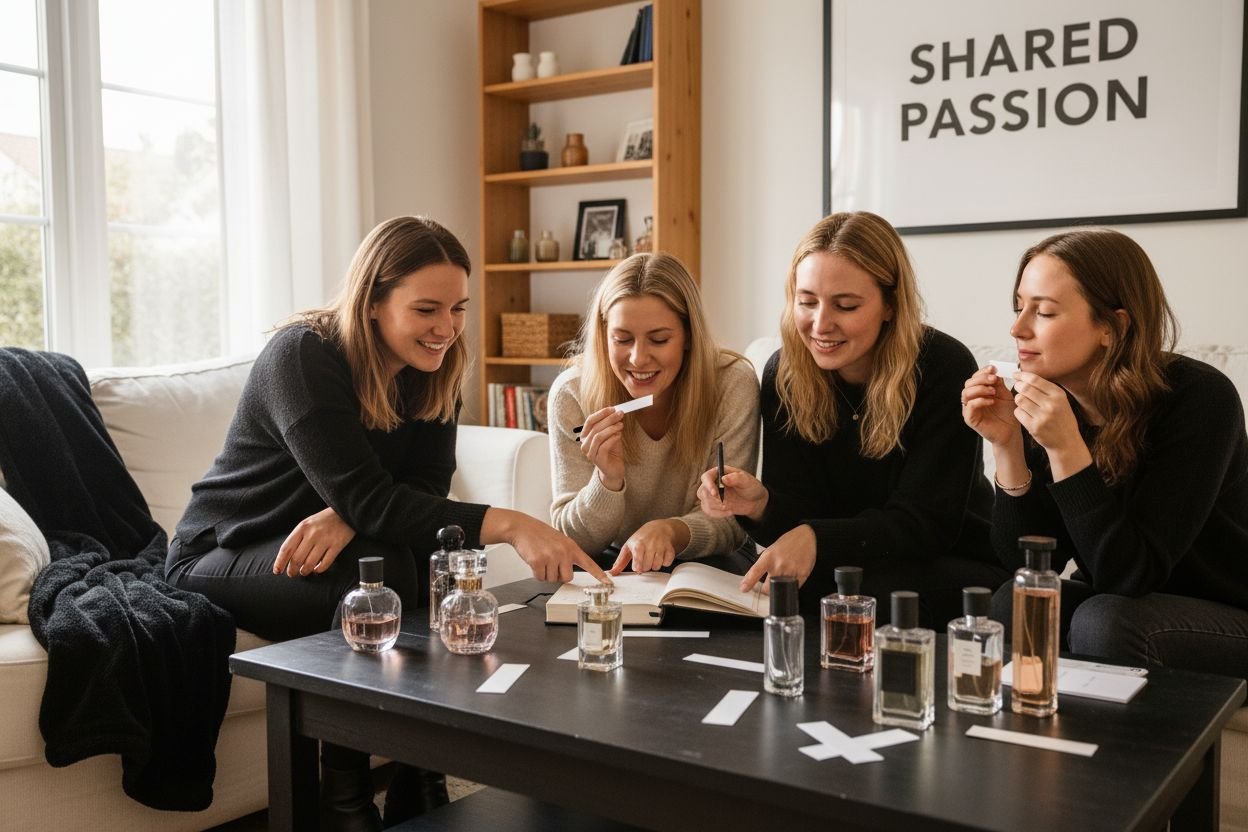
Shared passion is the difference between a comment section and a community. One is people talking near each other. The other is people building something they'll defend.
Scent is a memory shortcut, and members use it as one without apology. A perfume gets discussed as a wedding, a grandmother's flat, a bad year someone climbed out of — the note pyramid is almost beside the point. If that sounds sentimental, it is. It's also why the bonds hold when the discount codes dry up.
Shared passion is what keeps the learning going, and it moves in every direction at once:
Expertise here is earned in public rather than granted, which keeps it reasonably honest. That's the draw: fragrance enthusiasts explore deeper connections than any brand's copywriting will hand them.
These groups look casual and aren't. The same few structures show up again and again, and the communities missing them tend to fizzle.
Jargon gets a bad name. Here it earns its keep. Members build a specialised linguistic framework that reaches past "fresh" and "sweet" into terminology for scent profiles, molecular composition and how a perfume behaves over hours. Outsiders read that as gatekeeping. It's closer to precision — you can't argue about a base accord you have no word for.
Rituals do the work small talk can't:
The swap meet is the sleeper hit of that list. Nothing builds trust like posting a decant to a stranger and getting one back.
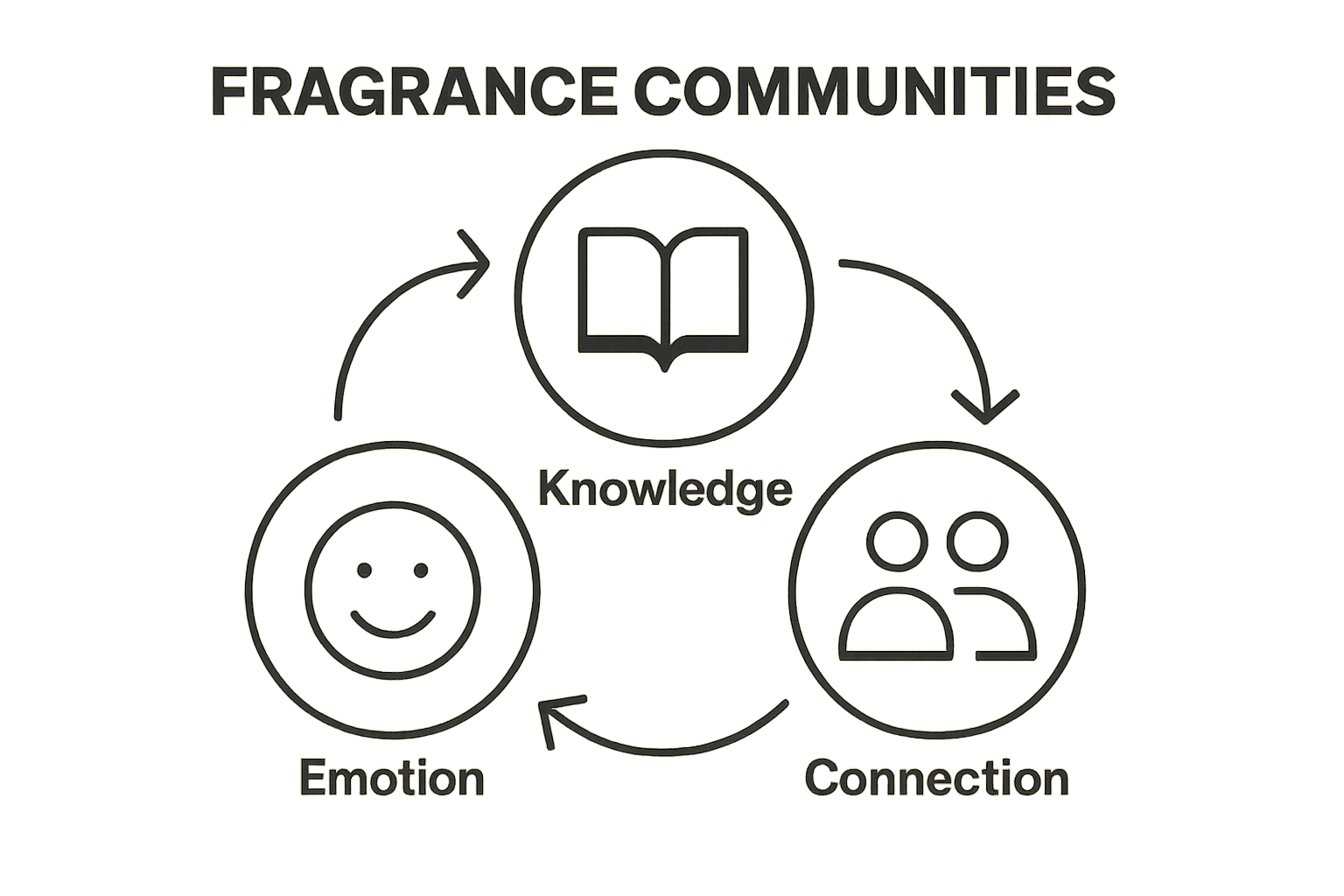
Here's the shape of it in one place.
Communities also write their own critical standards. Complexity, longevity, projection, artistic merit — members hammer out what counts and how much. It's messier than a formal review system and better than one, because the criteria get argued over instead of handed down. Explore more about our community standards to see how that plays out. The failure mode is worth naming, though: a loud consensus can flatten a genuinely strange perfume before it ever finds the people it was made for.
Most of what you'll learn about perfume, you'll learn from someone who isn't paid to teach you. That's the trade — no curriculum, no quality control, and far more useful than the alternative.
Peer-to-peer learning does the heavy lifting. Experienced collectors mentor newcomers, and that cycle preserves the kind of knowledge that never reaches print: batch differences, discontinued formulations, houses that changed a composition without saying so. The same cycle happily propagates the occasional myth, so give confident answers the scepticism you'd give any crowd.
The teaching happens through several channels at once:
Members aren't an audience. They write the reference material as they go, then rewrite it when someone makes a better case.
The intellectual side gets the credit, but the emotional side is what makes people stay. Learn more about our community engagement principles, where shared interest turns into actual relationships. At their best these groups work as support networks, with scent as the thing everyone has in common rather than the only thing anyone talks about.
If you know what you like and want one bottle, skip the community and buy the thing. If you keep buying blind, keep getting it wrong, and can't work out why a perfume everyone praises does nothing for you, then a community is the fastest correction available — it hands you other people's mistakes for free.
Start by reading, then start talking. Work through the Blog to get the vocabulary and the arguments, then join the Community of fragrance passionates, set up a profile and put your own take in front of people who'll push back on it.
It's a group of perfume enthusiasts who gather to share, explore and celebrate scents together — discussing, comparing and pooling knowledge rather than shopping side by side.
Through online forums, social media and specialised networks, covering perfume compositions, brand histories, personal experiences and emerging industry trends. Most of it moves peer to peer.
Because a shared memory binds people faster than a shared opinion. Members attach personal stories to specific scents, which turns perfumes into a medium for storytelling and cultural expression.
Organised sampling events and fragrance challenges give members a reason to show up and something concrete to talk about, which is how knowledge gets exchanged and a group starts feeling like a community.
| Takeaway | Explanation |
|---|
| Fragrance communities encourage deep emotional connections. | Members share personal stories and emotions tied to scents, fostering strong interpersonal bonds. |
| Specialised language enhances communication. | A unique vocabulary helps members discuss fragrances in detail, allowing for sophisticated exchanges of ideas. |
| Collaborative learning drives knowledge growth. | Knowledge sharing among novices and experts creates dynamic learning environments within fragrance communities. |
| Community rituals promote engagement and connection. | Organised events and activities help strengthen bonds and facilitate knowledge exchange among members. |
| Shared passion transforms individual interests into community knowledge. | Collective enthusiasm for fragrances enhances understanding and appreciation of olfactory artistry through shared experiences. |
| Key Element | Description |
|---|
| Shared Language and Communication Protocols | Use of specialised vocabulary and communication techniques for precise and nuanced fragrance discussions. |
| Community Rituals and Engagement Mechanisms | Organised events and interactions, such as sampling events and fragrance challenges, to foster engagement. |
| Evaluative Standards and Collective Knowledge | Community-driven criteria and frameworks for assessing and sharing knowledge about scents and perfumery. |
| Emotional Connectivity | Sharing of personal stories and emotional narratives tied to fragrances, creating strong bonds. |
| Collaborative Learning | Peer-to-peer knowledge sharing among novices and experts, encouraging continuous learning and growth. |