Articles
Fragletter पाएँ
नई फ़्रेगरेंस कहानियाँ और चुनिंदा सुझाव आपके इनबॉक्स में। कभी भी सदस्यता छोड़ सकते हैं।
नई फ़्रेगरेंस कहानियाँ और चुनिंदा सुझाव आपके इनबॉक्स में। कभी भी सदस्यता छोड़ सकते हैं।
नई फ़्रेगरेंस कहानियाँ और चुनिंदा सुझाव आपके इनबॉक्स में। कभी भी सदस्यता छोड़ सकते हैं।
नई फ़्रेगरेंस कहानियाँ और चुनिंदा सुझाव आपके इनबॉक्स में। कभी भी सदस्यता छोड़ सकते हैं।
The most useful thing ever written about a perfume was almost never written by the brand that made it. Customer reviews can influence buying decisions more than traditional adverts, according to research from California Polytechnic State University - and in a category you can't sample through a screen, that gap matters more than usual. Scent stays personal, but a well-written review still gets you closer to the right bottle than any advert will.
A fragrance review is a verdict with its workings shown. The good ones tell you what a perfume does across an afternoon, who it suits, and what you're risking if you buy it unsniffed. The bad ones describe the bottle.
Strip a decent review down and you find four moving parts:
Anyone can copy a note pyramid off the box. The other three are where a reviewer earns your trust or loses it.
Research from California Polytechnic State University found that customer reviews significantly influence purchasing decisions, often carrying more reliable information than traditional marketing materials. That won't shock anyone who has read a press release for a new flanker.
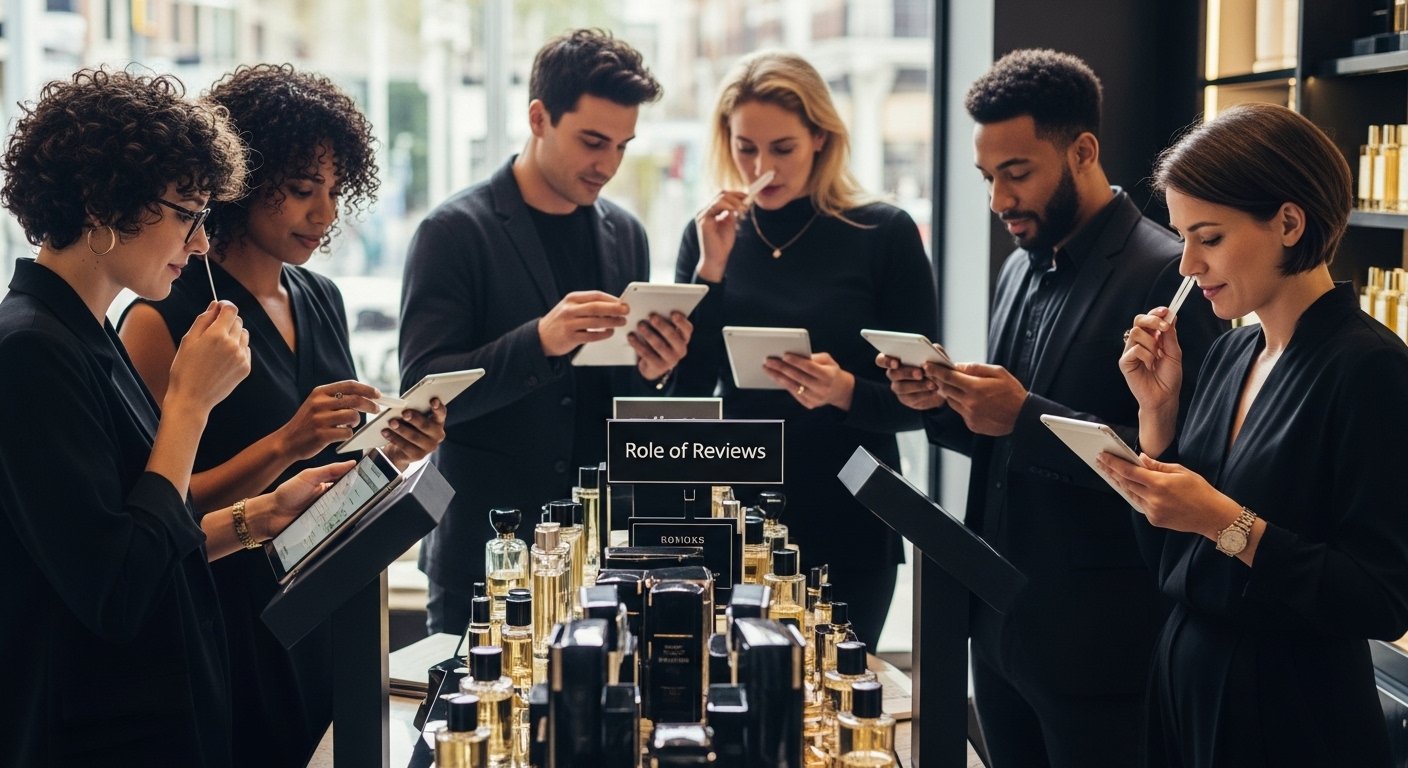
Reviews do more than steer buyers. They're the closest thing perfumery has to a feedback loop running between wearers, brands and the perfumers themselves. Learn more about our fragrance passionate community and you'll see that loop in action - people disagreeing loudly about the same bottle, which is the point rather than the problem.
They also flatten a hierarchy that badly needed flattening. Perfume talk can get snobbish, heavy on house heritage and light on information. A plainly written review that says a scent reads like clean laundry and fades by lunch does more good than a paragraph about the maison's founding.
Perfume is one of the last things people still buy blind. You can't smell a screen, returns policies on opened bottles are unforgiving, and the copy is written to sell a mood rather than describe a smell. Reviews are the correction.
Nobody enjoys spending serious money on a guess. Reviews work as social proof: when several strangers independently describe a scent the same way, you stop worrying that you're the odd one out.
What makes a review credible is simpler than it looks:
That last one is where most reviews collapse.
A systematic review on online consumer reviews found that consumer-generated content shapes purchasing intentions across product categories. Fragrance is an extreme case of it. The cost of buying wrong is high, so the value of somebody's honest account is high to match.
Reviews democratise information by turning complex sensory impressions into language you can act on. They won't make the process painless, and crowd wisdom has its own distortions - hype cycles inflate scores, and whatever is trending this season gets graded generously. Read a spread of them, though, and most of that noise cancels out.
Crowd-sourced insight, used with a bit of scepticism, lets you buy for your own preferences, budget and life rather than someone else's.
Reviews don't just report on perfumes. They build the frame you smell them through, and that frame is hard to take off once it's on.
You never read a review neutrally. You read it against every scent you already know, filtered through what you want to be true about the bottle you're eyeing.
The main mechanisms at work:
That third one cuts both ways. A breathless review can set expectations no perfume survives.
Research examining two-sided argumentation in online reviews found that reviews presenting both positive and negative aspects come across as more credible and more helpful. Trust the writer who tells you what's wrong with it.
Smell resists language, so reviewers borrow from everywhere else: texture, temperature, weather, memory, other perfumes. Explore our comprehensive fragrance search and you'll spot the shared vocabulary doing the heavy lifting - powdery, sharp opening, soapy drydown.
That vocabulary is a genuine achievement, and it's also a trap. Once enough people file a scent under one tidy label, hardly anyone smells past it. Useful shorthand, lazy conclusion.
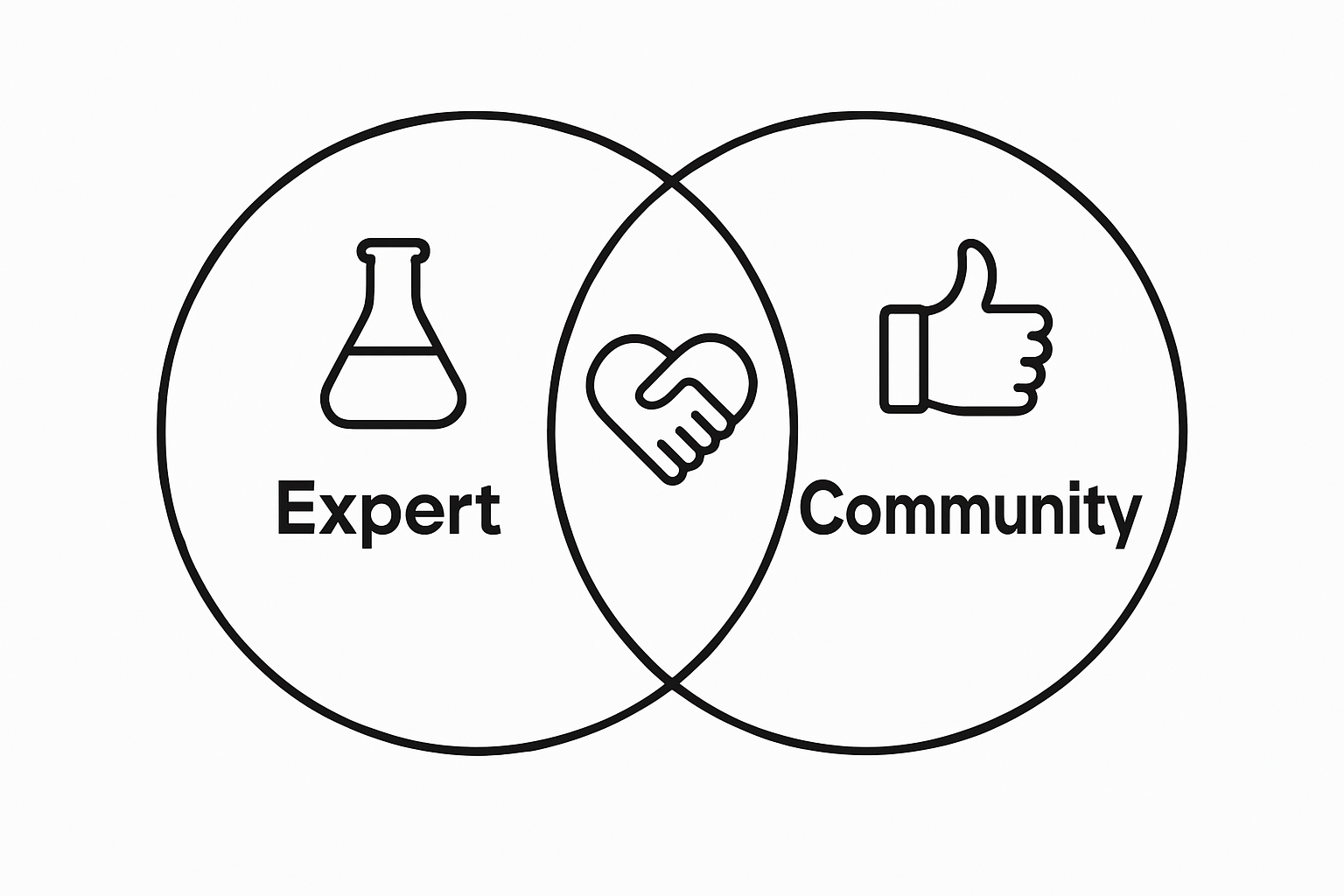
The best fragrance writing sits between two camps that don't always respect each other: the trained nose, and the person who wears the thing to work on a Tuesday.
Perfumers, chemists and professional reviewers bring the part you can't crowdsource: why a composition behaves the way it does.
What the professional side contributes:
The failure mode is predictable. Expertise slides into telling you your taste is wrong, and a review that lectures you about ingredient grades has stopped answering the question you asked.
Community reviews cover ground no single critic can reach: far more wearings, across more climates, price brackets and body chemistries. Community detection research in fragrance analysis shows that user groups can cluster and categorise perfume preferences effectively, generating insight through collective intelligence. The crowd sorts itself into taste tribes without anyone organising it.
Put the two together and you get something better than either alone - the technical account of why a scent works, and the practical account of whether anyone wants to wear it.
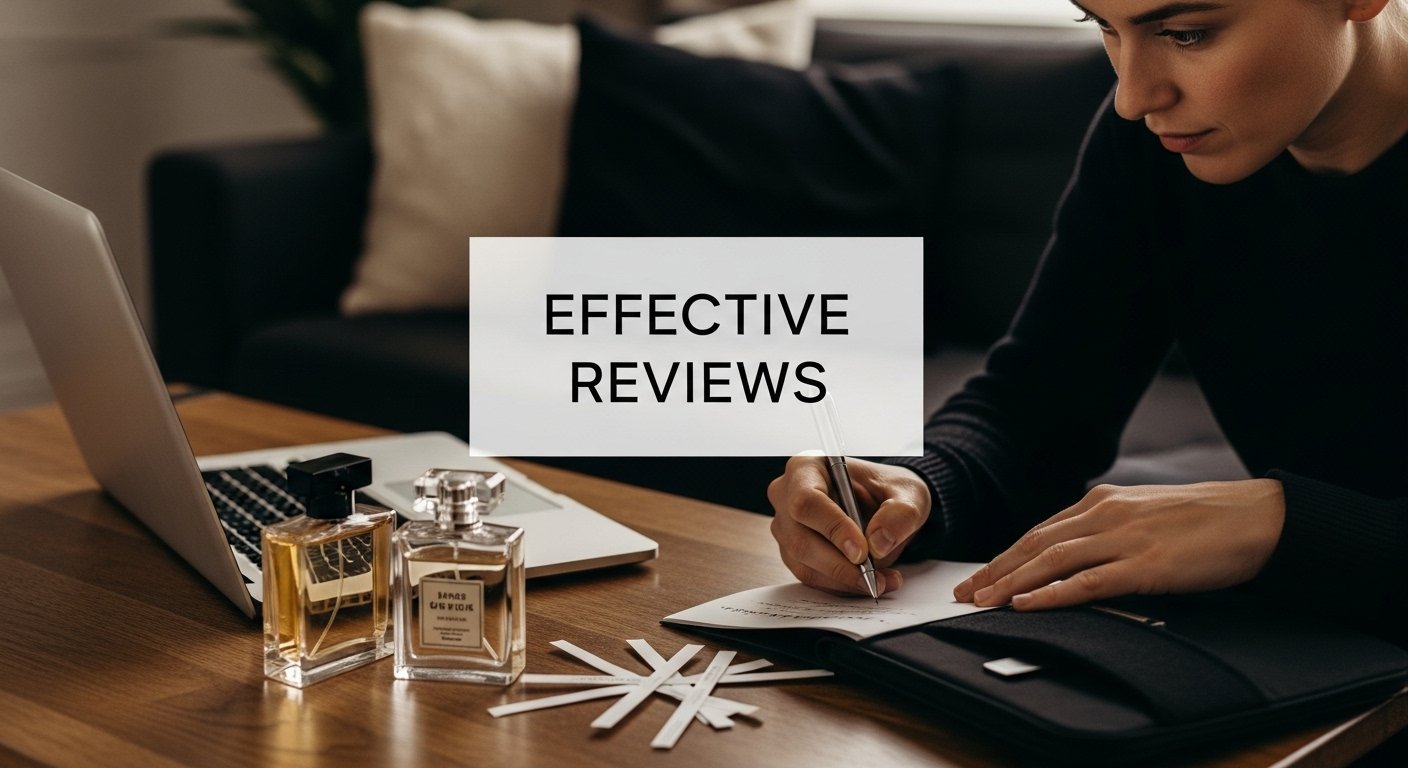
If you write reviews, and on a community platform you probably should, structure is what separates a helpful one from a wasted paragraph.
A review worth reading covers the same ground every time, which sounds dull and is the reason people trust it.
The pieces that matter:
Skip the performance section and you've written a mood board.
Language does the translating here, and vague language translates nothing. Review our terms of understanding fragrance terminology to get a feel for the precision the job asks for.
Research developing a fragrance linguistic lexicon found that describing scent systematically improves the value and credibility of consumer reviews. Shared terms turn one nose's impression into something another person can use.
The target is a review that survives disagreement: someone can read it, decide the scent isn't for them, and still know exactly what you meant.
Here's the whole checklist in one place.
The verdict is straightforward: marketing copy tells you who a perfume wants to be, reviews tell you what it is. If you're stuck between two bottles, an hour spent reading a spread of honest accounts beats another hour staring at the product page. Fragplace.com exists for that hour - a community, detailed reviews and user-driven rankings, with the flaws left in.
So do two things. Explore our comprehensive fragrance search and compare what people say about the shortlist you're already circling. Then Learn more about our fragrance passionate community and post a review of your own - especially the slightly unflattering kind, because those are the ones the next buyer needs.
A scent profile covering top, middle and base notes, an assessment of longevity and projection, and recommendations for seasonal suitability and occasions. Miss any of those and you've written half a review.
They work as social proof, giving you authentic insight from other people's experiences. That lowers the perceived risk of buying and shows you a fragrance's actual performance rather than its advertised one.
Precise descriptions of the scent, performance details like longevity and sillage, and clear guidance on which seasons and occasions the fragrance suits. If it lists no drawbacks at all, treat it with suspicion.
Professionals explain composition, historical context and ingredient quality - the technical why behind the smell. Layered over community reviews, that turns a pile of opinions into something you can reason with.
| Takeaway | Explanation |
|---|
| Fragrance reviews guide consumer choices | They provide detailed insights into scents, helping buyers make informed decisions before purchasing. |
| User-generated content builds trust | Authentic reviews from various users offer social proof, easing buyer hesitations through shared experiences. |
| Effective reviews combine expert and community insights | Merging professional opinions with consumer experiences creates a well-rounded perspective on fragrances. |
| Key components include scent profile and performance | Precise descriptions of notes and evaluation of longevity and projection enhance the value of reviews. |
| Reviews transform sensory experiences into relatable narratives | They articulate complex olfactory details in accessible language, helping consumers appreciate fragrances more deeply. |
| Element | Description |
|---|
| Scent Profile | Detailed articulation of top, middle, and base notes |
| Longevity | Assessment of how long the fragrance remains detectable |
| Projection | Evaluation of scent strength and sillage |
| Seasonal Suitability | Recommendations for appropriate weather and occasions |
| Performance Metrics | Evaluation of longevity, sillage, and projection |
| Contextual Recommendations | Guidance on suitable seasons and occasions |
| Linguistic Precision | Clear, descriptive language to convey olfactory details |
| Technical/Professional Insight | Input from experts on composition, history, and quality |