Articles
Fragletter पाएँ
नई फ़्रेगरेंस कहानियाँ और चुनिंदा सुझाव आपके इनबॉक्स में। कभी भी सदस्यता छोड़ सकते हैं।
नई फ़्रेगरेंस कहानियाँ और चुनिंदा सुझाव आपके इनबॉक्स में। कभी भी सदस्यता छोड़ सकते हैं।
नई फ़्रेगरेंस कहानियाँ और चुनिंदा सुझाव आपके इनबॉक्स में। कभी भी सदस्यता छोड़ सकते हैं।
नई फ़्रेगरेंस कहानियाँ और चुनिंदा सुझाव आपके इनबॉक्स में। कभी भी सदस्यता छोड़ सकते हैं।
Eau de toilette gets filed away as perfume's diluted cousin, and that reading is lazy. It makes up almost half of all fragrance sales worldwide, which suggests people aren't settling — they're buying the strength a working day actually calls for. Understand the format on its own terms and you'll stop overpaying for concentration you don't need.
Start with the definition, because most of the myths grow out of a bad one. According to Merriam-Webster, eau de toilette is a perfumed liquid containing a lower percentage of fragrant oils compared to traditional perfumes or eau de parfum. Lower percentage. That's all it says.
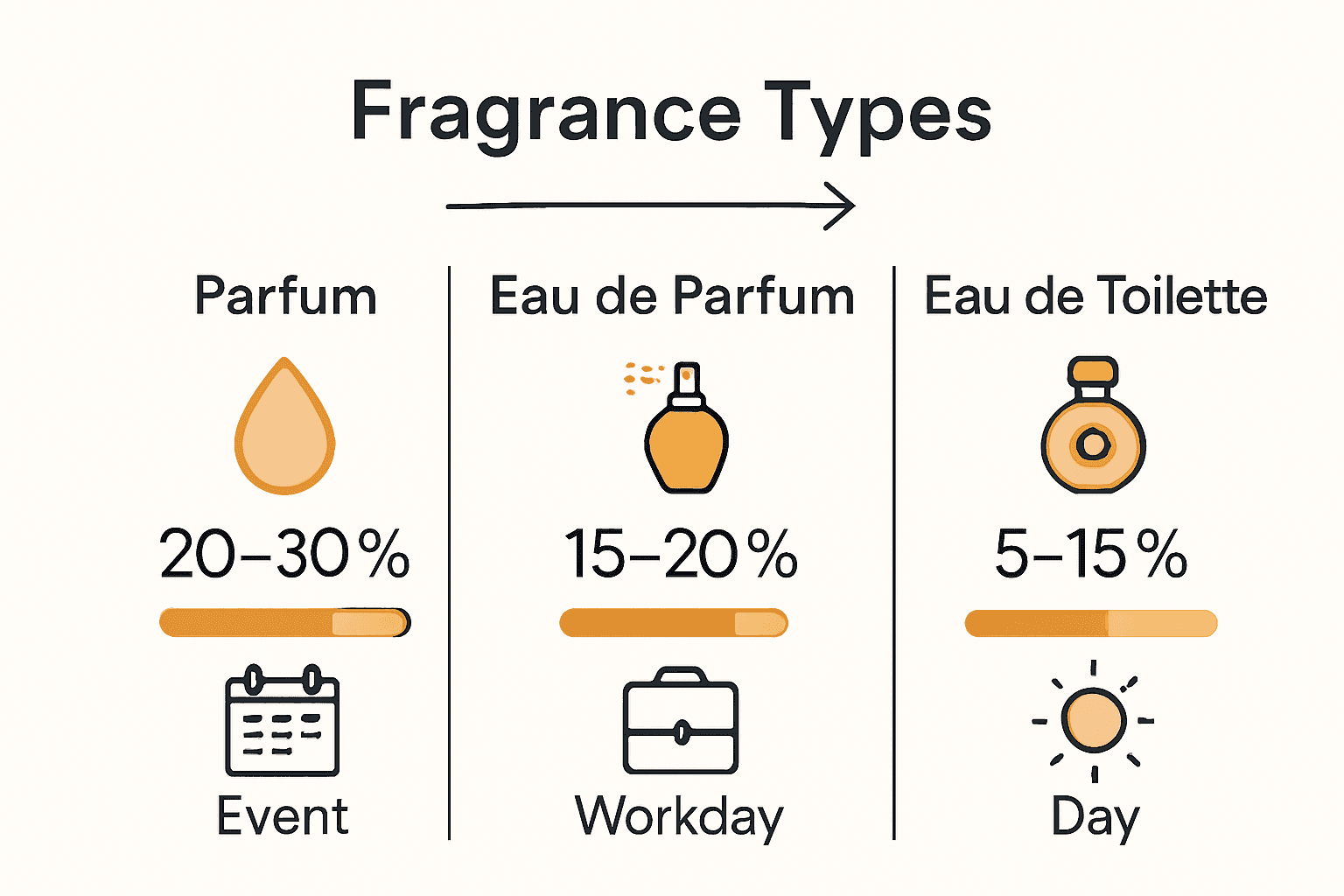
That puts eau de toilette in the middle of the fragrance hierarchy, with a typical concentration between 5% and 15% fragrance oils. The practical effect is a scent that sits close to you and stays readable rather than announcing itself across a room. Treat that as the design brief, not the shortfall.
Three myths keep circulating, and all three deserve correcting:
Myth 1: Eau de toilette is just a watered-down perfume Reality: It's a deliberately crafted fragrance type with its own unique purpose and characteristics
Myth 2: Eau de toilette doesn't last long Reality: While lighter than pure perfume, modern formulations can provide 4-6 hours of consistent scent projection
Myth 3: All eau de toilette are the same Reality: Formulations vary dramatically across different fragrance families and brands
That third one is the expensive myth. Two bottles can share a concentration band and behave nothing alike, because the family and the materials matter more than the label percentage. For a deeper exploration of fragrance layers, check out our guide on eau de parfum types.
So an eau de toilette isn't a compromise between intensity and wearability — it's a decision about which one you want more of today. If you work in close quarters, that decision usually makes itself.
Concentration is the one number brands publish, so it's worth reading properly. According to Desging, eau de toilette sits comfortably in the middle of fragrance strength, containing between 5-15% aromatic compounds.
Here's how the categories stack up against each other:
According to Woodberg, eau de toilette typically offers moderate projection and lasting power, making it an ideal choice for daytime wear or professional environments where a subtle fragrance is preferred.
What that concentration actually buys you:
Now the honest negative. At 3-5 hours, an eau de toilette won't carry you from a morning meeting to a late dinner untouched. If you resent carrying a travel spray, that's a real argument for buying up a concentration rather than fighting the format.
For fragrance enthusiasts seeking to understand more about layered scent experiences, our guide on eau de parfum types offers deeper insights into how perfumers build a composition.
According to IJIRT, these fragrances typically contain 5-15% fragrance oils, offering a lighter composition with an average longevity of 3-4 hours. Notice that the figure moves by an hour or so depending on who's counting — treat published longevity as a range, never a promise.
The lower oil load isn't only about strength; it changes the shape of the scent. A subtle fragrance profile turns over more quickly, so the top of the composition reads clearly and the drydown arrives sooner. Some people call that shallow. Others call it the reason a fragrance stays pleasant on a hot commute. Both camps have a point.
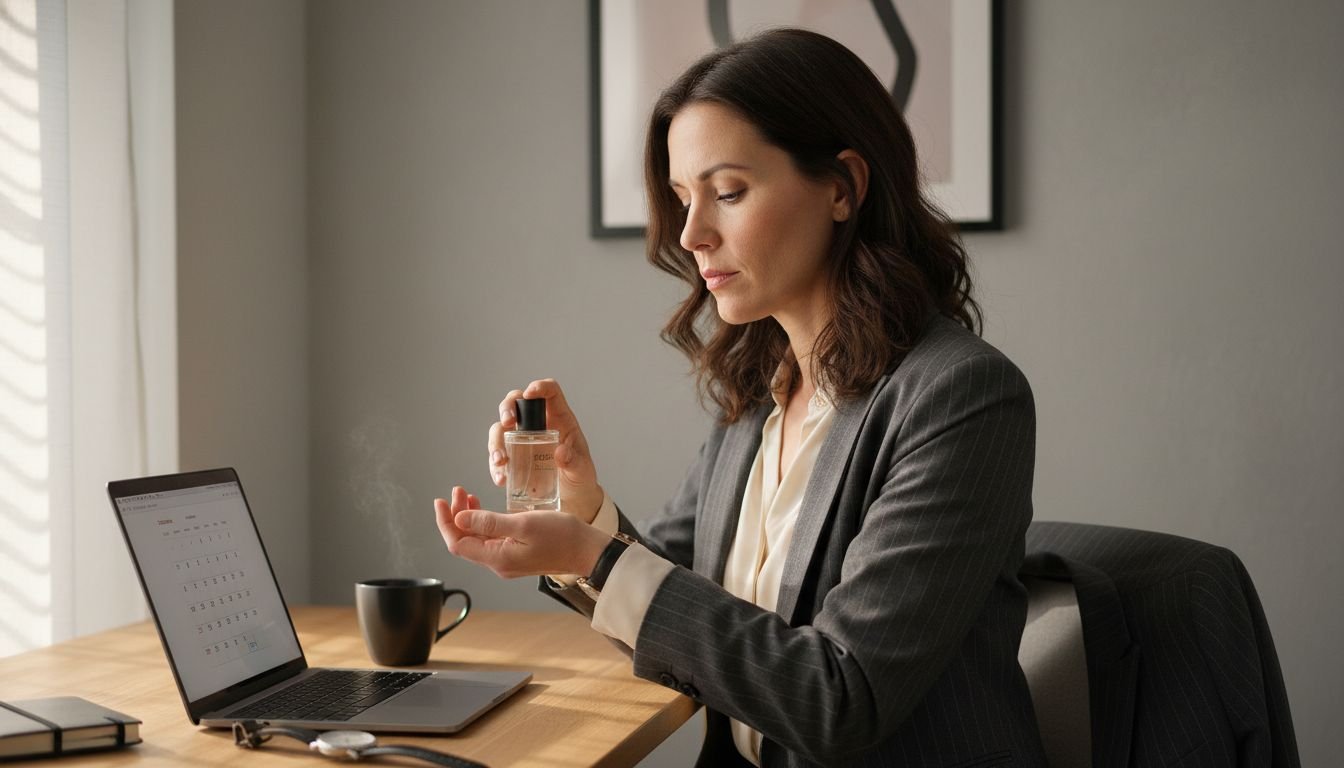
As Woodberg notes, eau de toilette is often integrated into morning routines, featuring lighter and more uplifting notes with moderate projection. Optimal application techniques include:
Pulse Point Application
Layering Techniques
The moisturised-skin step is the one most people skip, and it's the one that pays. Dry skin gives a light concentration nothing to hold on to.
Where the format earns its keep:
If you want to go further into how a composition is built, our guide on eau de parfum types covers the layers in more detail.
The distinctions between concentrations are simpler than the marketing makes them sound. According to Desging, eau de toilette (EDT) represents a lighter fragrance option, typically lasting 3-5 hours compared to other more concentrated formulations.
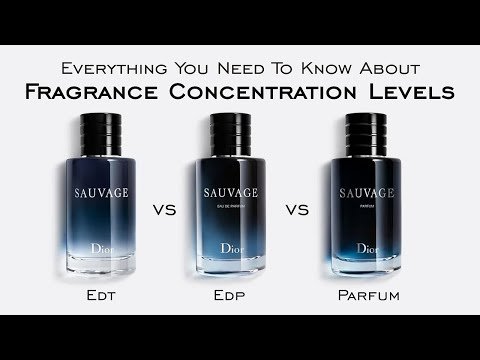
Woodberg highlights that eau de parfum (EdP) contains 10-15% fragrance oil, making it more intense and suitable for both day and night wear, with impressive sillage lasting up to 8 hours. Set that against the table below and you'll see the sources don't agree on the EdP band — another reminder that these ranges are conventions, not standards.
The gap between the two middle rows is where most buying decisions get made, and where most money gets wasted:
If you already own the eau de parfum of something you love, the matching EDT is often the redundant purchase — spray less of the stronger one instead. The exception is summer, where the lighter version can be the better buy of the two.
For fragrance enthusiasts seeking deeper insights, our fragrance discussions provide a comprehensive exploration of scent nuances and personal preferences.
Choosing well is mostly about matching the bottle to the day. According to Desging, the occasion plays a critical role in fragrance selection - recommending stronger concentrations like eau de parfum for evening or formal wear, while suggesting lighter eau de toilette options for daytime and warmer weather environments.
Before you commit, work through these:
Occasion Appropriateness
Personal Chemistry Considerations
Storage is where good bottles quietly die:
The bathroom shelf is the most common self-inflicted wound. Heat and steam every morning will age a fragrance faster than using it will.
Most disappointing purchases trace back to one of these:
Blotter testing is the worst of the four. Paper flatters a fragrance and tells you nothing about how it settles.
Here's a summary of best practices for selecting and preserving eau de toilette:
Here's the verdict. Eau de toilette is the concentration to default to for daytime, for the office and for warm weather, and the 3-5 hour window is a feature you plan around rather than a defect you fix by buying stronger. Keep a travel spray in your bag and save the eau de parfum for evenings when reapplying isn't practical. If a fragrance keeps vanishing on you, check your storage and your moisturiser before you blame the format.
Two things worth doing next. Browse the notes, concentrations and reviews on Fragplace to build a shortlist you can actually test, then take your shortlist into our fragrance discussions and let people who've worn those bottles tell you what the label won't.
Eau de toilette is a perfumed liquid that contains a lower percentage of fragrant oils, typically between 5% to 15%, which makes it lighter and more refreshing than parfum or eau de parfum.
Around 3-5 hours, though skin type, body temperature and the formulation itself all move that number. Plan for the low end and you'll never be caught out.
Go for pulse points — wrists, neck, behind the ears. Layering with complementary body products helps it hold, and light spritzes keep the scent pleasant for the people near you rather than overwhelming.
Eau de toilette has a lower concentration of fragrance oils (5-15%) compared to eau de parfum (15-20%), so it reads lighter and fades sooner. Eau de parfum is the more intense option and suits evening wear; eau de toilette is the daytime pick.
| Point | Details |
|---|
| Eau de Toilette Characteristics | Contains 5-15% fragrance oils, offering a lighter scent profile ideal for daytime wear and casual settings. |
| Longevity Misconception | Eau de toilette typically lasts 3-5 hours, making it a versatile choice for daily use. |
| Selection and Application Tips | Choose based on occasion and personal chemistry; apply to pulse points and consider light reapplications. |
| Storage Best Practices | Store between 10-25°C, away from direct sunlight, and retain original packaging for longevity. |
| Fragrance Type | Concentration Range | Typical Longevity |
|---|
| Parfum | 20-40% | 6-8 hours |
| Eau de Parfum | 15-20% | 4-6 hours |
| Eau de Toilette | 5-15% | 3-5 hours |
| Eau de Cologne | 2-5% | 2-3 hours |
| Eau Fraîche | 1-3% | 1-2 hours |
| Fragrance Type | Concentration | Typical Longevity | Best Used For |
|---|
| Parfum | 20-40% | 6-8 hours | Special occasions |
| Eau de Parfum | 15-20% | 5-8 hours | Evening events |
| Eau de Toilette | 5-15% | 3-5 hours | Daytime wear |
| Eau de Cologne | 2-5% | 2-3 hours | Casual settings |
| Eau Fraîche | 1-3% | 1-2 hours | Hot weather |
| Aspect | Best Practices | Common Pitfalls |
|---|
| Selection | Match to occasion Test on skin Consider personal chemistry | Impulse purchasing Ignoring skin type |
| Storage | Store at 10-25°C Avoid sunlight Keep in original bottle | Bathroom storage Exposure to heat |
| Application | Apply to pulse points Use light spritzes Reapply as needed | Overapplication Testing on paper |
| Longevity | Retain cap tightly Monitor expiry dates | Using expired scent |