Articles
Fragletter पाएँ
नई फ़्रेगरेंस कहानियाँ और चुनिंदा सुझाव आपके इनबॉक्स में। कभी भी सदस्यता छोड़ सकते हैं।
नई फ़्रेगरेंस कहानियाँ और चुनिंदा सुझाव आपके इनबॉक्स में। कभी भी सदस्यता छोड़ सकते हैं।
नई फ़्रेगरेंस कहानियाँ और चुनिंदा सुझाव आपके इनबॉक्स में। कभी भी सदस्यता छोड़ सकते हैं।
नई फ़्रेगरेंस कहानियाँ और चुनिंदा सुझाव आपके इनबॉक्स में। कभी भी सदस्यता छोड़ सकते हैं।
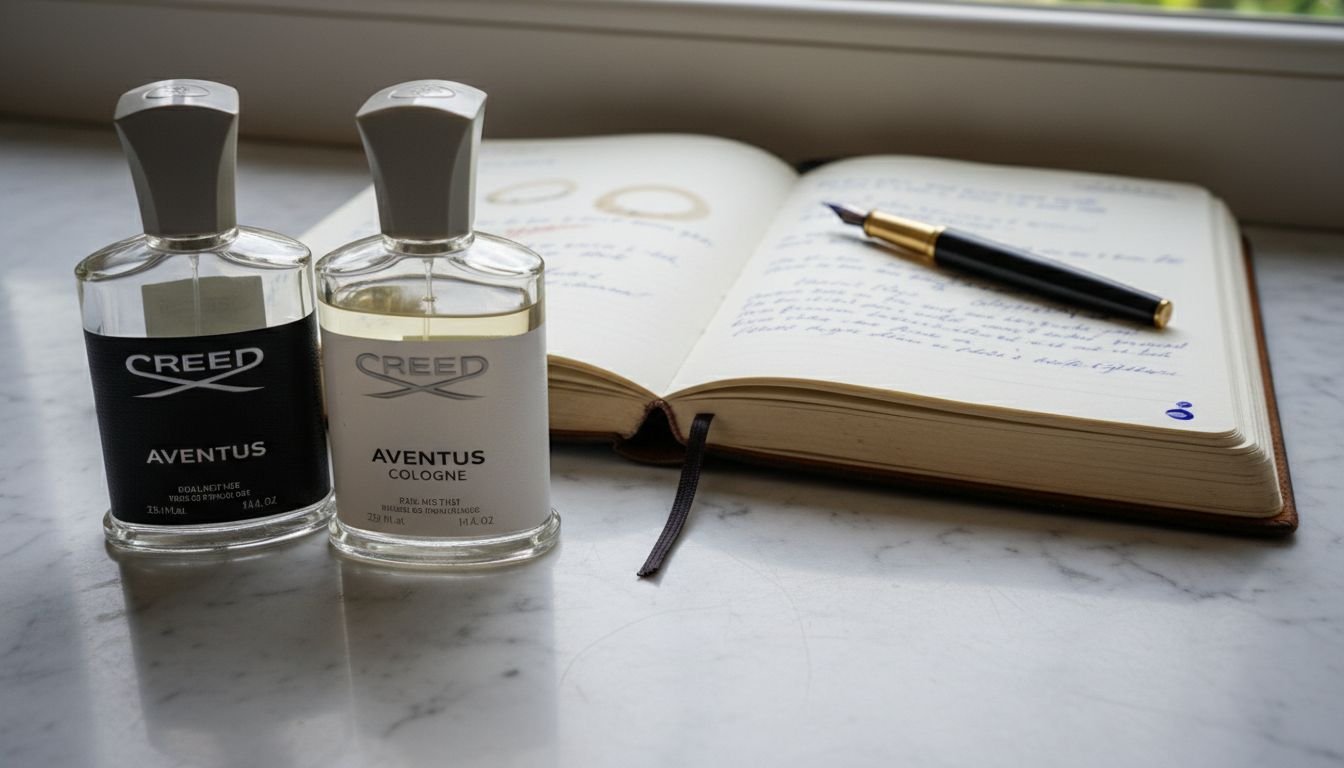
Aventus Cologne isn't a cologne. That one marketing decision has caused more confusion than anything else Creed has done with the line, because both bottles sit at the same concentration. What separates them is temperament, and temperament is what should decide which one you buy.
The name is doing the damage. Cologne on an Aventus box reads as "the weaker one", and that's not what you're buying: both the Eau de Parfum and the Cologne are built at Eau de Parfum strength. According to fragrance experts, those labels describe concentration and character rather than dramatically different compositions, which is precisely why the usual shorthand fails you here.
So read 'Cologne' as a stylistic instruction, not a dilution. Nothing has been thinned out. The house simply redrew the same picture with a lighter hand, and the two results happen to sit at the same strength on paper while behaving nothing alike on cloth.
Where they genuinely diverge is character. The original Eau de Parfum is the denser, more argumentative of the two, anchored by pineapple, birch, musk and ambergris. The Cologne keeps that core recognisable but swaps in a fresher set of top and heart notes, and the result is a scent that greets you rather than announcing itself. Knowing that in advance saves you from buying the wrong bottle for the right reason.
What actually separates them:
Same surname, different personality. The original Aventus is the maximalist of the pair: top notes of pineapple, blackcurrant, bergamot and apple, a heart of birch, jasmine, patchouli and rose, and base notes of musk, oakmoss, vanilla and ambergris. That birch is the whole trick. It's the smoky counterweight that stops the fruit reading like juice, and it's the single element most Aventus imitations fail to reproduce. By contrast, fragrance classifications place the Aventus Cologne in markedly lighter territory, emphasising citrus and fresh elements.
The Cologne is less a diluted Aventus than a redraft. Bergamot, pineapple and blackcurrant open it, vetiver, musk and ginger carry the middle, and tonka bean, sandalwood and musk close it out. Losing the oakmoss and birch while gaining ginger and vetiver is a real change of argument: less smoke, more snap. That tonka-and-sandalwood base is what keeps it from evaporating into generic freshness, though it's a softer landing than ambergris and oakmoss ever gave the original.
Here's the honest warning. If the smoke is the reason you love Aventus, the Cologne will read as a good citrus-fruit scent wearing a famous name. If the fruit is the reason you love it, you may prefer the Cologne outright.
Where to focus your comparison:
This is where the two stop being close relatives. The fragrance performance spectrum shows how differently these variants behave depending on body chemistry and conditions, and the gap is wide enough to settle most buying decisions on its own.
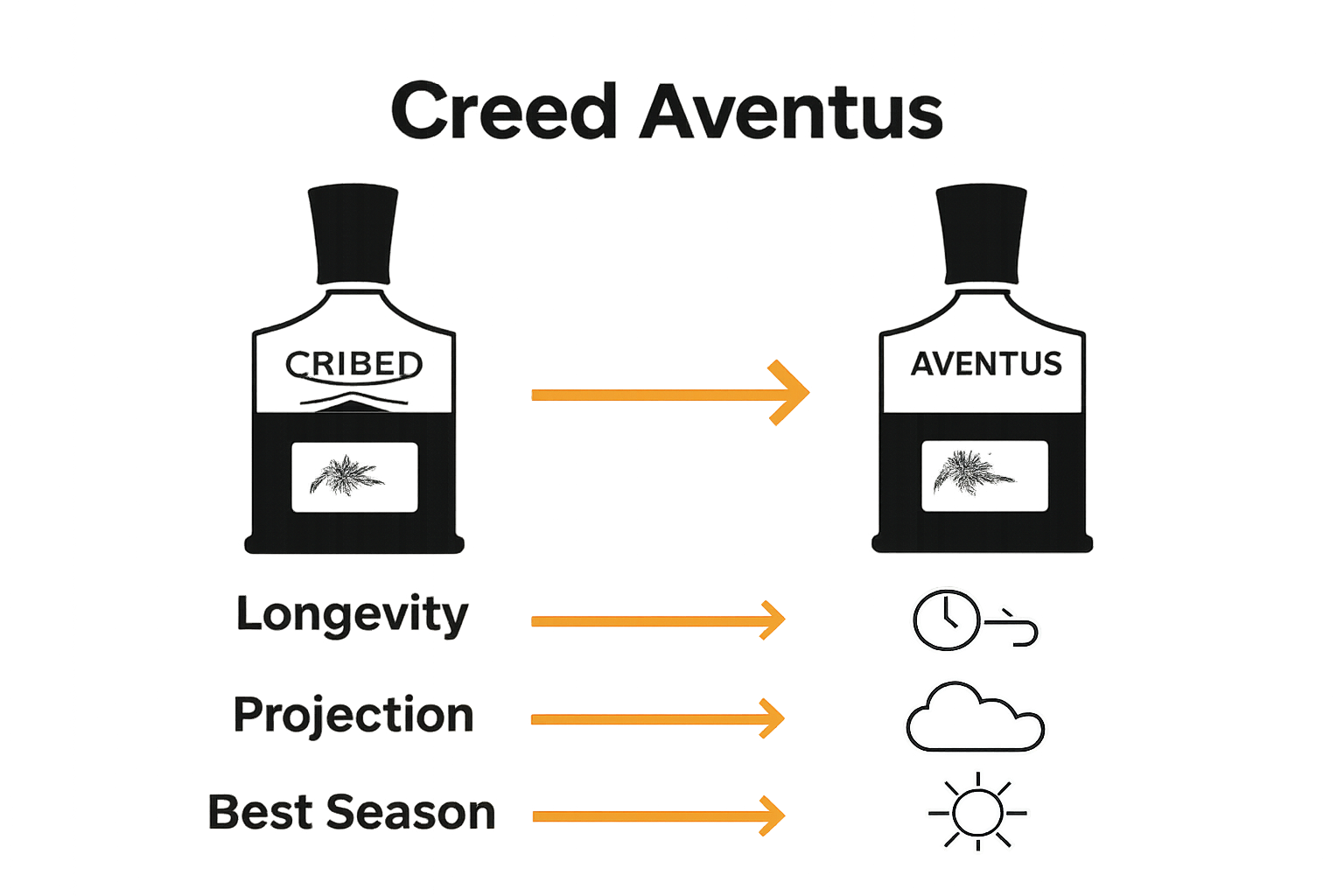
The original Creed Aventus is the stronger performer, holding its profile for roughly 8-10 hours with projection that fills the room instead of hugging the skin. The density of the note structure is what buys that staying power, with the woody and musky base doing the late shift. Aventus Cologne runs lighter and shorter: an average of 5-7 hours, and a projection that stays close to you. Five to seven hours isn't a failure. It is, however, less than people tend to expect at this price, and worth knowing before you're disappointed at 4pm.
Season settles the rest. The original wants cold air. Its musk, vanilla and ambergris harmonise with wool and indoor rooms, and autumn and winter give that weight somewhere to sit. The Cologne is a summer scent by construction: those citrusy top notes read as relief in heat, where the original can turn heavy and cloying. Buy the original in July and you'll wear it in November.
What to weigh:
Creed prices these as two tiers, and the gap is smaller than the difference in performance. The standard Aventus typically runs between £250-£350 for a 100ml bottle, which reflects the denser composition and the longer wear. Aventus Cologne sits lower, usually £200-£280, which makes it the cheaper entry but not obviously the better value per hour on skin. Collectors treat both as more than personal purchases, with limited editions and discontinued batches drawing real money on the secondary market.
Then there's batch chasing, which is where this hobby gets a little silly. Certain early Aventus batches have acquired near-mythical status, and serious collectors track variation closely, logging differences in note profile and performance that move a bottle's desirability and its resale price. Some of that scrutiny is genuine; some of it is people talking each other into paying more for a code on a box. Judge for yourself, but don't let batch folklore become the reason you overspend on your first bottle.
Worth tracking if you're collecting rather than just wearing:
Pick by context, not by prestige. Both bottles carry the name; only one of them suits a given afternoon.
The original Creed Aventus is the one for formal environments and occasions that matter. Its density reads as deliberate in business meetings, evening events and professional settings, and the slow evolution of the note structure means it still has something to say hours in. It's also the one that will be noticed, which cuts both ways — in a small meeting room it can be too much.
Aventus Cologne is the relaxed sibling, and better company for daytime. It suits outdoor gatherings, warm weather and casual working days, where the crisp citrus undertones feel appropriate rather than performative. If you already know the original reads as heavy on you, this is the version that fixes that complaint without abandoning the Aventus signature.
My recommendation, if you're choosing one: make it the original. The Cologne makes more sense as a second bottle than a first.
Decide on:
The original Aventus is the better fragrance and the better buy, and the price gap is too narrow to argue otherwise — you're paying modestly more for longer wear, more depth and the version that made the name. Aventus Cologne earns its place only in specific weather: summer heat, daylight, and days when you'd rather be noticed at conversational distance than across a room. If your only objection to the original is that it's too heavy in July, the Cologne is the answer, and it's a genuinely good one. If you want the smoke, don't compromise.
Before you commit to a full bottle, read what other collectors say about batch variation and real-world wear over at Fragplace. Then work through the note breakdowns on the fragrance performance spectrum to see which side of the fruit-versus-smoke divide you actually fall on.
Both are technically Eau de Parfum concentrations, so 'Cologne' here is a style, not a strength. The original Eau de Parfum is the more intense of the two; the Cologne is the lighter, fresher reading of the same idea.
The original opens on pineapple, blackcurrant, bergamot and apple, with richer heart and base notes behind it. The Cologne pushes citrus and freshness forward with top notes of bergamot, pineapple and blackcurrant, and a heart of vetiver and ginger that gives it a sharper edge.
The original, without much debate: roughly 8-10 hours and a projection that carries. Aventus Cologne averages 5-7 hours and stays softer and closer, which suits intimate settings but won't see you through a long day.
Wear the original for formal occasions and cooler months, where its weight has somewhere to go. Save the Cologne for casual settings and warm weather, where its lightness is the point rather than a shortfall.
| Point | Details |
|---|
| Fragrance Variations | Creed Aventus includes both Eau de Parfum and Cologne, with subtle differences in their aromatic profiles rather than concentration levels. |
| Scent Composition | The original Aventus is complex and robust, while Aventus Cologne is lighter and fresher, appealing to different preferences. |
| Performance Characteristics | Original Aventus offers longer longevity and stronger projection, making it suitable for formal occasions, while Cologne is ideal for casual, warm-weather settings. |
| Value and Collectability | Both fragrances have distinct pricing and collectible aspects, with original Aventus often viewed as a more prestigious investment. |