Articles
Fragletter पाएँ
नई फ़्रेगरेंस कहानियाँ और चुनिंदा सुझाव आपके इनबॉक्स में। कभी भी सदस्यता छोड़ सकते हैं।
नई फ़्रेगरेंस कहानियाँ और चुनिंदा सुझाव आपके इनबॉक्स में। कभी भी सदस्यता छोड़ सकते हैं।
नई फ़्रेगरेंस कहानियाँ और चुनिंदा सुझाव आपके इनबॉक्स में। कभी भी सदस्यता छोड़ सकते हैं।
नई फ़्रेगरेंस कहानियाँ और चुनिंदा सुझाव आपके इनबॉक्स में। कभी भी सदस्यता छोड़ सकते हैं।
AI hallucinating once again.
Longevity does not increase by default due to larger concentration. Molecular weight and intermolecular force does affect this however.
An extrait containing mainly volatile lighter molecules will evaporate more quickly than a bass heavy eau de toilette.
Most people buy the wrong concentration and then blame their skin. Some perfumes carry up to 40 percent pure fragrance oils, which makes them a different proposition from the eau de toilette you've been emptying six sprays at a time. Sort out concentration first, and half your fragrance complaints solve themselves.
Parfum - extrait de parfum, in full - sits at the top of the concentration ladder, at 20% to 30% pure fragrance oils. That density is the entire point of the format. Six to eight hours of wear isn't a lucky outcome here, it's the baseline you should expect, and if you're not getting it, the fault is usually in how you're applying it rather than in the bottle.
The craft argument holds up. Extraits are built to be read slowly, with the oils doing the talking instead of a big alcoholic blast. Set against lighter concentrations like eau de toilette, understanding fragrance layers explains why parfum carries a premium price. The lower alcohol content is a practical win too: if alcohol-heavy sprays sting or dry you out, an extrait is the gentler format, and that's worth more than any marketing copy.
The intimidation factor is nonsense. Parfum isn't a difficult product, it's a dense one, and dense products need a lighter hand. A single drop or two behind the ears or on pulse points will carry an evening. Spray it like an eau de toilette and you'll be the reason someone opens a window.
Key characteristics that distinguish parfum include:
Perfume concentration isn't a quality grade. It's a decision about how loud you want to be and for how long, and treating the strongest option as the best one is where most money gets wasted. 7 Essential Eau de Parfum Types breaks the categories down further.
The primary fragrance types, ranked from most to least concentrated, include:
Here's a comparison of the main fragrance concentration types:
You'll notice the ceiling for parfum gets quoted as 30% in one place and 40% in another. Houses count differently and the label almost never tells you, so judge a bottle on how it behaves rather than on a percentage someone printed in a press release.
Parfum, the most concentrated form, gives you 6-8 hours with minimal reapplication. Eau de toilette does the opposite job and does it well: it's designed to fade, which in a heatwave or an open-plan office is a feature rather than a flaw.
So choose on use, not on prestige. Skin type, climate, and how formal the room is all matter more than which tier sounds most serious. If you wear fragrance daily, an EDT you spray without thinking beats an extrait you're too precious to open.
The three-part note pyramid is a simplification, and a useful one - it tells you when to judge a fragrance rather than what to think of it. Note Categories goes deeper into how these building blocks are grouped.
Traditionally, fragrances are structured across three primary note categories:
Top notes are the lightest and most volatile, so citrus and sharp herbal openings burn off fastest - which is exactly why buying from a first sniff on a paper strip is a bad habit. The heart shows up after 10-15 minutes, and that floral or spicy middle is the part you'll actually live with. Base notes surface hours in: wood, musk, vanilla, the material that holds everything upright.
That base is where the budget goes, and it's where disappointment usually starts. If a scent charms you in the shop and bores you by mid-afternoon, blame the drydown, not the opening. Learn which base materials you keep returning to and your buying gets sharper immediately.
Most fragrances people call weak are simply badly applied. Sillage and longevity are as much technique as formula, and technique is the free part.
Optimal application techniques include:
The rubbing habit is the one to break first. Concentration then does the rest of the work: parfum at 20-30% oils typically runs 6-8 hours and leaves a heavier trail than an eau de toilette ever will. Body chemistry shifts the result more than people expect, and members of the Community of fragrance passionates will tell you the same bottle can read differently from one person to the next.
Sillage - the trail your fragrance leaves behind you - deserves more thought than longevity does. A well-applied perfume should whisper your presence, not shout it. Aim for something a person notices when they lean in, not from across a meeting room.
The bathroom shelf kills more good perfume than time does. Heat, steam, and light degrade a formula quietly, and by the time you can smell the damage the bottle is past saving. All Reviews is full of people discovering this the expensive way.
Common mistakes that can compromise your precious perfume include:
Allergy risks deserve genuine caution rather than a shrug. Patch test properly: a small amount on your inner forearm, then wait 24 hours before you commit it to your neck. Reactive skin is worth respecting, since both essential oils and synthetic materials can set it off, and known allergens like oakmoss, bergamot, or certain synthetic musks are the usual suspects.
Storage is simple once you stop overthinking it - a cool, dark spot at a steady temperature, so a dresser drawer or a dedicated cabinet. Keep it away from swinging temperatures, light, and damp. Stored properly, a fragrance holds its character for 1-3 years. The corollary is the part people ignore: don't save a bottle for an occasion that never arrives. Perfume doesn't improve in the dark.
Here's the verdict. Extrait earns its price if you wear fragrance rarely and want the wear to count, or if alcohol-heavy sprays irritate your skin - the lower alcohol content is a real argument, not a sales line. For anything close to daily wear, an eau de parfum is the better buy, and in hot weather an EDT beats both. Buy the concentration that fits your week, learn your base notes, and store the thing away from your shower.
Start with Note Categories and work out which base materials you keep coming back to. Then read All Reviews before you spend extrait money on anything.
Parfum, also called extrait de parfum, is the most concentrated format, at 20-30% pure fragrance oils. That's what buys you 6-8 hours of wear, where an eau de parfum or eau de toilette gives you less of it and a lighter trail.
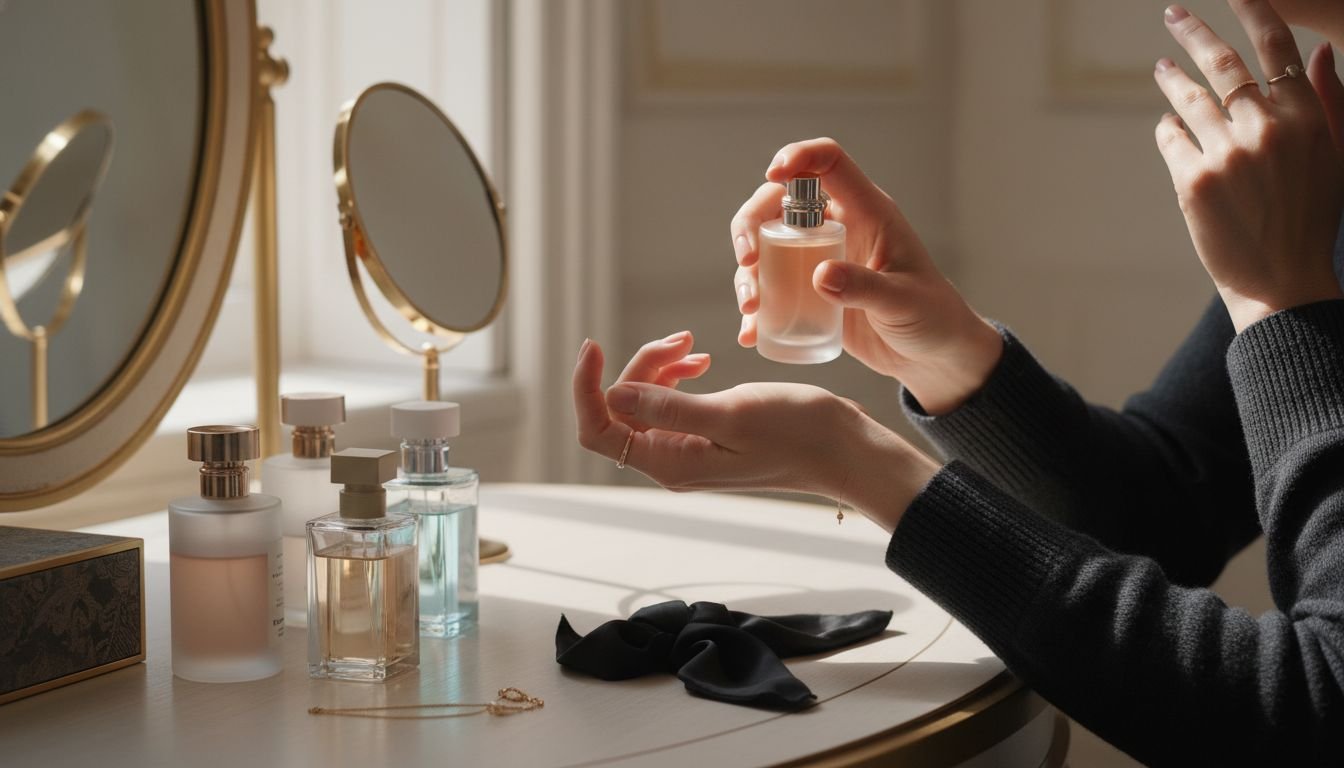
Pulse points - wrists and neck - on clean, moisturised skin, sprayed from 3-6 inches away. Don't rub it in afterwards; you'll crush the opening and shorten the whole thing.
Notes are the layers that unfold as you wear a scent: top notes first, heart notes as the character settles, base notes lasting longest. Knowing which layer you're smelling tells you when to judge a fragrance rather than guessing from the first spray.
Cool, dark, steady temperature, away from sunlight and humidity - so not the bathroom. Done properly, a bottle keeps its character for 1-3 years.
| Point | Details |
|---|
| High Concentration | Parfum contains 20-30% pure fragrance oils, providing intense scent longevity of 6-8 hours. |
| Fragrance Composition | Understand fragrance notes: top, middle, and base, to select scents that complement your personal essence. |
| Application Techniques | Apply to pulse points on clean, moisturized skin for optimal sillage and fragrance longevity. |
| Proper Storage | Store fragrances in cool, dark places to preserve quality and prevent deterioration. |
| Fragrance Type | Oil Concentration | Longevity (Hours) | Scent Intensity |
|---|
| Parfum (Extrait) | 20-40% | 6-8 | Intense |
| Eau de Parfum (EDP) | 15-20% | 4-6 | Strong |
| Eau de Toilette (EDT) | 5-15% | 2-4 | Moderate |
| Eau de Cologne (EDC) | 2-4% | 1-2 | Light |
| Eau Fraîche | 1-3% | <1 | Faint |