Articles
Fragletter पाएँ
नई फ़्रेगरेंस कहानियाँ और चुनिंदा सुझाव आपके इनबॉक्स में। कभी भी सदस्यता छोड़ सकते हैं।
नई फ़्रेगरेंस कहानियाँ और चुनिंदा सुझाव आपके इनबॉक्स में। कभी भी सदस्यता छोड़ सकते हैं।
नई फ़्रेगरेंस कहानियाँ और चुनिंदा सुझाव आपके इनबॉक्स में। कभी भी सदस्यता छोड़ सकते हैं।
नई फ़्रेगरेंस कहानियाँ और चुनिंदा सुझाव आपके इनबॉक्स में। कभी भी सदस्यता छोड़ सकते हैं।
Niche perfume has a marketing problem: plenty of what gets sold as artisanal is a mainstream formula in a heavier bottle. The part that's real is worth paying for, and recent research shows the global niche fragrance market growing far faster than mass fragrance lines. If you're bored of smelling the same blockbuster accord on every commute, start here.
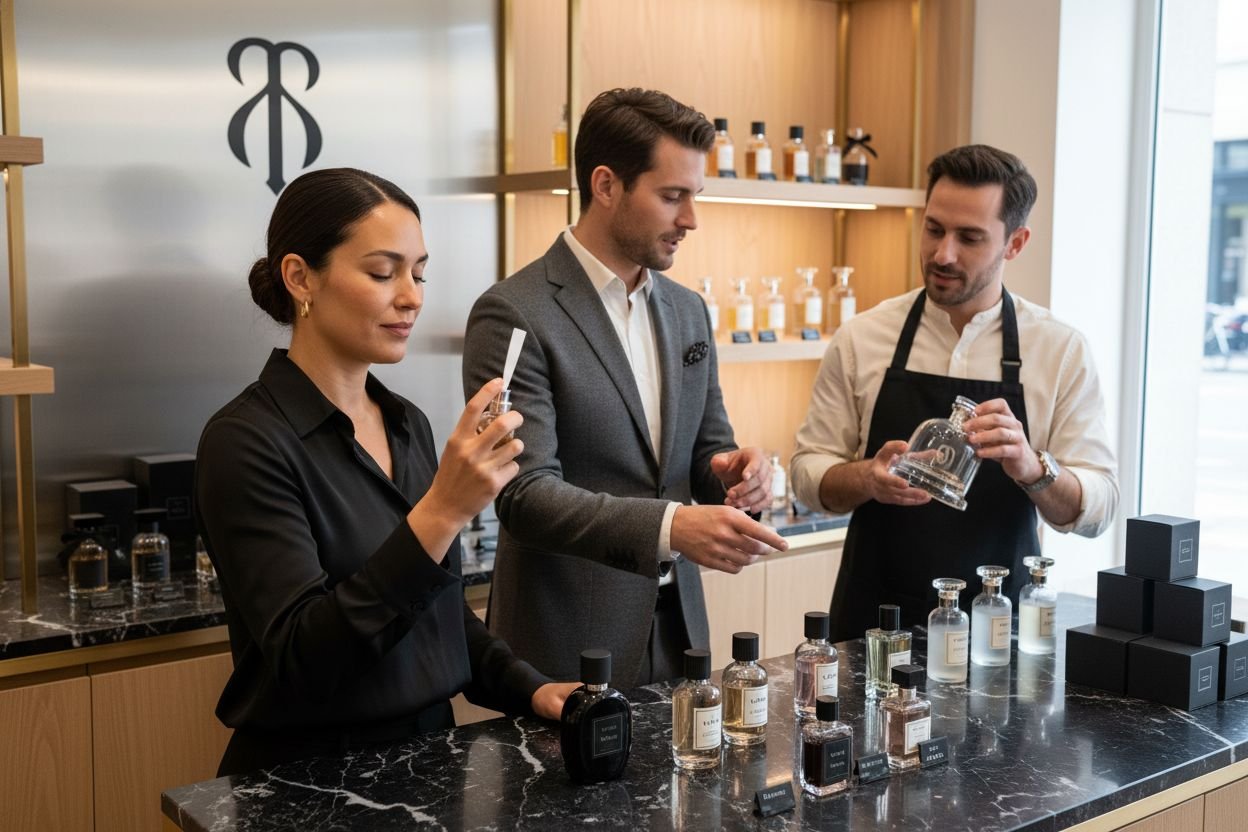
Niche is a business model before it's a smell. A fashion house briefs a fragrance to help sell handbags; a niche house briefs it to say something. That gap is where artistic expression and uncompromising quality live, and it's why these bottles don't smell committee-approved.
The category's real claim is storytelling through scent. Perfumers here treat a formula as an art form rather than a product, and the good ones build compositions that push at conventional boundaries instead of flattering everyone in the room. Explore our community of fragrance enthusiasts who read fragrance that way.
Key characteristics that define niche perfume brands include:
Limited production runs that ensure exclusivity and prevent oversaturation
Unconventional ingredient selections sourced from rare and high-quality materials
Emphasis on artistic vision rather than commercial marketability
Higher price points reflecting exceptional ingredient quality and craftsmanship
Fragrance Foundation research points to significant growth for niche brands, with buyers increasingly valuing unique, personalised scent over mass-produced fragrance. Call it individualism, or call it fatigue with the same clean-laundry accord on every high street. The money has moved either way.
So the honest framing is this: niche perfumes are wearable art forms that communicate personal identity, emotion and creativity. Just don't let the word "art" excuse a thin blend at a luxury price. That happens more often than the category likes to admit.
Here's the unpopular half of the answer: a great designer fragrance beats a mediocre niche one every time, at a fraction of the cost. The case for niche isn't that it's automatically better. It's that the ceiling is higher, because nobody is sanding the edges off to keep a department store happy.
Explore fragrance discussions if you want to see how collectors actually weigh that trade.
The key distinctions between niche and designer fragrances include:
Creative freedom that allows perfumers to experiment without commercial constraints
Higher concentration of rare and premium ingredients
Smaller production volumes ensuring greater exclusivity
More complex and innovative scent profiles
Euromonitor International research reports remarkable growth in niche perfume markets, with buyers increasingly willing to spend for something exceptional, and projects the global niche fragrance market to expand significantly. That willingness is the engine of the whole category.
Designer houses chase mass appeal, and predictability is the price of it. Niche houses chase an idea. If you've ever found a fragrance beautiful and slightly uncomfortable at the same moment, you already know which side of that line you stand on.
What buyers want now goes past smelling pleasant: emotional connection and personal expression, scent as a signature rather than an accessory. Niche perfumery is built to deliver that. It just asks you to do some homework first.
Strip away the marketing and a handful of traits separate a real niche house from one cosplaying as one. Explore our most popular brands and the pattern gets obvious fast.
Artistic integrity is the load-bearing trait. These perfumers treat a formula as personal expression and put creative vision over commercial constraints — which is also why some niche releases are frankly unwearable. That's the deal you're making.
Key defining characteristics of niche perfume brands include:
Extreme ingredient selectivity focusing on rare, high-quality raw materials
Minimal marketing interference allowing pure artistic interpretation
Small-batch production ensuring exceptional quality and exclusivity
Euromonitor International research points to consistent differentiators across these brands. They spend more on premium ingredient sourcing, often going direct to specialised suppliers for exotic and uncommon raw materials that larger commercial brands can't get near.
The pricing structure follows from that. A designer bottle carries the cost of the campaign and the packaging; a niche bottle mostly carries the cost of formulation excellence. You're paying for what's inside instead of for the billboard. Whether that's worth it depends entirely on the house — some earn the premium, others are charging you for the font on the label.
Where niche brands do consistently deliver is genuine storytelling through scent. A fragrance built around an idea rather than a demographic stays interesting instead of settling into background pleasantness, and that's the difference you're actually buying.
The most interesting work in perfumery is coming from houses small enough to fail. Learn more about our fragrance community if you want to know which ones people keep returning to.
Independent perfumers are the engine here. They reject mass-market formulation and build things that are deeply personal and meticulously constructed — sometimes gloriously, sometimes at the cost of anything you'd wear to an office.
Key considerations when exploring unique niche perfume brands include:
Commitment to original artistic vision
Rejection of commercial fragrance trends
Experimental approach to scent composition
Fragrance Foundation research describes exponential growth in the global niche perfume market, driven by buyers who want authenticity and craftsmanship. Fair enough — though "authenticity" is itself a marketing claim now, so treat it as a question to ask rather than an answer you've been given.
What genuinely separates these houses is unconventional ingredient selection: rare botanical extracts, awkward synthetic molecules, aromatic structures a commercial brand would kill in testing as too risky. Risk is the product.
The best of them treat scent as a narrative medium, and that isn't always comfortable. A fragrance can be brilliant and still not be for you. Learning to tell those two things apart is most of what taste actually is.
"Artisanal" is an unregulated word. Anyone can print it on a box, and plenty do, so identifying authentic niche fragrances means reading past the copy. Our community is full of collectors who have already made the expensive mistakes, which is a cheaper way to learn than making them yourself.
A few markers of true craftsmanship and originality do most of the work for you.
Key authentication considerations include:
Detailed ingredient transparency with specific botanical and molecular descriptions
Limited production volumes indicating bespoke craftsmanship
Unique packaging that reflects artistic intent rather than commercial trends
Global Cosmetic Industry research ties genuine niche fragrance to exceptional provenance and production standards. Provenance is the tell. A house that can't say where its materials come from usually has a reason for staying quiet.
The origin story matters more than most buyers assume. Real niche houses are run by independent perfumers or small artisanal outfits with a stated point of view, and they put their time and money into complex, innovative scent compositions rather than into a launch party.
So check the creative lineage before you spend: who made it, what they've made before, what they say they were reaching for. Genuine niche fragrance carries a creator's fingerprint. If nobody is named anywhere, ask why.
Most collections are two-thirds dead weight — bottles bought on hype, worn twice, never finished. Perfume collecting gets good the moment you stop buying scents you admire and start buying ones you'll reach for.
Key strategies for building an exceptional niche perfume collection include:
Prioritise quality over quantity
Research perfumers and their artistic philosophies
Invest in sample sets before purchasing full bottles
Store fragrances properly to maintain integrity
The sample habit is the most valuable thing on that list. A decant costs a fraction of a bottle and answers the one question no write-up can: do you want to smell like this on an ordinary Tuesday?
Fragrance Foundation research frames serious collecting as artistic investment, and curators recommend balancing personal preference against technical understanding. Sensible, as long as "investment" doesn't become an excuse to buy things you don't enjoy because someone told you they were important.
Then there's preservation of fragrance integrity. Niche perfumes are sensitive to their surroundings and want controlled storage environments away from direct sunlight, temperature fluctuations and humidity. A drawer beats a windowsill. A cool cupboard beats a bathroom shelf, which is the worst spot in the house and exactly where most people keep their bottles.
Past the logistics, emotional connection is the point. A collection should read like you, not like somebody's best-of list. The good ones keep changing.
Seasonal rules are guidelines, not law — wear the smoky one in July if it makes you happy. They exist because they mostly work, and niche fragrances are flexible enough to bend them with some intelligence.
Key considerations for seasonal and occasion-based fragrance selection include:
Winter fragrances featuring warm, rich woody and spicy notes
Summer scents emphasising light, fresh citrus and aquatic compositions
Professional environments requiring subtle, understated aromatic profiles
That third one is where enthusiasts most often go wrong. A composition you find fascinating can be an imposition in a small meeting room, and the fix is to wear less of it rather than to swap it for something dull.
Fragrance Marketing Institute research notes that perfume buyers increasingly want multidimensional fragrance experiences matched to specific lifestyle contexts and personal narratives.
The molecular complexity of niche work is what makes that possible. These scents shift as they go, responding to body chemistry, ambient temperature and social setting — which is precisely what a flat commercial fragrance can't do.
And that's the practical argument for a small, deliberate wardrobe instead of one bottle asked to do everything: fragrance is communication. What you wear to a long dinner shouldn't be what you wear to a client meeting.
Here's everything above in one place — the themes, what they get you, and what to do about them.
So, the verdict. If you're new to niche perfume, don't buy a bottle — buy samples, and put the money you save into working out which perfumer you keep gravitating towards. If you already own a shelf of designer classics, the reason to cross over isn't status; it's that the best small houses will show you structures the mass market decided you didn't want. And if a brand won't say who made the fragrance or where the materials came from, walk away. That's the shortest reliable filter there is.
Two places to start. First, Explore our most popular brands to see which houses hold up once the hype burns off. Then Explore fragrance discussions and read the people who have already spent the money, so you don't have to spend it twice.
Artisanal fragrances that put artistic expression and high-quality ingredients ahead of mass-market appeal. They come from independent perfumers who build a scent around a story rather than a sales target.
Niche perfumers get more creative freedom and rarer materials, so the compositions tend to be more complex and more innovative. Designer houses chase mass appeal, and predictable is what that buys you.
Detailed ingredient transparency, limited production volumes, and packaging that reflects artistic intent rather than a commercial trend. If a brand is vague on all three, stay sceptical.
Quality over quantity. Research the perfumers and what they're trying to do, buy sample sets before full bottles, and store everything properly so the juice you paid for survives.
| Takeaway | Explanation |
|---|
| Niche perfumes prioritise artistry and quality. | These fragrances focus on creative expression and high-quality ingredients, setting them apart from mass-market perfumes. |
| Frequent limited production ensures exclusivity. | Niche brands produce smaller batches, offering unique scents to discerning consumers, avoiding oversaturation in the market. |
| Invest in niche for deeper emotional connections. | Niche fragrances provide personal narratives and complex olfactory compositions, elevating scent to an artistic form of self-expression. |
| Research niche brands before purchasing. | Understanding a brand's story and the perfumer's philosophy enhances your ability to choose meaningful scents that resonate personally. |
| Proper storage maintains fragrance integrity. | Niche perfumes require careful storage away from light and temperature extremes to preserve their unique compositions and quality. |
| Aspect | Key Points | Benefits/Outcomes |
|---|
| Definition & Philosophy | Niche perfumes prioritise artistry, uniqueness, and high-quality ingredients, focusing on creative exploration over mass-market appeal. | Fragrances become wearable art forms, expressing personal identity and emotions beyond conventional scent. |
| Niche vs. Designer | Niche brands offer greater creative freedom, use rare ingredients and create more complex profiles, unlike designer brands focused on mass appeal. | Deep sensory experiences, individuality, and exclusivity for discerning fragrance lovers. |
| Characteristics | Limited production runs, ingredient selectivity, minimal marketing influence, and narrative storytelling define niche brands. | Ensures exclusivity, authenticity, and a more meaningful connection to the fragrance. |
| Identifying Authenticity | Transparency in ingredients, small production volumes, and unique packaging signal genuine niche fragrances crafted by independent perfumers. | Protects against mass-produced imitations and guarantees true artisanal value. |
| Collecting Tips | Prioritise quality over quantity, research perfumers’ backgrounds, sample before buying, and store fragrances properly to preserve integrity. | Builds a refined, personally resonant collection with sustained fragrance longevity. |
| Seasonal & Occasion Adaptation | Niche fragrances offer adaptability for seasons and occasions, with complex, evolving scents suited to personal and professional settings. | Enables personal storytelling through scent, conveying mood, professionalism, or individuality as desired. |
| Community Engagement | Joining enthusiast communities enhances brand discovery, education, and shared experiences in the niche perfume world. | Increases confidence in selecting authentic artistic fragrances and expands olfactory knowledge. |