Choosing a fragrance that truly lasts can feel like a guessing game. Nearly eight out of ten people say they are disappointed by how quickly a scent fades after buying a new perfume. Getting reliable results depends on more than just the bottle you pick. From prepping your skin to comparing notes with other enthusiasts, a step-by-step approach reveals which fragrances really stand the test of time.
Ensure clean skin and controlled conditions for reliable fragrance testing.
2. Apply fragrance consistently
Use the same technique for applying fragrance to ensure accuracy in results.
3. Record scent performance regularly
Document fragrance characteristics at fixed intervals to track its development over time.
4. Compare results systematically
Use a chart to objectively analyze different fragrances under identical conditions.
5. Validate with community feedback
Engage with fragrance enthusiasts to gather broader insights and validate personal findings.
Step 1: Prepare your skin and environment
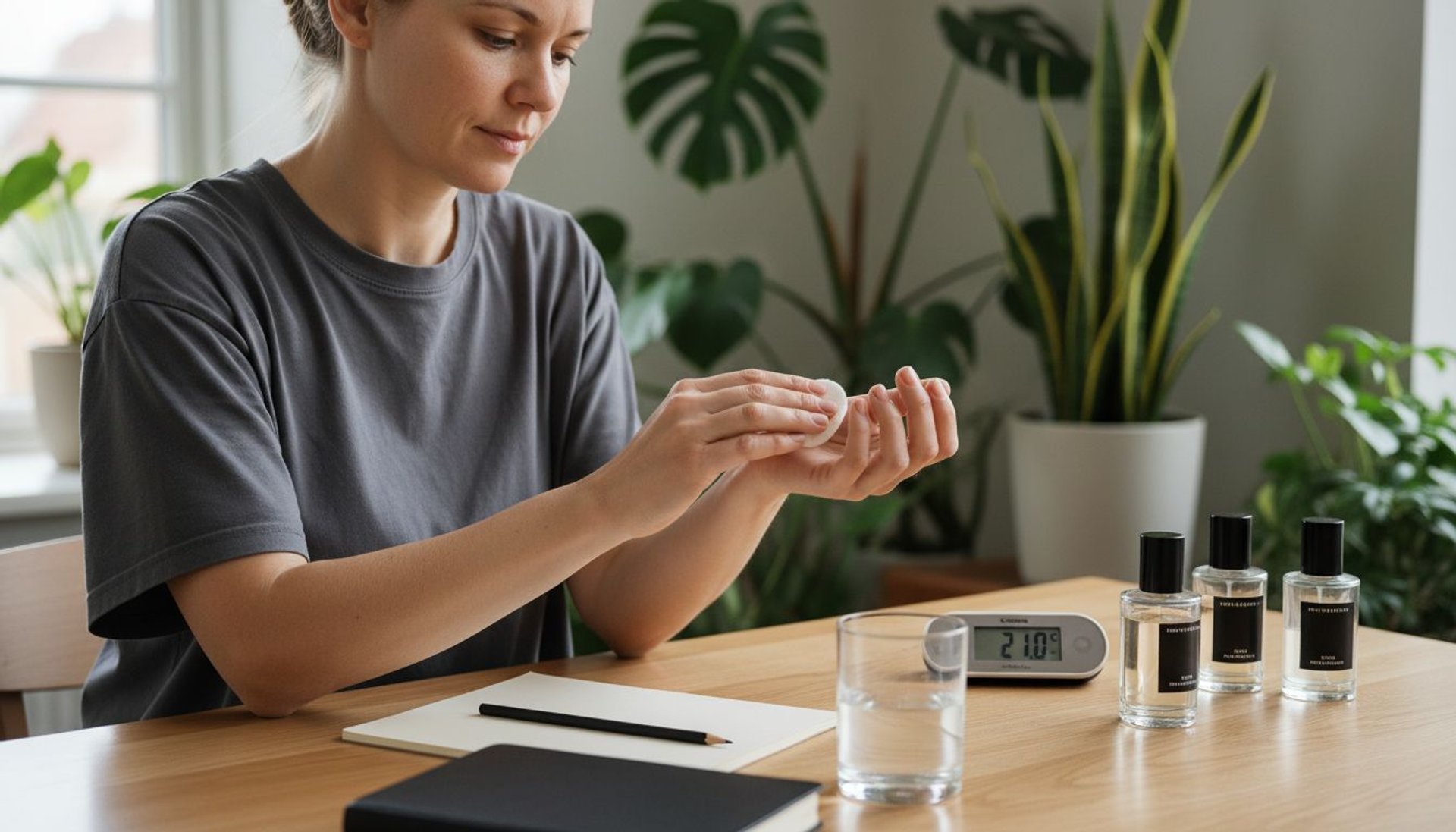
Preparing your skin and environment is a crucial first step in accurately testing fragrance longevity. You want to create an optimal testing scenario that allows your chosen perfume to perform at its best while giving you reliable performance data.
Start by selecting a clean area of skin that has not been recently moisturised or exposed to other fragrances. According to nikoochem.com, pulse points like your inner wrists and behind the ears are ideal for application because these areas generate natural warmth that helps diffuse the scent. Pro tip: avoid rubbing your wrists together after spraying, as this can break down the fragrance molecules and reduce its staying power.
Controlling your environment is equally important for consistent testing. As recommended by nikoochem.com, maintain a stable room temperature and humidity level during your fragrance test. Extreme temperatures or high humidity can significantly impact how long a scent remains detectable. Consider testing in a room around 20 22 degrees Celsius with moderate humidity for the most reliable results. This standardised approach will help you compare different fragrances more accurately and understand their true longevity characteristics.
Before moving to the next step, ensure your skin is clean, dry, and free from other competing scents or heavy moisturisers that might interfere with the perfume's performance.
Step 2: Apply fragrance using consistent technique
Now that your skin and environment are prepared, it is time to apply your fragrance using a precise and consistent technique. This step is crucial for obtaining accurate longevity measurements and understanding how your chosen scent truly performs.
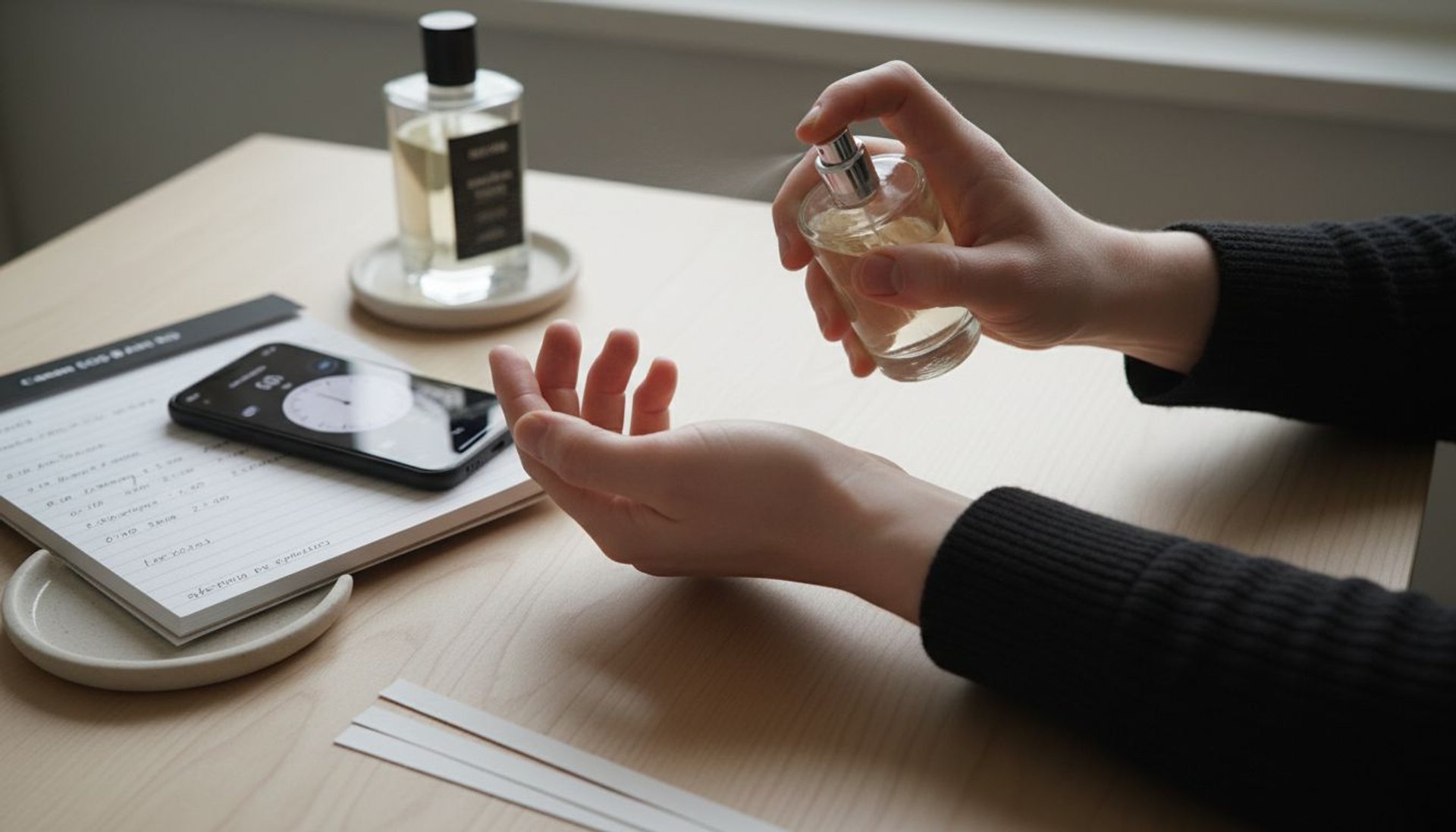
According to nikoochem.com, the method of fragrance application dramatically impacts its performance. Position the perfume bottle 5-10 cm away from your skin and apply using a gentle, even spray. This distance allows for optimal dispersion of the scent molecules. Target your pulse points specifically the inner wrists, neck, and behind the ears as these warm areas help diffuse the fragrance more effectively. Pro tip: aim to apply the same amount of fragrance in the same locations each time you test to ensure consistent results.
To maximise your testing accuracy, consider creating a standardised application routine. This might involve spraying exactly two times on each selected pulse point, always from the same distance and angle. Avoid rubbing the fragrance into your skin, as this can break down the delicate molecular structure and alter the scent profile. For an even more comprehensive test, check out our guide on understanding fragrance layers to learn more about how different concentrations and application techniques can influence a perfume's performance.
Remember that consistency is key when testing fragrance longevity. By following these precise application techniques, you will create a reliable baseline for comparing different perfumes and understanding their true staying power.
Step 3: Record scent performance at regular intervals
Tracking your fragrance's performance systematically is essential for understanding its true longevity and how it develops over time. This step transforms your fragrance testing from a casual observation to a precise scientific assessment.
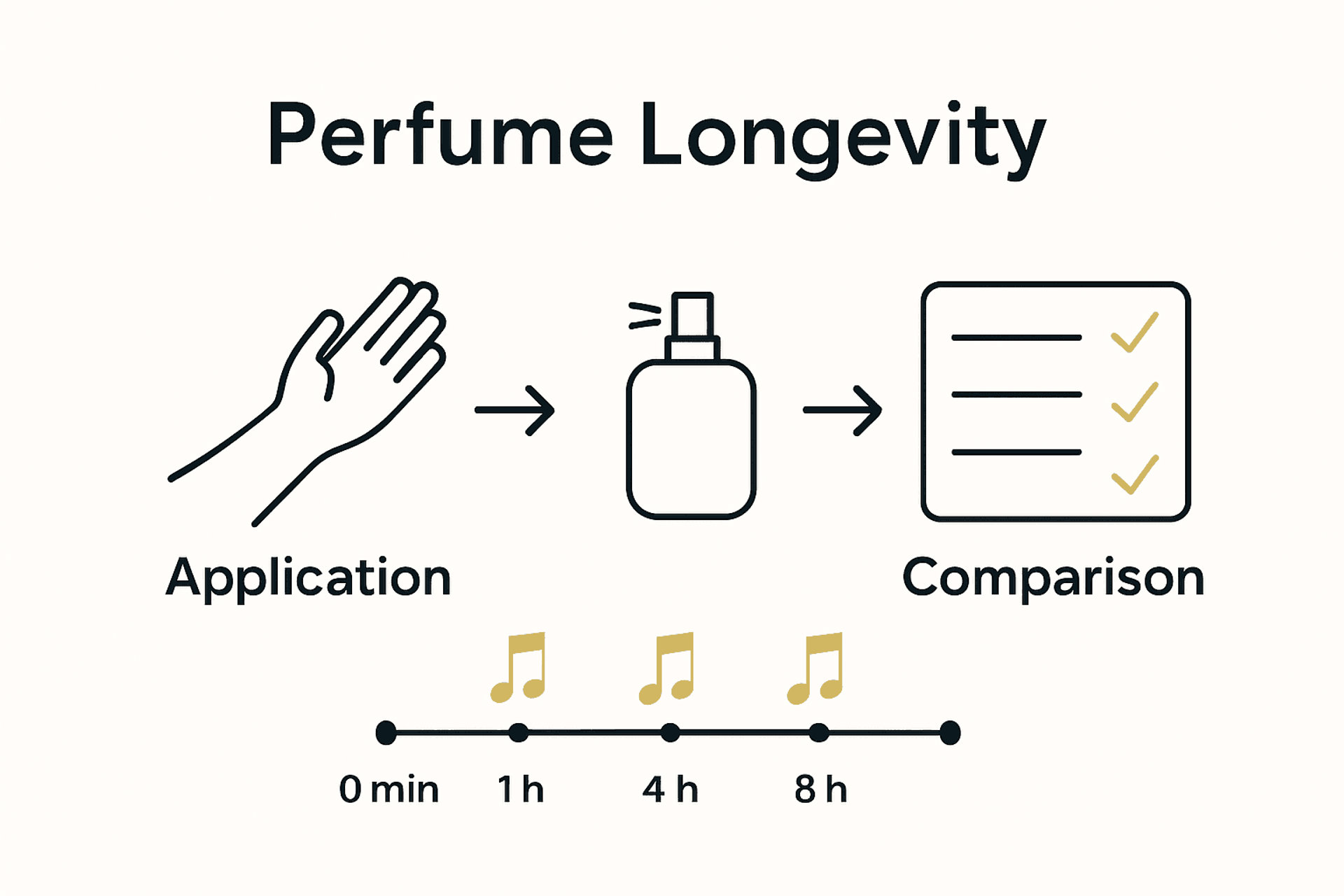
According to nikoochem.com, implementing a standardized testing framework means defining specific evaluation schedules. Create a detailed log where you document the fragrance's characteristics at fixed intervals such as immediately after application, then at 30 minutes, 1 hour, 2 hours, and continuing up to 24 hours. Prepare a notebook or digital spreadsheet with columns for time, scent intensity, projection, and any notable changes in the fragrance profile.
Complement your technical tracking with sensory observations. As recommended by tienperfume.vn, focus on monitoring the fragrance's development across its different note stages. Pay attention to how the top, heart, and base notes evolve over 4-8 hours. Pro tip: use descriptive language to capture nuanced changes make notes about whether the scent becomes softer, more intense, or shifts in character. Learn more about understanding fragrance layers in our comprehensive guide to enhance your evaluation skills.
Remember that consistent and thorough documentation is key to developing a reliable method for comparing different fragrances and understanding their unique performance characteristics.
Step 4: Compare results across different fragrances
After meticulously tracking individual fragrance performances, the next crucial step is comparing your results systematically. This comparative analysis will help you understand how different scents perform under identical testing conditions and reveal unique characteristics of each perfume.
According to nikoochem.com, building a robust testing framework requires maintaining consistent protocols across all fragrances. Create a comparative chart that lists each fragrance alongside standardized metrics such as initial projection, scent intensity, evolution of notes, and total longevity. This approach ensures your comparisons remain objective and scientifically grounded.
As recommended by tienperfume.vn, consider using blotter strips as an initial screening method before full skin testing. This technique allows you to quickly assess and shortlist fragrances based on their initial characteristics. Pro tip: pay special attention to how each fragrance interacts with your unique skin chemistry different scents can dramatically transform over time. Check out our fragrance discussions to learn how other enthusiasts approach comparative fragrance testing and share insights from your own experiments.
Remember that meaningful fragrance comparisons go beyond mere numbers they tell a story about scent complexity, personal chemistry, and olfactory experience.
Step 5: Verify longevity with community feedback
Validating your personal fragrance longevity findings through community insights adds an important layer of understanding to your testing process. By connecting with other fragrance enthusiasts, you can gain broader perspectives and validate your individual observations.
Research from arxiv.org reveals fascinating insights into community detection techniques for perfume preferences. These advanced methods can uncover clusters of similar fragrances based on collective user experiences. Start by exploring online fragrance forums, review platforms, and community discussion groups where members share detailed insights about scent performance. Look for patterns in user reviews that discuss longevity, paying special attention to comments about how a fragrance performs across different skin types and environments.
According to arxiv.org, integrating user feedback with personalized recommendation algorithms can significantly enhance your understanding of fragrance characteristics. Pro tip: engage directly with community members by sharing your own testing results and asking about their experiences. Check out our fragrance discussions to connect with other enthusiasts who can provide nuanced insights into scent longevity. Remember that while personal testing is crucial, community feedback offers a broader perspective that can validate or challenge your initial findings.
Community verification transforms your individual fragrance testing from a personal experiment into a collaborative exploration of scent experiences.
Discover True Fragrance Longevity with the Fragplace Community
Testing a perfume’s longevity naturally at home can be challenging. You want to ensure your skin and environment are primed, apply scents consistently, and carefully track their evolution over hours. However, even the most careful testing can leave questions about how a fragrance performs on others or how it interacts with different chemistries. Fragplace.com offers the perfect solution for anyone seeking deeper insights and reliable comparisons through community feedback and expert discussions.
Join Fragplace today to not only record and compare your own fragrance tests but also to connect with a passionate community of scent lovers. Explore thorough reviews, detailed note breakdowns, and shared experiences that reveal how fragrances truly hold up beyond your own skin. Dive deeper into fragrance discussions and enrich your knowledge with collective insights. If you are serious about understanding perfume longevity and want to make confident, informed choices, start now and become part of a fragrance community that brings your testing results to life.
Frequently Asked Questions
How can I prepare my skin for testing fragrance longevity at home?
To prepare your skin, choose a clean area that has not been recently moisturized or exposed to other scents. Apply the fragrance to a pulse point like your inner wrist to ensure optimal performance and measurement accuracy.
What technique should I use to apply fragrance for testing?
Apply your fragrance by holding the bottle 5-10 cm away from your skin and using a gentle, even spray. Consistently spray the same amount on the same pulse points each time you test to achieve reliable results.
How do I systematically record fragrance performance?
Create a detailed log where you document the fragrance's intensity and character at regular intervals, like every 30 minutes for the first 2-3 hours. This structured approach will help you track the scent's evolution over time accurately.
What should I include in my comparison of different fragrances?
When comparing fragrances, create a chart that includes metrics like initial projection, intensity, and longevity. Consistency is key, so ensure all tested fragrances are evaluated under the same conditions for a fair comparison.
How can I validate my personal findings on fragrance longevity?
Engage with online fragrance communities to gather insights on how others experience the same scents. Share your testing results and ask for feedback to obtain a broader perspective on longevity and performance across different skin types.
Why is it important to control my environment while testing fragrances?
Controlling your environment, such as keeping a stable room temperature and humidity level, is essential for accurate testing results. For the most reliable observations, aim for a room temperature around 20-22 degrees Celsius with moderate humidity.