Eau de Toilette vs Eau de Parfum: Complete Guide
20 Nov 2025
Choosing between eau de toilette and eau de parfum leaves many fragrance lovers puzzled. With concentration levels ranging from 5 to 20 percent, even a small difference can completely change how a perfume smells and lasts on your skin. Understanding what sets these two types apart helps you make smarter, more personal choices—whether you crave a light, daytime scent or a lingering, luxurious aroma for special evenings.
Table of Contents
- Defining Eau de Toilette And Eau de Parfum
- Fragrance Concentration And Longevity Compared
- How Usage And Occasion Influence Choice
- Cost, Performance, And Value Differences
- Common Myths And Mistakes To Avoid
Key Takeaways
Defining Eau de Toilette and Eau de Parfum
Fragrances are complex creations with subtle yet significant distinctions, and understanding eau de toilette and eau de parfum represents a fundamental aspect of scent appreciation. According to ifrafragrance, these terms are general descriptors without strict international definitions, which means their characteristics can vary across different regions and market segments.
The primary difference between eau de toilette and eau de parfum lies in their fragrance concentration. As research from the International Journal of Creative Research Thoughts indicates, eau de parfum typically contains a higher concentration of aromatic compounds. Specifically:
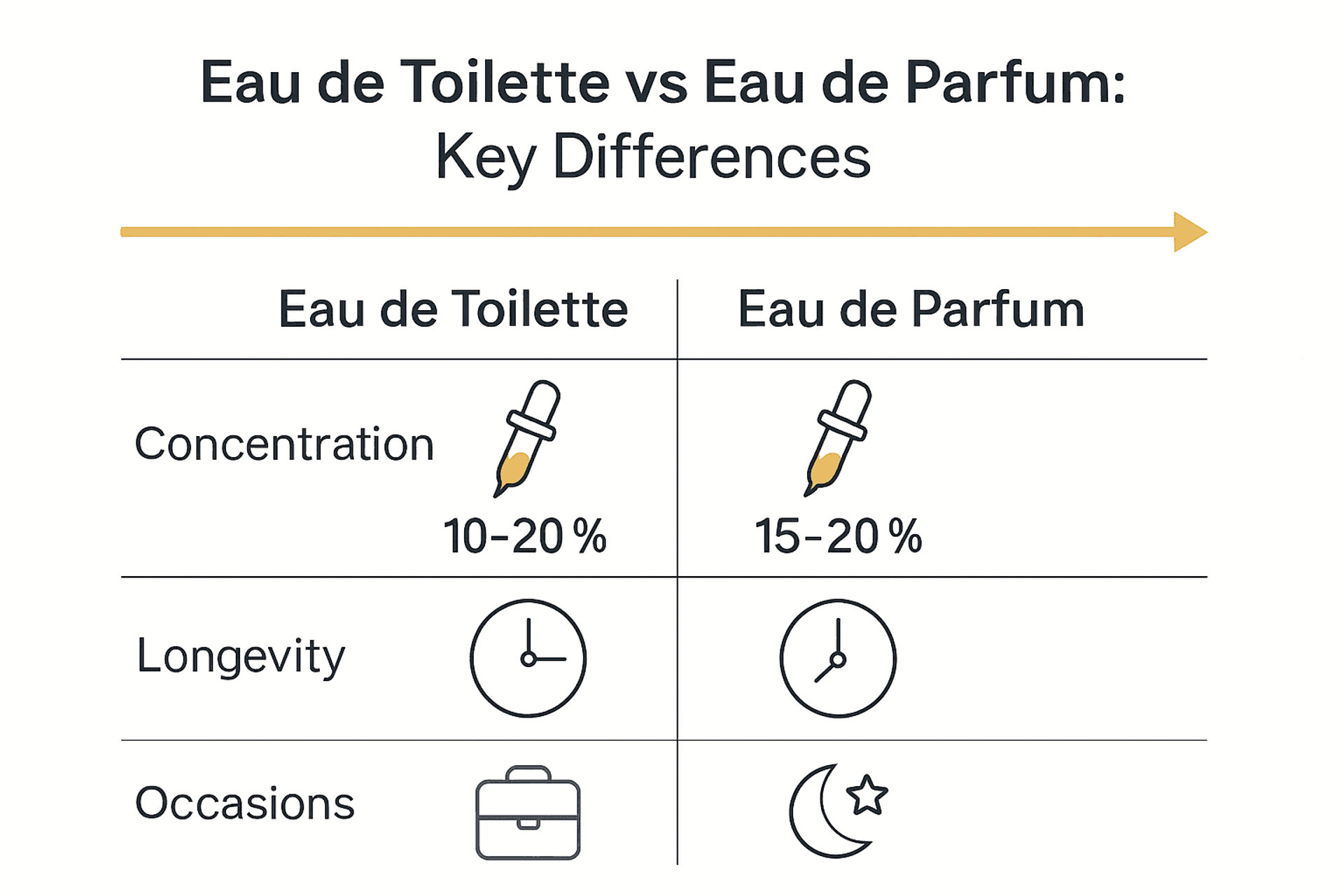
- Eau de Toilette: 5–15% fragrance concentration
- Eau de Parfum: 10–20% fragrance concentration
This variation in concentration directly impacts the perfume's performance and longevity. Eau de parfum generally offers a more intense and longer-lasting scent experience, typically lasting four to five hours, compared to eau de toilette's two to three hours of projection. The higher concentration means eau de parfum contains more essential oils and less alcohol, resulting in a richer, more complex fragrance profile that develops more slowly on the skin.
When selecting between these two fragrance types, consider your personal preferences, occasion, and desired scent intensity. An exploration of fragrance layers can provide deeper insights into how these concentrations influence a perfume's overall character.
Fragrance Concentration and Longevity Compared
Understanding the intricate relationship between fragrance concentration and scent longevity is crucial for perfume enthusiasts and casual wearers alike. Ifrafragrance provides a comprehensive breakdown of fragrance types and their typical concentration levels, revealing how these variations dramatically impact a perfume's performance.
Let's explore the concentration spectrum and how it influences scent duration:
- Eau de Cologne: 3–8% concentration, lasting up to two hours
- Eau de Toilette: 5–15% concentration, lasting two to three hours
- Eau de Parfum: 10–20% concentration, lasting four to five hours
Research from the International Journal of Creative Research Thoughts confirms that higher fragrance concentrations directly correlate with extended wear time. Eau de parfum, with its robust 15–20% aromatic compound percentage, offers the most substantial and enduring scent experience.
This higher concentration means more essential oils and less alcohol, resulting in a more complex and persistent fragrance profile.
For those exploring perfume options, consider the context of your fragrance wear. Lighter concentrations like eau de toilette work brilliantly for daytime, casual settings, while eau de parfum provides a more intense, long-lasting option for evening events or situations requiring prolonged scent projection. Dive deeper into understanding these nuanced fragrance types in our 7 Essential Eau de Parfum Types You Need to Know article.
How Usage and Occasion Influence Choice
Choosing between eau de toilette and eau de parfum extends beyond mere concentration—it's about understanding how different fragrance types align with specific social contexts and personal preferences. According to ifrafragrance, the selection of a perfume is intricately tied to the occasion and setting, with each concentration offering unique advantages.
Daytime and professional environments typically call for more subtle scent profiles. Eau de toilette emerges as the ideal choice for these settings, offering:
- Lighter fragrance intensity
- Shorter projection (2-3 hours)
- Less overwhelming presence
- Suitable for close-proximity interactions
- Professional and casual daytime wear
Research from the International Journal of Creative Research Thoughts suggests that eau de parfum becomes the preferred option for evening events and social gatherings. Its more intense and longer-lasting nature makes it perfect for scenarios demanding a more dramatic olfactory statement, such as:
- Romantic dinners
- Night-time social events
- Formal evening celebrations
- Situations requiring extended scent longevity
Ultimately, the art of fragrance selection involves understanding the nuanced interplay between concentration, occasion, and personal style. Exploring these subtle differences can transform your approach to wearing perfumes, ensuring you make the most sophisticated and context-appropriate choice.
IMAGE:descriptive_key_1] For more insights into navigating these fragrant waters, check out our [7 Essential Eau de Parfum Types You Need to Know guide.
Cost, Performance, and Value Differences
Navigating the economic landscape of fragrances requires understanding the intricate balance between concentration, performance, and price point. Ifrafragrance highlights that the differences between eau de toilette and eau de parfum extend far beyond mere scent intensity—they represent distinct value propositions for fragrance enthusiasts.
The price structure reflects the fundamental differences in composition and concentration:
-
Eau de Toilette:
- Lower cost
- Less expensive production
- Shorter longevity (2-3 hours)
- More budget-friendly option
- Ideal for casual, everyday use
-
Eau de Parfum:
- Higher price point
- More expensive production
- Extended longevity (4-5 hours)
- Greater concentration of aromatic compounds
- Premium option for special occasions
Research from the International Journal of Creative Research Thoughts confirms that the higher fragrance concentration directly correlates with increased cost. This price difference isn't merely arbitrary—it reflects the more complex formulation, higher essential oil content, and superior performance of eau de parfum.
For fragrance enthusiasts seeking to optimize their scent investment, understanding these nuanced differences becomes crucial.
Ultimately, choosing between eau de toilette and eau de parfum is about matching your personal budget, desired wear time, and specific occasion requirements. For those wanting to explore more about fragrance types and make informed decisions, our 7 Essential Eau de Parfum Types You Need to Know guide offers deeper insights into the world of sophisticated scents.
Common Myths and Mistakes to Avoid
Fragrance terminology can be a minefield of misconceptions, with many enthusiasts falling prey to widespread misunderstandings about eau de toilette and eau de parfum. Ifrafragrance emphasizes that there are no strictly defined international standards for these fragrance classifications, which contributes to the confusion surrounding their characteristics.
Let's debunk some of the most persistent myths:
-
Myth 1: Higher Concentration Always Means Better Quality
- Concentration doesn't equate to superior fragrance
- Personal preference matters most
- Occasion and context are crucial
-
Myth 2: Eau de Parfum is Always More Expensive
- Price varies widely between brands
- Production costs differ
- Quality of ingredients plays a significant role
Research from the International Journal of Creative Research Thoughts highlights a critical mistake many fragrance buyers make: assuming that higher fragrance concentration automatically indicates superior quality. This oversimplification overlooks the nuanced art of perfumery, where personal preference, skin chemistry, and specific occasion play pivotal roles in selecting the right scent.
Avoid these common pitfalls by approaching fragrance selection with an open mind and personalized perspective. Understanding that no single concentration is universally 'best' will help you make more informed choices. For those eager to dive deeper into the world of fragrances, our 7 Essential Eau de Parfum Types You Need to Know guide offers comprehensive insights to help you navigate the complex world of scents.
Discover Your Perfect Scent Match with Fragplace
Choosing between eau de toilette and eau de parfum can feel overwhelming when you consider factors like fragrance concentration, longevity, and occasion suitability. Many fragrance lovers seek clarity on how to select scents that truly match their personal style and needs without wasting time or money. Whether you desire a lighter, everyday aroma or a lasting impression for special evenings, the key is understanding the nuances behind these fragrance types.
At Fragplace, we transform this complex journey into an exciting and informed experience. Explore detailed fragrance information and join a passionate community where you can compare scents, read and share honest reviews, and get personalised recommendations tailored to your preferences and occasions. Don’t let confusion hold you back from finding scents that resonate deeply with your identity and lifestyle.
Take control of your fragrance discovery now by visiting Fragplace. Learn more about the subtle art of perfume types in our 7 Essential Eau de Parfum Types You Need to Know article and join engaging discussions with fellow enthusiasts. Your perfect scent awaits, and the time to explore it is today.
Frequently Asked Questions
What is the difference between eau de toilette and eau de parfum?
The primary difference lies in fragrance concentration. Eau de toilette typically contains 5–15% fragrance concentration, while eau de parfum contains 10–20%. This affects the scent's intensity and longevity, with eau de parfum generally lasting longer.
How long does eau de toilette last compared to eau de parfum?
Eau de toilette usually lasts about 2 to 3 hours, whereas eau de parfum provides a longer-lasting scent, typically around 4 to 5 hours due to its higher concentration of aromatic compounds.
Which fragrance type is more suitable for daytime use: eau de toilette or eau de parfum?
Eau de toilette is often more suitable for daytime use due to its lighter fragrance intensity and shorter projection, making it ideal for casual and professional environments.
Are eau de toilette and eau de parfum interchangeable?
While they can be used interchangeably depending on personal preference and occasion, they are not identical. Eau de parfum is typically recommended for evening events or situations that require a more intense and long-lasting scent, while eau de toilette works well for lighter, daily wear.