Eau Perfume Meaning: Complete Guide to Types and Uses
17 Nov 2025
Perfume bottles often share the label 'eau,' yet few people realize this term signals more than style. Eau de Parfum holds a concentration of 15-20% aromatic compounds, setting it apart from lighter sprays and powerful extracts. If you have ever felt uncertain about which fragrance strength suits your needs, you are not alone. This article clears up widespread confusion, shows what each 'eau' type really means, and helps you choose scents with new confidence.
Table of Contents
- Eau Perfume Meaning And Common Misconceptions
- Types Of Eau Perfumes And Key Differences
- Concentration, Longevity, And Fragrance Strength
- Application Methods And Best Use Cases
- Comparing Eau Perfume With Other Fragrance Types
Key Takeaways
Eau Perfume Meaning and Common Misconceptions
The term "eau" originates from the French word for water, representing a specific category of fragrance concentration with unique characteristics. According to dermnetnz, perfume classifications are defined by their essential oil percentage and intensity, making understanding these distinctions crucial for fragrance enthusiasts.
Eau de Parfum, often misunderstood, is not simply a generic perfume but a precise fragrance type with specific concentration levels. Typically containing 15-20% aromatic compounds, it sits between lighter Eau de Toilette and more concentrated Parfum in the fragrance hierarchy. This nuanced positioning means Eau de Parfum offers a balanced experience: stronger than lighter versions yet more wearable than pure perfume extracts.
Common misconceptions about eau perfumes frequently stem from misunderstanding their composition and purpose. Many people assume all fragrances are interchangeable, but each type serves a distinct function. For instance:
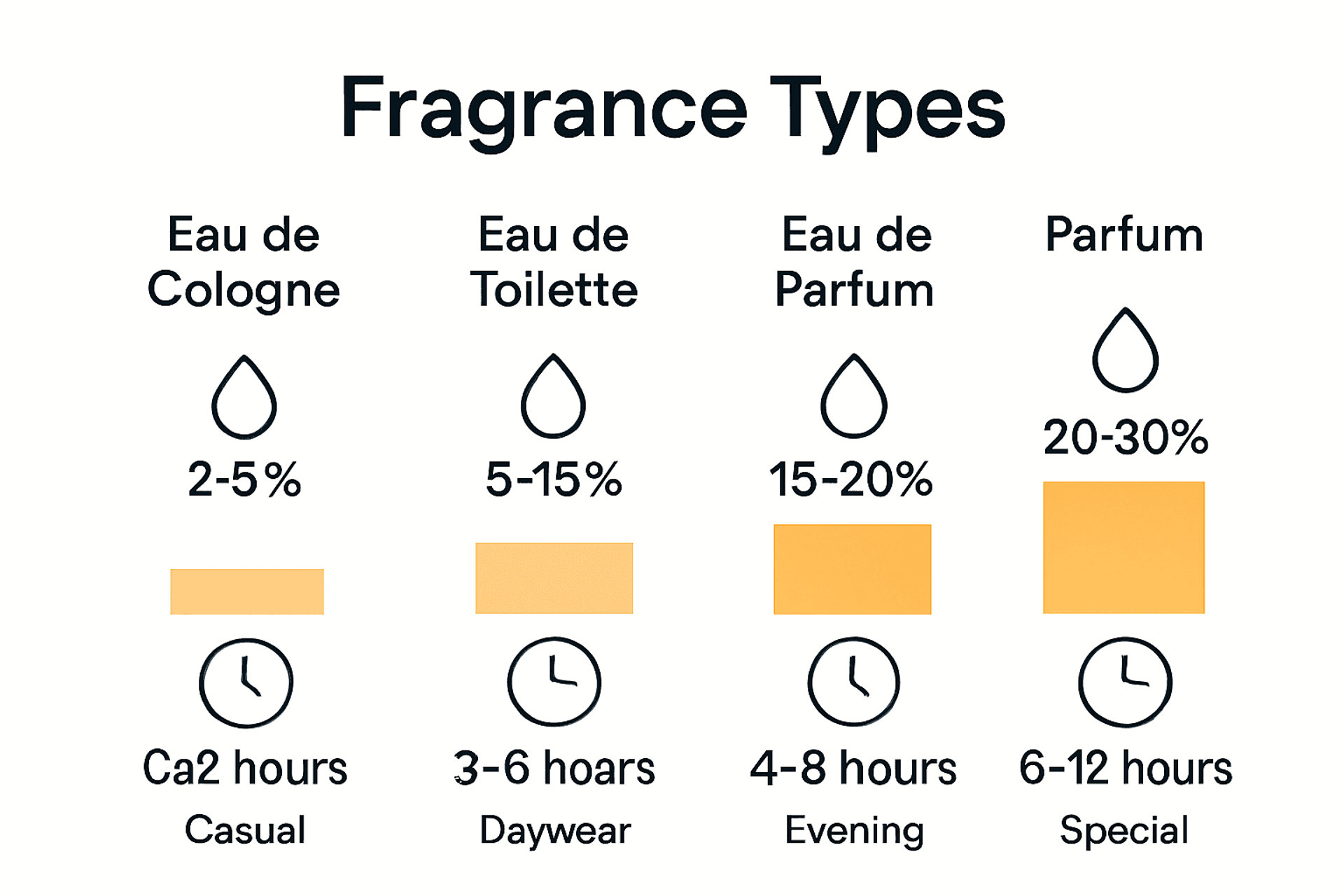
- Eau de Cologne: Lowest concentration (2-4% aromatic compounds)
- Eau de Toilette: Light concentration (5-15% aromatic compounds)
- Eau de Parfum: Medium-high concentration (15-20% aromatic compounds)
- Parfum/Extrait: Highest concentration (20-40% aromatic compounds)
These distinctions significantly impact a fragrance's longevity, projection, and overall wearing experience.
As the types of perfume classifications guide explains, understanding these nuances helps enthusiasts select the perfect scent for their personal preferences and occasions.
Types of Eau Perfumes and Key Differences
Perfume types represent a sophisticated spectrum of fragrance concentrations, each with distinct characteristics and applications. According to research from ijcsrr, these classifications are primarily determined by the percentage of essential oils, which directly influences the fragrance's intensity, longevity, and overall performance.
The primary eau perfume types range from the lightest to the most concentrated formulations. ijcrt outlines these variations, highlighting how each type serves different purposes and wearing preferences. Here's a comprehensive breakdown:
- Eau de Cologne
- Lowest concentration (2-4% essential oils)
- Lightest and most refreshing
- Typically lasts 1-2 hours
- Best for hot weather and casual settings
- Eau de Toilette
- Light concentration (5-15% essential oils)
- Moderate staying power
- Typically lasts 2-3 hours
- Ideal for daily wear and warmer climates
- Eau de Parfum
- Medium-high concentration (15-20% essential oils)
- Stronger and longer-lasting
- Typically lasts 4-5 hours
- Suitable for evening events and professional settings
- Parfum/Extrait
- Highest concentration (20-40% essential oils)
- Most intense and longest-lasting
- Can last 6-8 hours or more
- Perfect for special occasions and cooler weather
For those looking to dive deeper into fragrance nuances, our guide on understanding fragrance layers offers an extensive exploration of how these different concentrations interact and impact overall scent experience.
Concentration, Longevity, and Fragrance Strength
Understanding the intricate relationship between perfume concentration and fragrance performance is crucial for enthusiasts and casual wearers alike. According to research from ijirt, the concentration of essential oils directly correlates with a fragrance's strength, projection, and overall wearing experience.
The molecular composition of perfumes plays a critical role in determining their longevity and intensity. ou highlights that different concentration levels create unique sensory experiences. Essentially, higher oil concentrations mean:
- More pronounced initial scent projection
- Longer-lasting fragrance on the skin
- Greater complexity in scent development
- Increased depth and richness of aromatic notes
Perfume strength can be understood through a strategic breakdown of concentration levels:
- Lightest Concentration (Eau de Cologne)
- Quick, refreshing burst of fragrance
- Ideal for hot climates and casual settings
- Disappears within 1-2 hours
- Subtle and minimal projection
- Light Concentration (Eau de Toilette)
- Moderate scent strength
- Balanced between subtlety and presence
- Lasts approximately 2-3 hours
- Suitable for daily wear
- Medium Concentration (Eau de Parfum)
- Stronger, more persistent fragrance
- Significant projection and longevity
- Typically lasts 4-5 hours
- Perfect for evening events and professional environments
- Highest Concentration (Parfum/Extrait)
- Most intense fragrance experience
- Longest-lasting performance
- Can endure 6-8 hours or more
- Ideal for special occasions and cooler weather
For fragrance enthusiasts looking to explore more nuanced insights, our blog on fragrance reviews offers additional perspectives on understanding and evaluating perfume characteristics.
Application Methods and Best Use Cases
Perfume application is an art form that extends beyond simply spraying a fragrance. According to dermnetnz, strategic application techniques can significantly enhance the overall fragrance experience and longevity of different perfume concentrations.
Pulse point application is the most recommended method for maximizing a fragrance's potential. These warm areas of the body - including the wrists, neck, behind the ears, inside the elbows, and behind the knees - naturally diffuse heat, helping to activate and project the scent. Each eau perfume type requires slightly different application strategies:
- Eau de Cologne
- Quick, light sprays
- Multiple reapplication throughout the day
- Best for refreshing midday touch-ups
- Ideal for layering with complementary scents
- Eau de Toilette
- 2-3 sprays on pulse points
- Apply before leaving home
- Great for casual and daytime settings
- Works well in warmer, more active environments
- Eau de Parfum
- 1-2 strategic sprays
- Focus on key pulse points
- Perfect for evening events
- Longer-lasting performance with fewer applications
- Parfum/Extrait
- Minimal application (1 light spray)
- Extremely concentrated
- Use sparingly for special occasions
- Best applied to single, concentrated pulse point
Proper storage also plays a crucial role in maintaining fragrance quality. Keep your perfumes away from direct sunlight, extreme temperatures, and humidity to preserve their molecular integrity and prevent degradation.
For fragrance enthusiasts seeking deeper insights into perfume application techniques, our blog on fragrance reviews provides additional expert perspectives on maximizing your scent experience.
Comparing Eau Perfume With Other Fragrance Types
Understanding the nuanced landscape of fragrance types requires a comprehensive comparison of their unique characteristics. According to research from ijcsrr, Eau de Parfum represents a distinctive category with specific attributes that set it apart from other perfume classifications.
The molecular composition and concentration levels create fundamental differences between fragrance types. ijcrt highlights key distinctions that impact a fragrance's performance and user experience:
Concentration Comparison:
-
Eau de Cologne: 2-4% aromatic compounds
- Lightest and most transient
- Refreshing but short-lived
- Ideal for quick, casual refreshment
-
Eau de Toilette: 5-15% aromatic compounds
- Slightly more substantial
- Moderate staying power
- Suitable for everyday wear
-
Eau de Parfum: 15-20% aromatic compounds
- More intense and longer-lasting
- Balanced between strength and wearability
- Perfect for evening and professional settings
-
Pure Perfume/Extrait: 20-40% aromatic compounds
- Most concentrated form
- Richest and most complex
- Designed for special occasions
Key differentiators extend beyond mere concentration. Eau de Parfum strikes a unique balance, offering more depth than lighter variations while remaining more versatile and approachable than pure perfume extracts. This makes it a preferred choice for individuals seeking a sophisticated yet practical fragrance experience.
For fragrance enthusiasts interested in exploring the diverse world of scents, our blog collection offers comprehensive insights into the intricate universe of perfumery.
Discover Your Perfect Eau Perfume Experience Today
Navigating the world of eau perfumes can feel overwhelming with so many types and concentrations to consider. Whether you seek the lasting strength of an Eau de Parfum or the light freshness of an Eau de Cologne, understanding these choices is essential for finding a fragrance that truly matches your personality and occasions. Fragplace.com is here to guide you through this journey by offering detailed information, honest reviews, and a vibrant community passionate about scents.
Join thousands of fragrance lovers on Fragplace to explore comprehensive perfumer insights, learn how to select your ideal concentration, and share your own experiences. Don’t wait to experience the perfect balance of scent and longevity that fits your lifestyle. Start your personalised fragrance discovery now with Fragplace.com and transform how you wear perfume. For even deeper knowledge, check out our guide on understanding fragrance layers and enrich your scent journey.
Frequently Asked Questions
What does "eau" mean in perfume terminology?
The term "eau" comes from the French word for water and indicates a specific category of fragrance concentration with varying aromatic compound percentages.
What is the difference between Eau de Parfum and Eau de Toilette?
Eau de Parfum typically contains 15-20% aromatic compounds, offering a stronger scent and longer longevity (4-5 hours), while Eau de Toilette contains 5-15% aromatic compounds and lasts 2-3 hours, making it lighter and more casual.
How should I apply Eau de Parfum for the best effect?
For optimal results, apply Eau de Parfum to pulse points like the wrists, neck, and behind the ears. Use 1-2 strategic sprays for a balanced scent experience, especially for evening events.
How do various perfume concentrations affect longevity and fragrance strength?
Higher concentrations, like Parfum (20-40%), provide the longest-lasting scent (6-8 hours or more) and greater intensity, while lighter concentrations like Eau de Cologne (2-4%) offer freshness but typically last only 1-2 hours.