Complete Guide to Perfume vs Eau de Parfum
22 Nov 2025
Over 80 percent of british fragrance buyers admit they struggle to understand the difference between perfume and eau de parfum. Choosing the right scent can feel confusing when labels and concentrations blur together on shop shelves. Understanding these terms not only helps you find your signature fragrance, it also saves you from costly mistakes. Get ready to discover how subtle differences in scent strength and lasting power impact your daily experience and confidence.
Table of Contents
- Defining Perfume and Eau de Parfum
- Concentration Levels and Composition
- Longevity, Sillage and Performance Differences
- How to Choose: Factors and Preferences
- Common Misconceptions and Usage Mistakes
Key Takeaways
Defining Perfume and Eau de Parfum
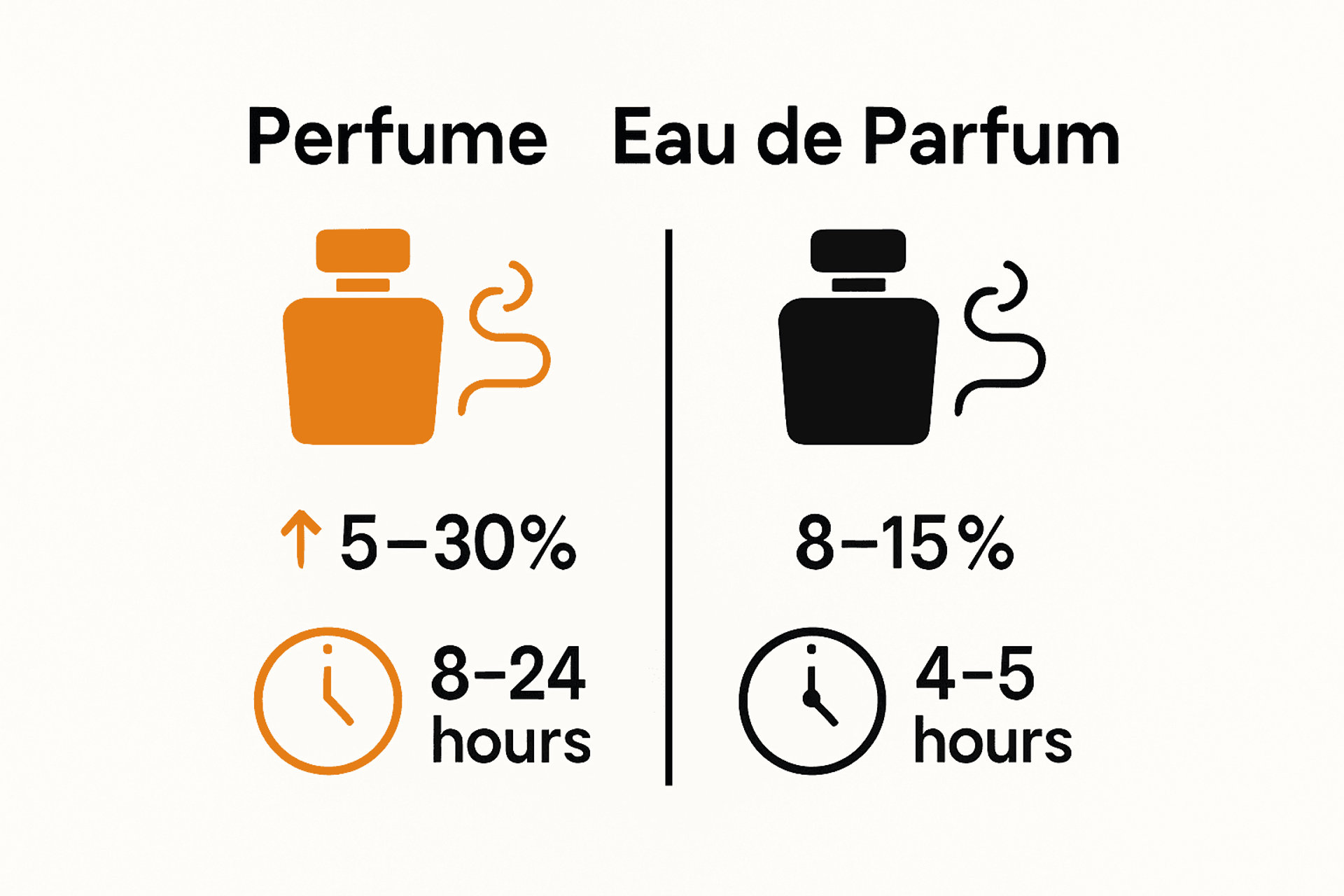
Perfume and eau de parfum represent two distinct categories of fragrances, differentiated by their concentration of aromatic compounds. According to ncbi, perfume (also known as parfum or extrait de parfum) contains between 15% and 30% aromatic compounds, offering an intense and long-lasting scent experience.
In contrast, eau de parfum has a lower fragrance concentration, typically ranging between 8% and 15%. Dermnetnz indicates that eau de parfum provides a lighter fragrance profile that generally lasts around 4 to 5 hours. This makes it an excellent choice for individuals seeking a balanced scent intensity that isn't overpowering.
The key differences between perfume and eau de parfum extend beyond concentration. Perfume represents the most potent fragrance format, with a rich and complex composition that often requires minimal application. Eau de parfum offers more versatility, allowing wearers to apply multiple layers without feeling overwhelmed. When selecting between these two formats, consider factors such as personal preference, occasion, and desired longevity of the scent.
For a deeper understanding of fragrance layers and types, see our guide on understanding fragrance layers.
Concentration Levels and Composition
Fragrance concentration is a critical aspect that defines the intensity, longevity, and overall character of a scent. According to ncbi, perfume classifications are meticulously structured around the percentage of aromatic compounds, ranging from the most concentrated parfum to the lightest eau de cologne.
The fragrance concentration hierarchy typically follows this standard progression: Parfum (15–30%), Eau de Parfum (8–15%), Eau de Toilette (4–8%), and Eau de Cologne (2–5%). Dermnetnz confirms that higher concentrations directly correlate with more intense and enduring fragrances. This means a parfum will not only smell more potent but will also persist on the skin significantly longer compared to lighter formulations.
Composition goes beyond mere concentration. Each fragrance level involves a nuanced balance of essential oils, alcohol, and water. Parfum contains the highest percentage of pure fragrance oils, making it the most expensive and luxurious option. Eau de parfum offers a more accessible middle ground, providing substantial scent strength while remaining lighter and more versatile for everyday wear.
For enthusiasts seeking to understand the intricate world of fragrance layers in more depth, explore our guide on essential eau de parfum types.
Longevity, Sillage and Performance Differences
Sillage and longevity are critical characteristics that distinguish different fragrance concentrations, with each level offering unique performance attributes. According to ncbi, higher concentrations of aromatic compounds directly influence a fragrance's strength and endurance on the skin.
Dermnetnz reveals fascinating insights into fragrance performance, noting that parfum can last an impressive 8 to 24 hours, while eau de parfum typically provides a more moderate 4 to 5 hours of scent projection. The dramatic difference stems from the concentration of essential oils. Parfum, with its rich 20–30% oil concentration, creates a powerful sillage - the trail of scent left behind as you move - that lingers extensively compared to lighter formulations.
Understanding sillage goes beyond mere duration. It encompasses the fragrance's ability to project and create an olfactory presence around the wearer. Eau de parfum strikes a delicate balance, offering substantial projection without overwhelming the senses. This makes it ideal for professional settings or intimate social gatherings where a subtle yet noticeable scent is desirable. The performance nuances mean that selecting between parfum and eau de parfum isn't just about longevity, but about creating the right sensory experience for different occasions.
To explore more about crafting the perfect fragrance experience, join our fragrance discussions and connect with fellow scent enthusiasts.
How to Choose: Factors and Preferences
Selecting the perfect fragrance concentration requires careful consideration of personal lifestyle, budget, and sensory preferences. According to ncbi, the choice between parfum and eau de parfum fundamentally depends on an individual's desired scent intensity and longevity.
Dermnetnz highlights several critical factors in fragrance selection. For those seeking an intense, long-lasting scent experience, parfum emerges as the premium choice. Its higher concentration makes it ideal for special occasions, evening events, or individuals who prefer a more dramatic olfactory statement. Conversely, eau de parfum offers remarkable versatility, providing a balanced fragrance profile perfect for daily wear in professional and social settings.
Practical considerations extend beyond mere scent performance. Budget plays a significant role, as parfum's higher concentration typically translates to a more expensive product. Skin chemistry also influences fragrance selection - some individuals may find parfum's intensity overwhelming, while others might appreciate its robust character. Consider factors like skin type, personal comfort level, and the environments where you'll predominantly wear the fragrance. A light, subtle eau de parfum might be more appropriate for close-quarters professional settings, whereas a more potent parfum could be perfect for evening social events or environments with broader spatial dynamics.
For those seeking personalized fragrance guidance, explore our fragrance discussions and connect with fellow scent enthusiasts who can share insights from their own experiences.
Common Misconceptions and Usage Mistakes
Fragrances are nuanced products often misunderstood by consumers, with numerous myths surrounding their application and performance. According to ncbi, a prevalent misconception is that higher concentration automatically equates to superior fragrance quality, which is fundamentally incorrect.
Dermnetnz highlights several critical misunderstandings in fragrance selection. Many individuals erroneously believe parfum is universally better than eau de parfum, when in reality, the choice depends entirely on personal preference, occasion, and individual skin chemistry. Common usage mistakes include over-application, which can overwhelm the senses, and storing fragrances in inappropriate conditions that compromise their delicate molecular structure.
Perhaps the most damaging misconception is the belief that one can judge a fragrance's quality solely by its concentration. Experienced fragrance enthusiasts understand that performance is a complex interplay of ingredients, molecular composition, and personal interaction with skin chemistry. Some people mistakenly apply fragrances to clothing, not realizing that the best application is directly on pulse points where body heat can gently diffuse the scent. Another frequent error is rubbing the fragrance after application, which can actually break down the delicate aromatic compounds and alter the intended scent profile.
Join our fragrance discussions to debunk more myths and learn from fellow scent enthusiasts who have navigated these complex fragrance landscapes.
Discover Your Perfect Scent Match with Fragplace
Choosing between perfume and eau de parfum can feel overwhelming when you want just the right balance of intensity, longevity and sillage for your unique lifestyle. Whether you seek the rich, long-lasting impact of parfum or the versatile elegance of eau de parfum, understanding your personal preferences and skin chemistry is key. At Fragplace, we know those challenges intimately and offer a vibrant community and detailed fragrance insights to guide your journey.
Join thousands of fragrance lovers at Fragplace to explore comprehensive reviews, share experiences and deepen your knowledge about scent concentrations and performance differences. Dive into our fragrance discussions for expert advice and real user stories that bring clarity beyond mere concentration percentages. Ready to make confident fragrance choices that truly match your style and occasions Let Fragplace be your trusted partner today.
Frequently Asked Questions
What is the difference between perfume and eau de parfum?
Perfume, also known as parfum, contains 15% to 30% aromatic compounds, making it more intense and long-lasting. Eau de parfum has a lower concentration of 8% to 15%, offering a lighter scent profile that typically lasts around 4 to 5 hours.
How long does a fragrance last depending on its concentration?
Parfum can last between 8 to 24 hours due to its higher concentration of essential oils, while eau de parfum generally lasts around 4 to 5 hours, providing a moderate scent experience.
Can I layer eau de parfum without being overwhelming?
Yes, eau de parfum is designed for versatility and allows for multiple layers of application without being overpowering, making it suitable for daily wear in various settings.
What should I consider when choosing between parfum and eau de parfum?
Consider factors such as your personal fragrance preference, the occasion, how long you want the scent to last, and your budget. Parfum is ideal for special occasions, while eau de parfum is great for everyday use.