Articles
Recevez la Fragletter
De nouvelles histoires et sélections de parfums dans votre boîte mail. Désabonnement à tout moment.
De nouvelles histoires et sélections de parfums dans votre boîte mail. Désabonnement à tout moment.
De nouvelles histoires et sélections de parfums dans votre boîte mail. Désabonnement à tout moment.
De nouvelles histoires et sélections de parfums dans votre boîte mail. Désabonnement à tout moment.
Perfume gets sold to you as magic. The mechanics are better than the myth — a few airborne molecules hit a patch of tissue high inside your nose and haul back a childhood kitchen before you've named a single note. Learning what's actually going on won't flatten the pleasure, but it will make you much harder to sell to.
Anything you can smell — a spritz off your wrist, a garden in June — is made of volatile molecules light enough to drift through the air and reach you. Breathe in and they travel through your nasal cavity to the olfactory epithelium, a patch of tissue tucked high inside your nose. It's about the size of a thumbnail, and in humans it holds roughly 6 million olfactory receptor neurons. Dogs have about 300 million, which should keep anyone's claims about their own nose modest.
Each neuron is topped with cilia, tiny hair-like structures sitting under a thin layer of mucus. Fragrance molecules dissolve into that mucus and bind to specific receptor proteins on the cilia.
Here's the part worth holding onto: humans carry approximately 400 different types of olfactory receptor, each shaped to recognise certain molecular features. A single molecule can trip several receptor types at once, and a perfume built from dozens of ingredients sets off an intricate pattern of activation. Your brain reads that pattern like a fingerprint. It's why the bright spark of reads as nothing like the warm sweetness of , even though your conscious verdict on both is just "pleasant".
Smell is the sense with a back door. When olfactory receptor neurons fire, the signal runs along the olfactory nerve to the olfactory bulb, which sits just above your nasal cavity, and from there to two regions that matter enormously: the amygdala, which processes emotions, and the hippocampus, which handles memory formation.
Your other senses queue. Visual, auditory and tactile information all pass through the thalamus — a relay station — before reaching higher brain areas. Smell skips the checkpoint entirely. That's why a scent can knock the wind out of you emotionally before you've consciously worked out what you're smelling.
This shortcut is the machinery behind the phenomenon French novelist Marcel Proust made famous: involuntary memory triggered by sensory experience. Scientists now call it the "Proust effect", and research has confirmed that scent-triggered memories tend to be more emotionally vivid and feel more "real" than memories triggered by other senses. So when lands as an unexplained pang of nostalgia, that isn't you being sentimental. That's wiring.
You reach for woody, earthy things like and . Your friend won't wear anything that isn't a fresh floral — , . Neither of you is being awkward on purpose. It's nature and nurture, in that order.
Genetics comes first. We each carry a slightly different combination of those 400 receptor types, and research published in Nature has shown that genetic variation in olfactory receptors can make certain molecules smell pleasant to one person and unpleasant to another. The same molecule you'd describe as creamy and warm registers to someone else as sharp and off-putting.
Then there's everything that's happened to you since. Scent preference is shaped hard by experience and cultural context. Smells attached to good memories — a grandmother's perfume, a favourite holiday, a place you felt safe — get filed as "good" and stay filed that way. That learned association is strong enough to override an innate preference. It's why is cosy and luxurious to one person and overwhelming to the next, on nothing more than what it reminds them of.
This is the question every fragrance forum answers badly, usually with something about auras. The real answer is duller and more useful: when you apply perfume, the molecules interact with your skin chemistry, and nobody else has yours.
So the same bottle of and can smell like two different perfumes on two people standing side by side. The fragrance isn't changing. The equipment reading it is.
Top notes, heart notes, base notes — the vocabulary is everywhere, and for once the marketing language describes something physical. Fragrance molecules have different volatility levels, meaning they evaporate at different rates.
Top notes are the lightest and most volatile: what you get in the first 15-30 minutes, whether that's bright citruses like bergamot, sharp spices like pepper, or crisp green notes. Strong first impressions, short careers.
Heart notes arrive as the top fades and typically last several hours. Florals like and jasmine, aromatics like lavender. This is the actual character of the thing, and it's the part most people never meet before they pay.
Base notes are the heaviest and least volatile. They anchor the whole composition and can linger on skin for 8-12 hours or more. , sandalwood, vanilla and musk live down here, and so does a perfume's depth and lasting power.
Which is the case against judging anything on the first spray. Give it at least 30 minutes on your skin before you decide you've got its number.
Knowing the mechanism doesn't drain the pleasure out of perfume. It mostly saves you money. Here's what to do with it:
Fragrance is unique among art forms because it works through the most primal, emotionally direct sense we have. Every time you smell a perfume, your body performs an act of molecular recognition and pattern matching and turns it into feeling, all in the fraction of a second before conscious thought catches up.
So the next time a spray does something to you that you can't articulate, that's millions of years of evolution behaving exactly as designed. Your nose isn't just detecting chemicals. It's reading a story written in molecules.
That's the science. And that's the magic.
If you take one thing away: stop shopping by bottle and start shopping by note. The perfumes people regret buying are almost always the ones bought on a thirty-second blotter sniff, before the heart had shown up and long before the base did. Read up on to work out whether bright, fast-fading openings are what you actually want on a wrist. Then look at and decide what you want still there hours later — because that's the part you'll live with.

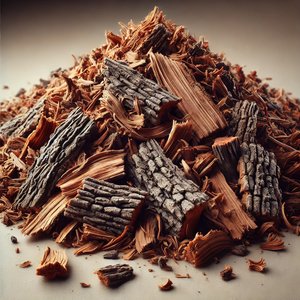 Agarwood (Oud)
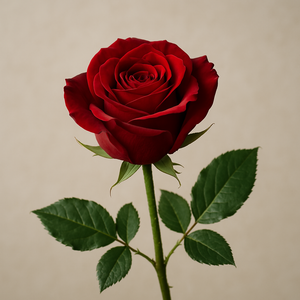 Rose
Rose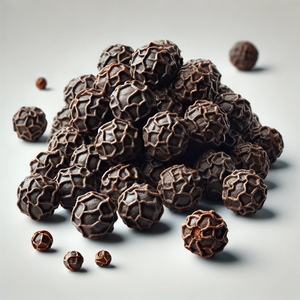 Pepper
 Jasmine
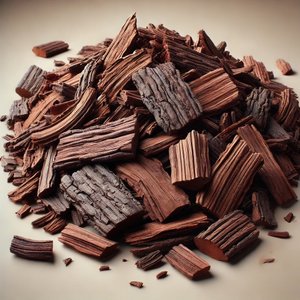 Sandalwood
 Cedarwood
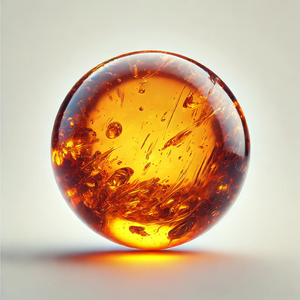 Amber
Amber Patchouli
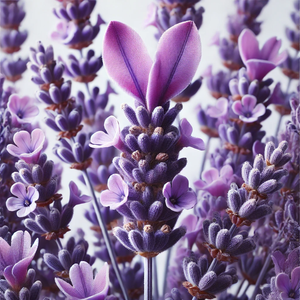 Lavender
 Bergamot
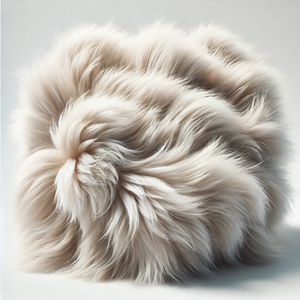 Musk
Musk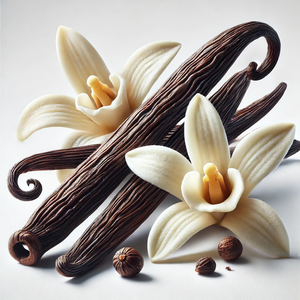 Vanilla