Articles
Recevez la Fragletter
De nouvelles histoires et sélections de parfums dans votre boîte mail. Désabonnement à tout moment.
De nouvelles histoires et sélections de parfums dans votre boîte mail. Désabonnement à tout moment.
De nouvelles histoires et sélections de parfums dans votre boîte mail. Désabonnement à tout moment.
De nouvelles histoires et sélections de parfums dans votre boîte mail. Désabonnement à tout moment.
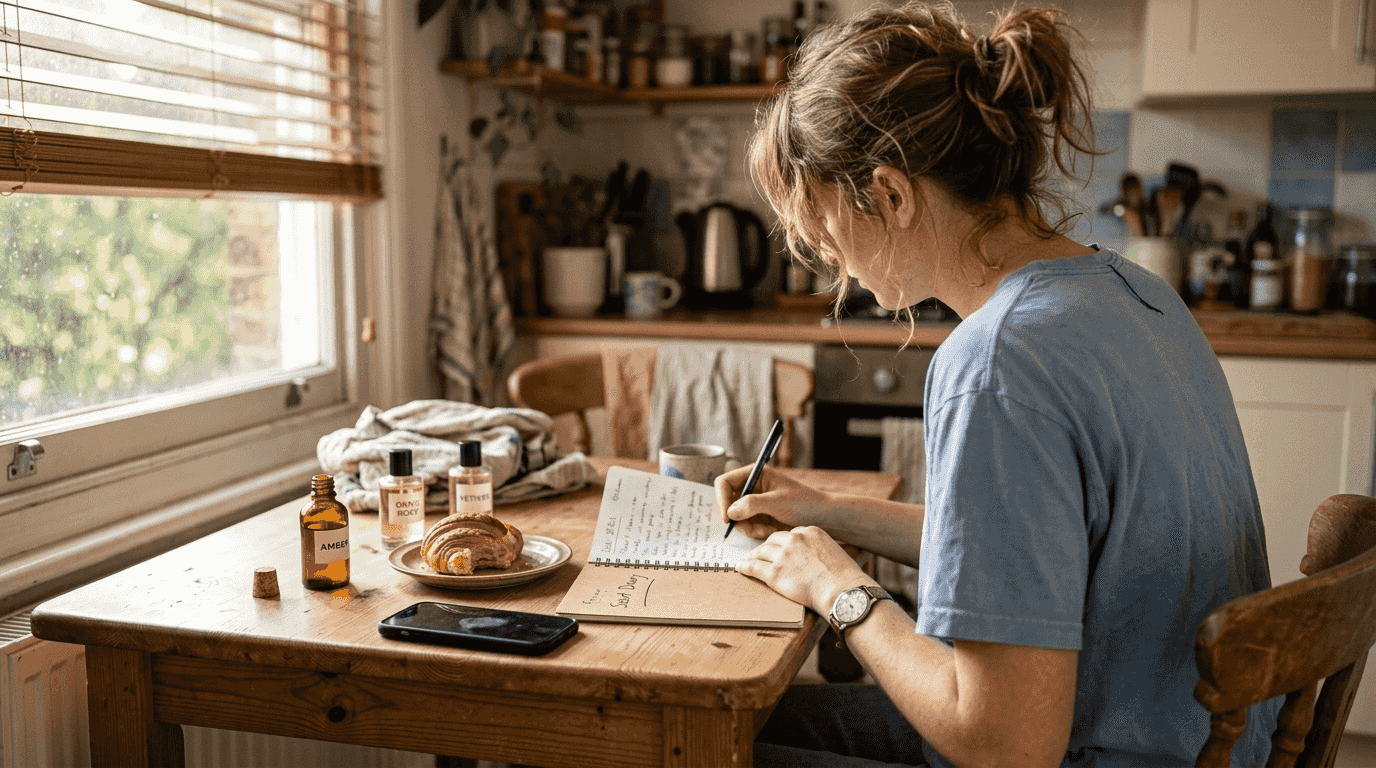
Most collections outlive the memory of the person who owns them. You buy the bottle, wear it a handful of times, and by spring you can't say whether it held up through a hot afternoon or gave up before lunch. A scent diary closes that gap, and it's the only honest record of what you genuinely reach for.
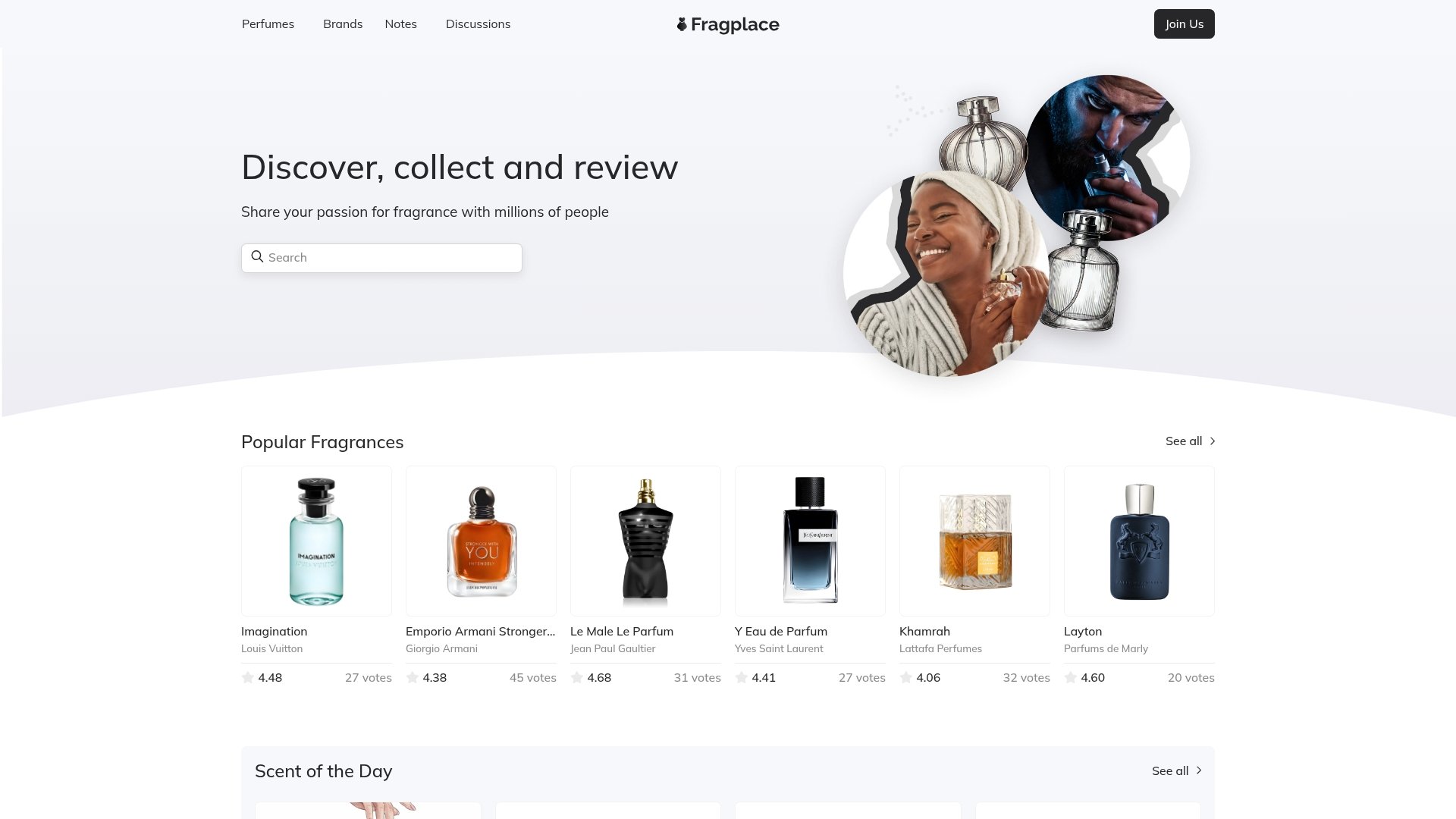
You need less than you think. One app, opened at the same moment every morning, beats an elaborate system you'll quietly abandon. Aromoshelf lets you log fragrance impressions, organise collections and share scent stories with a community of like minded people. Fragplace handles personal fragrance journaling, with features built around daily scent choices and a running scent diary.
A paper notebook or a notes app works too, either as a companion or on its own. Handwriting suits people who want the ritual. Digital wins the first time you need to search back for that one oud that behaved oddly in the rain. Pick whichever you'll actually keep doing — the medium isn't the point, the streak is.
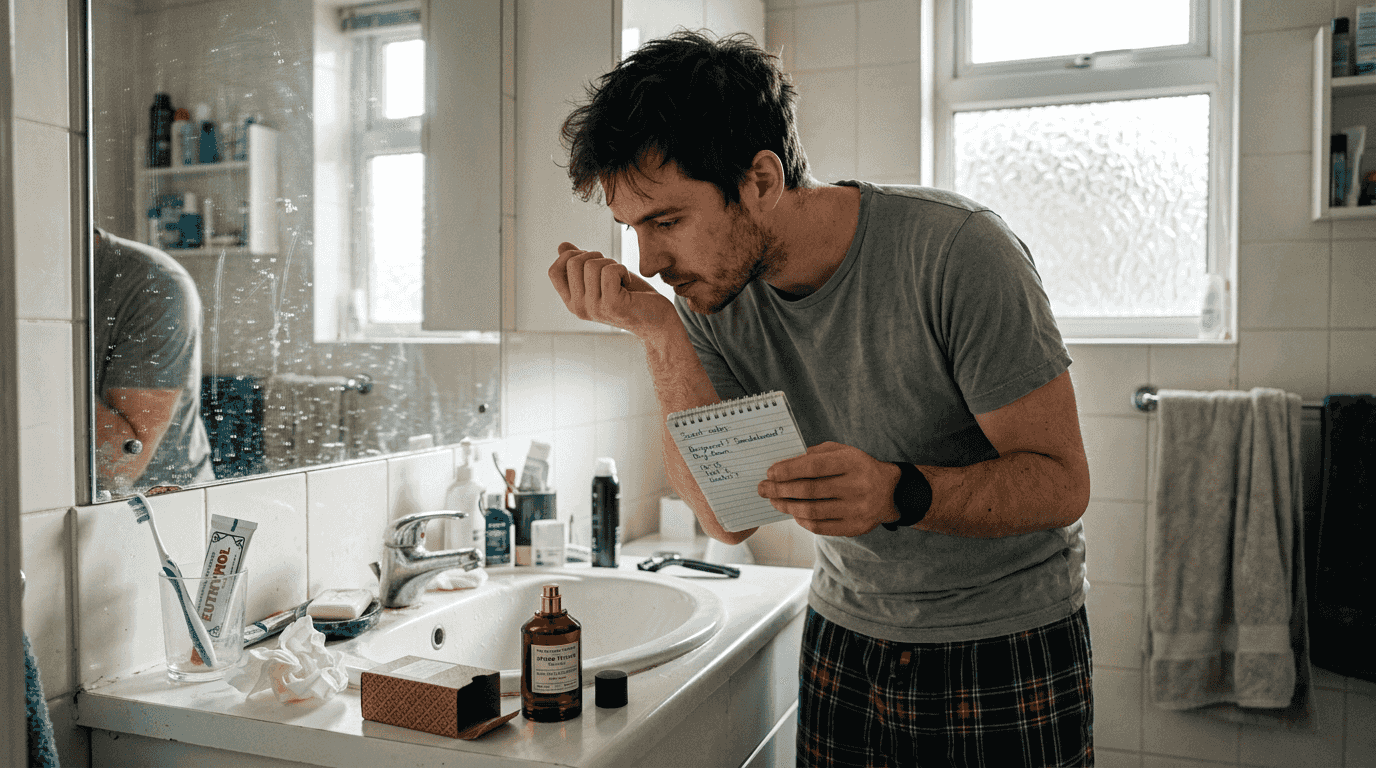
Knowing how a perfume is built makes your entries worth rereading. Top notes arrive immediately, heart notes emerge after 15 to 30 minutes, and base notes hang around for hours. Once you can hear that structure, you stop logging first impressions and start logging the whole arc. Read the fragrance evaluation tips guide for the vocabulary and assessment habits that make tracking entries sharper.
Pro Tip: Decide your rating scale before your first entry, such as a five star scale for longevity, projection and personal enjoyment, so today's log and next year's are measuring the same thing.
Then commit to honesty, which is harder than it sounds. A diary full of what you hoped a fragrance would do teaches you nothing. Write down the weather, the hour and your mood — the context a published review can't know about you, and a star rating flattens into nothing.
The choice itself is data, so capture it before you spray. Weather, what's in the diary, the mood you're aiming at: write those down first, while they're still the reason rather than a rationalisation. ScentSphere's SOTD feature runs daily streaks and recommendations, and Sillage logs wears and personal ratings alongside deeper insights about your fragrance identity.
A workable daily routine looks like this:
Maintaining daily tracking streaks is what turns scattered notes into a dataset you can read patterns from. Apps lean on streak counters and badges to keep you honest, which sounds gimmicky until it works on you. A two line entry on a chaotic day beats a skipped one every time.
Pro Tip: Photograph the bottle each morning and attach it to that day's entry — the visual diary jogs memory far faster than text when you're reviewing months of logs.
The biggest upgrade you can make is describing movement instead of ingredients. "Citrus top, floral heart, woody base" is a press release. "Sharp bergamot softened into creamy jasmine by lunchtime, then settled into warm sandalwood by evening" is a record of something that happened. Perfume is a thing that changes; static note lists pretend otherwise. The independent fragrance review guide has techniques for putting that movement into words without sounding like a catalogue.
Most logs die at the ten minute mark. You capture the opening, feel productive, and never come back — so your diary ends up documenting top notes and nothing else, which is the part of a perfume that matters least. AI generated reviews have the same blind spot, and that's exactly why time stamped personal observations still earn their keep. Set more than one reminder.
Inconsistency does the rest of the damage. Sporadic entries leave gaps where the patterns should be, and they blunt the recommendations any app can give you. You log enthusiastically for a week, then vanish for a month, and the thread of the thing is gone. Treat it like brushing your teeth rather than a hobby you're in the mood for.
Then there's the vagueness problem. "Smells nice" is a wasted entry. Name the flower. Compare the projection to something you've logged before. Say what it made you feel, even if the answer is bored. The guide to writing effective fragrance reviews is worth reading purely for the descriptive muscle it builds.
A few more traps worth naming:
"The difference between a useful scent log and a useless one lies in specificity. Generic observations teach you nothing about your preferences, whilst detailed, honest impressions reveal your evolving fragrance identity over time."
Data overload is the opposite failure, and it's just as fatal. Comprehensive sounds virtuous, but every extra field is friction, and friction is what kills the habit. Keep the metrics that earn their place: evolution, performance, emotional response, context. Cut everything else. The moment your system feels like homework, it's finished.
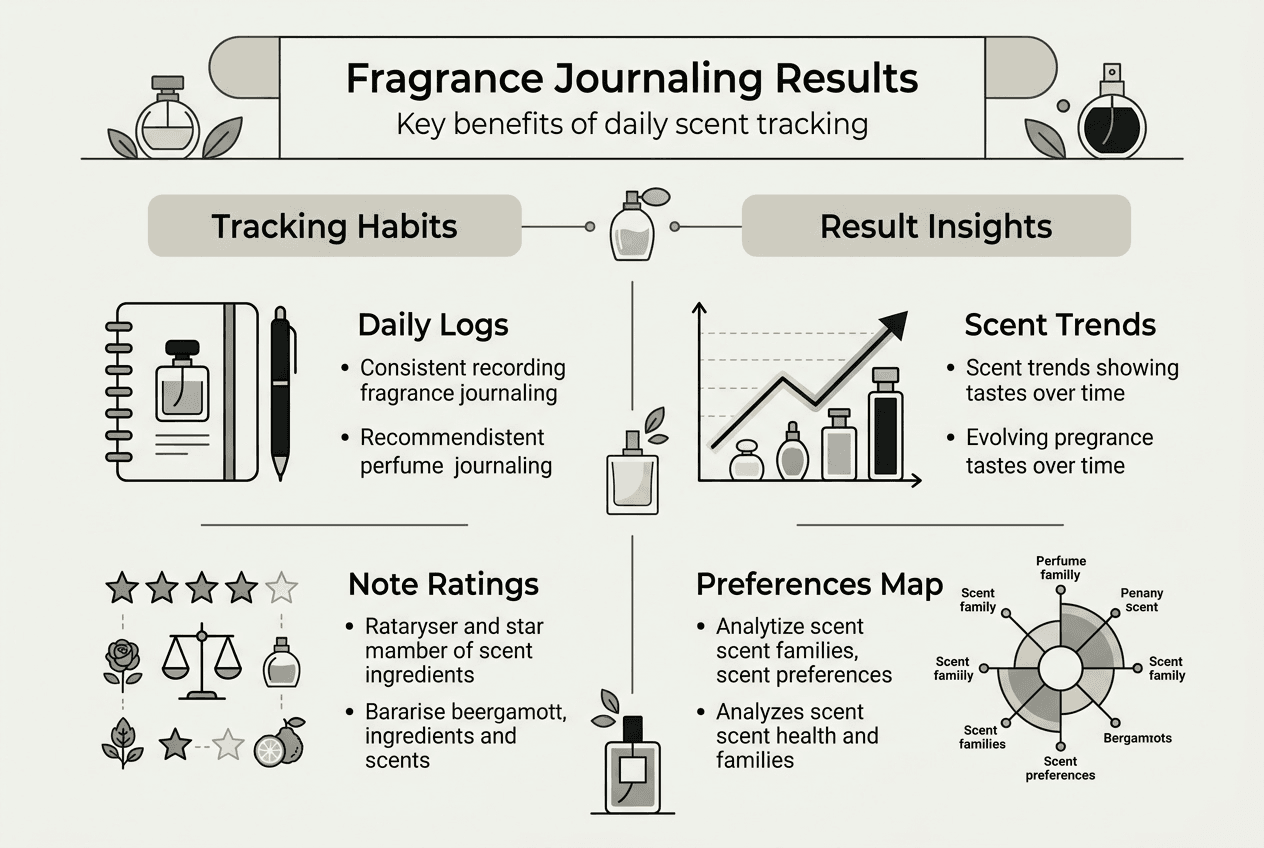
A few weeks in, stop logging for a moment and read. Sillage offers advanced statistics and insights for analysing fragrance preferences and identity development, and the patterns it surfaces are invisible inside any single entry. Look for the note families that keep recurring, the houses you keep returning to, the performance profile that keeps scoring well. That's your fingerprint, and it should be doing the work your impulse purchases currently do.
Compare across seasons and occasions and the honest picture appears. Maybe woody orientals own your winter while fresh citruses show up only in July. Maybe florals keep disappointing you despite the fact you keep buying them, which says something uncomfortable about the distance between aspiration and taste. Better to learn it from your own logs than from a shelf of half full bottles.
Then let the data pick your wishlist. Instead of chasing every new release, aim at what your entries already endorse: if iris compositions with moderate projection keep winning, buy in that direction rather than gambling on the loud oud that has underwhelmed you every time. Sampling gets cheaper and more accurate the moment it stops being random.
Pro Tip: Export your tracking data quarterly and build a visual preference map of your most worn note families, brands and seasonal patterns — it makes collection decisions obvious.
Use the community side too, because your own palate is a small sample. Post the day's wear, read how someone else describes a fragrance you thought you had pinned down, and let the disagreement sharpen your assessment. Other people notice what you've stopped noticing.
One housekeeping job people skip: update your preference settings as your taste moves. Stale preferences produce stale suggestions, and an algorithm working from last year's you is worse than no algorithm. A monthly review is enough. Keep an eye on top perfume trends as well, but let your own logs win the argument when the two disagree.
The verdict is simple: choose one platform, fix one moment in your morning, and ignore every other tool until the habit holds. If you want the tracking, the collection and the recommendations under one roof, Fragplace is built for exactly that, with a dedicated scent of the day feature rather than a notes field bolted onto a shop.
So do two things. Log today's wear on Fragplace before you talk yourself out of starting, then Browse thousands of fragrances with their note breakdowns, community ratings and wearing occasion suggestions to line up what you'll sample next. Tracking alone tells you who you are; the community tells you what you've been missing.
Pick one fragrance in the morning and write your first impression before you leave the house. Add the weather and what the day holds, because context carries half the value of any entry. Fragplace's scent of the day tracking supplies guided prompts, so your logs stay complete without turning into admin.
Aromoshelf, Fragplace, ScentSphere and Sillage each bring different strengths in collection management and community features. Fragplace is the one that pulls tracking, community and discovery into a single platform. Some lean towards statistics and others towards social interaction, so try a few before committing to one.
Consistent logging builds scent memory, so you can say which perfume suited which situation instead of guessing. It also separates the preferences you have from the ones you wish you had, which is where most regrettable purchases begin. Over time it feeds recommendations based on how you actually wear things, and reading fragrance evaluation tips will get more out of the practice.
Four to six weeks of consistent daily logging is usually enough for the first patterns to show. Seasonal insight needs at least three months across different weather. A full year gives you the whole cycle, including occasion based habits you didn't know you had. Start reading your data after a month, then keep going, because your taste keeps moving.
Yes, though layering demands more detail from you. Log each component separately, then write the combination up as its own entry, since the blend is a different thing from its parts. Record the application order and rough proportions, because both change the result. Many apps let you link several fragrances to one day, which keeps the individual and combined impressions side by side.
| Point | Details |
|---|
| Daily tracking builds memory | Consistent logging strengthens recall of scent impressions and collection insights over time. |
| Mobile apps simplify logging | Dedicated fragrance apps streamline scent documentation and enable discovery through community features. |
| Community engagement enriches experience | Sharing daily scents with fellow enthusiasts provides fresh perspectives and recommendations. |
| Personalised suggestions improve with data | Regular input trains recommendation algorithms to match your evolving fragrance identity. |
| Avoiding common errors ensures accuracy | Knowing typical mistakes prevents incomplete logs and maintains tracking consistency. |
| Tool Type | Examples | Primary Benefit |
|---|
| Mobile Apps | Aromoshelf, Fragplace, ScentSphere | Streamlined logging with community features |
| Physical Journal | Dedicated notebook, bullet journal | Tactile engagement and creative expression |
| Digital Notes | Evernote, Notion, Apple Notes | Searchability and cross device access |
| Reference Materials | Fragrance wheel, note glossaries | Enhanced vocabulary for precise descriptions |
| Tracking Checkpoint | Timing | Key Focus |
|---|
| Initial Application | 0 to 5 minutes | Top notes, first impression, emotional response |
| Early Development | 30 to 60 minutes | Heart notes emerging, projection assessment |
| Mid Wear | 3 to 4 hours | Sillage evaluation, skin chemistry interaction |
| Late Wear | 6 to 8 hours | Base notes, longevity, overall satisfaction |
| Analysis Type | Insight Gained | Practical Application |
|---|
| Note Frequency | Most worn fragrance families | Prioritise sampling similar compositions |
| Seasonal Patterns | Weather appropriate choices | Build targeted seasonal wardrobes |
| Performance Trends | Longevity and projection preferences | Filter purchases by performance needs |
| Occasion Mapping | Event specific fragrance success | Create occasion based wearing guides |
| Brand Affinity | Consistently satisfying houses | Explore full catalogues of favoured brands |