Articles
Get the Fragletter
New fragrance stories and picks in your inbox. Unsubscribe anytime.
New fragrance stories and picks in your inbox. Unsubscribe anytime.
New fragrance stories and picks in your inbox. Unsubscribe anytime.
New fragrance stories and picks in your inbox. Unsubscribe anytime.
Blind buying is how wardrobes fill up with bottles nobody wears. With over 80 percent of people unable to identify their favourite scent on the first try, snap decisions are working against you, and a bit of method fixes that faster than more shopping does. This guide walks you through sampling properly, from setting up the space to committing to one bottle.
Where you sample matters more than most people admit. Research from International Journal of Novel Research and Development points to skin chemistry as a decisive factor in how a fragrance reads, which makes the conditions around your test part of the test itself.
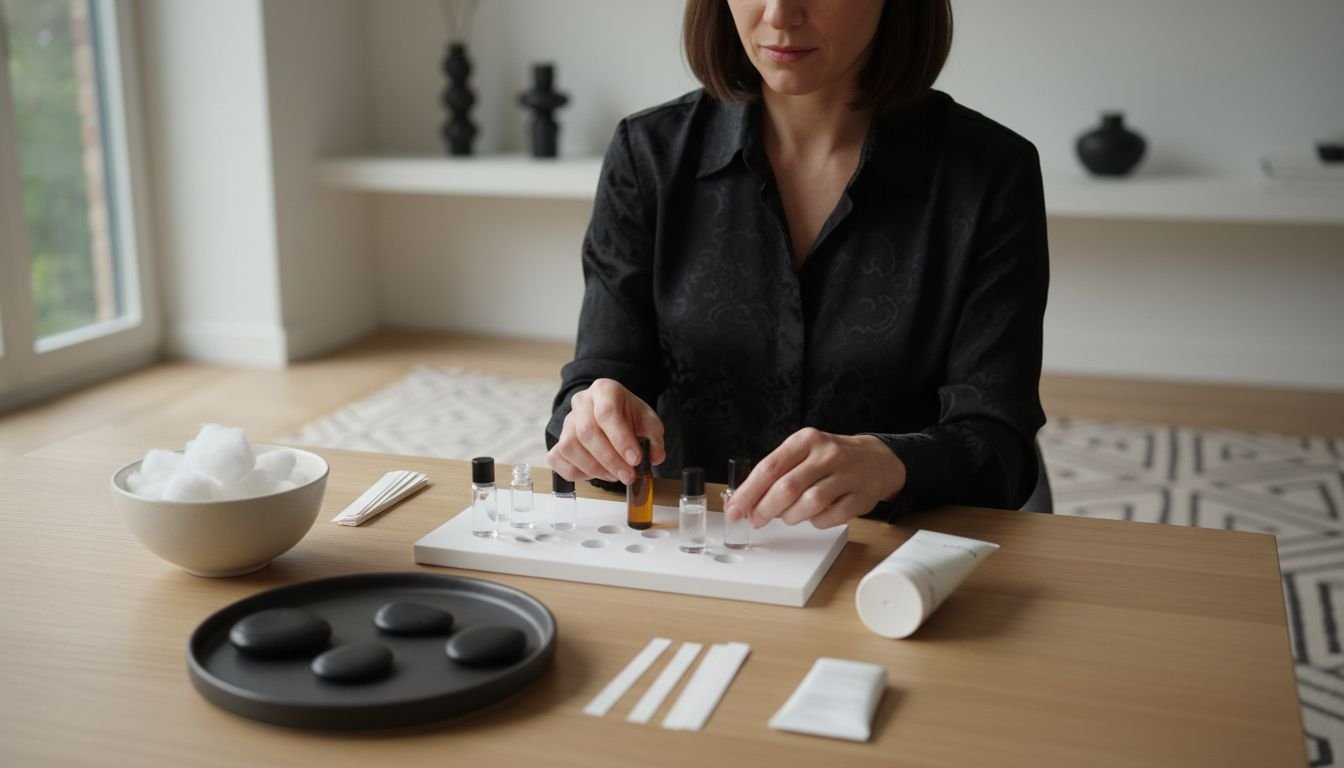
Pick a neutral room with a steady temperature and nothing competing for your nose. Clean, uncluttered, air moving through it, but no draught pulling the scent off your wrist before you've caught it. Natural light helps you see what you're doing, and a mirror nearby is worth having so you can watch how your skin reacts.
Then build a small kit: clean testing strips, unscented moisturiser, cotton wool, and water to reset between tests. Clean hands and neutral skin do a lot of quiet work here, because skin chemistry shapes the result more than the bottle does. Don't sample straight after a lotion or a strong coffee. You'll be analysing those instead.
Get the room right and every step after it gets easier.
Curiosity will hand you twelve bottles. Discipline is what gets you an answer. Browse the Fragrance Discussions on our platform for inspiration and to learn from what other people have already worked out.
Sort your shortlist across families — woody, floral, oriental, fresh, citrus — so you're comparing directions rather than five variations on one theme. Then narrow by your actual life. A scent for the office, an evening scent and a lazy Saturday scent are three different briefs, and they rarely have the same answer.
Cap each session at 3-5. Push past that and your nose stops giving you honest information; everything starts reading vaguely the same, and that's fatigue, not a verdict. Start with small samples or tester strips, leave room between them, and give each one enough time to travel from its top notes down to its base.
A short, deliberate shortlist beats a long, hopeful one.
Over-spraying is the most common sampling mistake, and it wrecks the test rather than sharpening it. Research from the International Journal of Novel Research and Development makes the same case: a small amount on pulse points, then patience. Our guide on understanding fragrance layers covers what's happening underneath.
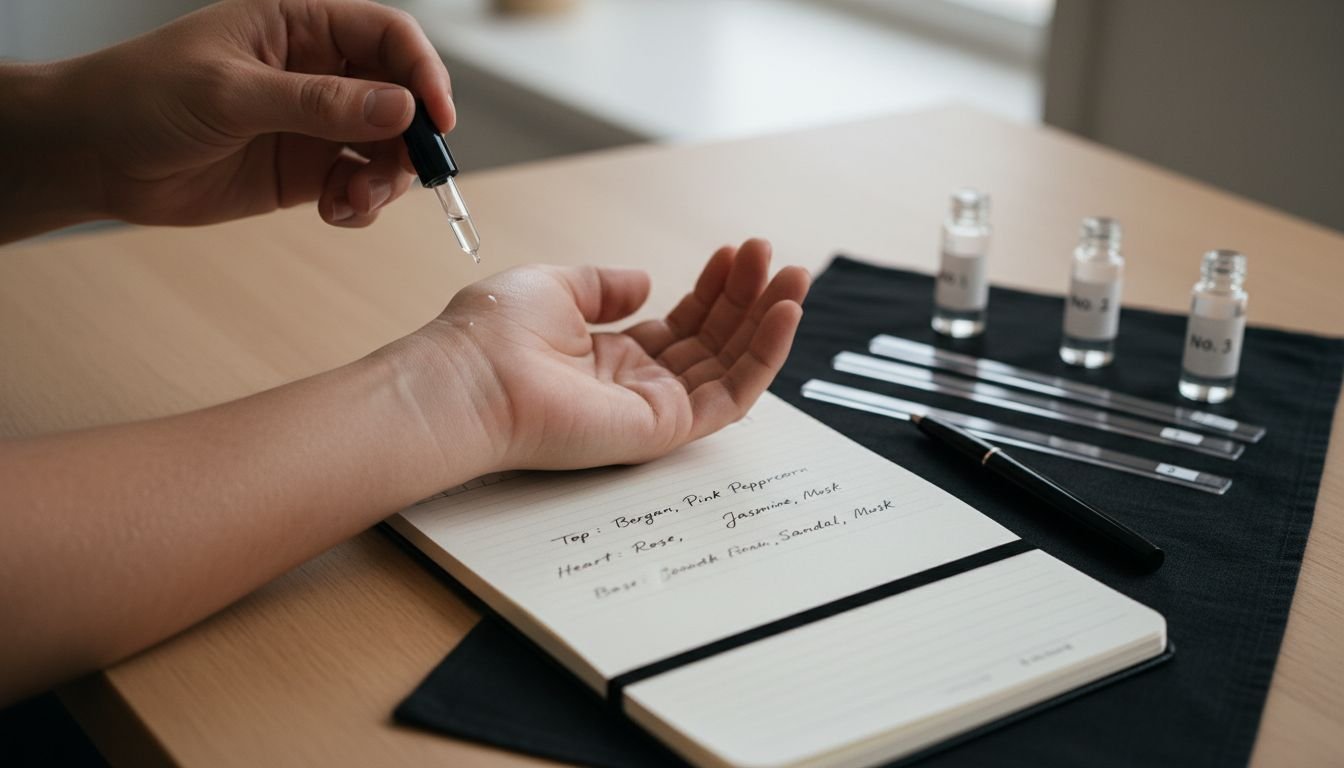
Use the inner wrists, neck, behind the ears, inside the elbows. Warm skin activates and diffuses the scent so you get the whole shape of it. One light dab or spray is enough — you can always add more, and you can't take it back off. Leave at least 30 minutes between fragrances, or you'll be judging the fourth one through the ghost of the third.
Write things down as you go, not from memory hours later. First impression, what shifted, what it reminded you of. Emotional and memory associations count; they're often the real reason you reach for a bottle again. Notebook or app, doesn't matter, as long as you keep the habit.
Apply lightly, space it out, and the differences between scents stop blurring.
A fragrance you judge in the first five minutes is a fragrance you haven't judged. Research from the International Journal of Novel Research and Development treats the arc from application to dry down as the thing that matters, and that's the right way round. For more on reading a scent properly, browse our blog articles.
Check in at fixed points: immediately after application, at 30 minutes, then at 2-hour increments. Top notes arrive first and are the lightest and most volatile, which makes them the least reliable guide to what you're buying. Middle notes surface around the 30-minute mark and give you the heart of the thing. Base notes settle in after 2 to 3 hours, and that's the part you'll live with.
Score every stage the same way: projection, longevity, complexity, and whether you like it. Add the context that decides real purchases — how it sits on your skin, where you'd wear it, what it makes you feel. Consistency is what makes the comparison worth anything at the end.
Judge the dry down, not the opening spray.
This is where sampling turns into a decision, and where most people go on instinct and regret it. Our guide on writing fragrance reviews effectively is worth reading if your notes tend to come out as "nice".
Put everything into one comparison matrix: longevity, sillage, projection, emotional resonance. Break it out by use as well — workplace, evening, season, plain comfort — and rank each fragrance across those dimensions with a scoring system you apply the same way every time. The point is that the winner wins on evidence rather than on whichever bottle you smelled last.
Then wait 24 hours. It's the most useful step here and the first one people skip. Read your notes cold, and notice which scent you keep circling back to or want on again. That pull is information, and it often outranks the tidy score on paper.
Decide on the second day, not the first.
If you take one thing from all of this: the 3-5 cap and the 24-hour pause do more for your final choice than any amount of extra testing. Method beats volume. Sampling only feels overwhelming when you're holding ten half-formed impressions in your head and hoping one of them sticks.
Fragplace.com handles the other half of the job — checking your read against other people's. Fragrance information, reviews with actual detail in them, and discussions that go further than "smells nice". That's the stuff worth having when you're stuck between two bottles and your own notes won't break the tie.
So do two things. Join Fragplace and start tracking what you sample instead of trusting your memory to hold it. Then take your shortlist into the Fragrance Discussions and see what people who've lived with those bottles have to say before you buy.
Neutral room, steady temperature, nothing else competing for your nose. Keep it clean, well-lit and ventilated so you're assessing the fragrance rather than the space it's in.
Sort by olfactory family — woody, floral, fresh and so on — so you're comparing directions instead of near-identical bottles. Keep it to 3-5 per session; past that your nose stops being reliable.
A small amount on pulse points such as the inner wrists and neck. Wait at least 30 minutes between tests so each scent has room to develop and your nose gets a reset.
Note your impressions at set intervals after application and track how the scent shifts. Projection and plain personal appeal both belong in the same assessment.
Build a comparison matrix covering longevity, sillage and the rest for each fragrance, score them all the same way, and give it 24 hours before you commit.
Go with what you enjoyed, not what you think you ought to like. The scent you're still thinking about after the session is usually the one that fits.
| Essential Insight | Explanation |
|---|
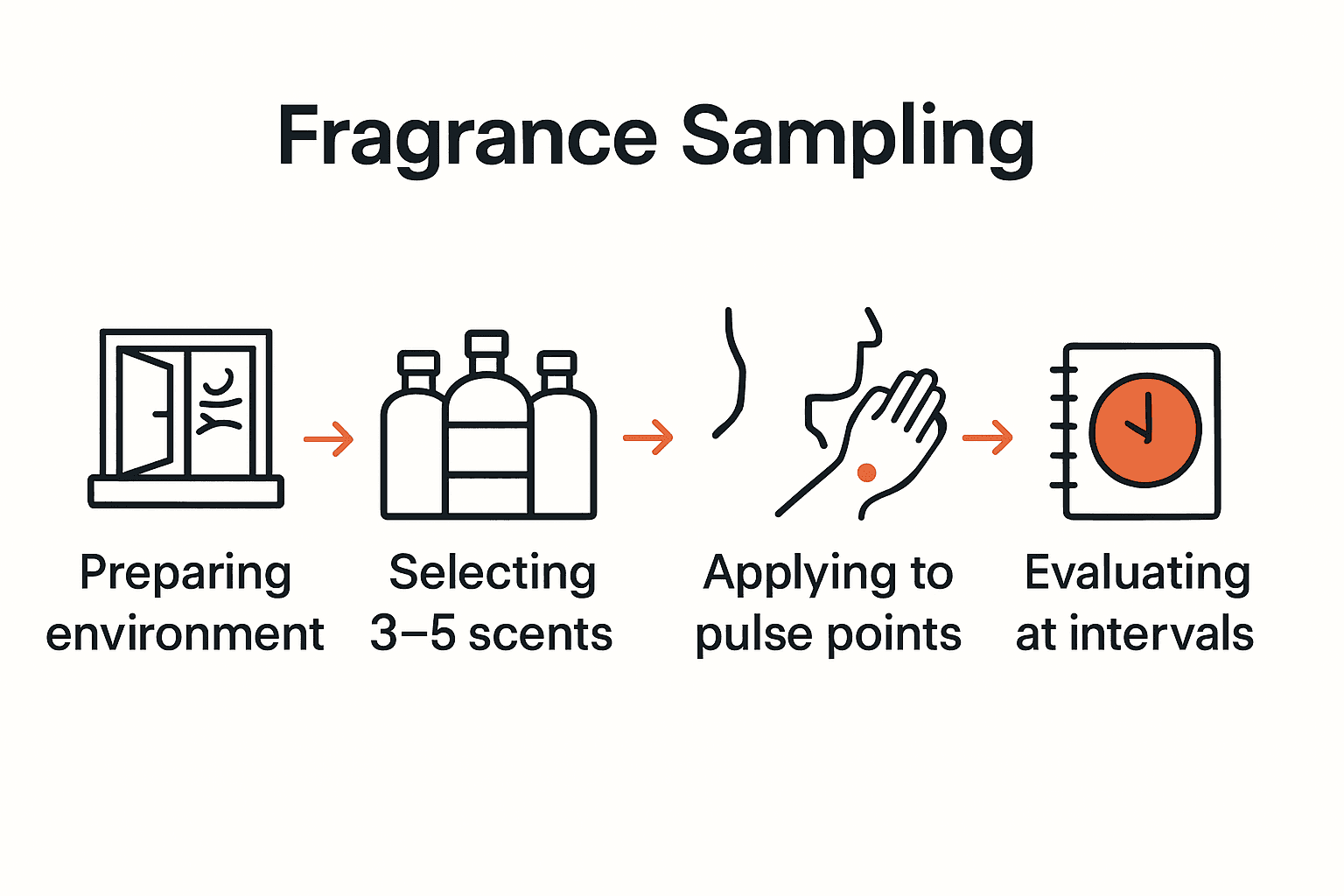
| 1. Create a neutral sampling environment | Use a clean, clutter-free space with stable temperature and no strong odours to enhance your fragrance testing experience. |
| 2. Limit fragrance selection to 3-5 | Sampling too many fragrances at once can overwhelm your senses; focus on a manageable number for clarity. |
| 3. Apply to pulse points sparingly | Apply fragrance lightly to warm areas like wrists and neck, allowing time to evolve and avoid olfactory fatigue. |
| 4. Evaluate fragrances systematically | Document scent changes over time with structured intervals to assess each fragrance's development accurately. |
| 5. Reflect before finalising choice | Take 24 hours to review notes and allow initial impressions to settle before selecting your preferred fragrance. |