Eau de Toilette vs Parfum: Complete Guide to Differences
10 Nov 2025
Choosing between Eau de Toilette and Parfum can leave even seasoned fragrance lovers scratching their heads. With Parfum containing up to 40 percent fragrance oil, it outlasts and outshines its lighter counterpart, Eau de Toilette, which sits at a more modest 5 to 15 percent concentration. Understanding what sets these two apart helps you match your scent to your style, daily routine, and favorite occasions, turning every spritz into a perfect personal statement.
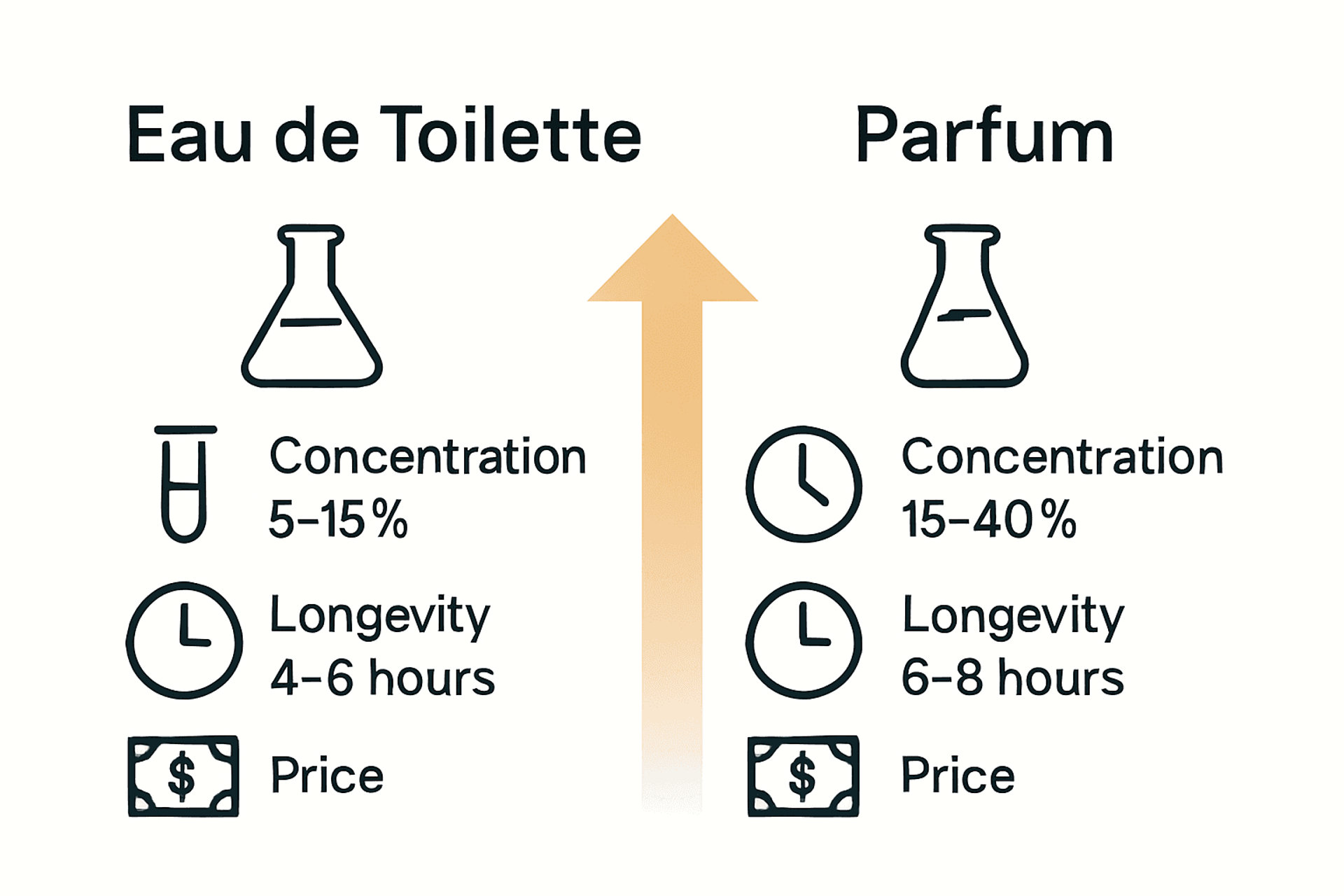
Eau de Toilette contains 5-15% aromatic compounds, while Parfum has 15-40%, impacting the scent's intensity and longevity.
Usage Context
Eau de Toilette is ideal for daily wear, whereas Parfum is suited for special occasions due to its richer scent and higher cost.
Longevity
Parfum lasts 6-8 hours or more, compared to 2-3 hours for Eau de Toilette, which requires more frequent reapplications.
Personal Preference
Choosing between the two depends on individual lifestyle, occasion, budget, and desired scent impact.
Eau de Toilette and Parfum Defined Clearly
Fragrance enthusiasts often find themselves puzzled by the nuanced differences between Eau de Toilette and Parfum - two distinct types of scented products with unique characteristics. According to Wikipedia, Eau de Toilette represents a lighter fragrance concentration typically ranging between 5% and 15% aromatic compounds, making it ideal for everyday wear and casual settings.
In contrast, Parfum (also known as Extrait de Parfum) represents the most concentrated fragrance variant. As research from IJNRD reveals, Parfum contains an impressive 15% to 40% fragrance oil concentration, delivering a rich, long-lasting sensory experience that lingers significantly longer than its lighter counterparts.
The key differences between these fragrance types extend beyond mere concentration levels. Eau de Toilette offers a subtle, refreshing scent perfect for daytime activities, while Parfum provides an intense, complex aroma designed for special occasions and evening wear. These variations mean you'll choose your fragrance based on desired intensity, longevity, and the specific environment or event you're preparing for.
Typically, the fragrance hierarchy follows this progression of concentration:
Eau de Cologne (2-4% fragrance oils)
Eau de Toilette (5-15% fragrance oils)
Eau de Parfum (15-20% fragrance oils)
Parfum/Extrait (15-40% fragrance oils)
When selecting between these options, consider your personal preference, skin chemistry, and the specific ambiance you wish to create. For more in-depth insights, check out our guide on understanding fragrance layers.
Concentration Levels and Scent Longevity Explained
Understanding the relationship between fragrance concentration and longevity is crucial for selecting the perfect scent. Concentration levels directly influence how long a fragrance will persist on your skin, creating a unique aromatic experience that varies dramatically between different perfume types.
According to research from IJNRD, the concentration of fragrance oils plays a pivotal role in determining a perfume's staying power. Higher concentration variants like Parfum can last for hours or even days, while lighter concentrations such as Eau de Toilette typically require more frequent reapplication to maintain their scent profile.
The science behind fragrance longevity is fascinating. Different concentration levels interact uniquely with your skin's chemistry, with factors like body heat, humidity, and individual skin type influencing how a scent develops and persists. Parfum, being the most concentrated option, tends to create a more complex and enduring fragrance experience, slowly revealing different notes over several hours.
Here's a quick breakdown of how concentration affects scent performance:
Eau de Cologne: Lightest concentration, lasts 1-2 hours
Eau de Toilette: Light to moderate, lasts 2-3 hours
Eau de Parfum: Stronger concentration, lasts 4-5 hours
Parfum/Extrait: Most intense, can last 6-8 hours or more
The world of fragrances is a complex symphony of carefully selected aromatic ingredients that create unique sensory experiences. Each perfume type - from Eau de Toilette to Parfum - tells a different olfactory story through its carefully composed ingredient profile.
Research from IJNRD reveals that fragrances with base notes composed of rich, long-lasting ingredients like woods, resins, and musks tend to have significantly greater staying power compared to perfumes dominated by volatile top notes. This means that Parfum, with its higher concentration, typically features more complex and enduring ingredient compositions.
Scent profiles differ dramatically between Eau de Toilette and Parfum. Eau de Toilette tends to showcase brighter, more ephemeral top notes - think citrus, light florals, and fresh herbs. In contrast, Parfum allows for a more nuanced exploration of fragrance, with deeper base notes that unfold slowly and create a more intricate sensory journey.
Key ingredient characteristics by concentration level:
Eau de Cologne: Predominantly light citrus and herbal notes
Eau de Toilette: Fresh, vibrant top notes with minimal mid and base notes
Eau de Parfum: Balanced mix of top, heart, and base notes
Parfum: Rich, complex layers with prominent base notes
Fragrance selection involves more than just finding a pleasant scent - it's about understanding value, application, and personal lifestyle. The choice between Eau de Toilette and Parfum goes beyond mere preference, touching on practical considerations like budget, occasion, and desired scent intensity.
According to research from IJNRD, Parfum is generally more expensive due to its higher concentration of fragrance oils, making it ideal for special occasions when a prolonged fragrance experience is desired. This higher cost reflects not just the quantity of ingredients, but the complexity and longevity of the scent profile.
Practical buying strategies depend on your specific needs. Eau de Toilette works brilliantly for daily wear - lightweight, refreshing, and budget-friendly. It's perfect for office environments, casual outings, and warmer weather. Parfum, conversely, serves as a luxurious investment for evening events, romantic dinners, or when you want a signature scent that leaves a memorable impression.
Key considerations when purchasing fragrances:
Budget: Eau de Toilette is more wallet-friendly
Occasion: Parfum for special events, Eau de Toilette for everyday
Skin Chemistry: Test how different concentrations interact with your personal scent
Selecting the perfect fragrance is a personal journey that blends art and science. Fragrance choice goes beyond simple preference, requiring a nuanced understanding of how different concentrations interact with your lifestyle, personality, and sensory preferences.
According to research from IJNRD, when selecting between Eau de Toilette and Parfum, one must carefully consider factors such as desired scent intensity, longevity, occasion, and budget to determine which concentration aligns best with personal preferences. This decision-making process is more complex than simply picking a pleasant smell.
Consider your daily rhythm and personal style as key decision factors. Eau de Toilette shines for individuals with dynamic, active lifestyles - think professionals who want a light, refreshing scent that doesn't overwhelm colleagues. Parfum, in contrast, becomes the choice for those seeking a more intimate, luxurious fragrance experience that unfolds slowly and leaves a memorable impression.
Practical decision-making framework:
Lifestyle: Active/Professional = Eau de Toilette
Occasion: Formal/Evening = Parfum
Budget: Moderate = Eau de Toilette
Desired Impact: Subtle = Eau de Toilette, Dramatic = Parfum
Choosing between Eau de Toilette and Parfum can feel overwhelming when faced with so many options and technical terms. Whether you seek a light, refreshing aroma for daytime or a rich, lasting scent for special occasions, understanding fragrance concentrations and their impact on longevity is essential. If the challenge of picking the perfect scent resonates with you, Fragplace is here to guide your journey.
Unlock a world of fragrance knowledge and community support at Fragplace. Explore detailed reviews, compare scent profiles, and join discussions that demystify terms like Eau de Toilette and Parfum. Stay inspired with the latest releases and expert insights designed to help you make confident, personalised choices. Start your fragrant adventure now by visiting Fragplace and dive deeper into the art of scent with our fragrance discussions and expert guides on fragrance layers. Your perfect scent awaits—make today the day you find it.
Frequently Asked Questions
What is the difference between Eau de Toilette and Parfum?
Eau de Toilette typically contains 5% to 15% fragrance oils, making it a lighter scent suitable for everyday wear. In contrast, Parfum has a higher concentration of fragrance oils, ranging from 15% to 40%, providing a deeper and longer-lasting scent experience.
How long does Eau de Toilette last compared to Parfum?
Eau de Toilette usually lasts 2-3 hours, while Parfum can last 6-8 hours or more due to its higher concentration of fragrance oils, which leads to greater longevity.
When should I choose Eau de Toilette over Parfum?
Eau de Toilette is ideal for casual, everyday wear or warmer weather when you want a refreshing scent. It’s perfect for the office or daytime events. Parfum, being more intense, is better suited for formal occasions or evenings.
How do the scent profiles differ between Eau de Toilette and Parfum?
Eau de Toilette tends to emphasize bright and fresh top notes, such as citrus and light florals, while Parfum features more complex and rich base notes that unfold gradually, creating a more intricate olfactory experience.