How to Sample Perfumes for the Perfect Fragrance Choice
How to Sample Perfumes for the Perfect Fragrance Choice
23 Nov 2025
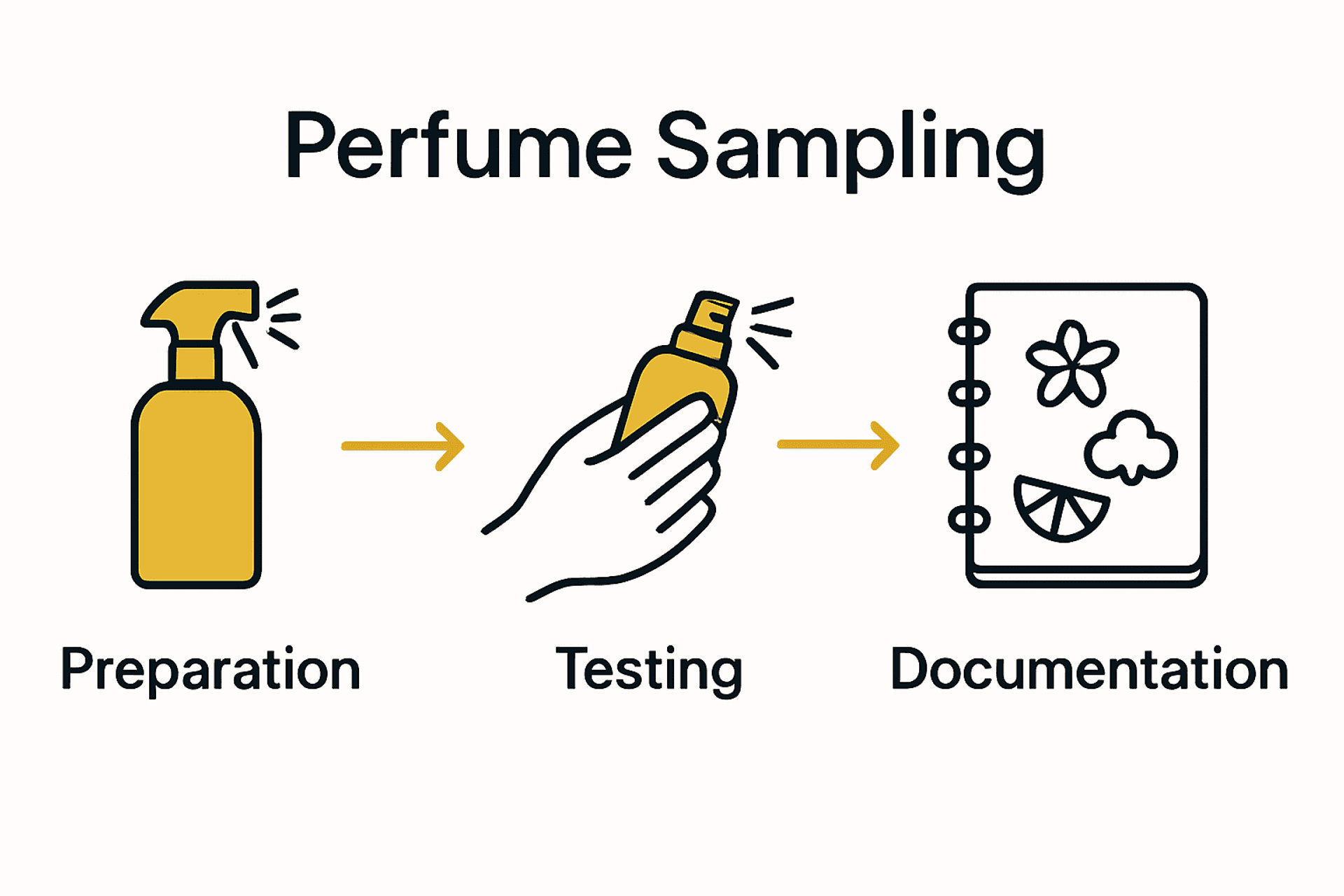
Most perfume enthusiasts underestimate how much their surroundings affect fragrance testing. For british collectors and newcomers alike, achieving an accurate scent impression demands more than just a quick spritz on the wrist. In fact, even a faint room odour can skew results and make comparing perfumes tricky. This guide gives you practical steps to create the right environment, organise samples, master testing, and document your journey, so you discover fragrances as the creators intended.
A clean, odour-free space allows for accurate perfume evaluation without external influences. Remove all scented products beforehand.
2. Organise Samples by Category
Group fragrances by scent family or season, and label each sample to track your impressions systematically during testing.
3. Test on Skin and Blotters
Use both blotters and skin applications to understand the fragrance's evolution and avoid overwhelming your senses by limiting tests to three per session.
4. Document Your Scent Impressions
Create a journal to record key details of each fragrance, tracking changes over time to build a personal scent profile for future reference.
5. Assess Longevity and Sillage
Understand how long a fragrance lasts and its projection by testing it throughout the day and noting first-hand accounts from others.
Step 1: Prepare Your Scent Environment
Creating the right environment for sampling perfumes is crucial for an accurate sensory experience. According to hhrinstitute.org, establishing a neutral olfactory setting allows you to truly evaluate a fragrance without external interference.
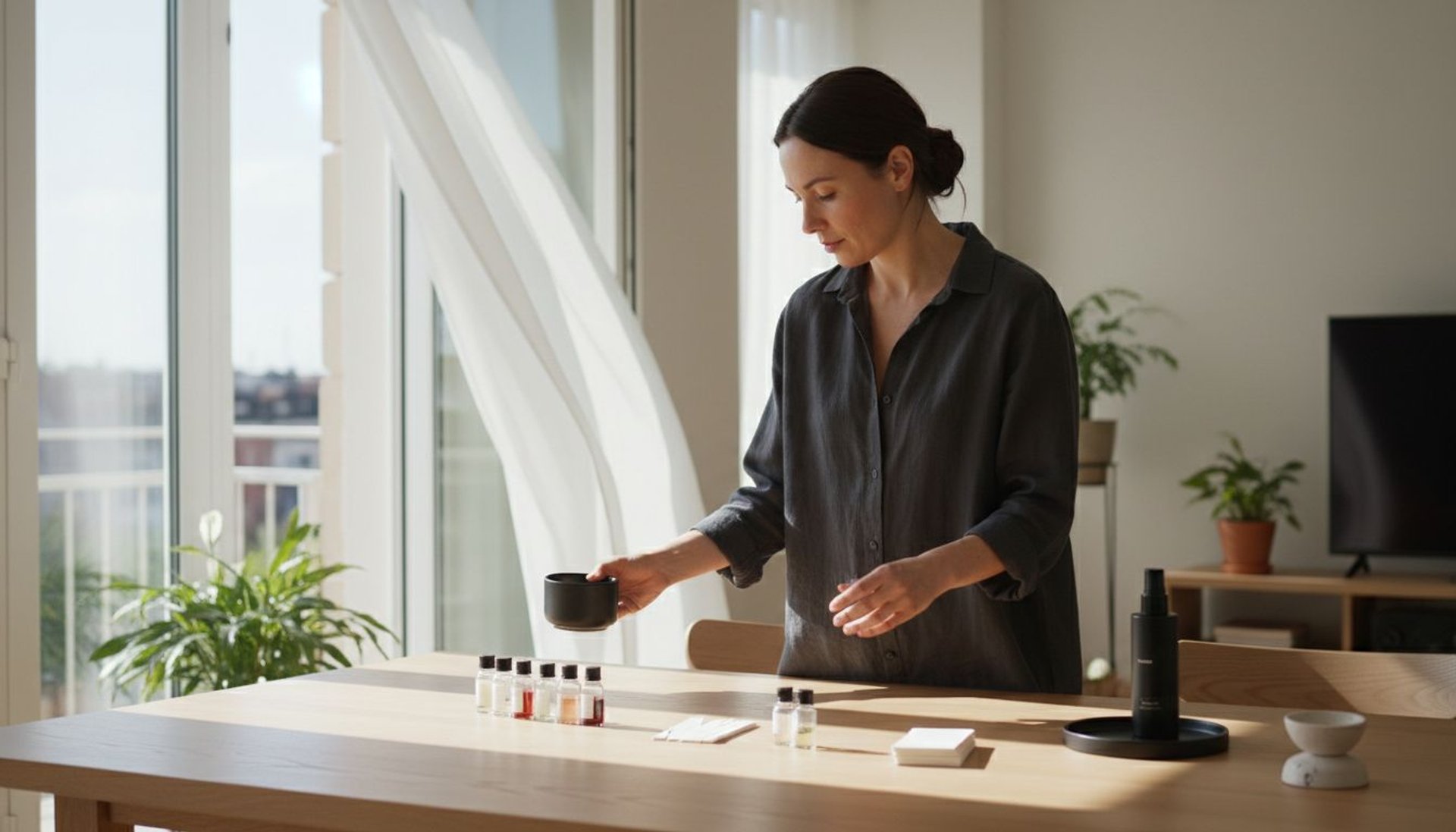
To prepare your scent environment, start by ensuring the space is clean and free from competing odours. Remove any scented products like air fresheners, candles, or personal fragrances that might impact your perception. As recommended by anapsid.org, air out the room beforehand and wear clothing that has been laundered without fabric softeners or strong detergents.
A pro tip for perfume sampling: choose a well-ventilated area with consistent temperature and minimal external scent distractions. Natural light and a neutral background will help you focus on the fragrance itself. By carefully controlling your environment, you set the stage for a precise and enjoyable perfume exploration experience.
Step 2: Select and Organise Perfume Samples
Now that you have prepared your scent environment, it is time to strategically select and arrange your perfume samples for an effective testing experience. According to thetechedvocate.org, having a systematic approach to organizing your fragrances can significantly enhance your sampling process.
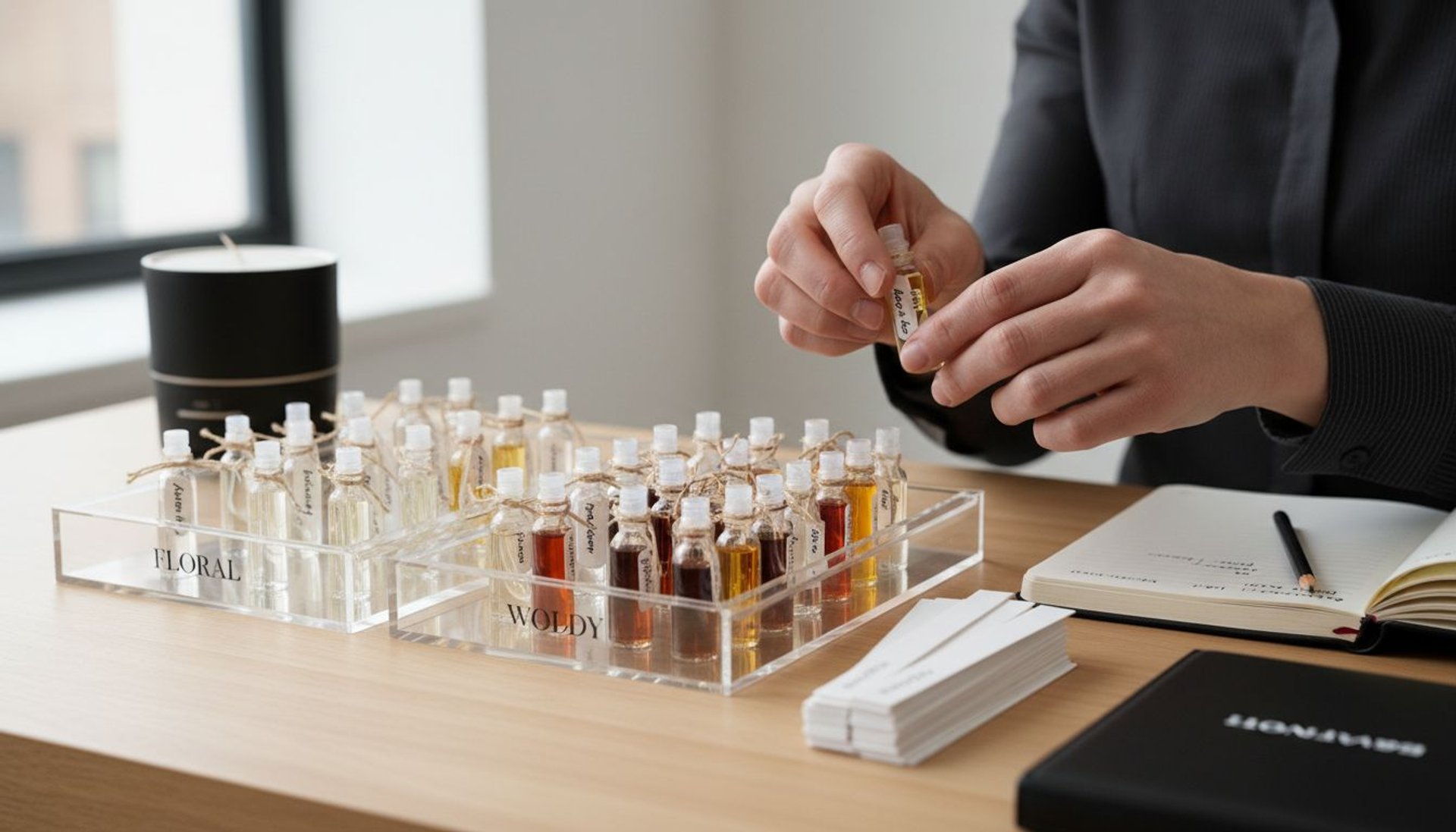
Begin by gathering your samples and sorting them into meaningful categories. Consider grouping fragrances by scent family (floral, woody, oriental), concentration level (eau de toilette, eau de parfum), or season. Use practical organization tools like acrylic trays, drawer dividers, or small shelves to keep your samples neat and easily accessible. This method not only helps you track your testing progress but also prevents cross contamination of scents.
A pro tip for perfume sampling: number or label each sample before testing to maintain clear records of your impressions. This approach will help you remember and compare different fragrances systematically.
With how to write fragrance reviews effectively, you can document your experiences and build a comprehensive understanding of your fragrance preferences. Your next step will involve understanding how to apply and test these carefully selected samples.
Step 3: Test Fragrances Correctly on Skin and Blotters
Testing perfumes requires a strategic approach to truly understand their unique characteristics and how they interact with your personal body chemistry. With what is an Eau de Parfum? Understanding fragrance layers, you will gain deeper insights into the complex world of fragrance compositions.
Start by using two primary testing methods: paper blotters and skin application. For blotter testing, spray a small amount of fragrance onto the paper strip and allow it to develop for 30 seconds. This initial test helps you understand the top notes and immediate scent profile. When testing on skin, apply the fragrance to pulse points like wrists, inner elbows, or neck where body heat naturally helps the scent evolve. Wait at least 10 minutes between different fragrance tests to allow each scent to fully develop and prevent olfactory fatigue.
A crucial pro tip is to test no more than three fragrances in one session. This approach prevents overwhelming your senses and allows for a more nuanced evaluation. Pay attention to how the fragrance transforms over time noting the progression from top notes to heart and base notes. Remember that fragrances smell different on paper versus skin, so always perform both tests to get a comprehensive understanding of the perfume's true character.
Step 4: Compare and Document Scent Impressions
Documenting your fragrance experiences systematically transforms a casual sampling into a meaningful exploration of personal scent preferences. According to mrsec.psu.edu, recording scent impressions over time helps you observe how fragrances evolve and develop a nuanced understanding of their characteristics.
Create a dedicated fragrance journal or digital spreadsheet to track your impressions. For each perfume, note key details including initial spray impression, how the scent changes after 15 and 30 minutes, longevity, sillage, and overall mood or occasion you imagine wearing it. Include sensory descriptors like specific notes you detect, emotional responses, and comparison to other fragrances in your collection. Pro tip: Take brief notes immediately after application and then again at 30 minute intervals to capture the fragrance's full olfactory journey.
Share your discoveries and compare notes in Fragrance Discussions to gain insights from other perfume enthusiasts. By methodically documenting your experiences, you will develop a personalised fragrance profile that guides future purchases and deepens your appreciation for the complex world of perfumery.
Step 5: Verify Longevity and Sillage Before Selection
Understanding a fragrance's performance goes beyond its initial impression. Longevity refers to how long the scent remains detectable on your skin, while sillage describes the trail or projection of the fragrance as you move. Exploring these characteristics will help you select a perfume that meets your personal and social expectations.
To accurately assess longevity, apply the fragrance in the morning and track its performance throughout the day. Note how the scent transforms over different hours and under varying conditions like temperature and activity level. For sillage evaluation, ask trusted friends or family members about the perfume's detectability from a conversational distance. Pay attention to whether the fragrance remains subtle and personal or creates a more pronounced presence. A pro tip is to test fragrances during different scenarios such as a workday, social event, or evening out to understand their versatility.
Share your detailed observations in All Reviews to contribute to the fragrance community and help other enthusiasts make informed decisions. By methodically assessing a perfume's longevity and sillage, you will develop a nuanced understanding of how a fragrance performs in real world conditions, ensuring your final selection meets your specific preferences.
Discover Your Perfect Scent with Fragplace
Sampling perfumes can be overwhelming when you face challenges like avoiding scent fatigue, organising your fragrance collection, and tracking how each perfume evolves on your skin. This guide highlights key steps such as preparing a neutral environment, testing on both blotters and pulse points, and documenting your impressions to truly understand your preferences. If you have ever wished for a place to record these details, compare notes, and gain insights from a vibrant community then Fragplace is the perfect companion for your fragrance journey.
Take control of your perfume sampling experience today with Fragplace Our platform offers detailed fragrance information, user reviews, and a welcoming community eager to share advice and discussions. Whether you are comparing longevity, sillage, or simply seeking your next favourite scent Fragplace makes your search easier and more rewarding. Join now to explore expert articles, save your scent discoveries, and connect with enthusiasts who share your passion. Start your personalised fragrance adventure at Fragplace and transform the way you choose perfumes.
Frequently Asked Questions
How do I prepare my environment for sampling perfumes?
Creating the right scent environment is essential for an accurate perfume sampling experience. Clean your space, remove any competing odours, and air out the room before starting. Opt for neutral clothing and choose a well-ventilated area with consistent temperature.
How should I organise my perfume samples for testing?
You should group your perfume samples logically, such as by scent family or concentration level, to enhance your sampling process. Use trays or dividers to keep them accessible and prevent scent cross-contamination. Label each sample to easily track your impressions while testing.
What is the best way to test fragrances on my skin?
Apply fragrances to pulse points like your wrists or neck to see how they interact with your skin chemistry. Test no more than three fragrances in one session, allowing 10 minutes between each application to prevent olfactory fatigue and to fully appreciate the development of the scent.
How can I effectively document my scent impressions?
To document your fragrance experiences, create a fragrance journal or digital spreadsheet. Note details such as initial impressions, how the scent evolves, and its overall mood. Record your thoughts immediately after application and again at 30-minute intervals to capture the full olfactory journey.
How do I verify the longevity and sillage of a fragrance?
To assess a fragrance's longevity and sillage, wear the scent throughout your day and take notes on how it performs in various conditions. Ask friends or family about its detectability from a conversational distance to evaluate its presence. Test fragrances in different scenarios, such as work or social events, to understand their versatility.