How to Sample Fragrances for Perfect Scent Selection
27 Nov 2025
Choosing the right fragrance sample can be a daunting task for even the most seasoned british perfume enthusiasts. With over 80 percent of people unable to identify their favourite scent on the first try, the quest for the perfect perfume often becomes a journey of discovery. A well-organised approach to sampling not only saves money, it also reveals scent profiles that truly complement your skin and lifestyle. This straightforward guide helps you navigate each step, from preparing your sampling space to making a confident final selection.
Table of Contents
- Step 1: Prepare Your Sampling Environment
- Step 2: Select Fragrances to Test
- Step 3: Apply and Space Out Fragrance Samples
- Step 4: Evaluate Scents at Different Intervals
- Step 5: Record Impressions and Finalise Your Choice
Quick Summary
Step 1: Prepare Your Sampling Environment
Preparing the ideal environment for fragrance sampling transforms an ordinary perfume experience into a precise sensory exploration. According to research from International Journal of Novel Research and Development, understanding how fragrances interact with individual skin chemistry is crucial for accurate scent evaluation.
Start by selecting a neutral environment with consistent temperature and minimal competing odours. Your sampling space should feel clean and uncluttered, allowing you to focus entirely on the fragrance nuances. Open windows to ensure fresh air circulation, but avoid drafty conditions that might interfere with scent perception. Choose a well-lit area with natural light, preferably near a mirror where you can observe your skin's reaction to different perfumes.
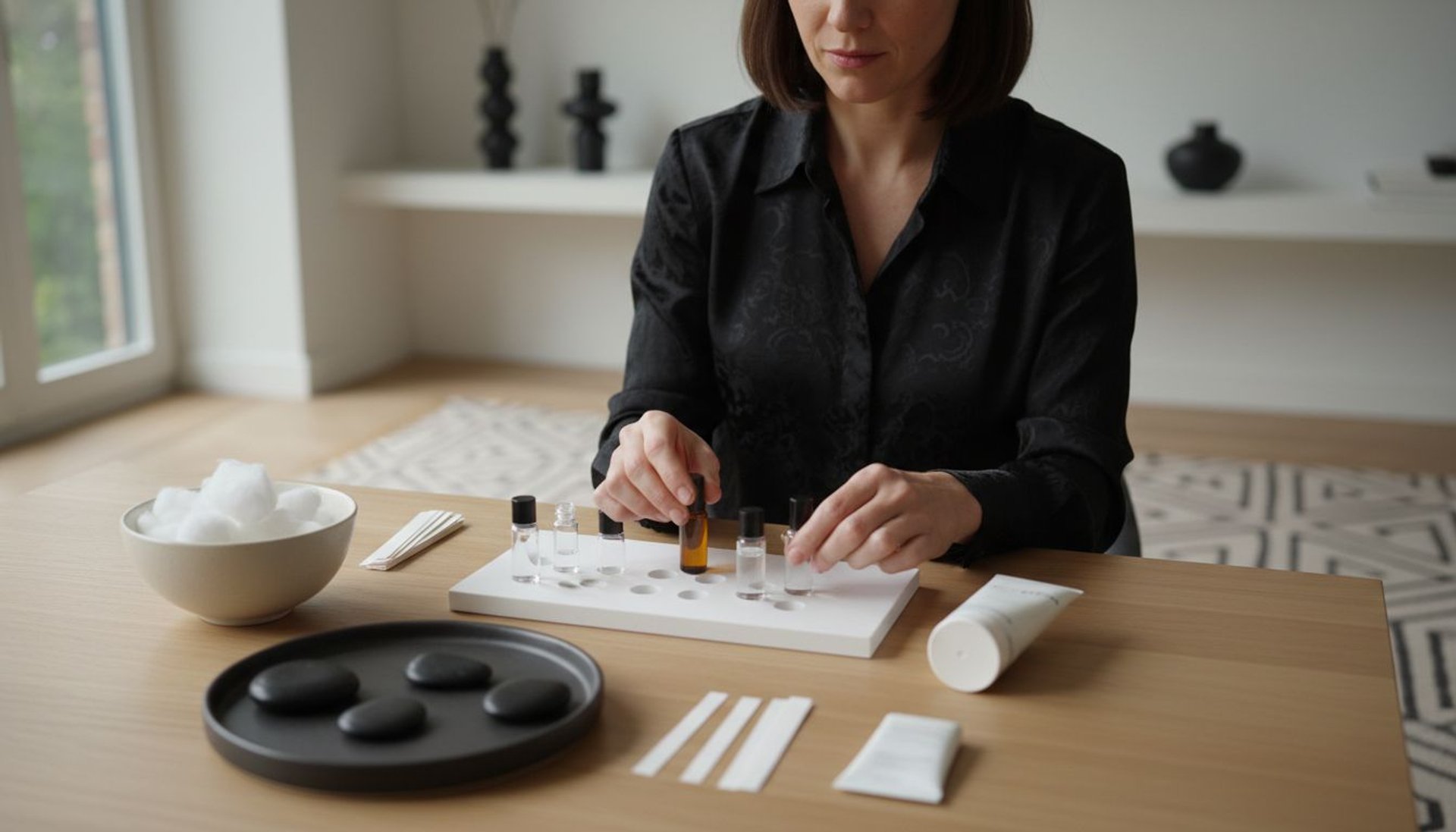
Consider preparing a sampling kit with essential tools: clean testing strips, unscented moisturiser, cotton wool, and water for neutralising your olfactory senses between tests. As the research suggests, skin chemistry significantly influences fragrance performance, so clean hands and neutral skin conditions are paramount. Pro tip: avoid sampling fragrances immediately after applying lotions or consuming strong foods and beverages, as these can dramatically alter your perception of the scent.
With your environment meticulously prepared, you are now ready to embark on a precise and enjoyable fragrance sampling journey.
Step 2: Select Fragrances to Test
Selecting the right fragrances for sampling requires a strategic approach that balances personal curiosity with methodical exploration. Your goal is to create a diverse yet manageable collection of scents that will provide meaningful insights into your olfactory preferences. Explore the Fragrance Discussions on our platform to gain inspiration and learn from community experiences.
Begin by categorising fragrances across different olfactory families: woody, floral, oriental, fresh, and citrus. This systematic approach ensures you experience a broad spectrum of scent profiles. Consider your lifestyle, personal style, and typical occasions when choosing fragrances. Are you seeking a signature scent for professional environments, a romantic evening fragrance, or a casual weekend perfume? Each category offers unique characteristics that might resonate differently with your personal chemistry.
Pro tip: Limit your initial sampling to 3-5 fragrances per session. Sampling too many scents simultaneously can overwhelm your olfactory senses, making accurate perception challenging. Start with small sample sizes or tester strips, and space out your testing to maintain sensory clarity. Remember that fragrances evolve over time, so allocate sufficient time to experience each scent's complete olfactory journey from top notes to base notes.
With your carefully selected fragrances ready, you are prepared to embark on a fascinating sensory exploration that will help you discover scents perfectly suited to your personality and preferences.
Step 3: Apply and Space Out Fragrance Samples
Applying fragrance samples requires precision and patience to truly understand their unique character. According to research from the International Journal of Novel Research and Development, the key is to apply a small amount to pulse points and allow sufficient time for the perfume to reveal its full complexity. Learn more about fragrance nuances in our guide on understanding fragrance layers.
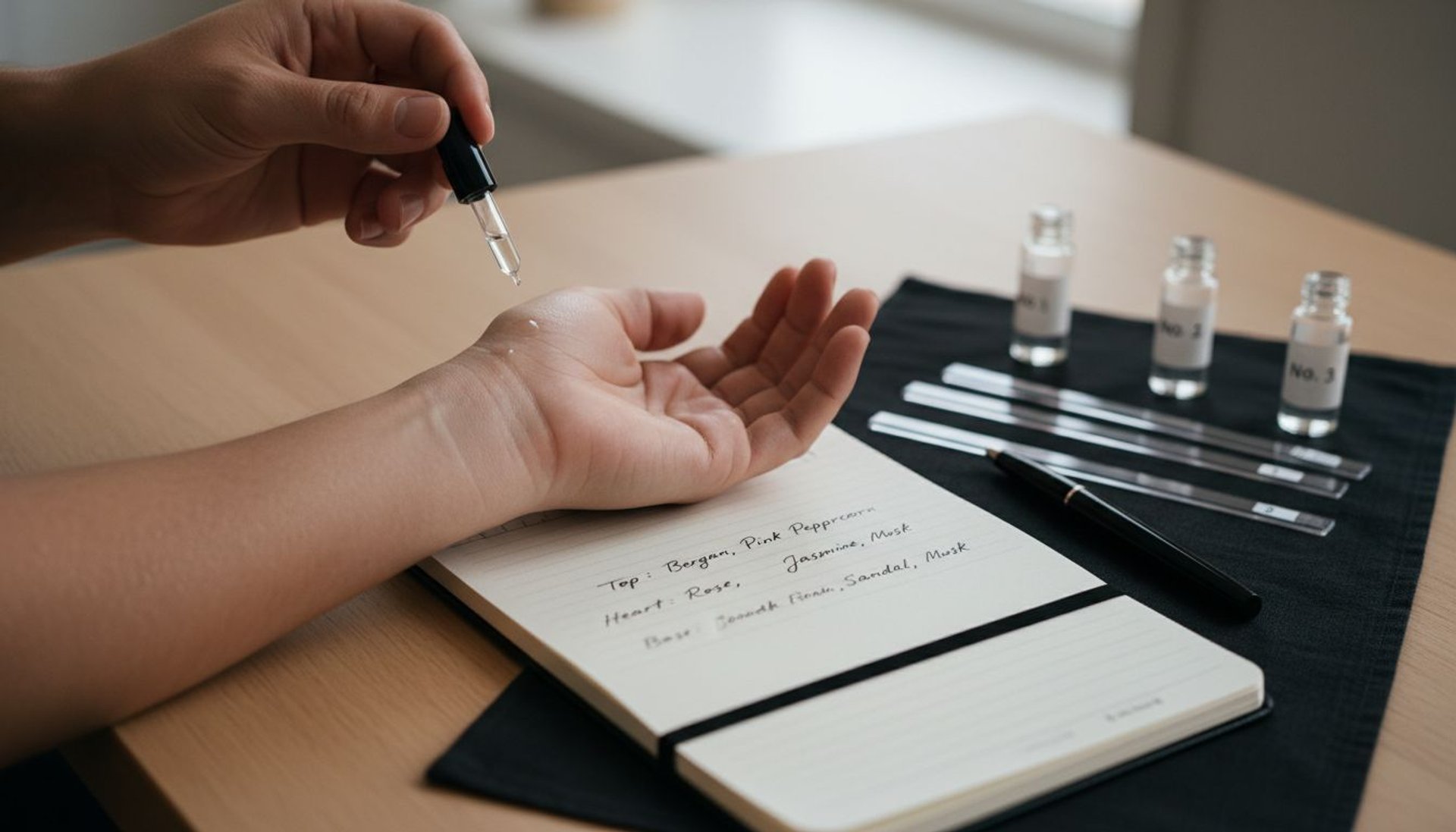
Select strategic pulse points for application: inner wrists, neck, behind ears, and inside elbows. These areas generate warmth that helps activate and diffuse the fragrance, allowing you to experience its complete olfactory profile. Apply sparingly with a light dab or spray – remember that you can always add more, but cannot easily remove excess. Maintain a minimum 30-minute interval between different fragrance tests to prevent olfactory fatigue and ensure accurate sensory perception.
Pro tip: Take detailed notes during each sampling session. Document your initial impressions, how the scent evolves over time, and any emotional or memory associations that emerge. This methodical approach transforms fragrance sampling from a casual activity into a structured sensory exploration. Keep a dedicated notebook or use digital tracking to record your olfactory journey, helping you develop a sophisticated understanding of your personal scent preferences.
With careful application and thoughtful spacing, you are now ready to uncover the subtle nuances of each fragrance and discover your perfect scent match.
Step 4: Evaluate Scents at Different Intervals
Evaluating fragrances is a nuanced process that requires patience and keen observation. According to research from the International Journal of Novel Research and Development, understanding how a perfume evolves from initial application to dry down is critical for accurate assessment. For comprehensive insights into fragrance analysis, explore our blog articles.
Begin by documenting your sensory experience at precise intervals: immediately after application, 30 minutes later, and then at 2-hour increments. During each interval, pay attention to how the fragrance transforms. Top notes typically present themselves immediately and are usually lighter and more volatile. Middle notes emerge within 30 minutes, revealing the heart of the fragrance. Base notes develop after 2 to 3 hours, providing the lasting impression and deepest character of the scent.
Pro tip: Create a structured evaluation framework. Rate each stage of the fragrance on dimensions such as projection, longevity, complexity, and personal appeal. Consider factors like how the scent interacts with your skin chemistry, its appropriateness for different settings, and the emotional responses it evokes. A methodical approach transforms fragrance sampling from a casual experience into a sophisticated sensory exploration.
With a systematic evaluation process, you are now equipped to make an informed and nuanced fragrance selection that truly resonates with your personal style and preferences.
Step 5: Record Impressions and Finalise Your Choice
The final stage of fragrance sampling involves transforming your sensory experiences into a deliberate and thoughtful selection process. Learn more about perfume review techniques in our guide on writing fragrance reviews effectively.
Compile a comprehensive comparison matrix for each sampled fragrance. Include detailed observations about performance characteristics such as longevity, sillage, projection, and emotional resonance. Consider creating distinct categories for evaluation including workplace appropriateness, evening versatility, seasonal compatibility, and personal comfort level. Rank each fragrance across these dimensions using a consistent scoring system that allows objective comparison.
Pro tip: Allow a 24-hour reflection period before making your final selection. This waiting phase permits your initial impressions to settle and provides perspective on which fragrances truly stand out. Review your notes with fresh eyes, paying attention to which scents you find yourself consistently thinking about or wanting to wear again. Your intuitive emotional response is often as important as technical performance metrics.
With a methodical approach to recording and reflecting on your fragrance experiences, you are now prepared to confidently select a scent that authentically represents your personal style and sensory preferences.
Discover Your Signature Scent with Fragplace
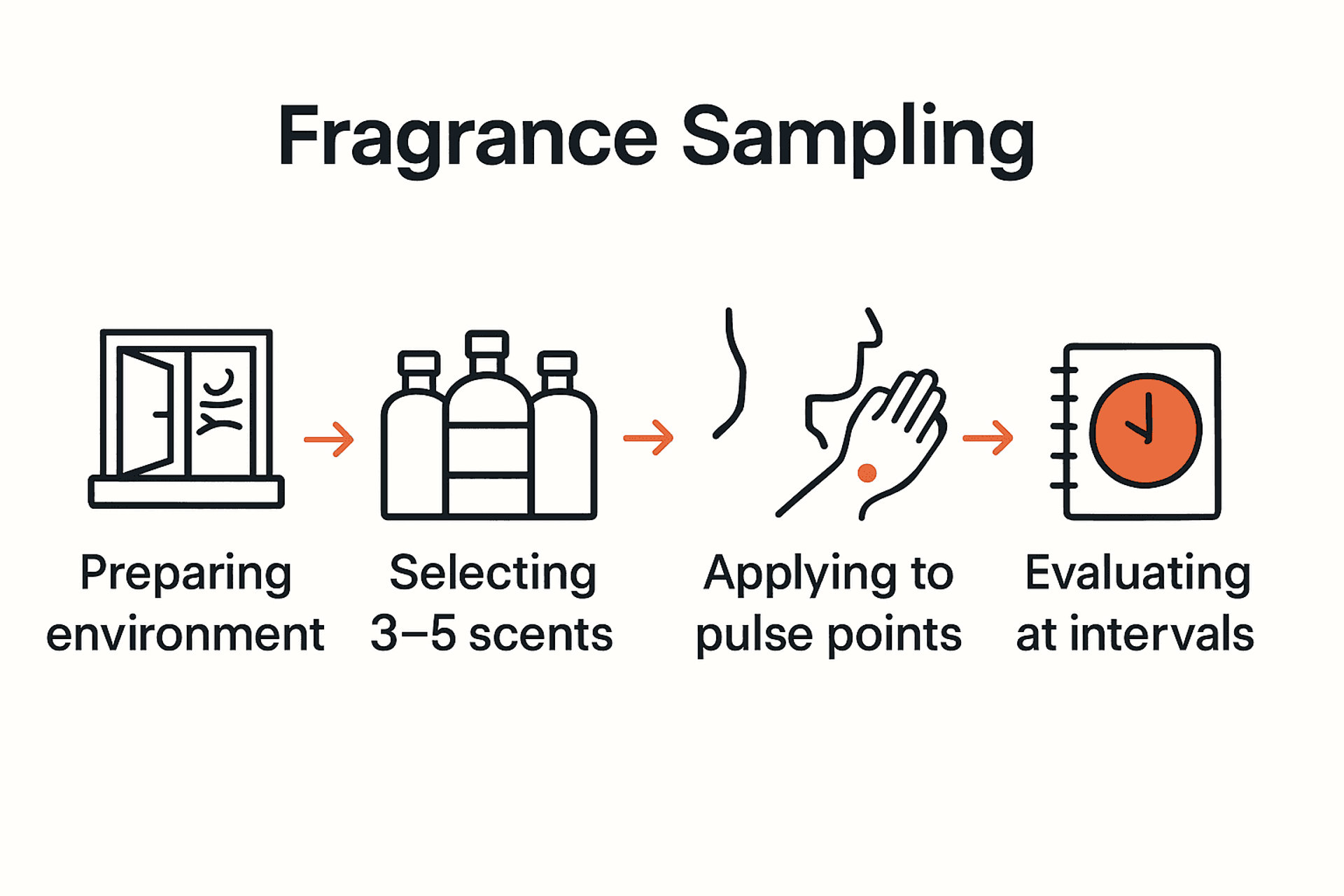
Sampling fragrances to find your perfect scent can feel overwhelming with so many options and subtle nuances. The challenge lies in understanding how fragrances evolve over time and how your personal skin chemistry affects each scent’s character. This article highlights key steps like applying fragrances at pulse points, spacing out testing, and evaluating scents at different intervals — all essential for making a confident and personalised choice.
Fragplace.com offers a supportive community and a rich resource hub designed precisely to help fragrance lovers like you navigate this sensory journey. Explore detailed fragrance information, read in-depth reviews, and engage in discussions that deepen your understanding of scent families, notes, and performance. Benefit from expert insights and user experiences to complement your sampling process and bring clarity to your scent selection.
Take control of your fragrance discovery now by joining Fragplace. Dive into popular fragrance discussions, access fresh reviews, and start tracking your favourites with precision. Don’t let uncertainty hold you back from finding a scent that truly reflects your personality and style. Visit Fragplace.com and transform your fragrance sampling into a confident and enjoyable adventure today.
Frequently Asked Questions
How should I prepare my environment for fragrance sampling?
Start by choosing a neutral space with consistent temperature and minimal competing scents. Ensure the area is clean, well-lit, and has good air circulation to enhance your olfactory experience.
What is the best way to select fragrances for sampling?
Categorise fragrances by olfactory families such as woody, floral, and fresh to create a diverse collection. Aim to sample 3-5 scents per session to maintain clarity and avoid overwhelming your senses.
How do I apply fragrance samples correctly?
Apply a small amount of perfume to pulse points like the inner wrists and neck. Wait at least 30 minutes between tests to allow each scent to develop fully and prevent olfactory fatigue.
What should I do while evaluating fragrances?
Document your impressions at specific intervals after application, noting how the scent evolves over time. Consider factors like projection and personal appeal to ensure a comprehensive assessment.
How can I effectively record my impressions during fragrance sampling?
Create a comparison matrix detailing key characteristics such as longevity and sillage for each fragrance. Use consistent scoring for a clear evaluation, and allow a 24-hour reflection period before finalising your choice.
How can I choose the perfect scent for my personal style?
Reflect on your emotional responses and enjoyment of each fragrance after sampling. Prioritise the scents that resonate with you intuitively, ensuring they complement your personal style.