Fragrance Shopping Tips for Choosing Your Perfect Scent
12 Nov 2025
Over 80 percent of perfume lovers admit they have bought a fragrance that smelled different at home than it did in the store. Navigating the world of scent can be confusing, especially with so many notes, families, and choices on every shelf. Learning how to identify your preferences, sample wisely, and shop smart helps you avoid costly mistakes and find a fragrance that truly suits you. This guide reveals the steps that will lead you to your perfect scent.
Explore different fragrance families to discover which scents you naturally enjoy.
2. Research fragrance families and notes
Understand seven fragrance families to improve your scent selection process.
3. Test perfumes on your skin
Apply fragrances to warm skin to see how they evolve with your body chemistry.
4. Compare shopping options and deals
Evaluate various retailers for pricing and authenticity to maximize your purchasing power.
5. Verify authenticity before purchasing
Inspect packaging and purchase from authorized sellers to avoid counterfeit products.
Step 1: Identify your fragrance preferences
Choosing the perfect fragrance starts with understanding your personal olfactory landscape. Your goal in this step is to map out what scents resonate with you by exploring different fragrance families and reflecting on past sensory experiences.
According to ijnrd.org, selecting an ideal perfume involves carefully examining fragrance families and notes while experimenting through sample testing. Begin by exploring the fragrance wheel which categorises scents into primary groups: floral, oriental, woody, and fresh. Think about the aromas you naturally gravitate towards in daily life. Do you enjoy fresh citrus notes? Warm spicy scents? Delicate floral bouquets?
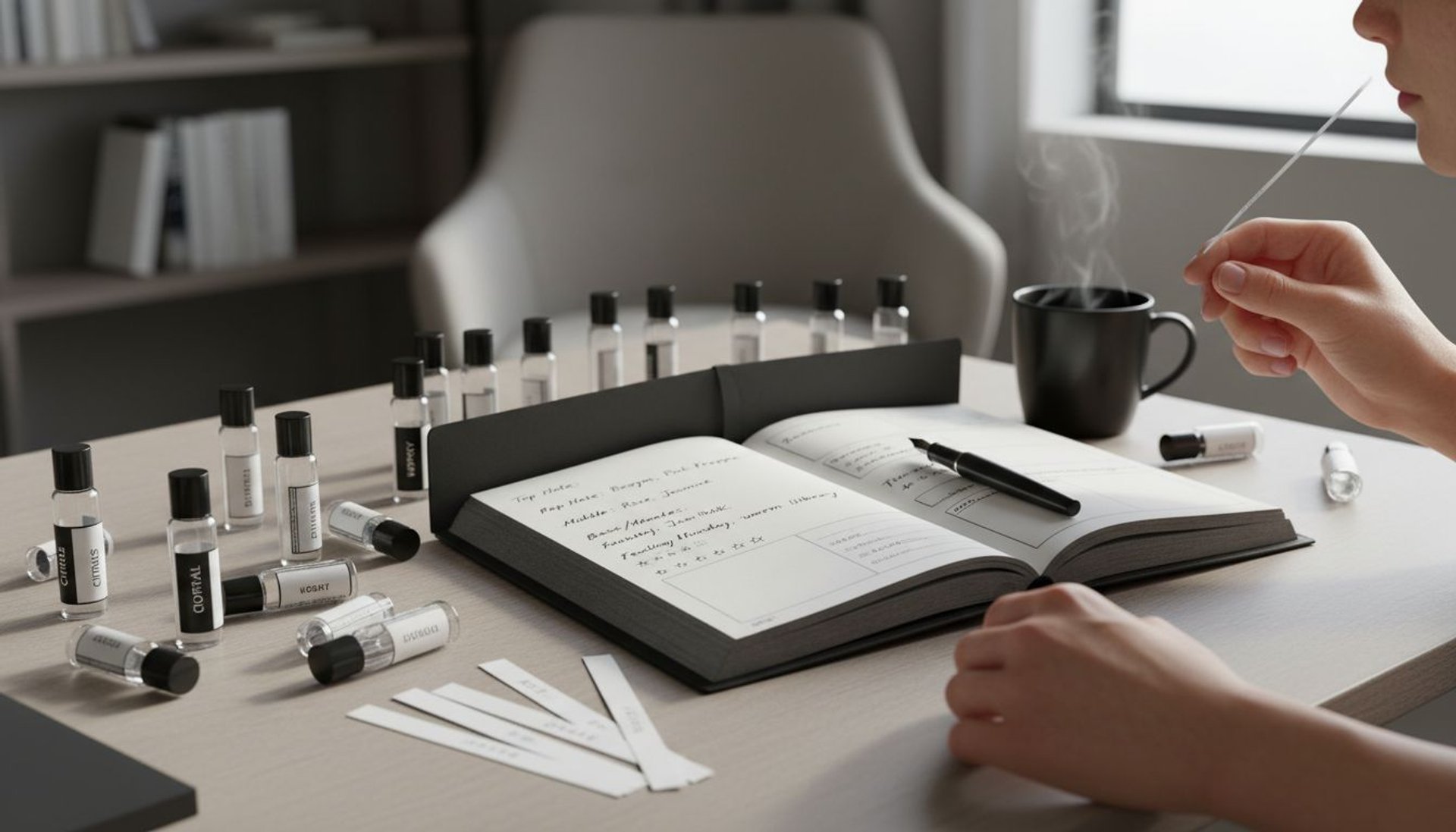
To refine your preferences, start collecting small fragrance samples and keep a sensory journal. Note how different scents make you feel, what memories they evoke, and which ones you find most appealing. Pay attention to how a fragrance transforms on your skin over several hours. This methodical approach will help you narrow down your signature scent with confidence and precision.
Step 2: Research fragrance families and notes
Deepening your fragrance knowledge requires understanding the fundamental building blocks of scent composition. This step will help you systematically explore and comprehend the intricate world of perfume families and individual fragrance notes.
According to parfumeurs-createurs.org, the Société Française des Parfumeurs defines seven fundamental fragrance families: citrus, floral, oriental, woody, aromatic, fougère, and chypre. Each family represents a distinct olfactory character that can guide your scent exploration. When researching note categories, pay attention to how individual ingredients interact and create complex sensory experiences.
To master fragrance families effectively, start by sampling scents from each category. Visit perfume counters, request testers, and keep a detailed journal documenting your impressions. Note the top, middle, and base notes of each fragrance. Pay attention to how scents evolve over time on your skin. This methodical approach will transform you from a casual perfume buyer to an informed fragrance enthusiast who understands the nuanced art of scent composition.
Step 3: Test perfumes on your skin
Testing fragrances directly on your skin is the ultimate way to understand how a scent truly interacts with your unique body chemistry. This crucial step transforms your fragrance selection from a guessing game to a precise personal discovery.
According to attireclub.org, testing perfumes on your skin is essential because the interaction between the fragrance and your body chemistry can dramatically alter the scent's profile. When testing, apply a small amount to your inner wrist or elbow where skin is warm and pulse points are active. Give the fragrance time to develop rather than making an immediate judgment. Check how the scent evolves in how to test fragrance longevity naturally stages over several hours.
Be strategic about your testing approach. Avoid testing too many fragrances at once, as this can overwhelm your senses and muddle your perceptions. Ideally, test no more than two to three scents in a single session. Wear the fragrance for a full day if possible to understand its complete olfactory journey. Take notes on how the scent changes with your body heat, skin oils, and throughout different activities. Remember that what smells incredible in the bottle might transform completely once it meets your unique skin chemistry.
Step 4: Compare shopping options and deals
Navigating the world of fragrance shopping requires a strategic approach to finding the best value without compromising on quality. This step will help you become a savvy shopper who knows how to maximize your purchasing power across different retail channels.
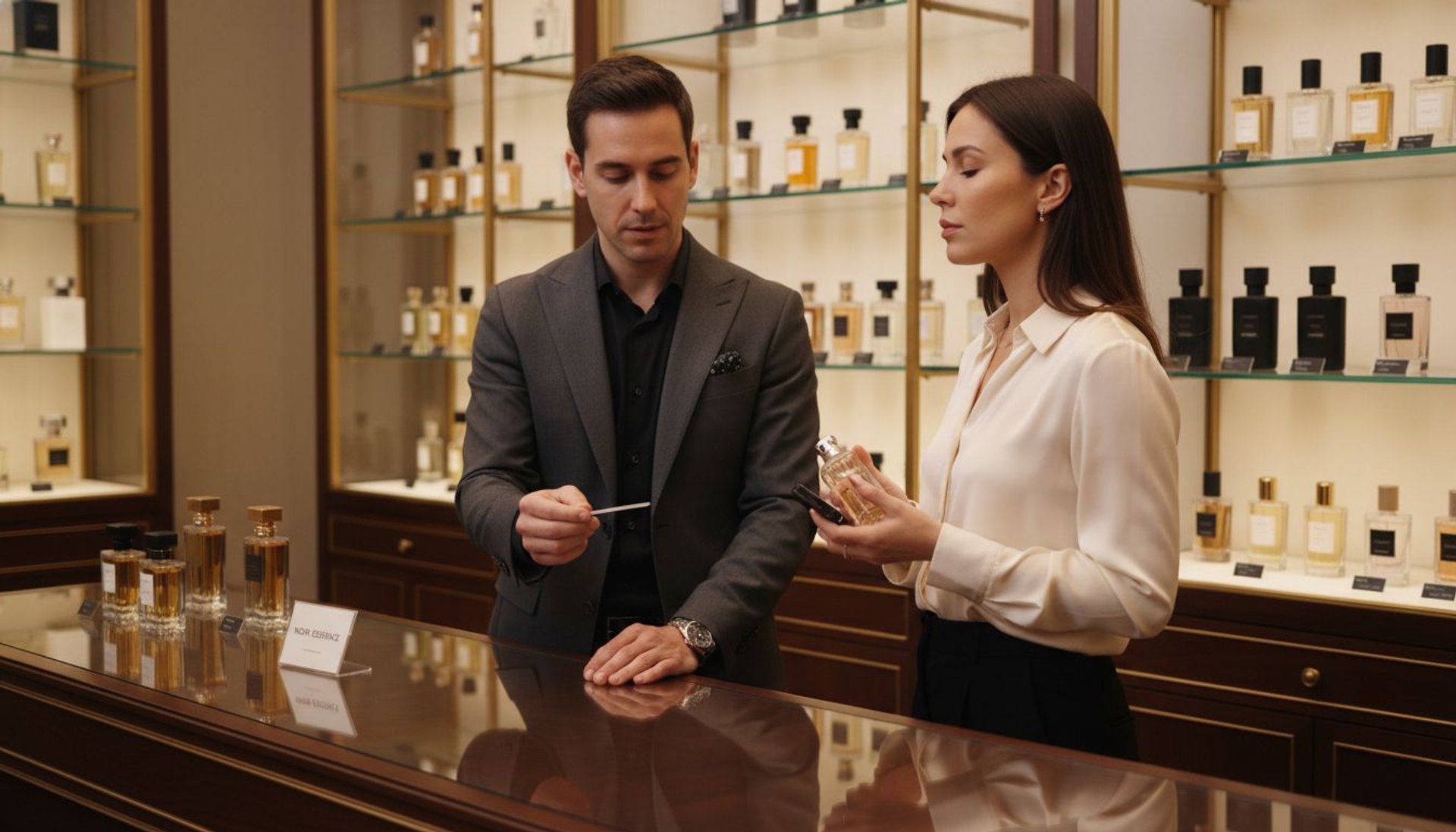
According to attireclub.org, comparing different shopping options allows you to evaluate pricing, availability, and potential discounts when purchasing fragrances. Start by exploring both online retailers and physical boutiques. Online platforms often offer competitive pricing and wider selections, while brick and mortar stores provide the advantage of immediate testing and personalised advice. Check multiple sources including specialty fragrance shops, department stores, and dedicated online fragrance communities.
To make the most informed decision, create a comparison spreadsheet tracking prices, bottle sizes, return policies, and shipping costs. Watch for seasonal sales, especially around holidays when retailers often offer significant discounts. Be cautious of deals that seem too good to be true, as counterfeit fragrances are common in the market. Consider purchasing from authorised retailers to ensure you receive an authentic product. Remember that the cheapest option is not always the best value when it comes to fragrance quality and longevity.
Step 5: Verify authenticity before purchasing
Protecting yourself from counterfeit fragrances requires a keen eye and strategic approach. Your goal in this step is to develop the skills necessary to distinguish genuine perfumes from potentially fraudulent products that could compromise both your investment and olfactory experience.
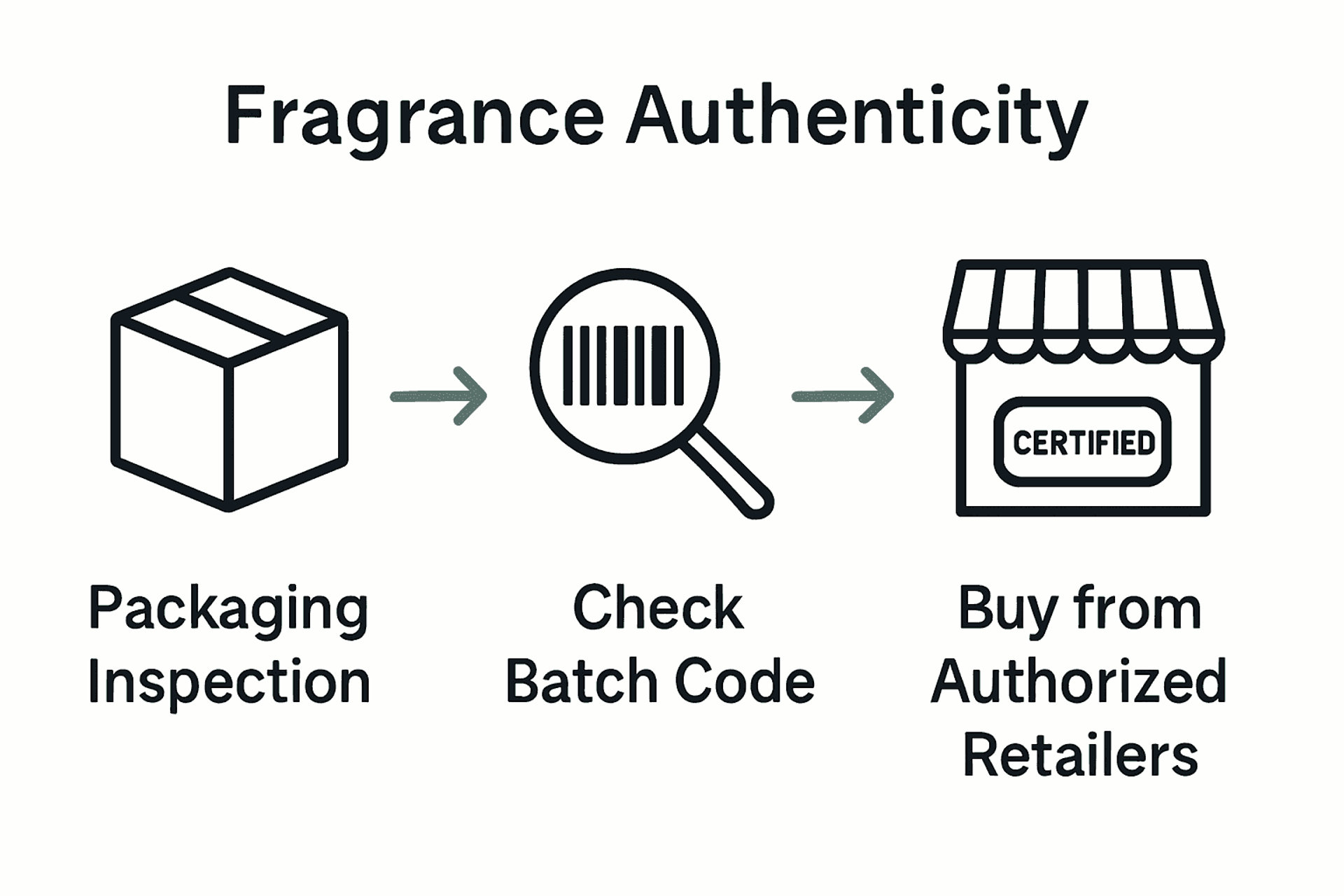
According to attireclub.org, verifying the authenticity of a perfume involves checking for proper packaging, batch codes, and purchasing from authorized sellers. Examine the packaging closely for high quality printing, precise logos, and consistent typography. Legitimate fragrances will have crisp, clear labelling with no spelling errors or irregular fonts. Inspect the bottle itself for uniform glass quality, precise spray mechanism, and consistent branding. Check the batch code on the bottom of the bottle or packaging and verify it through official manufacturer websites in online fragrance discussions.
Be particularly cautious when purchasing from third party sellers or online marketplaces with limited verification processes. Authentic fragrances will have consistent pricing that reflects their market value. Prices dramatically lower than standard retail rates are often red flags for potential counterfeits. When possible, purchase directly from authorized retailers or official brand websites to guarantee product authenticity. Trust your instincts if something seems suspiciously cheap or the packaging appears substandard.
Discover Your Signature Scent with Confidence
Choosing the perfect fragrance can feel overwhelming when faced with countless options, confusing notes, and concerns about authenticity. If you struggle to identify your true scent preferences or want to understand fragrance families and notes better, you are not alone. The journey from testing perfumes on your skin to verifying authenticity requires both patience and knowledge.
Fragplace.com is here to support you every step of the way. Our fragrance-centric community offers detailed information on scent notes and brands to help you pinpoint exactly what appeals to your senses. Explore user reviews and join discussions that will deepen your understanding of perfume composition while connecting you with fellow scent enthusiasts.
Ready to take the guesswork out of fragrance shopping?
Visit Fragplace now to explore in-depth guides, engage in thoughtful fragrance discussions, and find honest reviews that empower you to make informed choices. Start your personalised scent journey today and transform uncertainty into confidence.
Frequently Asked Questions
How can I identify my fragrance preferences?
Start by exploring different fragrance families like floral, woody, or fresh and reflect on what scents you’ve enjoyed in the past. Collect samples of fragrances that intrigue you and keep a sensory journal to note how they make you feel over time.
What should I look for when researching fragrance families and notes?
You should learn about the seven fundamental fragrance families and the individual ingredients within them. Sample fragrances from each category, taking notes on their top, middle, and base notes to understand their unique profiles and how they evolve on your skin.
How do I properly test perfumes on my skin?
Apply a small amount of the fragrance to your inner wrist or elbow and let it develop for a few hours. Avoid testing more than two to three fragrances at once to prevent overwhelm and be sure to observe how each scent changes throughout the day.
What are the best practices for comparing shopping options for fragrances?
Evaluate prices and availability across different retailers, both online and in physical stores. Create a spreadsheet to track key details like pricing, return policies, and shipping costs to help you make an informed decision.
How can I verify the authenticity of a fragrance before purchasing?
Check the quality of the packaging, look for batch codes, and ensure the seller is authorized. Confirm that the labeling is clear and there are no spelling errors or inconsistencies in branding; this can help protect you from counterfeit products.
What should I do if I find a fragrance at a significantly lower price?
Be cautious, as prices much lower than standard retail rates are often indicators of counterfeit products. Always check the packaging and verify the source, and when in doubt, choose to purchase from authorized retailers to ensure authenticity.