Articles
Get the Fragletter
New fragrance stories and picks in your inbox. Unsubscribe anytime.
New fragrance stories and picks in your inbox. Unsubscribe anytime.
New fragrance stories and picks in your inbox. Unsubscribe anytime.
New fragrance stories and picks in your inbox. Unsubscribe anytime.
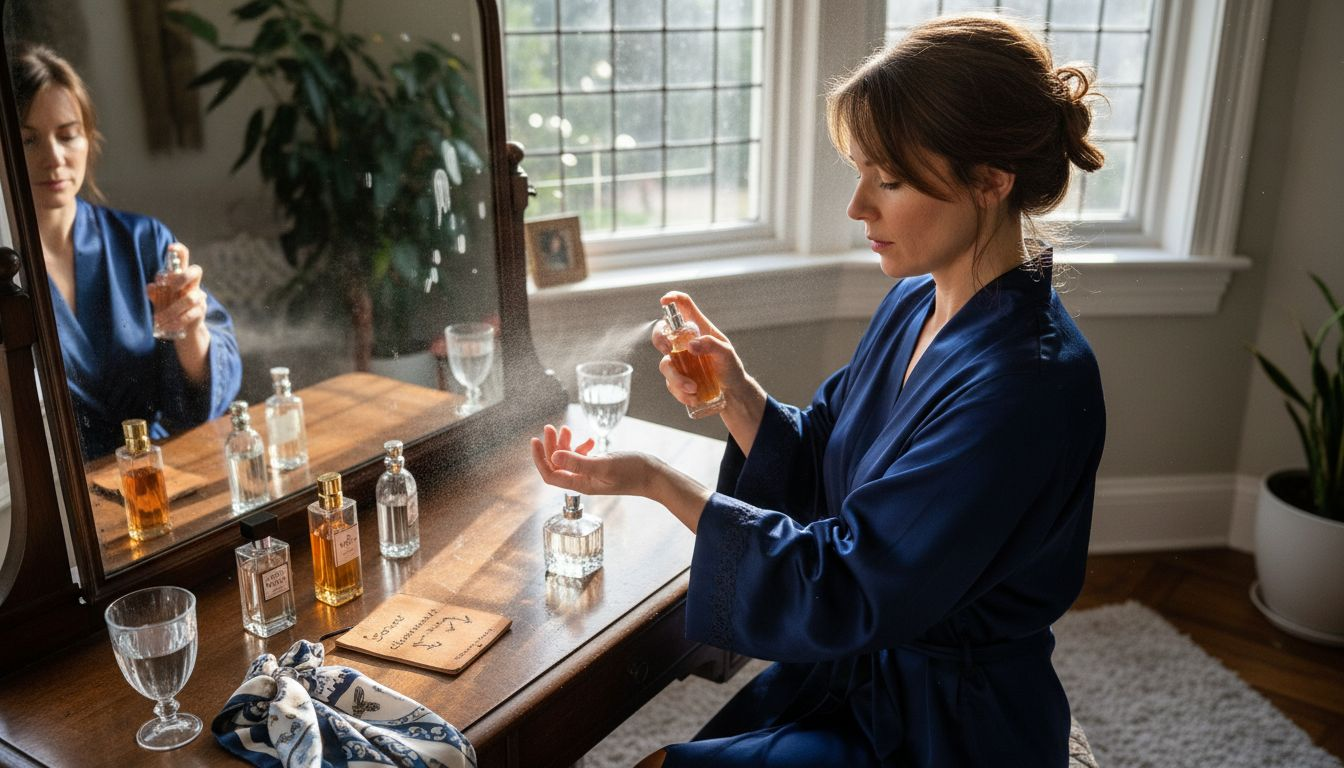
Most people wear one fragrance and accept whatever it gives them. Layering is the refusal to accept that: two or three scents applied on purpose, so what sits on your skin is yours rather than the brand's. It's an old Middle Eastern habit long before it became a collector's trick, and it's still the cheapest way to make a collection feel twice its size.
Fragrance layering is combining multiple perfumes to build a scent that's entirely your own. Two, three, sometimes more, applied with intent. The word that matters there is intent — spraying whatever's nearest isn't layering, it's noise.
The practice isn't new. Perfume layering roots itself in Middle Eastern traditions where mixing fragrances remains a daily ritual and cultural staple. Worth holding onto that when a brand tries to sell layering back to you as an innovation: it's centuries old, and it was never precious about it.
The principle underneath is simple:
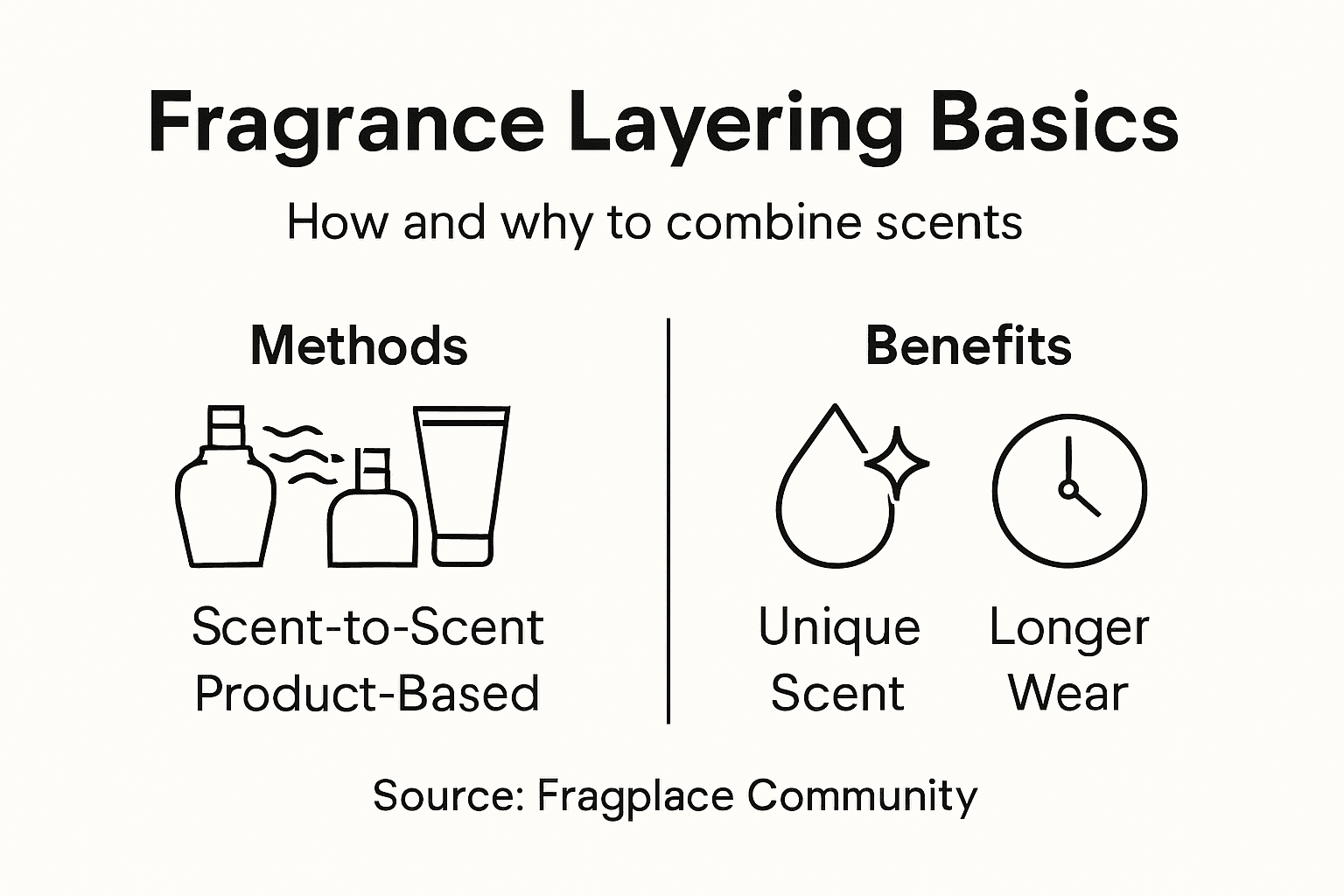
Layering buys you two things a single bottle can't: staying power, and a signature nobody else is wearing.
So why bother? The usual pitch is longevity — most fragrances fade within hours, and a base layer slows that down. True, but it's the weaker half of the argument. The better half is what layering does to your shelf. That bottle you bought on a blind punt, too thin or too sweet or too shrill on its own, becomes the missing piece under something else. Nothing has to be dead weight.
The creative freedom is real too. You stop being limited to what perfumers released and start making decisions yourself — mood, season, occasion. That's a different relationship with a collection than passively picking a bottle each morning.
Be honest about the odds, though. Most combinations you try will be worse than either fragrance alone. Layering is a hobby with a high failure rate, and pretending otherwise is how beginners burn through good juice and conclude the whole idea is nonsense. The ones that land make up for it.
Pro tip: Start by layering unscented moisturiser beneath your fragrance before experimenting with fragrance-to-fragrance combinations. It's the safest possible first move — it can't clash with anything, and it teaches you what better lasting power actually feels like.
Layering isn't one technique. It's four, and they don't all ask the same thing of you.
Direct fragrance on fragrance. Apply one, layer another on top. This is the version everyone means when they say layering, and it's the one most likely to go wrong. Complementary families blend. Conflicting notes turn to sludge.
Once you grasp how fragrances contain distinct notes arranged in pyramids, the guesswork shrinks. Citrus layers well with florals. Woody scents take spice happily. Gourmands sit comfortably over vanilla-based compositions.
This uses complementary scented products rather than fragrances alone. You build a foundation:
Unglamorous, and the most reliable results in this article. Moisturiser acts as an adhesive, giving fragrance something to cling to. Your scent projects stronger and lasts 6-8 hours instead of 3-4. If you only adopt one method, adopt this one.
Mixing strengths gives you a dial rather than a switch. Eau de toilette (typically 5-15% fragrance concentration) with eau de parfum (15-20% concentration) lands you in between.
Use it when a fragrance is nearly right and wrong by degree. A heavy scent becomes wearable to an office. A quiet one gains enough presence to register.
The least technical of the four. Summer wants lighter bases — a crisp citrus under white florals. Winter wants amber with spices and woods. You're not solving a chemistry problem here, you're matching weight to weather.
Layering lives or dies on whether your combinations complement each other or compete.
There are pairings sitting in your collection you haven't found yet. Some fragrances are soloists. Others only make sense next to one specific partner.
Pro tip: Keep a notebook of successful combinations — the fragrances, the ratio, how long the blend lasted. You will not remember. Nobody does.
Here is a quick comparison of common fragrance layering methods and their main benefits:
Order, concentration and timing are what separate a blend from a mess. Get the mechanics right and your experiments stop being a coin flip.
Apply your most intense fragrance first, then the lighter complementary scents. It feels backwards. It isn't. A heavy fragrance applied second simply flattens everything underneath it.
Start with the strongest. Wait 2-3 minutes for it to settle. Layer the lighter scents on top, where the base can anchor them and the top notes still have room to move.
Don't spray it all at once. Space the applications by a few minutes so the fragrances aren't fighting for the same patch of skin at the same moment. Each layer needs its own space to open up.
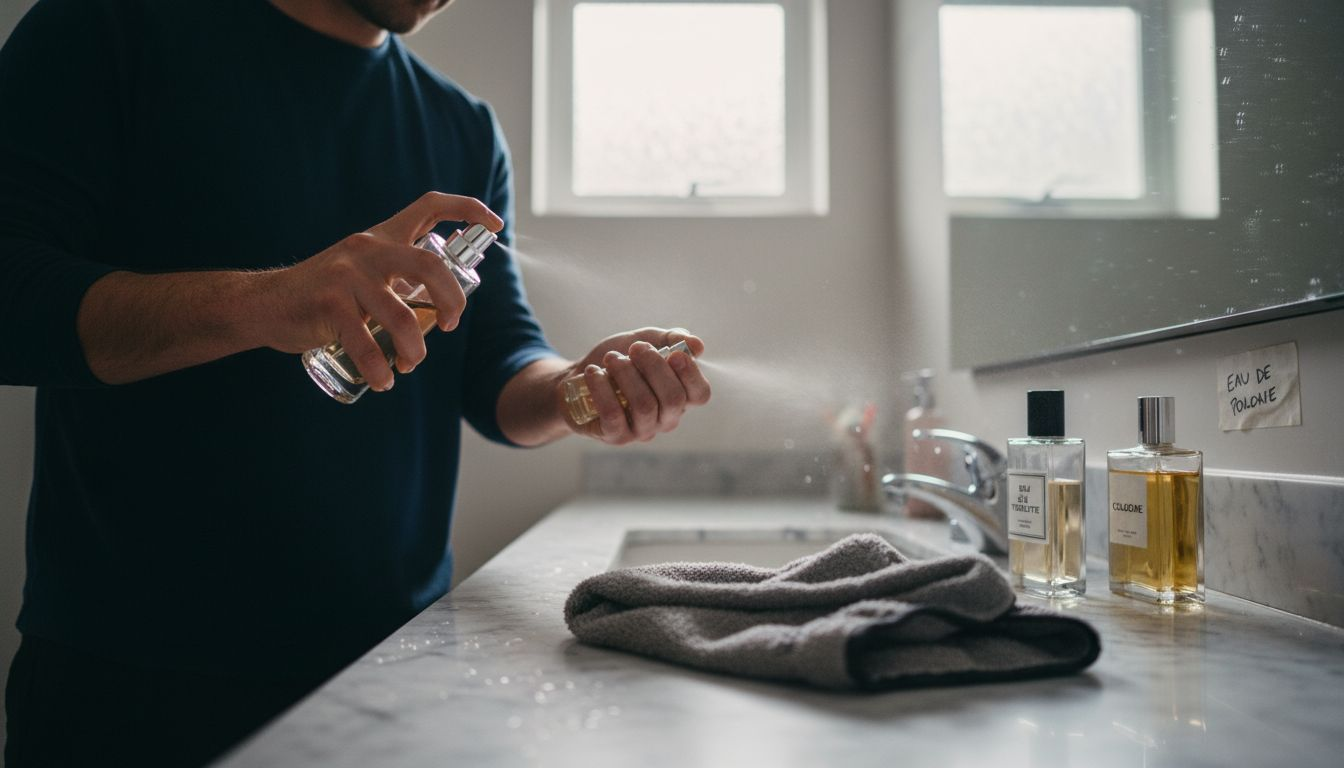
Apply your base to pulse points: wrists, neck, behind ears, inside elbows. Warm areas do the work of diffusion for you.
A sequence that holds up:
Concentration differences are doing more work than most people credit. Eau de parfum beneath eau de toilette balances itself — the heavier base stops the lighter fragrance vanishing in the first hour.
Your skin's warmth amplifies concentration. Heat speeds diffusion. Pulse points behave like micro-diffusers, releasing scent through the day rather than all at once.
Layering is experimentation with a method. The method is what stops it being a gamble.
Some blends read as harmonious straight away. Others need hours. A pairing that seemed wrong at 9am can be the best thing you've worn by mid-afternoon, which is either the appeal of layering or the frustration of it, depending on your temperament.
Skin chemistry is the third ingredient in every combination. What works on a friend can read completely differently on you. That's not a flaw in the technique, it's why borrowed recipes only ever get you to the starting line.
Pro tip: Test a new combination the day before something important, never the morning of. You want to know how it behaves at hour four before you're stuck with it.
Some approaches work often enough to be worth copying. Take them as scaffolding, then adapt them to what you own.
Start with a long-lasting base fragrance. Oud or vanilla anchor complex blends because their staying power keeps lighter notes from evaporating out from under you. Apply first, give it 3-5 minutes to settle.
Then the lighter notes. Lavender, jasmine or citrus sit well above a heavy base, and the contrast produces depth neither fragrance manages alone.
Pick your approach based on what you want.
Complementary pairings stack similar notes. Vanilla over vanilla deepens the sweetness. Floral over floral builds a fuller bouquet. Low risk, modest reward.
Contrasting pairings create tension. Spice over sweet. Citrus over floral. Higher failure rate, and the successes are the ones people ask you about.
Try these proven starting points:
The following table highlights suitable fragrance family pairings for successful layering:
These hold up because the notes share territory. Collectors have tested them to death, which is exactly why they're a safe place to begin and a dull place to stay.
Layering-friendly sets from brands take the guesswork out — the notes are pre-selected to work together. There's a slight cynicism to them, since you're paying for compatibility you could learn for free. They're still the fastest way to understand what a good pairing feels like.
Once you've heard how pre-matched fragrances behave together, you'll start spotting the same relationships in bottles you already own.
Test in small numbers, keep it simple, and trust your nose over the recipe.
A signature scent is the one people recognise before they see you. You don't design it in an afternoon. It accumulates.
Document what works — the fragrances, the ratios, the time of day, the season. Patterns show up after a few weeks: a base you keep returning to, a top note you always reach for, a balance that feels correct.
And it stays yours, because nobody else has your combination of taste, skin and shelf.
Pro tip: Two fragrances, not three. Add complexity only once you can predict how your chosen pair develops across a day.
Layering looks easy when it's done well, which is why beginners walk into the same few traps and conclude they have no talent for it. They don't have a talent problem. They have a process problem.
Two heavy fragrances don't complement each other. They fight, and neither wins. Your nose can't pick out individual notes when everything is shouting, so the result reads muddled — and you've spent good fragrance to get there.
Lightest first, heaviest second, and the pairing is finished before it starts. The lighter fragrance disappears within minutes, buried under the intensity you put on top of it, and all the complexity you were building goes with it. This one mistake explains most failed first attempts.
Skip the preparation and the best pairing in your collection will still fade early. Dry skin gives fragrance nothing to hold onto.
Moisturise before layering. Unscented lotion on the pulse points. Hydrated skin holds scent for hours longer, and it costs you thirty seconds.
Watch for these specific errors:
Start with lighter scents before you attempt anything bold. A light citrus under a medium floral teaches you the cause and effect. Learn that, then take a risk.
Three fragrances at once teaches you nothing, because you can't tell which decision caused which result. Two is a controlled experiment.
Harmony between notes, the right order, and restraint on complexity. That's the whole discipline.
What reads well on a blotter can disappoint on skin, and blends keep shifting as the day warms up. Try one new pairing a week and write down what happened. Slow, but it beats a month of vague disappointment.
Pro tip: Apply the combination somewhere discreet — inner wrist, behind the ear — and give it 30 minutes before you commit to wearing it out.
Here's the verdict. If you're starting, ignore scent-to-scent entirely for now and do product layering: unscented moisturiser, one fragrance on top, done. It's the method with the best odds and the clearest lesson — you'll feel the difference in lasting power immediately, and nothing can clash. Once that's second nature, move to two fragrances, strongest first, and keep a record. Everything else in this article is a refinement of those two habits.
At Fragplace you can work out which of your bottles are natural partners before you spend a spray finding out. Detailed notes, community opinion, and reviews from people whose taste you can calibrate against.
Two things to do next. Read How to Evaluate Perfumes: Master Fragrance Assessment so you can name what you're smelling before you start combining it. Then head to Fragplace, browse the profiles of what's already on your shelf, and post the pairing that surprises you.
Combining multiple perfumes on purpose to make a scent that's yours. Blend deliberately and you get more complexity — and a signature nobody else is wearing.
It extends how long a scent lasts on skin, and it rescues bottles that don't work alone. Mix and match to suit your mood or the occasion and a collection stops being a row of fixed choices.
Four: scent-to-scent layering (blending two or more fragrances), product-layering (using complementary scented products), concentration blending (mixing different fragrance strengths), and seasonal mixing (adjusting scents according to the season). They differ in difficulty as much as in effect — product layering is the easiest win, scent-to-scent the hardest.
Strongest fragrance first, then a few minutes for it to settle, then the lighter scents on top with time between each. Order, timing and note compatibility are the three things doing the work.
| Point | Details |
|---|
| Fragrance Layering Technique | Combining multiple perfumes enhances personalisation and longevity, allowing for a unique scent experience. |
| Types of Layering | Different methods include scent-to-scent blending, product layering, and concentration blending, each serving distinct purposes. |
| Order and Timing | The application sequence and timing significantly impact the effectiveness of layering, enhancing the final fragrance outcome. |
| Common Mistakes | Avoid overpowering combinations, incorrect application order, and neglecting skin preparation to achieve successful layering. |
| Layering Method | Primary Benefit | Complexity Level | Typical Duration |
|---|
| Scent-to-Scent Layering | Creates bespoke blends | Moderate | Varies (3-6 hrs) |
| Product-Layering Method | Extends fragrance longevity | Low | Long (6-8 hrs) |
| Concentration Blending | Adjusts scent intensity | High | Customisable |
| Seasonal Mixing | Matches scent to season | Low | Seasonal |
| Base Family | Complementary Partner | Layering Result |
|---|
| Citrus | Floral | Bright, fresh, uplifting |
| Woody | Spicy | Warm, rich, sophisticated |
| Vanilla | Gourmand | Sweet, creamy, comforting |
| Oud | Lavender | Deep, balanced, memorable |