Articles
Get the Fragletter
New fragrance stories and picks in your inbox. Unsubscribe anytime.
New fragrance stories and picks in your inbox. Unsubscribe anytime.
New fragrance stories and picks in your inbox. Unsubscribe anytime.
New fragrance stories and picks in your inbox. Unsubscribe anytime.
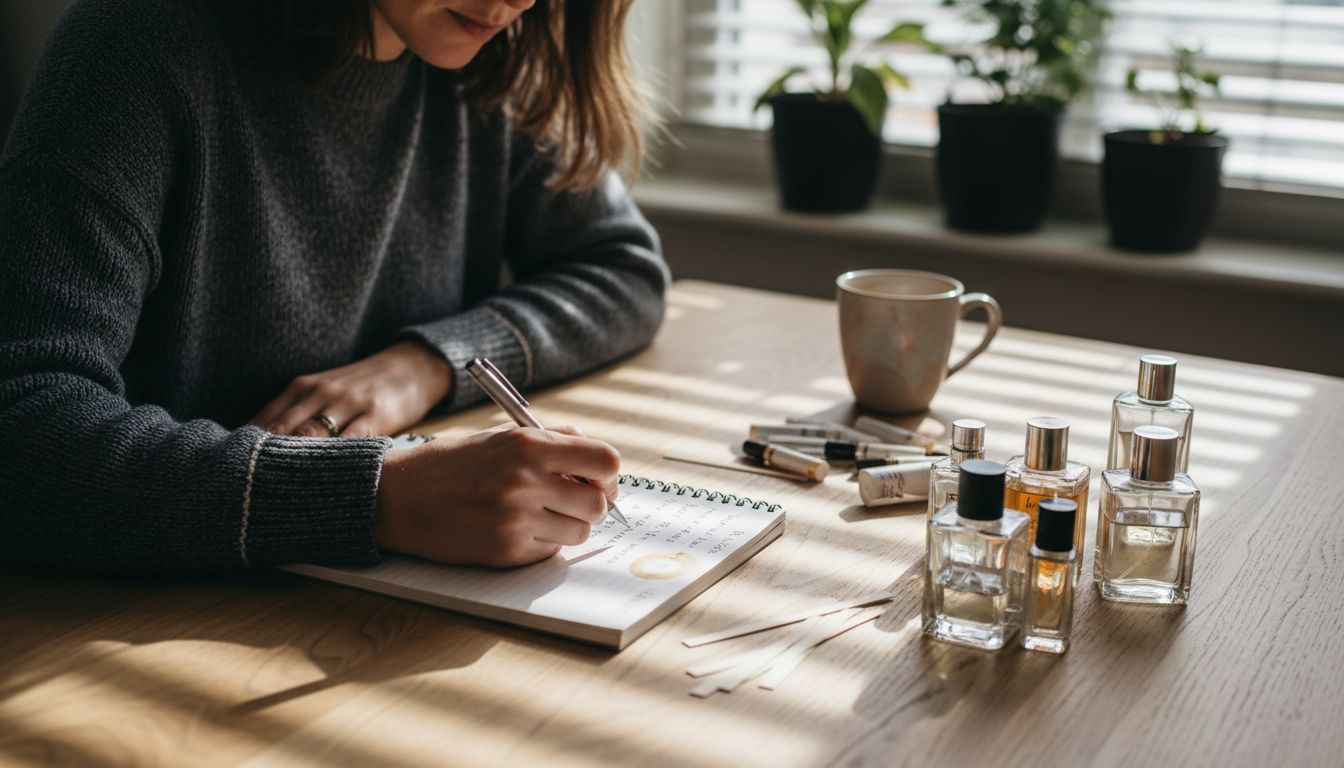
Most people evaluate perfume badly, and it's rarely the nose's fault — it's the kitchen they're standing in. A neutral room, a clean blotter and a written record will teach you more in a month than years of casual sniffing at department store counters. This is the unglamorous half of the hobby, and it's the half that separates a collector with opinions from a collector with evidence.
Your nose is probably fine. Your room isn't. A candle burning two doors away, last night's garlic, the softener on your sleeve — each one quietly edits what you think you're smelling, and you'll blame the perfume for it.
Sort the room out before you open a single bottle. What you want:
The temperature line is the one people skip, and it's the one that quietly changes everything: warmth speeds up evaporation, so the same spray reads louder and shorter in a hot room. Sit away from windows, cooking areas and anywhere with a competing scent. If this sounds fussy, think about how often something you adored at home fell flat in the shop. The perfume didn't change. The air did.
Get the room right and half the assessment is done before you spray.
Professional Tip: Keep a small fan nearby to reset your olfactory receptors between assessments. Sensory fatigue arrives earlier than you expect, and it arrives without announcing itself.
A note list is a sales document until you can follow it in order. Learning to hear the structure underneath — what arrives, what takes over, what's left at the end — is the skill everything else in this guide depends on.
Focus on these:
That 10-20 minute window is where most snap judgements go wrong. Walk out of a shop at minute three and you've reviewed the top notes and nothing else — which is exactly the part a brand designs to sell you the bottle. Train yourself to distinguish the categories, then track how they hand over to each other. The interesting perfumes are the ones where the transition surprises you; the boring ones smell the same at minute two as at minute forty.
Mastery is hearing how the compounds argue with each other, not naming them.
Professional Tip: Keep a dedicated fragrance journal and write in it while the scent is developing, not afterwards. Memory rounds everything off.
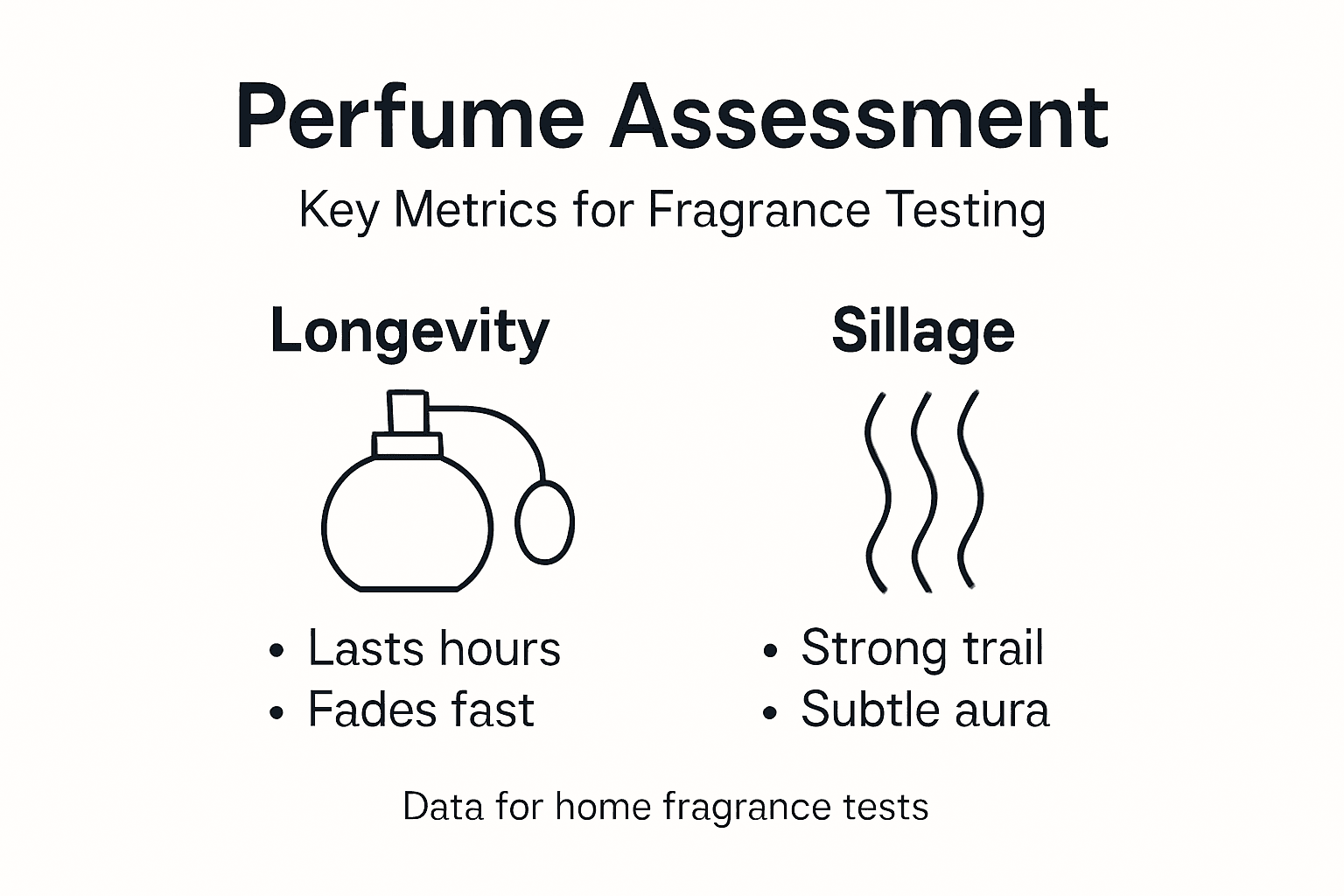
Longevity and sillage are the two things people argue about hardest online and define most loosely. Longevity is how long a fragrance stays perceptible on your skin. Sillage is its projection and dispersal — the trail. They're separate qualities, and a perfume can be excellent at one and hopeless at the other.
Useful techniques:
The movement point deserves more attention than it gets. A scent that sits quietly while you're at a desk can bloom every time you stand up, and judging it only in one state gives you half the picture. Test under conditions you can repeat, and watch for the perfume that lasts eight hours as a flat, sugary smear — duration on its own isn't quality. Holding shape as it fades is.
Staying power is cheap. Staying interesting is not.
Professional Tip: Apply at the same time of day, under similar conditions, every time. Comparisons across wildly different days aren't comparisons.
Here is a quick reference to key fragrance evaluation metrics and what they reveal:
Side-by-side comparison is where bias does its best work. The bottle, the brand, the price you paid, the mood you were in when the parcel arrived — all of it votes before your nose gets a turn. Perfume sampling techniques give you a structure to hold onto when that happens.
What to put in place:
Blind testing is the uncomfortable one, and it's the one worth doing. Hide the labels, number the blotters, decide afterwards. Plenty of people discover their favourite house makes their third-favourite perfume. Give each sample equal attention and equal time, test at consistent intervals, and follow every one from application through to the base rather than stopping the moment you've formed a view.
The following table summarises common challenges during fragrance evaluation and recommended solutions:
Take the label away and you find out what you actually think.
Professional Tip: Wear white or neutral-coloured clothing while testing, so nothing on you colours the assessment or carries scent from a previous session.
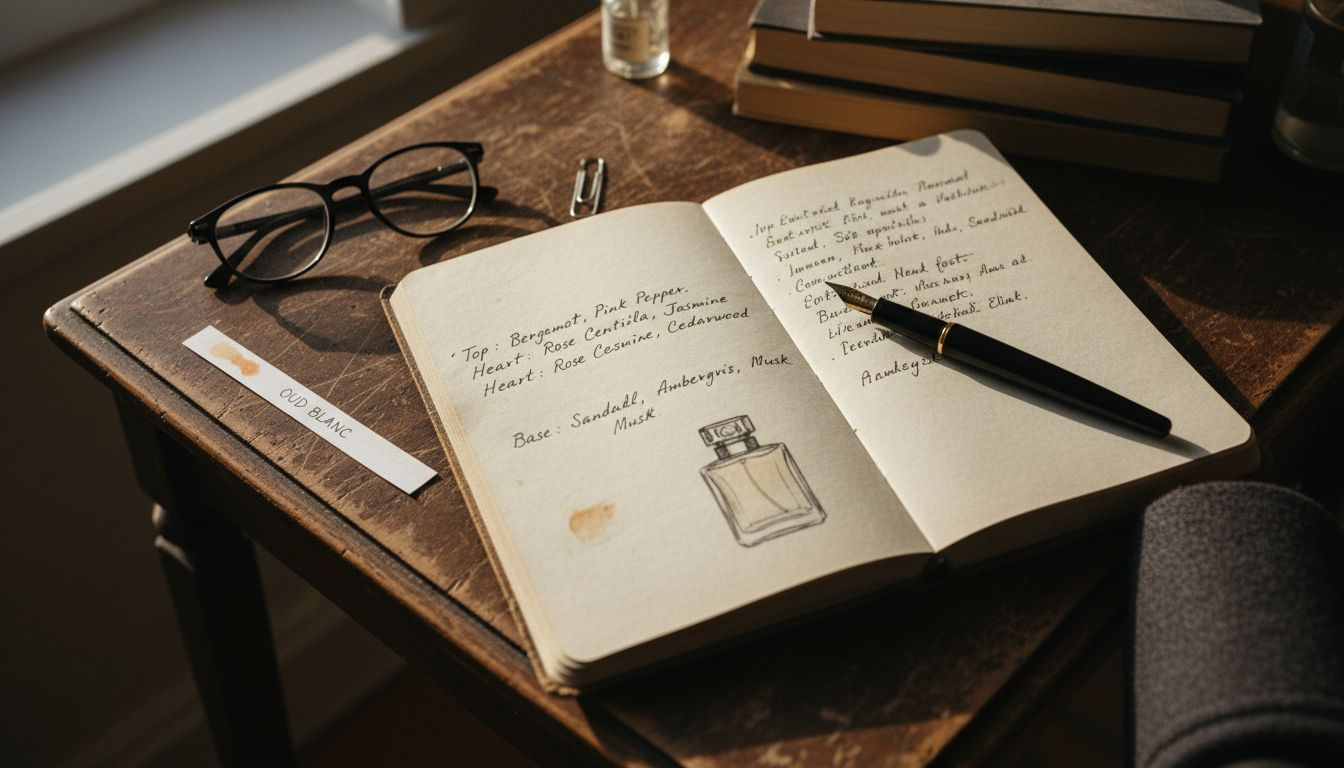
An evaluation you didn't write down is an anecdote. Six weeks later you'll remember that you liked something and nothing at all about why, which is how people end up buying the same disappointing bottle twice.
Build a record you'll actually keep:
Be honest about the limits of scoring. A number is useful for sorting a hundred entries and useless for describing why the base felt hollow — so keep both the score and the sentence. Record the objective observations and your emotional response, note how the scent progressed, then go back and compare what you found against what you expected. The gap between the two is the most instructive thing in the whole journal.
Documentation is what turns a hobby into a discipline.
Professional Tip: Back your notes up digitally. Years of observations living in one notebook is a filing system with a single point of failure.
Here's the verdict: if you take one thing from this guide, take the journal. The controlled room and the blind blotters matter, but they're single sessions — the written record is what compounds, and after a year it's the only thing that can tell you what you genuinely like rather than what you were told to like. Sensory fatigue, patchy notes and a wishlist that's outgrown your memory are ordinary problems, and they're easier to solve alongside other people doing the same work.
Start with Perfume sampling techniques to get your testing method straight. Then join Fragplace.com, keep your scent journals and note analysis in one place, and put your assessments in front of people who'll argue with them.
Use a neutral, well-ventilated room with minimal external odours. Hold the temperature between 20-22°C, work under natural or soft lighting, and keep the surface clean so nothing interferes with what you're smelling.
Track the top, heart and base notes, then place the scent in its fragrance family and consider its chemical composition. Write down how it evolves and how the aromatic compounds interact as one stage hands over to the next.
For longevity, apply to pulse points and time how long it stays detectable on your skin. For sillage, watch how it projects and disperses across different environments and testing conditions over a period of time.
A neutral testing environment and blind comparison strip out most of the bias. Keep detailed notes, test at consistent intervals, and give each fragrance the same attention rather than lingering on the one you already fancy.
Because it's your reference for every comparison you make afterwards, and the clearest picture you'll get of your own preferences. Use a standardised template covering scent progression and your emotional response so entries stay comparable.
Standardise the conditions and the documentation. Apply at the same time each day and record changes at set intervals — repeatability is what makes the result worth anything.
| Key Takeaway | Explanation |
|---|
| 1. Prepare a Controlled Testing Space | Use a neutral, well-ventilated room free from external odours to enhance sensory evaluation. |
| 2. Understand Fragrance Composition | Break down scents into top, heart, and base notes for comprehensive scent analysis. |
| 3. Assess Longevity and Sillage | Evaluate how long a fragrance lasts and its projection to gauge overall quality. |
| 4. Conduct Objective Comparisons | Use systematic methods to eliminate biases and accurately compare multiple fragrances. |
| 5. Document Findings Thoroughly | Maintain detailed records of scent evaluations to reference and validate personal assessments later. |
| Metric | What It Measures | Why It Matters |
|---|
| Longevity | Scent duration on skin | Indicates perfume staying power |
| Sillage | Fragrance projection | Shows perceived impact on others |
| Note evolution | Scent change over time | Reveals fragrance complexity |
| Emotional response | Personal feeling evoked | Assists in personal suitability |
| Challenge | Impact on Assessment | Recommended Solution |
|---|
| External odours | Distorts perceived scent | Use a neutral, ventilated room |
| Inconsistent temperature | Alters evaporation rate | Maintain 20-22°C consistently |
| Sensory fatigue | Reduces olfactory accuracy | Rest between tests, use a fan |
| Subjective bias | Skews objective findings | Apply blind testing methods |
| Poor documentation | Loss of critical information | Use a standardised record template |