Articles
Get the Fragletter
New fragrance stories and picks in your inbox. Unsubscribe anytime.
New fragrance stories and picks in your inbox. Unsubscribe anytime.
New fragrance stories and picks in your inbox. Unsubscribe anytime.
New fragrance stories and picks in your inbox. Unsubscribe anytime.
Most perfume gets chosen on the opening spray, under shop lights, on someone else's compliment. That's how bottles end up half full at the back of a shelf. Personalised perfume recommendations work the other way round: start with your preferences, your climate and your actual week, then find the scent that fits them.
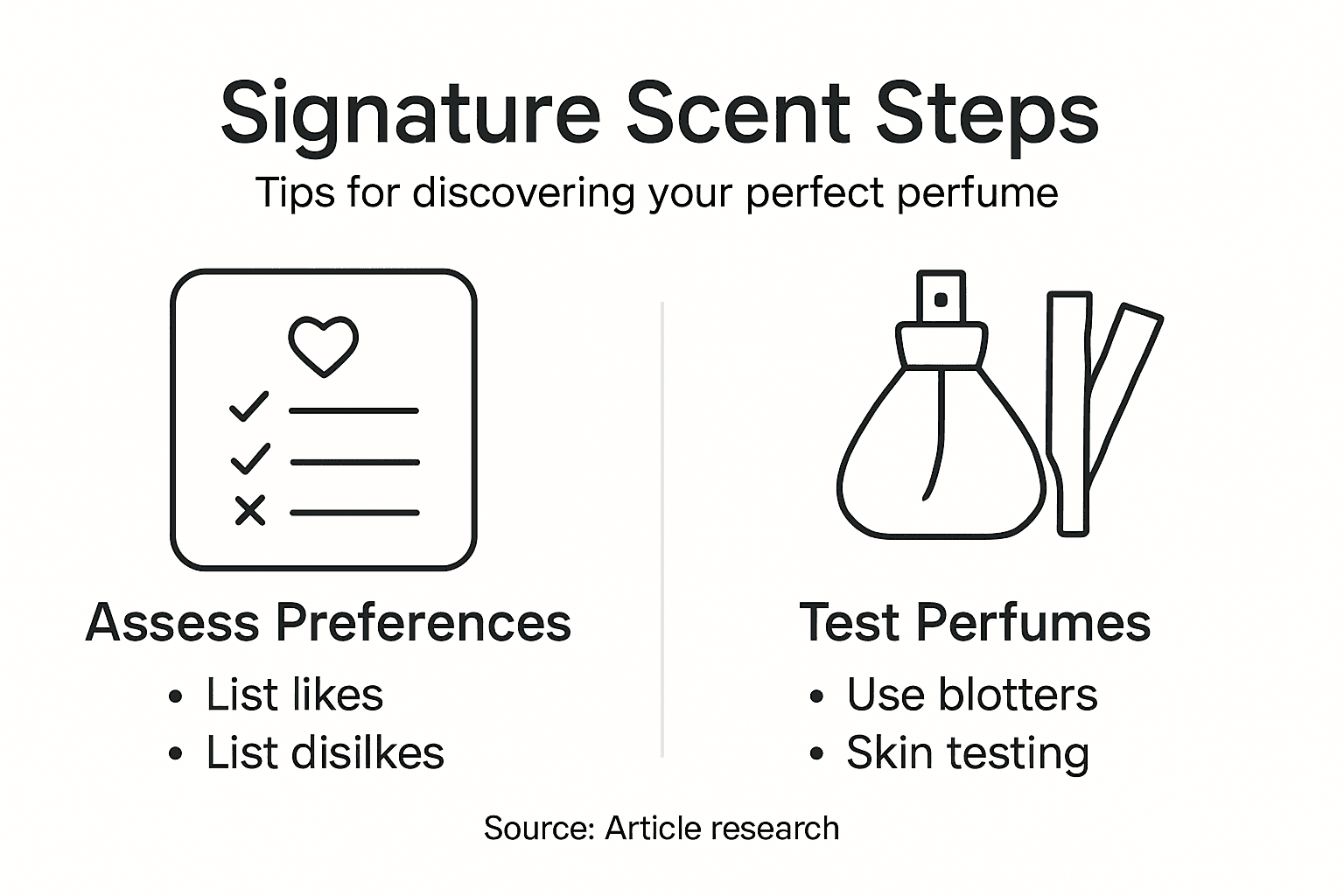
Skip this step and every step after it costs you money. Work out what you're drawn to and what your week actually looks like first, because a signature scent that fights your life isn't a signature scent. It's a bottle you feel guilty about.
Start with what you already reach for. Citrus first thing in the morning? Spice? Maybe florals make you feel like the sharpest version of yourself, or you want something woody sitting underneath everything. Your candles, your body care, even that favourite shampoo have already voted — pay attention to the ballot.
Then be honest about the days you're dressing for:
This is the part most guides gesture at and hurry past, and it matters more than any notes list. A perfume that reads gorgeous on a test strip under bright retail lighting can be unbearable in a warm open-plan office by mid-morning, and no amount of good taste fixes that afterwards.
Personality counts too. Adventurous or classic, loud or quiet — the fragrance should match how you move through the world rather than the person you think you're supposed to be. Getting clear here saves you a shelf of expensive mistakes.
Your signature scent is the one that makes you feel like yourself, not the one that impresses everyone else.
Come to how to evaluate perfumes systematically with that clarity and the whole assessment gets sharper.
Pro tip: Write down three scents you already love and three you dislike, then find the notes they share. That baseline kills the false starts before they begin.
Note lists are half description, half marketing copy. Learn to read them anyway — it's the difference between exploring and buying the same fragrance three times in different bottles.
Perfumes are structured in three layers that unfold over time. Top notes appear first and fade within 5 to 15 minutes. Heart notes emerge next and last for hours, forming the fragrance's character. Base notes provide longevity and depth, lingering for the entire wear. Once you understand how fragrance layers function, you'll recognise why a scent can smell like a different perfume at nine in the morning and at six in the evening.
Formulation is chemistry doing the work of art. Essential oils, aroma compounds and fixatives get chosen for how they behave next to each other rather than in isolation, which is why a note you dislike on its own can be the thing holding a fragrance together.
Use this overview to compare main fragrance note categories and their typical scent impressions:
The stories behind a perfume are worth knowing too. They reveal:
Stay sceptical, though. A good deal of house lore is branding with a talented copywriter behind it, and a moving tale about a harvest doesn't make the juice good. The useful part is the craft — knowing what a perfumer was trying to solve tells you what to listen for.
Seek out perfumer interviews, fragrance house histories, and brand narratives on fragrance community platforms. Many independent reviewers also share detailed stories about perfumes they've explored.
The best fragrances aren't just chemical formulas—they're miniature stories you wear on your skin.
Knowing the technical side and the narrative side together stops you writing something off in its first minute. You'll understand why a scent might need an hour before it makes sense.
Pro tip: Pick one fragrance you're drawn to and research its perfumer and its notes properly. That single deep dive teaches you more about your own taste than testing dozens blind.
Bad testing is how people end up owning bottles they never wear. Technique isn't fussiness here. It's the whole game.
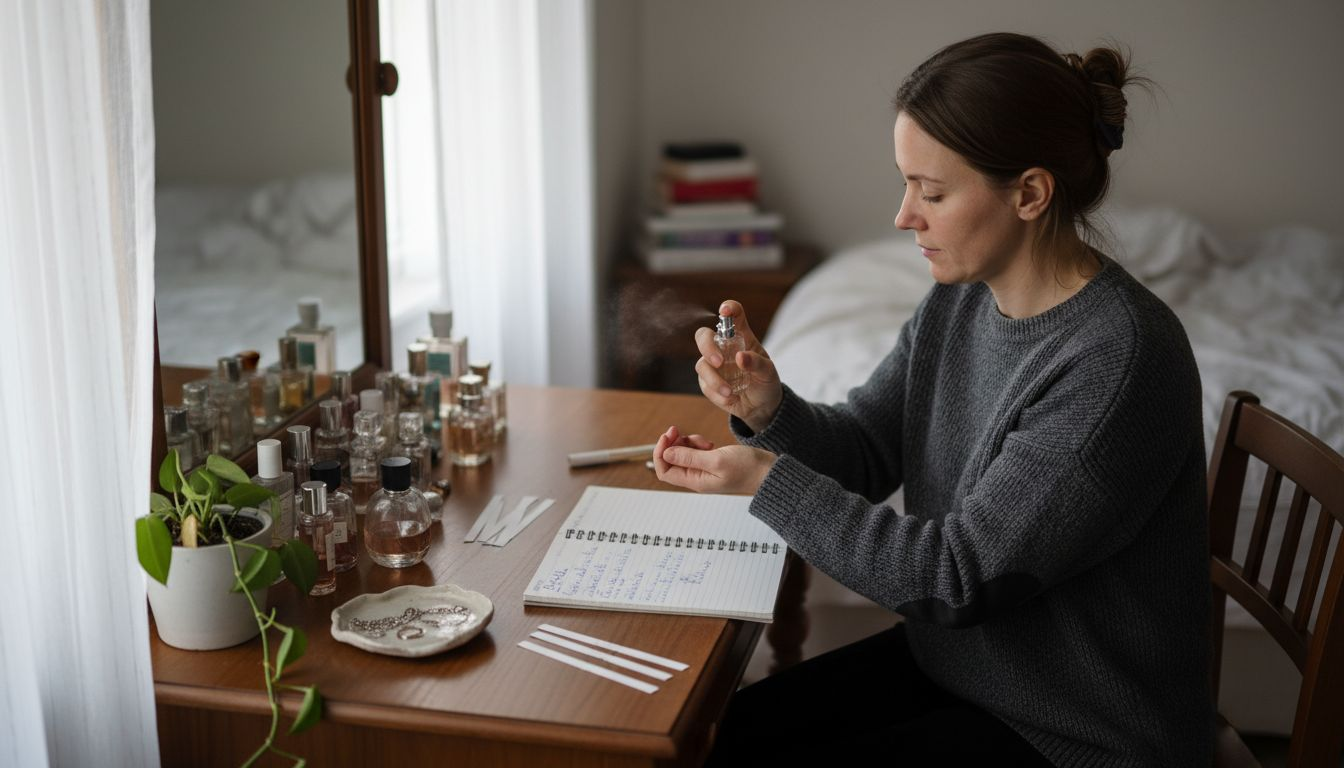
Blotters come first. Spray a paper strip and take in the top notes — you get a clean read on the opening with nothing else interfering. That's also the limit of what a blotter can tell you, because paper has no body chemistry.
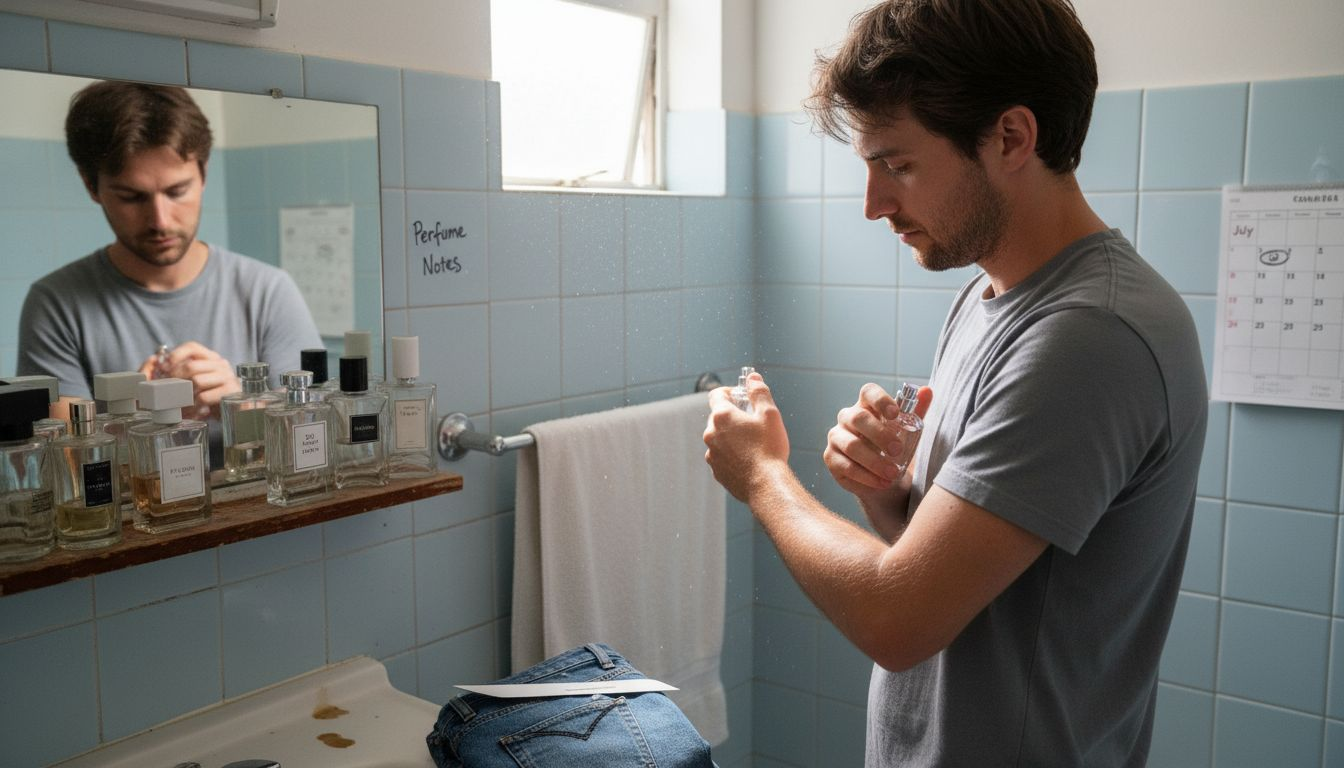
Skin next. A small amount on your wrist or inner elbow, then patience. Top notes fade within 5 to 15 minutes, heart notes emerge next and define the scent's true character, and base notes carry the longevity across hours. Judge in the first two minutes and you're judging a perfume you haven't met yet.
Limit yourself to a few samples per session or olfactory fatigue makes the decision for you. Space them by at least 15 to 20 minutes, and don't be too proud to come back the next day with a fresh nose.
Structure your testing like this:
Build your scent discrimination by testing contrasting fragrances first, then narrowing into a single family. Comparing two ambers back to back teaches your nose more than a week of unrelated sprays. Write down what happens at each stage rather than the verdict you arrived with.
The true personality of a fragrance reveals itself over hours, not in the first spray.
Most people abandon a fragrance inside a minute. Sit with the unfamiliar ones — the strange opening is often the thing you end up loving.
Pro tip: Three fragrances per session, applied to different areas, and no verdict for an hour. Fatigue and snap judgements do more damage to your shortlist than bad taste ever will.
Nobody enjoys this bit, and it's the step that separates people who own a signature scent from people who own eleven bottles. Written impressions show you patterns your memory quietly edits out.
Record straight after testing: the fragrance name, the application date, and your initial impression in those first few minutes. Fresh or heavy? Familiar or strange? Don't polish it — the blunt reaction is the useful one.
Then track the change. Note when the top notes fade and the heart notes emerge. Does the character shift into something else or hold its shape? How does it read on skin against what the blotter promised? These observations build your sense of how fragrances behave individually.
Journal, spreadsheet or fragrance app — pick the one you'll still be using in a month. Log things like:
After a handful of tests, read back through. Look for common threads: did every favourite hide a floral heart, did the citrus-heavy ones all turn sharp on you? That's your olfactory identity, and it's usually narrower than you'd like it to be.
Now cut. You're not eliminating fragrances arbitrarily — you're deciding from evidence you gathered yourself, which is the only dependable cure for buyer's remorse.
Your notes are the difference between a fragrance that looks good and one that genuinely belongs with you.
Go back to your finalists and live with them for full days where you can. Signature scents survive the honeymoon phase. Infatuations don't.
Pro tip: Rate each one love, like, neutral or dislike, and add a single specific reason. Comparing finalists takes seconds after that.
A perfume that vanishes within an hour is a scented moment, not a signature. Beauty in the opening counts for nothing if it's gone before lunch.
Apply to clean skin in the morning and check in at intervals: after one hour, three hours, six hours, and at the end of your day. Still noticeable, or faded to nothing?
Document each checkpoint. Intensity drops for everything, and that's normal. What matters is whether it softens into something you'd still choose to wear or simply disappears. Both answers are useful data.
Longevity is formulation, not quality. Eau de Toilette lasts shorter than Eau de Parfum because it contains less fragrance oil, and stronger fixatives buy you hours. Know which concentration you're testing before you accuse a perfume of being weak.
Here is a summary of common fragrance concentration types and their typical longevity:
Lasting power isn't the only question. Across a full day, watch for:
Some fragrances are lovely for four hours and then turn. Others open awkwardly and settle into something excellent. Only extended wear catches either pattern.
A signature scent must survive your actual day, not just smell good on paper.
If a fragrance keeps disappointing you by evening, it isn't your match, however much you wanted it to be. Trust the full day over the first spray.
Pro tip: Test on days you'll wear it for at least eight hours and take brief notes every two hours. A real day tells you things a shop never will.
Here's the verdict: the method beats the shortlist. Assess your life before you smell anything, learn how the layers work, test three at a time, write it down, then give your finalists a full day before you spend a penny. Do that and you'll buy fewer bottles and wear all of them. Fragplace is built for the middle part — detailed fragrance information, community reviews, and people who'll happily argue with you about a base note.
Start at Fragplace.com and put your shortlist through the scent analysis tools and real user insights before you commit to a bottle. Then come back and add your own reviews at Fragplace.com — your notes on how something wore are exactly what the next person is searching for.
Look at what you already choose. The scents around your home — candles, body care, shampoo — are a record of your taste, and the categories they fall into, whether fresh, floral or woody, point you in a direction before you test anything new.
Notes are the individual scents that make up a perfume, arranged in three layers: top, heart and base. Knowing the structure explains why a fragrance changes across a day, and it stops you judging a scent on an opening that lasts minutes.
Blotters give you a clean first impression of the top notes; skin gives you the truth, because body chemistry changes what you get. Allow several hours so you meet the heart and base rather than the opening, and note how the scent shifts along the way.
The name, your first impression, how the scent evolves, and what it does for longevity and projection. Patterns show up quickly once you have a few entries sitting side by side, and those patterns do the narrowing for you.
Wear your finalists on clean skin and check them at intervals across a full day. Note how long the scent holds and whether it still feels comfortable at hour six — that's the test that decides whether it fits your life.
Read your notes back and look for what the favourites have in common, whether that's shared notes or the same emotional response. Decisions built on your own recorded reactions hold up; decisions built on a first spray usually don't.
| Key Message | Explanation |
|---|
| 1. Understand Your Scent Preferences | Identify your natural fragrance likes and lifestyle to find a scent that genuinely resonates with you. |
| 2. Learn About Fragrance Notes | Familiarise yourself with how different fragrance layers work and their emotional effects to make informed choices. |
| 3. Test Fragrances on Skin | Apply fragrances on your skin to gauge their true performance and how they evolve over time. |
| 4. Document Your Experiences | Keep detailed notes on your fragrance tests to identify patterns and preferences for easier decision-making. |
| 5. Verify Longevity During Wear | Assess how a fragrance lasts throughout your day to ensure it meets your practical needs and feels comfortable. |
| Note Category | Typical Scent Profile | Common Uses |
|---|
| Citrus | Fresh, zesty, uplifting | Morning, summer |
| Floral | Soft, romantic, blooming | All-day, social events |
| Woody | Earthy, grounded, refined | Evening, colder months |
| Spicy | Warm, exotic, energising | Night, autumn/winter |
| Oriental | Rich, sensual, luxurious | Formal, evening wear |
| Type of Fragrance | Fragrance Oil Percentage | Usual Longevity |
|---|
| Eau de Cologne | 2% – 4% | 1–2 hours |
| Eau de Toilette | 5% – 15% | 2–4 hours |
| Eau de Parfum | 15% – 20% | 4–8 hours |
| Parfum/Extrait | 20% – 40% | 8–12 hours |