Articles
Get the Fragletter
New fragrance stories and picks in your inbox. Unsubscribe anytime.
New fragrance stories and picks in your inbox. Unsubscribe anytime.
New fragrance stories and picks in your inbox. Unsubscribe anytime.
New fragrance stories and picks in your inbox. Unsubscribe anytime.
A note list is marketing copy with a lab coat on. What you actually smell is the accord: the blend that fuses several materials into one impression your nose reads as a single thing. Learn to think in accords and you'll stop buying perfumes because you liked three words on the box.
An accord is what happens when several materials stop smelling like themselves. Blend them well enough and they fuse into one indivisible impression — that impression, not the ingredient list, is the unit a perfumer composes with.
The musical comparison gets wheeled out constantly, and it's earned: you hear a chord before you hear the notes inside it. That's the difference between a note and an accord. A note is a component. An accord is a decision. Common accords include:
Proportion is where this gets difficult. The same four materials in different ratios give you two perfumes that share nothing but a spec sheet, which is why two scents with near-identical note lists can smell like strangers. A good accord also holds its shape as the fragrance moves, showing up in the top notes and still recognisable in the base hours later.
Pro tip: Chase the accord, not the ingredient list. The list tells you what went in; the accord tells you what came out.
Fragrance families are filing cabinets. Useful for navigation, hopeless as verdicts — plenty of perfumes sit awkwardly between two of them, and those are often the interesting ones. Classic perfume classifications traditionally divide fragrances into four primary families, each with distinctive characteristics and emotional resonances.
The primary fragrance families include:
The subfamilies are where the craft lives. The Fougère accord (fresh aromatic with mossy undertones) built most of the barbershop shelf. Chypre (combining bergamot, jasmine, and oakmoss) is the structure serious collectors keep coming back to, and the one modern reformulations have treated worst. Classic Oriental (warm spices and resinous elements) is the template behind half the perfumes you'd call cosy.
Newer categories keep arriving: Marine, Aromatic, Gourmand. Gourmand in particular has gone from novelty to default — if sweet compositions read as cloying to you, that's the family to approach with your guard up. If you like them, you have never had more to choose from.
Here's how the four broad families compare:
Pro tip: Sample outside your usual family on purpose. Most people's stated preference is just the first thing they happened to like.
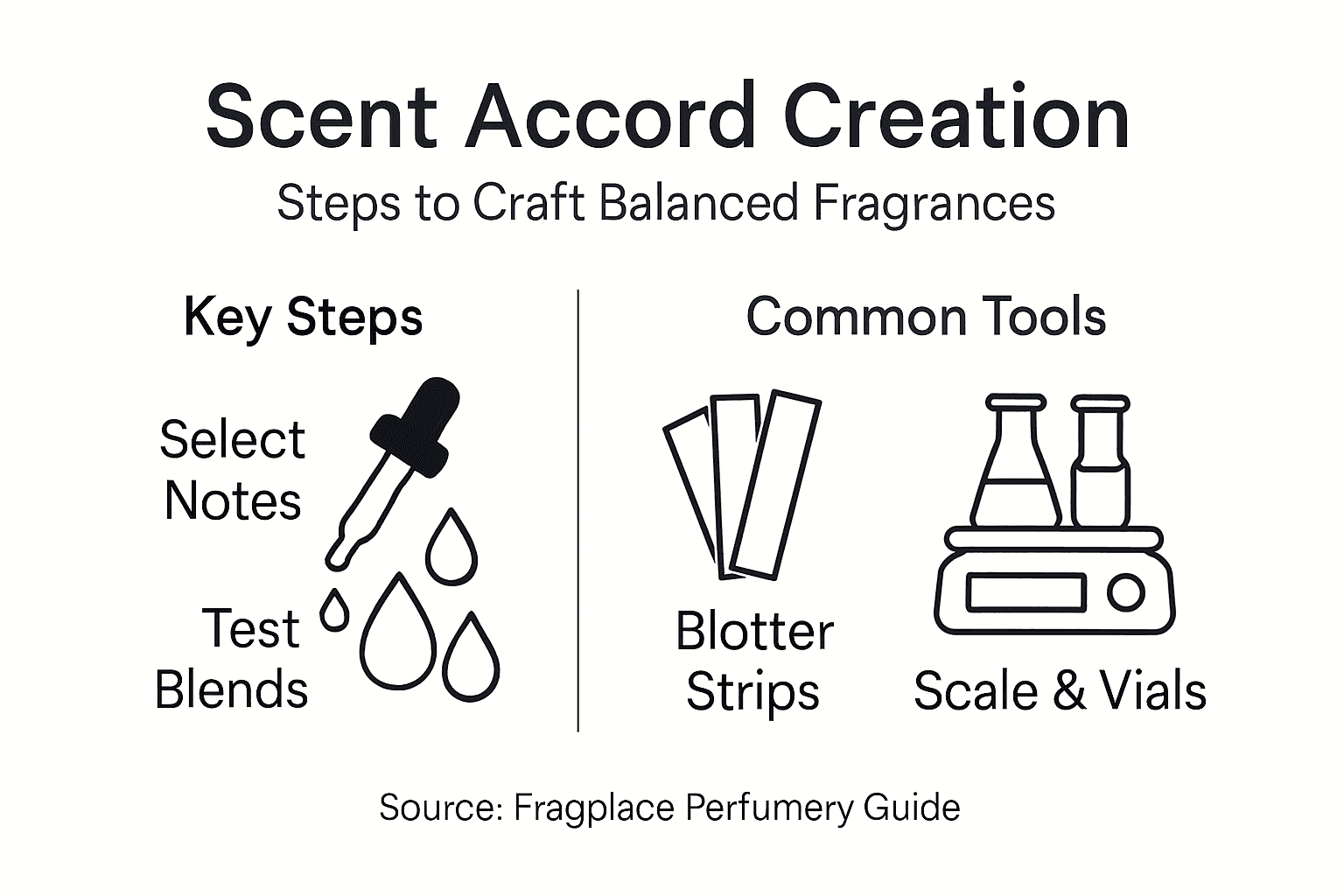
Building a fragrance accord is closer to arranging than to mixing. The perfumer layers aromatic components until they read as one, and the work is mostly in the ratios.
The accord creation process typically follows a structured approach:
Those layers get placed deliberately:
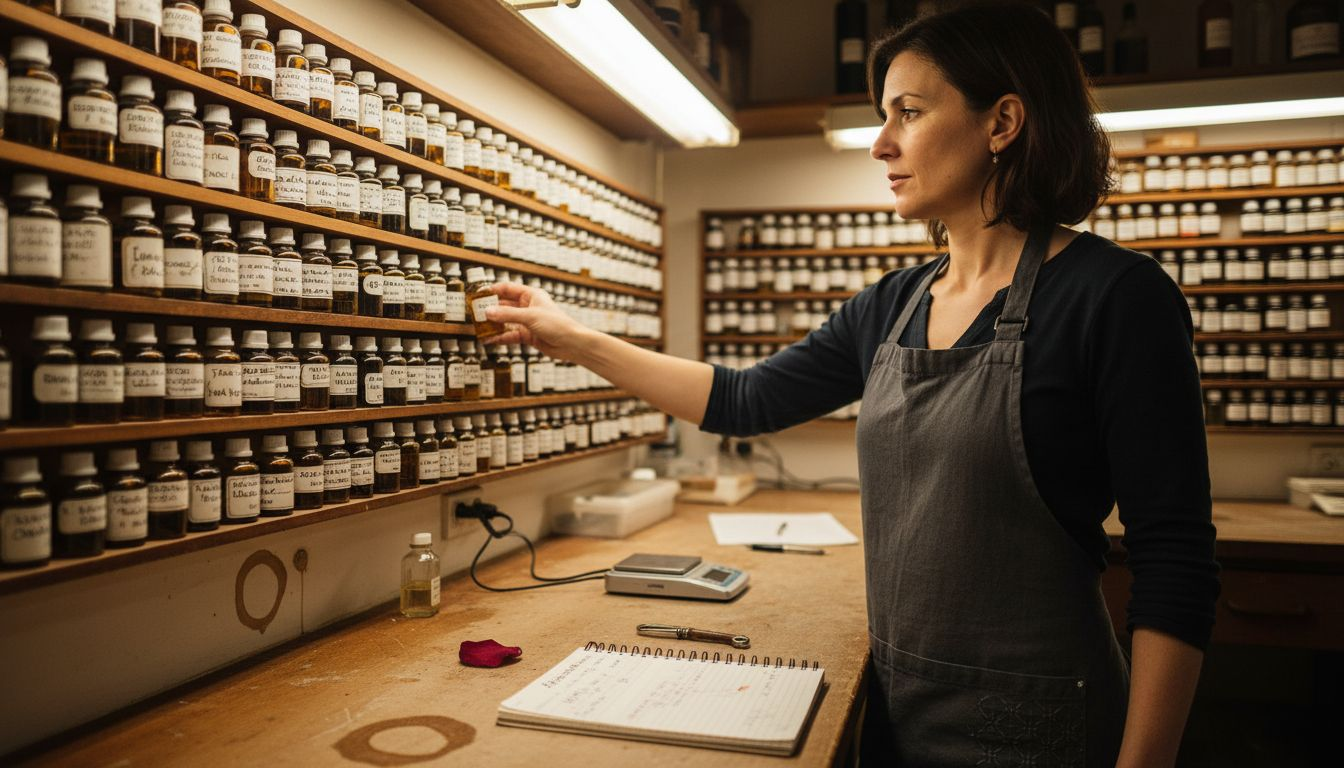
Working perfumers keep libraries of accords that already work, treating each one as a modular building block to be adapted later. It's less romantic than the mad-genius story, and it's how most fragrances you own actually got made.
Analytical tools and synthetic molecules widened the field considerably. Perfumers can manipulate scent profiles with a precision the old craft couldn't reach — which is a gain, whatever the naturals-only crowd says.
Pro tip: If you're blending at home, work in small batches and write everything down. The blend you can't reproduce might as well not exist.
Most bad takes about fragrance accords come from treating them as arithmetic. Fragrance assessment techniques are a better starting point than any ingredient list, because they train you to describe what you're smelling instead of what you were told to smell.
Common misconceptions about fragrance accords include:
The stubbornest error is treating an accord as a flat, one-dimensional mix. Every component in a good one is doing a job, including the ones you'd never identify blind. Perfumers spend years learning to balance those elements, and it shows in the ones who can.
The other habit worth dropping: assuming price signals mastery. Expensive doesn't mean well-built. Plenty of designer bestsellers are competent accords sold at a large markup, and plenty of cheap ones punch well above what they cost. What separates them is how the materials interact and how small the adjustments are that change a scent's character.
Pro tip: Sample systematically and pay attention to how notes behave together rather than cataloguing them one by one.
Fragrance regulation is the part of the industry nobody romanticises and everybody depends on. The frameworks protect consumers, and they also quietly shape what perfumers are allowed to build with.
Key regulatory focus areas include:
International safety frameworks lean on a few core mechanisms:
The International Fragrance Association (IFRA) sets the worldwide standards here, running scientific research and risk assessment across both natural and synthetic ingredients. That work is why oakmoss-heavy classics smell different now than they once did — the honest trade-off is safer products and, in some cases, a reformulation collectors mourn.
Modern frameworks go past simple ingredient bans into risk assessment that weighs skin sensitivity, allergenic response and long-term health. Restriction isn't the enemy of good perfumery; it's a constraint, and constraints have produced some of the sharpest work in the category.
Natural versus synthetic, in short:
| Ingredient Type | Strengths | Limitations |
|---|---|---|
| Natural | Unique aroma complexity; eco appeal | Allergen risk; supply variability |
| Synthetic | Consistent quality; creative flexibility | Perceived as less 'authentic' |
Pro tip: Check the ingredient list and buy from brands that comply with international safety standards, especially if your skin is reactive.
Here's the verdict: stop shopping by note list. If you want to buy better, learn the four families well enough to place a perfume in one, then learn the accords that cut across them — Chypre and Fougère will explain more of your collection than any ingredient breakdown. Everything else is detail you can pick up as you go.
So do two things. Look up three perfumes you already own on Fragplace and read how other people describe their accords rather than their notes — you'll find out fast whether you've been buying the same structure four times. Then write your own review on Fragplace and argue with them, because putting a scent into words is the quickest way to learn to smell it properly.
It's a blend of several aromatic ingredients that fuse into one impression, the way a musical chord reads as a single sound rather than the separate notes inside it.
By selecting complementary ingredients, layering them deliberately, managing the proportions, and testing the blend over and over until it balances. The last step is where most of the time goes.
Fresh/Citrus, Floral, Oriental and Woody are the four primary families, each with its own scent profile and emotional register. The subfamilies underneath them carry most of the nuance.
That more ingredients make a better fragrance, that accords never change, and that anyone can build a good one on the first try. None of that holds up: balance, training and an understanding of how notes interact are what make an accord work.
| Point | Details |
|---|
| Fragrance Accords Are Essential | They represent the artistic core of perfumery, blending individual scent notes into harmonious experiences. |
| Understanding Fragrance Families | Familiarity with major scent families helps in exploring and appreciating different fragrances. |
| Crafting Accords Requires Expertise | The creation of fragrance accords demands precision, creativity, and extensive training for effective combination of ingredients. |
| Awareness of Safety Standards | Understanding global regulations is crucial for ensuring the safety and responsible use of fragrance ingredients. |
| Fragrance Family | Signature Traits | Common Uses |
|---|
| Fresh/Citrus | Bright, vibrant, uplifting | Day wear, summer scents |
| Floral | Soft, romantic, expressive | Evening wear, special occasions |
| Oriental | Warm, rich, exotic | Autumn/winter perfumes |
| Woody | Earthy, grounding, robust | Unisex and masculine fragrances |