Articles
احصل على Fragletter
قصص واختيارات عطرية جديدة في بريدك. يمكنك إلغاء الاشتراك في أي وقت.
قصص واختيارات عطرية جديدة في بريدك. يمكنك إلغاء الاشتراك في أي وقت.
قصص واختيارات عطرية جديدة في بريدك. يمكنك إلغاء الاشتراك في أي وقت.
قصص واختيارات عطرية جديدة في بريدك. يمكنك إلغاء الاشتراك في أي وقت.
Most people use cologne, perfume and eau de toilette as three words for the same thing, and shops are happy to let that slide. They aren't the same thing. Each one names a concentration, and concentration decides how long a scent holds, how far it carries, and whether a bottle is worth what it costs.
| Point | Details |
|---|---|
| Concentration determines intensity | Higher fragrance oil percentages create stronger, longer lasting scents with more complex development |
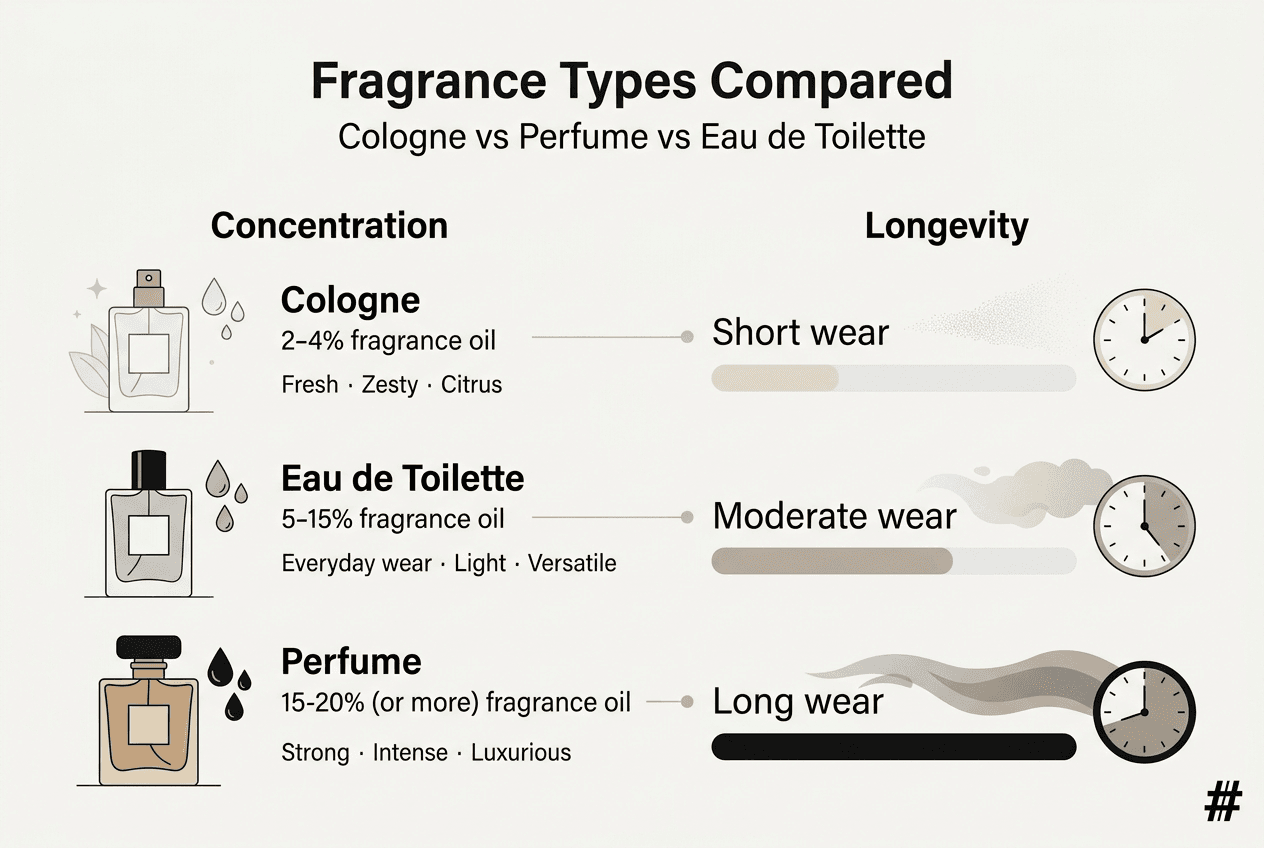
The whole distinction is one number: how much aromatic material is dissolved in the alcohol or oil base. That percentage sets how long the scent lasts, how loudly it projects and how far it gets to develop on skin. Perfume has fragrance oil concentrations of 15-40%, eau de toilette around 5-15%, and cologne generally 2-4% concentration, which is why the same composition can behave like three different products. The word is older than any of the categories, incidentally: "perfume" comes from the Latin "per fumum", meaning "through smoke", after ancient incense burning.
Perfume — parfum, or extrait de parfum — sits at the top of the scale. At oil concentrations reaching up to 40%, it unfolds slowly instead of saying everything in the first ten minutes, and that patience is the point of buying it. Bottles are small because they have to be; a wearing is a couple of dabs. The per millilitre price stings, but a bottle you use sparingly can work out cheaper per wear than the lighter thing you empty twice as fast.
Eau de toilette is the workhorse of the three. The name translates to "grooming water", from its old life as a splash after bathing, and modern versions keep that unfussy character: present enough to register, restrained enough for an office, a lunch, a Tuesday. The moderate concentration means you can spray with a free hand without becoming the main event in the room.
Cologne, or eau de cologne, began in the German city of Cologne in the 18th century as a light, citrus based refreshment, and the format has barely moved since. It carries the lowest concentration on the shelf and the most straightforward pleasure. One thing muddies the water: in North America "cologne" gets used loosely for men's fragrance of any strength, so the word on the box may tell you nothing. True cologne features:
Longevity is where the gap becomes a daily inconvenience or a daily luxury. Cologne typically lasts 2-4 hours, eau de toilette 3-5 hours, perfume up to 8 hours or more — treat those as ranges rather than promises, because skin chemistry, climate and the specific formulation all pull at them. Oily skin tends to hold fragrances longer than dry skin, whilst humidity can amplify projection but reduce longevity. Knowing roughly where you sit in that range is what stops you spraying at 8am and wondering by noon whether you bothered.
Price tracks both concentration and ingredient quality, and the jump is steeper than most people expect. A 50ml bottle of perfume might cost two to three times more than an equivalent eau de toilette from the same fragrance line. Do the maths per wearing before you flinch: perfume's potency means you use less each time. Cologne is cheap enough to be spent freely and experimented with, which is an underrated virtue, and eau de toilette's middle pricing is what lets a collection have breadth at all.
Occasion is the other axis. Cologne is the right answer for casual settings, gym sessions and anywhere you want scent to stay your own business — it won't dominate a lift or a packed train carriage. Eau de toilette handles professional environments and daytime events, noticeable without taking over. Perfume belongs to evenings and long occasions, where the slow development over hours is the whole reason you paid for it.
Pro Tip: Build your fragrance wardrobe by starting with one eau de toilette for daily wear, one cologne for hot weather or casual activities, and one perfume for special occasions. This trio covers most lifestyle needs whilst letting you explore different fragrance types without overwhelming your collection or budget.
Sillage separates the three as sharply as longevity does. Cologne makes a scent bubble that stops just past your own personal space; someone has to be close to notice it. Eau de toilette reaches about an arm's length, which is the sweet spot for shared offices. Perfume travels — it arrives before you do and hangs about after you've gone. Whether that reads as presence or as imposition depends entirely on the room, so be honest with yourself about which rooms you spend your days in.
Concentration doesn't just stretch a scent out. It changes its shape. Fragrance oil concentration affects longevity as well as the scent's projection and intensity at various stages, deciding which notes get to dominate and how the handover between top, middle and base notes plays out. Higher concentrations give perfumers room for heavier base notes and accords that need hours to say anything. Lower ones lean on the bright, volatile top notes that hit immediately and then leave.
In cologne, the top notes are effectively the whole show. Citrus, herbs and fresh aromatics land clearly, then the thing evaporates before it can develop anywhere deeper. That's a limitation and a feature: no narrative arc, no waiting, just clarity. If you find most fragrances demand too much attention, cologne is the one that asks for none.
Eau de toilette gives you a partial arc. Top notes hand over to the heart within the first hour or two, and you get a recognisable move from opening brightness into floral, spicy or woody territory. Base notes turn up quietly, grounding things without the depth a perfume would give you. It's scent as background rather than subject, which is exactly what you want on a working day.
Perfume is the only concentration that lets a composition run its full structure. The sparkling opening gives way quickly to heart notes that develop over several hours, and base notes emerge gradually, sometimes taking four to six hours to fully bloom — by which point you're wearing something noticeably different from what you sprayed. That payoff is real, but it needs a day long enough to collect it. Spray extrait at 7am for a schedule that ends at 3pm and you've paid for an act you'll never see.
Pick the concentration for the kind of wear you want, not for the prestige of the word on the box.
Sillage follows concentration in lockstep, and it's the part with social consequences. Cologne stays a private pleasure. Eau de toilette registers with colleagues and friends without colonising a shared space. Perfume asserts itself, and in a small meeting room that assertion can go from confident to rude in a spray. Read the environment before you read the marketing.
Application technique should adapt to concentration levels for optimal results:
Pro Tip: Apply perfume to pulse points before dressing, allowing alcohol to evaporate and oils to settle into skin. This prevents staining delicate fabrics whilst maximising longevity and natural scent development throughout your day.
A collection built entirely from one concentration will fail you somewhere, usually in August or at 9pm. Fragrance type choice should consider occasion, personal preference, and environmental factors rather than defaulting to a single category. Climate does more damage to your expectations than anything else: heat amplifies projection, cold air mutes development, and humidity cuts both ways — thinning lighter fragrances faster whilst helping perfumes bloom more fully.
Start from your actual day, not your aspirational one. Office hours are matched almost exactly by eau de toilette's moderate longevity and its manners in shared air. An active routine suits cologne, which reapplies easily and won't turn oppressive when you heat up. If your life happens after 7pm, perfume earns its price by surviving dinner and everything after it. Allocate the budget to the hours you actually keep.
Budget constraints needn't limit your collection diversity if you prioritise strategically:
Season nudges the same decision. Summer heat inflates everything you put on, so cologne and eau de toilette stay comfortable where a heavy concentration turns cloying. Winter's cold air flattens scent, and perfume's intensity is what pushes through it. Spring and autumn are open season — that's when it's worth playing across the whole concentration spectrum and seeing what the weather does to a bottle you thought you knew.
Tastes tend to travel in one direction, from simple colognes towards perfume's complexity, and there's no prize for arriving early. Plenty of people start with fresh, uncomplicated colognes and develop an appetite for nuance later. Plenty of others explore for years and still prefer cologne's directness, which is a legitimate destination rather than a failure to progress.
Owning multiple concentrations also opens up layering, and this is the underused trick. Put perfume down as a lasting base, then refresh with a cologne from a complementary family as the day goes on — you keep the signature while dialling the intensity to whatever room you're walking into. Experiment with layering fragrance wardrobe essentials to discover personalised combinations unavailable in any single bottle.
Travel practicality favours certain concentrations over others:
If you buy one thing on the strength of this article, make it an eau de toilette. It's the concentration that fits the most hours of the most lives, it costs less than the mistake a premium bottle represents, and it gives you enough development to learn what you actually like. Add cologne when summer forces the issue, and save perfume for when you know your taste well enough to commit to eight hours of it. Our comprehensive fragrance discovery platform features detailed concentration information, longevity ratings, and community reviews helping you identify which types suit your preferences before purchasing.
The database runs to thousands of fragrances across every concentration level, with filters that let you search colognes, eau de toilettes or perfumes specifically instead of guessing from a product name. Track your collection digitally and note which concentrations hold up in your climate and your calendar — that record will teach you more than any chart. The community side is where the practical detail lives: application habits, layering pairs, what works in July and what doesn't.
So: browse the fragrance discovery platform and filter by the concentration that matches your day, then learn about perfumers to see how master noses approach formulation across different strength levels.
Perfume, and it isn't close — the high oil load typically buys you eight hours or more on skin. Reach for it when reapplication is impractical: a long event, a day with no return trip home, anything where topping up in a bathroom mirror isn't happening. Individual formulations vary, and some perfumes last well beyond twelve hours depending on base note composition and your skin chemistry, so buy on the specific bottle rather than the category.
Yes. Eau de toilette is unisex by nature, and the only question worth asking is whether you like the scent profile. Gender labels on fragrance are a marketing decision made in a boardroom, not a fact about the composition, and plenty of eau de toilette formulations are built for universal appeal using balanced accords that work regardless of who wears them. Ignore the shelf it sits on.
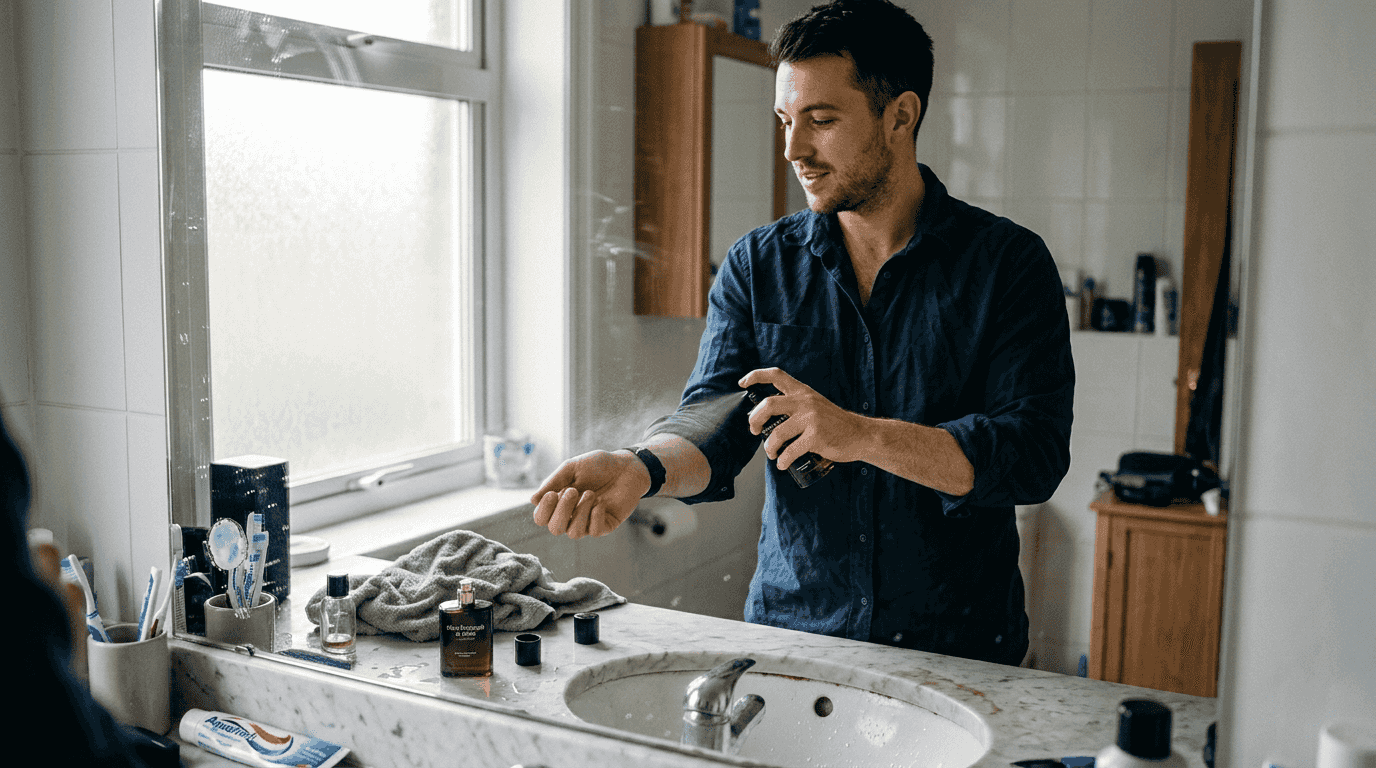
Opposite instincts. Cologne wants coverage — chest, arms, even clothing — because the light concentration needs area to register at all. Perfume wants restraint: one to two sprays on pulse points is enough, and more than that is a mistake you can't undo until you shower. Apply perfume to wrists, neck, or behind ears where body heat releases the concentrated oils gradually, giving you a trail rather than a broadcast.
It's the concentration offices were made for. The projection stays inside conversational distance, so you get a personal aura without imposing on people who never chose your fragrance or who react badly to scent. One to two sprays in the morning is the whole routine. Heavier concentrations in close quarters — meeting rooms, lifts — are the fastest way to become the person everyone quietly avoids sitting next to.
| Cologne offers refreshing simplicity | Lightest concentration ideal for casual wear and frequent reapplication throughout the day |
| Perfume delivers lasting impact | Highest concentration provides all day wear with rich, evolving scent profiles |
| Eau de toilette balances versatility | Medium concentration suits daily wear across various occasions and climates |
| Fragrance Type | Concentration | Longevity | Best For | Price Range |
|---|
| Cologne | 2-4% | 2-4 hours | Casual wear, hot weather, frequent refresh | Budget friendly |
| Eau de Toilette | 5-15% | 3-5 hours | Daily wear, office, daytime events | Moderate |
| Perfume | 15-40% | 8+ hours | Evening, special occasions, lasting impact | Premium |