# Fragrance Explained: Types, Notes, and Collection Guide
> Fragrance comprehensive guide: discover perfume types, scent notes, fragrance composition, collecting tips, and expert advice for enthusiasts\.
**Published:** 2025-11-02
Did you know that experts can now link your favorite scent to your personality using artificial intelligence? Fragrance is far more than a pleasant smell. It weaves together science, art, and psychology to create a powerful sensory signature. Understanding how fragrances are crafted, how their notes interact, and how scent preferences reveal hidden traits can help anyone enjoy a richer and more personal relationship with perfume.
## Table of Contents
* [What Is Fragrance? Key Definitions And Concepts](#what-is-fragrance-key-definitions-and-concepts)
* [Major Perfume Types And Their Differences](#major-perfume-types-and-their-differences)
* [Understanding Fragrance Notes And Composition](#understanding-fragrance-notes-and-composition)
* [Fragrance Collection, Storage, And Longevity Tips](#fragrance-collection-storage-and-longevity-tips)
* [Common Misconceptions And Mistakes To Avoid](#common-misconceptions-and-mistakes-to-avoid)
## Key Takeaways
| Point | Details |
|---|---|
| **Understanding Fragrance** | Fragrance is a combination of aromatic compounds that serve as a powerful form of self-expression and emotional connection. |
| **Fragrance Notes** | Perfumes consist of top, middle, and base notes, each contributing to the overall scent profile and unfolding over time. |
| **Fragrance Families** | There are six primary fragrance families (Floral, Woody, Oriental, Fresh, Gourmand, Chypre) that capture unique emotional landscapes and personal expression. |
| **Fragrance Preservation** | Proper storage practices, such as controlling temperature and avoiding light exposure, are essential for maintaining the integrity and longevity of fragrances. |
## What Is Fragrance? Key Definitions and Concepts
A **fragrance** is a complex sensory experience combining aromatic compounds designed to produce a pleasant, distinctive scent. According to [whowhatwear.com](https://www.whowhatwear.com/best-perfumes-uk), fragrances serve as both a powerful form of self-expression and an emotional journey, transcending mere smell to become a deeply personal statement.
At its core, fragrance represents a sophisticated blend of essential oils, aroma compounds, fixatives, and solvents carefully orchestrated to create a unique olfactory profile. The science behind fragrance goes far beyond simple scent creation. Emerging research from [arxiv.org](https://arxiv.org/abs/2411.03965) suggests that fragrances can be algorithmically mapped to personality types, indicating a profound psychological connection between scent preferences and individual characteristics.
Fragrances typically consist of three primary **fragrance layers** or notes:
- **Top Notes**: Initial, lightweight scents perceived immediately after application
- **Middle Notes**: The heart of the fragrance, emerging after 10-15 minutes
- **Base Notes**: Deep, lasting scents that provide foundation and longevity
Understanding these fundamental components helps enthusiasts appreciate the artistry behind perfume creation. [What is an Eau de Parfum? Understanding Fragrance Layers](https://fragplace.com/blog/what-is-an-eau-de-parfum-understanding-fragrance-layers) provides deeper insights into how these intricate layers interact to create a memorable sensory experience.
## Major Perfume Types and Their Differences
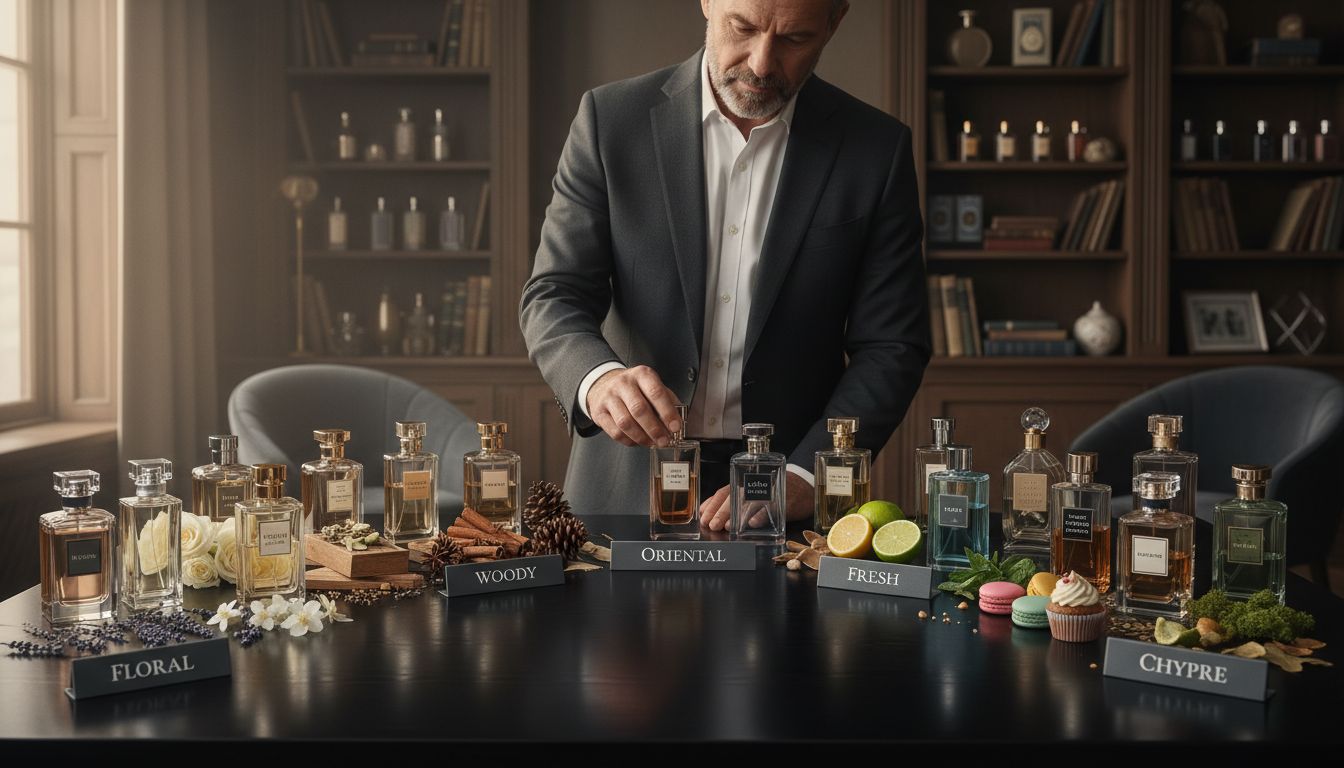
Perfumes are classified into distinct **fragrance families** that capture unique sensory experiences and emotional landscapes. whowhatwear.com highlights a rich olfactory spectrum including floral, woody, gourmand, fresh, musky, and spicy categories, each offering a distinctive aromatic personality.
The six primary fragrance families represent more than just scent classifications - they're a complex language of personal expression:
Here's a concise comparison of the six primary fragrance families:
| Fragrance Family | Main Notes | Character | Example Scents |
|------------------|------------|-----------|----------------|
| Floral | Rose
Jasmine
Lily | Romantic
Delicate | Flower Bouquet
Fresh Cut Flowers |
| Woody | Cedar
Sandalwood
Pine | Earthy
Sophisticated | Forest Walk
Smoky Wood |
| Oriental | Amber
Spices
Resins | Warm
Sensual | Exotic Spices
Incense |
| Fresh | Citrus
Aquatic
Green | Light
Crisp | Lemon Zest
Ocean Breeze |
| Gourmand | Vanilla
Chocolate
Caramel | Sweet
Edible | Dessert-Inspired
Toffee |
| Chypre | Oakmoss
Moss
Patchouli | Complex
Balanced | Woody-Mossy
Earthy Blend |
- **Floral**: Delicate, romantic scents dominated by flower-inspired notes
- **Woody**: Earthy, sophisticated fragrances featuring cedar, sandalwood, and pine
- **Oriental**: Warm, sensual perfumes with spicy and resinous undertones
- **Fresh**: Light, crisp scents reminiscent of citrus, marine, and green elements
- **Gourmand**: Sweet, edible-inspired fragrances with vanilla, chocolate, and caramel notes
- **Chypre**: Complex, balanced scents combining woody and mossy characteristics
Interestingly, emerging research from arxiv.org suggests these fragrance preferences aren't random but can be algorithmically mapped to individual personality traits. This scientific approach reveals how our scent choices reflect deeper psychological characteristics.
For fragrance enthusiasts seeking to explore these nuanced categories in depth, our [guide on essential Eau de Parfum types](https://fragplace.com/blog/7-essential-eau-de-parfum-types-you-need-to-know) offers comprehensive insights into the intricate world of perfume classifications.
## Understanding Fragrance Notes and Composition
**Fragrance notes** are the building blocks of perfumery, creating a complex symphony of scents that evolve over time. According to research from arxiv.org, these notes are more than mere combinations of ingredients - they represent a sophisticated language that can be mapped to individual personality traits, revealing deep psychological insights through olfactory preferences.
Fragrances are traditionally composed of three distinct layers, each playing a crucial role in the scent's overall character:
1. **Top Notes**: The initial impression
- Lightest and most volatile molecules
- Last 5-15 minutes after application
- Typically fresh, light scents like citrus or herbs
2. **Middle Notes**: The heart of the fragrance
- Emerge after top notes dissipate
- Provide the core character of the perfume
- Often floral, fruity, or spicy notes
3. **Base Notes**: The lasting foundation
- Deepest, most persistent scents
- Provide longevity and depth
- Typically rich notes like wood, musk, or vanilla
whowhatwear.com highlights how these notes combine to create a rich olfactory spectrum, ranging from floral and woody to gourmand and spicy compositions. The interaction between these notes creates a unique sensory journey that transforms over hours of wear.
For fragrance enthusiasts eager to dive deeper into the nuanced world of scent composition, our [guide to note categories](https://fragplace.com/en-US/notes) offers a comprehensive exploration of how these aromatic elements interact and create memorable olfactory experiences.
## Fragrance Collection, Storage, and Longevity Tips
**Fragrance preservation** is an art form that requires careful attention to environmental conditions and storage techniques. According to [mcaffeine.com](https://www.mcaffeine.com/blogs/news/long-lasting-perfumes-tips-and-tricks), temperature plays a critical role in maintaining a perfume's integrity, with the ideal storage range between 55-72°F (13-22°C).
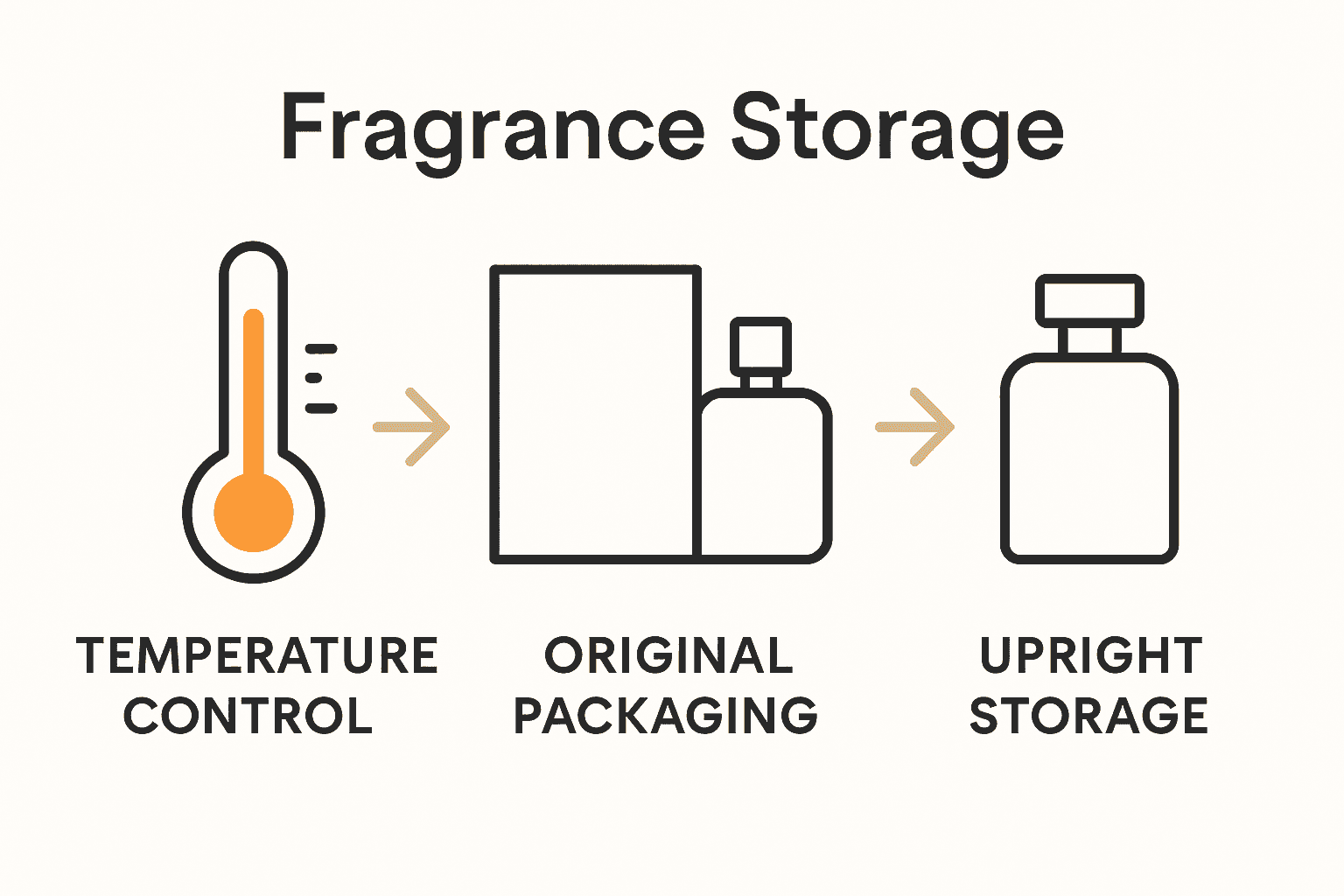
Key storage recommendations for protecting your fragrance collection:
- **Temperature Control**: Keep fragrances away from heat sources and direct sunlight
- **Original Packaging**: Store bottles in their original boxes to minimize light exposure
- **Consistent Environment**: Avoid bathrooms and areas with temperature fluctuations
- **Vertical Storage**: Keep bottles upright to prevent seal degradation
Perfume shelf life is not infinite. [woodberg.de](https://www.woodberg.de/en/blogs/blog/tips-information-on-perfume-shelf-life-and-storage) recommends checking the "open jar" symbol on packaging, which indicates the number of months a fragrance remains viable after opening - typically 12, 24, or 36 months.
Fragrance enthusiasts looking to expand their knowledge of scent preservation can explore our [fragrance discussions](https://fragplace.com/en-US/posts) to learn from fellow collectors and experts about maintaining a pristine perfume collection.
## Common Misconceptions and Mistakes to Avoid
**Fragrance preservation** is often shrouded in myths and misunderstandings that can potentially damage your precious perfume collection. According to [perfumiq.co.uk](https://perfumiq.co.uk/unveiling-the-truth-perfume-storage-and-longevity-myths-debunked/), most perfumes will maintain their quality for 3 to 5 years, depending on their composition, with lighter citrus-based scents fading faster than richer, woody fragrances.
Common misconceptions that can compromise your fragrance collection:
- **Dark Bottle Myth**: Believing dark bottles completely protect against light degradation
- **Refrigeration Fallacy**: Thinking storing perfumes in the refrigerator always preserves them
- **Bathroom Storage**: Keeping fragrances in humid, temperature-fluctuating environments
- **Shaking Bottles**: Believing that shaking perfume bottles helps mix the ingredients
Particularly noteworthy is the widespread belief about bottle color protection. perfumiq.co.uk reveals that while dark bottles offer some defence against UV rays, they are not foolproof. Experts recommend always storing perfumes in a drawer or box to shield them from light exposure.
For fragrance enthusiasts seeking to deepen their understanding of proper scent care, our fragrance discussions provide a community platform to learn from experienced collectors and avoid common preservation pitfalls.
## Discover and Master the Art of Fragrance with Fragplace
Understanding fragrance types, notes, and collection tips can feel overwhelming. You want to choose scents that truly express your personality, keep your collection fresh, and avoid common pitfalls in storage and use. This article breaks down complex perfume concepts like top, middle, and base notes, as well as fragrance families, so you can make informed decisions and enjoy your fragrances fully.
Ready to deepen your fragrance journey and connect with others who share your passion? Visit [Fragplace](https://fragplace.com) to explore detailed fragrance information, engage in thoughtful discussions, and read reviews that help you choose your next signature scent. Discover expert guides on fragrance layers and types and join a thriving community eager to share tips on collection and longevity. Take control of your scent experience today and start exploring how fragrance becomes a powerful form of self-expression.
## Frequently Asked Questions
#### What are the main types of fragrance families?
Fragrance families include floral, woody, oriental, fresh, gourmand, and chypre, each characterized by distinct aromatic profiles and emotional expressions.
#### How are fragrance notes structured?
Fragrance notes are organized into three layers: top notes provide the initial scent, middle notes form the heart of the fragrance, and base notes create a deep, lasting foundation.
#### How should I store my fragrances to maintain their quality?
To preserve fragrances, store them in a cool, dark place away from direct sunlight, ideally in their original packaging, and keep them upright to prevent degradation of seals.
#### What are common misconceptions about fragrance preservation?
Common misconceptions include the belief that dark bottles completely protect against light, that refrigeration improves longevity, and that shaking bottles helps mix ingredients, which can actually harm the fragrance.
## Recommended
- [Blog](https://fragplace.com/en-US/blog)
- [7 Essential Eau de Parfum Types You Need to Know](https://fragplace.com/blog/7-essential-eau-de-parfum-types-you-need-to-know)
- [Community of fragrance passionates](https://fragplace.com/en-US)
- [Community of fragrance passionates](https://fragplace.com)
- [Understanding the Types of Fragrance Notes in Perfume](https://alexandriauk.com/blogs/fragrance-academy/understanding-types-of-fragrance-notes)
---
Canonical: https://fragplace.com/en-IT/blog/fragrance-explained-types-notes-and-collection-guide