Articles
Get the Fragletter
New fragrance stories and picks in your inbox. Unsubscribe anytime.
New fragrance stories and picks in your inbox. Unsubscribe anytime.
New fragrance stories and picks in your inbox. Unsubscribe anytime.
New fragrance stories and picks in your inbox. Unsubscribe anytime.
Most fragrance disappointment starts with buying a note list instead of a scent profile. A note list is a menu. The profile is what's actually on your skin two hours later, once the bright stuff has burned off and the base has taken over — and reading one properly is the difference between a collection and a shelf of expensive mistakes.
A scent profile is the whole signature of a perfume, not the notes you can pick out one at a time. It's the orchestrated result of how every ingredient behaves against every other one — closer to a piece of music than to a list of instruments, where what stays with you is the blend, the way it moves, and which parts take over at which moment. Your nose is following a chemical conversation that runs for hours. Knowing what's in that conversation is the difference between choosing a fragrance and gambling on one.
Building a profile means balancing layers. A composition typically holds essential oils, synthetics, alcohols, stabilisers and fixatives, and each does a job beyond smelling good. Essential oils give the opening its freshness and character. Synthetics widen the palette with notes nature can't supply — and anyone still using 'synthetic' as an insult has misread modern perfumery. Alcohol is the delivery system. Fixatives keep the thing on skin long enough to finish its sentence. The chemistry of those aromatic compounds sets volatility, and volatility decides when a note shows up and when it disappears from your perception. Those long Fragplace reviews describing how a scent moves are describing proportions.
The profile is useful to collectors because it explains preference. Someone calls a perfume fresh and citrusy and you've learnt nothing about its structure. Once you're thinking in note progressions, concentration and volatility, you stop buying blind off a single note you love and start reading the arc. Concentration matters more than most people admit: an eau de toilette and an eau de parfum built on the same base are different scent profiles, which is why one brand name can feel like two separate fragrances depending on which bottle you picked up. Noticing that gap is roughly where the casual buyer ends and the collector begins.
Pro tip: Give a new fragrance at least four hours, opening through dry down, before you decide anything. A verdict reached in the first five minutes is a verdict on the top notes, and the top notes are the part that leaves.
Categories aren't marketing invention. They're a rough map of how the nose actually sorts things, and research puts the primary smell categories at around ten. The point isn't taxonomy for its own sake — it's that 'I like this' turns into 'I'm drawn to woody citrus', and the second sentence can be shopped.
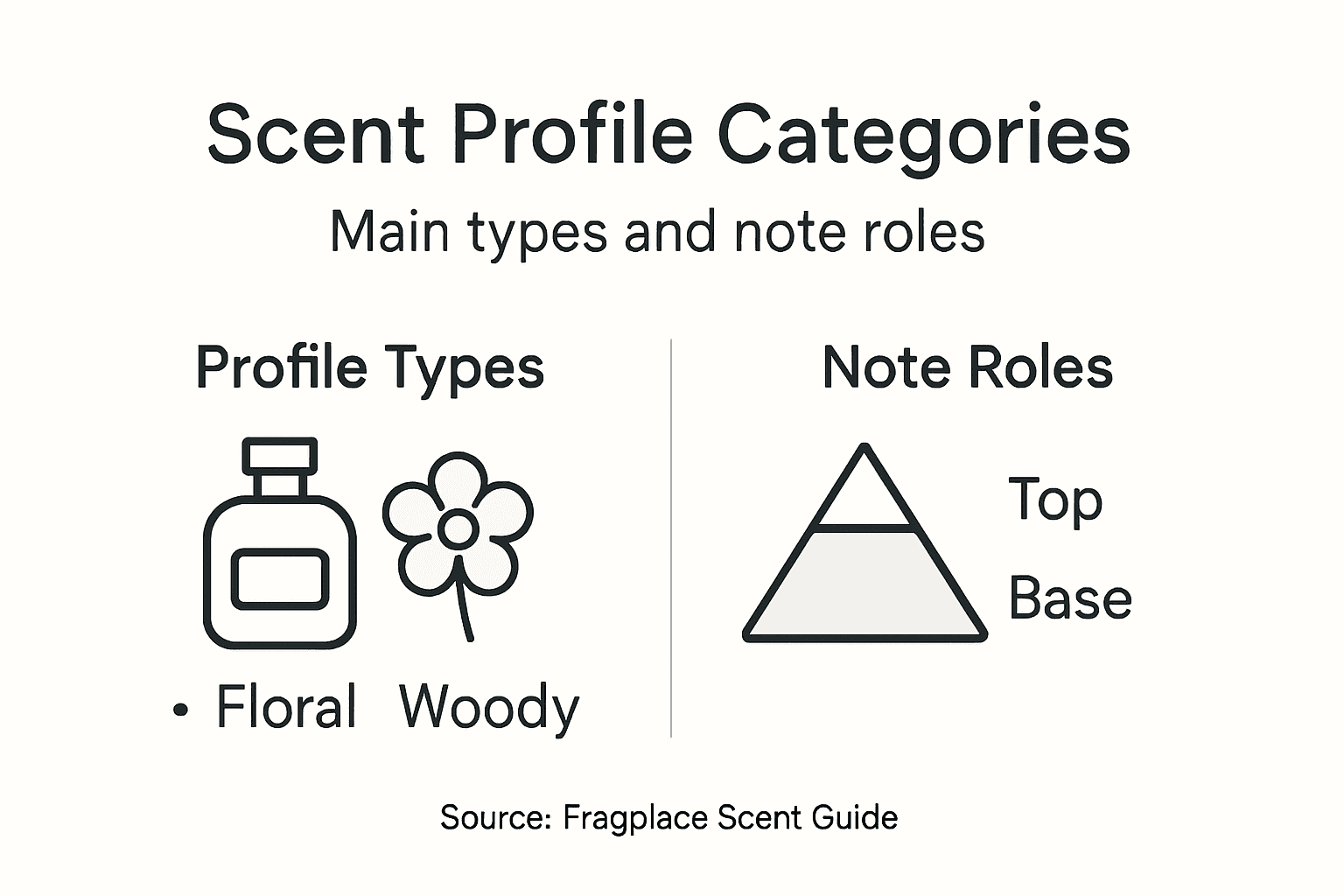
The main families are floral, woody, fruity, citrus, spicy, herbal, minty, earthy and sweet. Floral still dominates the market, running from restrained rose to tuberose loud enough to fill a room. Woody notes like sandalwood, cedar and vetiver give a composition its floor and much of its longevity. Citrus buys brightness, which is why it gets worn in heat and reached for daily. Fruity profiles bring berries, peach and tropical notes, and they're the easiest family to overdo. Spicy leans on pepper, cinnamon and cardamom. Herbal and minty go cool and crisp. Sweet is vanilla, tonka and gourmand territory, which has become the default setting for an entire wave of releases. Most fragrances don't sit in one box anyway: fruity floral, woody citrus. Those hybrids are where it gets interesting, and usually where the more rewarding compositions live.
Where categories earn their keep is sampling strategy. People who gravitate toward unisex scents tend to land on profiles that straddle the traditionally masculine and feminine — aromatic florals, woody citrus blends. Know your families and you can sample deliberately instead of chasing whatever's trending, and you can tell another Fragplace member what you're after in words they'll recognise. That's the real payoff: a private impression becomes shared language, and you can make a decent guess about a fragrance before it's ever on your skin.
Pro tip: Look at the fragrances you already own and love, work out which primary category shows up most, then explore the categories next door to it. You'll expand the collection without abandoning your own taste.
To help distinguish between different scent profile categories, here's a summary of their sensory characteristics and typical fragrance occasions:
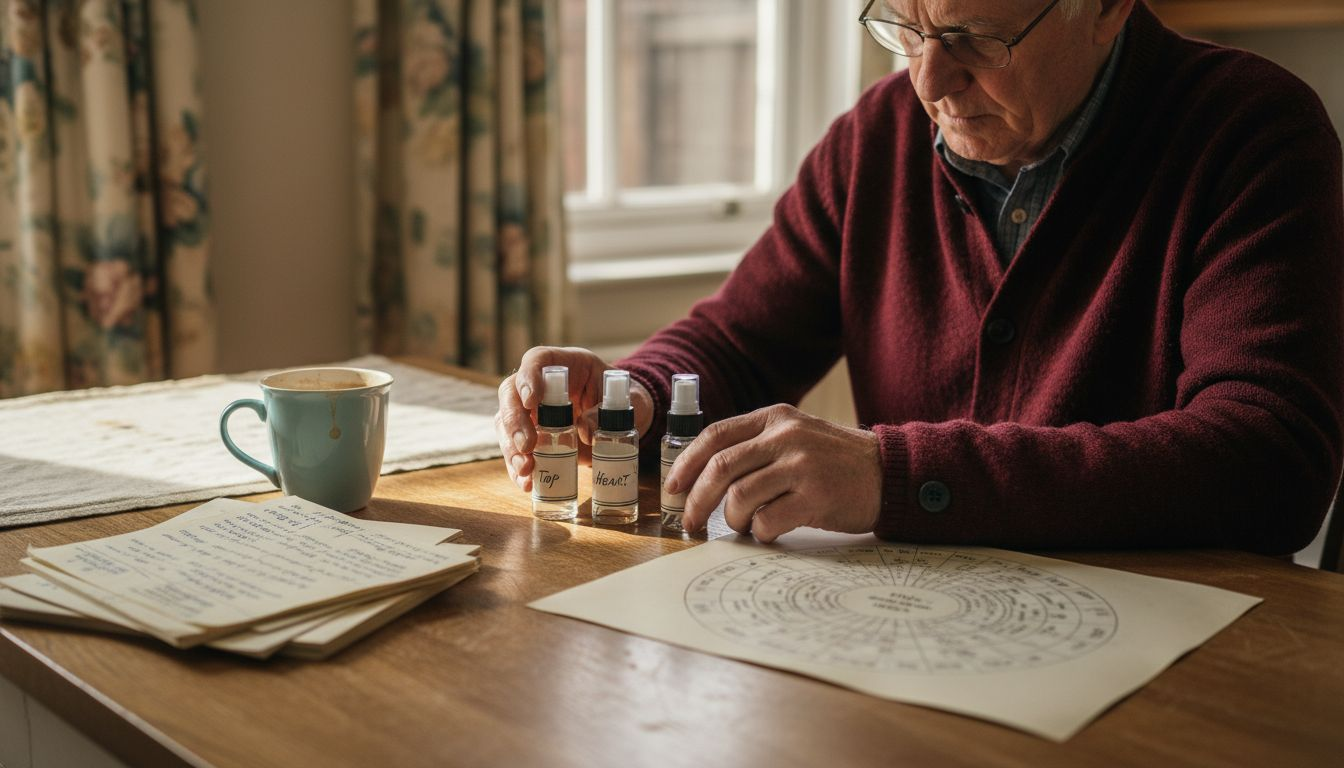
Spray a perfume and you're not smelling a fixed object. You're watching a timed release, because notes are sorted by volatility and leave in order. Top notes land first and go fast, typically 5 to 15 minutes, which makes them the least reliable part of a fragrance and the part shops sell you on. Heart notes come up as the top fades and carry the real character for several hours. Base notes hold the floor for 6 to 12 hours or more. Once that shape is in your head, fragrance reviews stop being poetry and start being data.
Accords are where perfumery stops being arithmetic. An accord isn't one note but several tuned so you perceive a single thing: rose, jasmine and geranium in the right proportions read as 'floral' rather than three separate flowers. An oriental accord puts vanilla, amber and musk together for that warm, skin-close effect. A citrus accord folds lemon, bergamot and neroli into one bright gesture. Perfumers spend years on this because the effect lives in the join, not in the components. It's also why the sharper collectors writing Fragplace reviews talk in accords while marketing copy just lists notes — the accord describes what the perfume does.
Notes and accords give you predictive power, which is the whole point. Love fruity florals? Look for fruit sitting prominently over a floral heart. Find vanilla-heavy orientals cloying? Now you can rule them out on paper instead of learning it one bottle at a time. This also explains the thing that frustrates beginners: the same juice smelling wrong on you and wonderful on a friend. Your skin chemistry changes which volatile notes develop and which accords surface, so pH and natural oils can tilt a composition fruity and fresh on one person, woody and warm on another. That's not randomness. It's information about your own skin, and it's worth collecting.
Pro tip: Write down what you smell at 5 minutes (top notes), 30 minutes (heart emerging) and 2 hours (dominant accords). It trains your nose on progressions and gets you describing what you actually like rather than what the marketing told you to like.
The following table summarises the three main fragrance note types and their role in scent evolution:
| Note Type | Duration on Skin | Main Function |
|---|---|---|
| Top Notes | 5–15 minutes | Initial impression |
| Heart Notes | 2–4 hours | Core identity |
Every fragrance description you read is one nose filtered through one vocabulary, and vocabularies vary wildly. Interpretation is the skill of translating those descriptors into categories that predict something. It sounds like chemistry homework and isn't: you're recognising patterns. A fruity scent carries aroma molecules your nose files under berry or stone fruit. A floral scent carries compounds your brain files under flowers. Once you read that way, 'peachy floral' or 'woody amber' becomes a usable instruction rather than atmosphere.
The fragrance wheel is the most practical tool here, a visual map of how the families relate. The centre holds floral, woody, amber and fresh, and each branches out. Fresh splits into citrus, herbal or aquatic. Woody leans toward sandalwood, cedar or vetiver. What the wheel exposes is adjacency. Say you love one citrus fragrance and nothing else has clicked — the wheel might show you that what you like is aromatic citrus rather than fruity citrus, and suddenly a whole different set of recommendations opens up. Plenty of experienced Fragplace reviewers reference these relationships, and knowing the framework gets you far more out of what they write.
The rest is building your own vocabulary and spotting your own patterns. Test deliberately and record what you get at each stage. Is the opening bright or dense? Which family owns it? Do new families arrive as it develops? Does it turn cloying? Do that for a while and you'll find both your habits and your deal breakers — maybe heavy amber bases feel suffocating on you, maybe you need citrus to feel awake. That vocabulary is also what separates a useful review from a useless one, and most reviews are useless because they're generic praise. If you're serious about writing fragrance reviews effectively, specificity is the entire job. It's also what turns random purchases into a collection with a point of view.
Pro tip: Keep a plain spreadsheet of what you own: primary family, love or dislike, and the notes that stood out. Analyse it before your next purchase — the pattern is usually more honest than your wishlist.
The fragrance world runs on myths, and the most persistent is that price correlates directly with quality. A £150 bottle isn't automatically better than a £50 one. At the top end you're frequently paying for brand heritage, packaging, marketing budgets and exclusivity rather than a better composition, and plenty of affordable fragrances punch well above their price while some luxury releases are dull. Judge the profile, not the label. The second myth is that a fragrance smells the same on everyone. It doesn't. Your skin chemistry alters how it develops, so what reads floral and fresh on a friend can turn warm and woody on you — that's chemistry, not a fault in the perfume or in you. Which is why store testers and other people's wrists are evidence, not proof. Test on your own skin.
Then there's application technique. Rubbing your wrists together after spraying doesn't help the scent develop; the friction damages fragrance molecules and speeds up oxidation, which can shift the profile away from what the perfumer built. Spray on pulse points and leave it alone. Body heat does the work. The other half of this mistake is the belief that more equals longer. Six sprays instead of two won't extend longevity, it'll waste product and punish everyone sharing a lift with you. Perfumers formulate for a particular concentration, and drowning a composition undoes their work.
The pitfall that catches serious collectors is overthinking. Learning about olfactory families and fragrance wheels doesn't oblige you to analyse everything academically. Sometimes a scent just works, and that's reason enough to buy it. The knowledge is there to serve your enjoyment, not to trigger decision paralysis. When you're assembling a wardrobe, think about how essential fragrance wardrobe pieces actually function in your week rather than agonising over whether an accord is perfectly balanced. The last trap is expecting one bottle to cover everything. It won't. A rich amber that's right in January will feel stifling in July, and a fresh citrus that keeps you sharp at work can read too thin at night. Best fragrance is a contextual claim.
Pro tip: Before you buy, wear a sample on your own skin for at least four hours through a normal day. That tells you how your chemistry handles the profile — a shop-floor impression tells you almost nothing.
Here's the verdict: buy the base, not the opening. Top notes are the sales pitch and they're gone in minutes, so the fragrance you're actually committing to is the one playing at hour four. Everything else follows from that — sample inside the families you already like rather than chasing releases, treat a high price as information about a brand rather than about a bottle, and give anything you're serious about several hours on your own skin before your card comes out. Do that consistently and the disappointing purchases largely stop.
Two things worth doing next. First, take the fragrances already on your shelf and read what the community says about them on Fragplace — the reviews, the notes analysis, the arguments — and see whether the pattern in your collection matches the one in your head. Then write one of your own, because nothing sharpens a nose faster than having to describe what it found; writing fragrance reviews effectively is the shortest route there.
It's the complete sensory signature of a perfume — how every ingredient interacts within the composition, the way instruments interact in a piece of music rather than sounding one at a time.
Because it stops you buying on a single note you like. Reading the whole arc, from opening to dry down, tells you whether the fragrance you'll be wearing for hours is one you actually want.
Top notes give the first impression and last only a few minutes. Heart notes define the core identity and hold for several hours. Base notes supply depth and longevity, lingering 6 to 12 hours or more, and they shape most of what people smell on you.
Floral, woody, fruity, citrus, spicy, herbal, minty, earthy and sweet. Recognising which ones you keep returning to lets you sample deliberately instead of at random, and makes every addition to the collection a decision rather than a hope.
| Point | Details |
|---|
| Understanding Scent Profiles | Scent profiles represent the complete sensory signature of a fragrance, encompassing the interplay between various notes and ingredients. Recognising this helps in making informed fragrance selections. |
| Categories of Fragrance | Familiarity with primary scent categories such as floral, woody, and citrus aids in exploring personal preferences. This knowledge enables strategic sampling and ensures collection alignment with individual tastes. |
| Role of Notes and Accords | Fragrance notes evolve over time, influencing the overall experience. Understanding the difference between top, heart, and base notes, as well as the concept of accords, allows for better predictions on how a scent will develop. |
| Avoiding Common Misconceptions | Recognise that skin chemistry significantly affects fragrance perception, and application techniques can alter scent profiles. Test fragrances on skin for several hours to gauge compatibility. |
| Scent Category | Typical Sensory Character | Common Occasion |
|---|
| Floral | Soft, romantic, fresh | Everyday, formal |
| Woody | Rich, grounding, earthy | Evening, autumn |
| Citrus | Lively, zesty, clean | Daytime, summer |
| Spicy | Warm, exotic, bold | Night out, winter |
| Fruity | Playful, sweet, vibrant | Casual, spring |
| Herbal | Crisp, green, invigorating | Office, daytime |
| Minty | Cool, refreshing, sharp | Sport, summer |
| Earthy | Rustic, deep, natural | Outdoor, autumn |
| Sweet | Indulgent, creamy, cosy | Social, winter |
| Base Notes | 6–12+ hours | Depth and longevity |