Articles
Get the Fragletter
New fragrance stories and picks in your inbox. Unsubscribe anytime.
New fragrance stories and picks in your inbox. Unsubscribe anytime.
New fragrance stories and picks in your inbox. Unsubscribe anytime.
New fragrance stories and picks in your inbox. Unsubscribe anytime.
A note list is a map, not a promise. Nearly half of enthusiasts still believe the old myths about how a scent develops — that a perfume smells identical on everyone, and that whatever hits you in the first thirty seconds is the fragrance. Learn to read top, middle and base notes properly and you'll waste a lot less money.
| Point | Details |
|---|---|
| Understanding Fragrance Notes | Fragrance notes are categorised into top, middle, and base notes, each playing a vital role in a scent's evolution over time. |
| Influence of Skin Chemistry | Individual skin chemistry affects how a fragrance develops, meaning the same scent can smell different on various people. |
| Testing Recommendations | Always test fragrances on your skin and allow at least 30 minutes for complete note development before making a decision. |
| Avoid Common Mistakes | Avoid judging scents based solely on top notes; allow time for the full drydown to unfold for proper evaluation. |
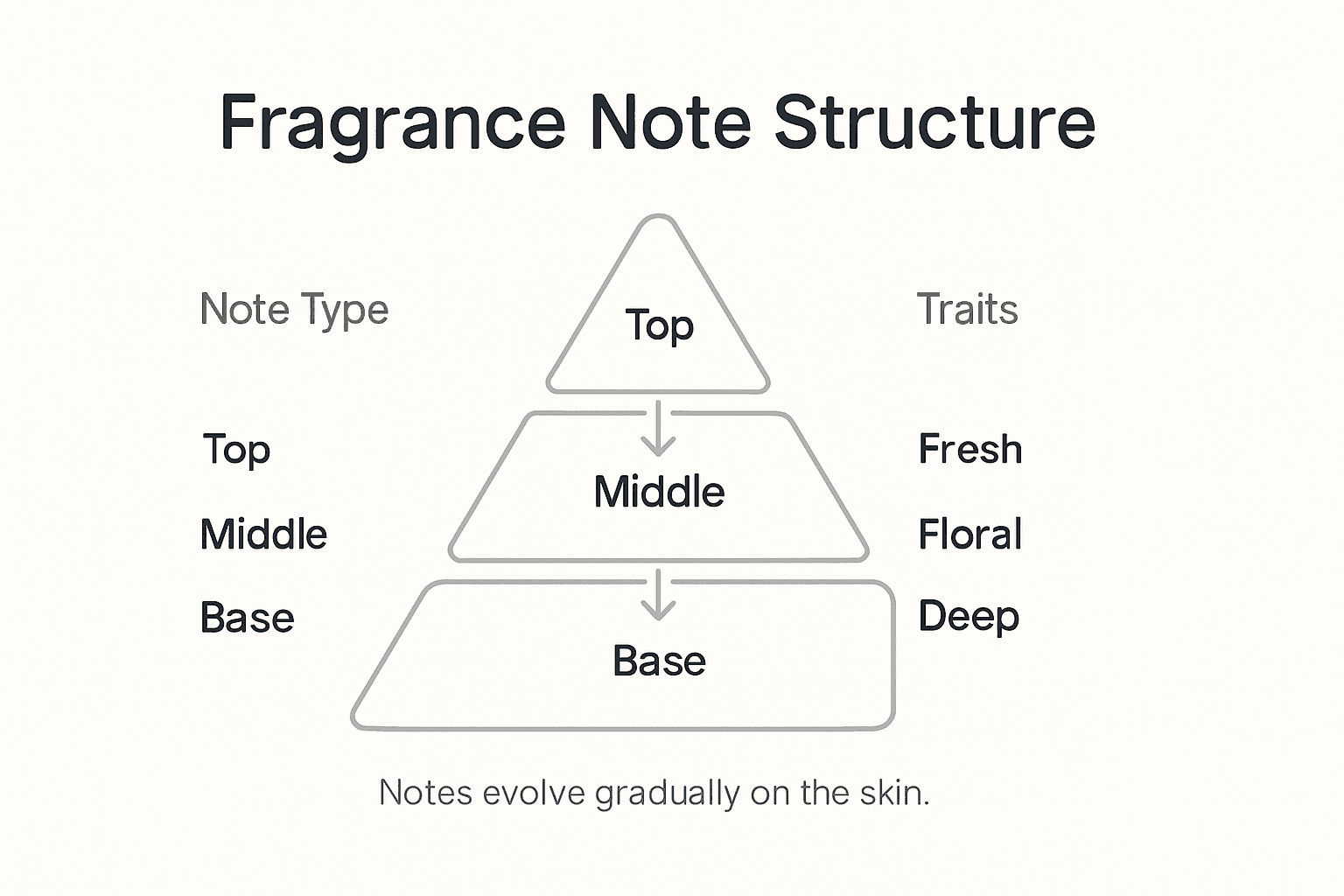
Notes are the aromatic layers that make up a perfume, sorted into top, middle and base according to how fast they burn off. That's the whole concept. What makes it useful is the implication: a perfume isn't one smell, it's a sequence, and the note list tells you the running order.
Top notes are the lightest and most volatile elements, which is a polite way of saying they're gone in 10-15 minutes. Middle notes — heart notes — take over once the top has faded and carry the perfume's actual character. Base notes do the heavy lifting: depth, weight, and the part still hanging around hours later. Most regrettable blind buys happen because someone fell for a top note and ignored the base.
Then there's the myth that a fragrance performs the same on everybody. It doesn't. Skin chemistry changes how a perfume develops and how it's perceived — body temperature, natural skin oils and personal pH levels all push the notes around, which is why a scent can smell divine on one person and like a different composition entirely on another. Treat other people's reviews as evidence, not verdicts.
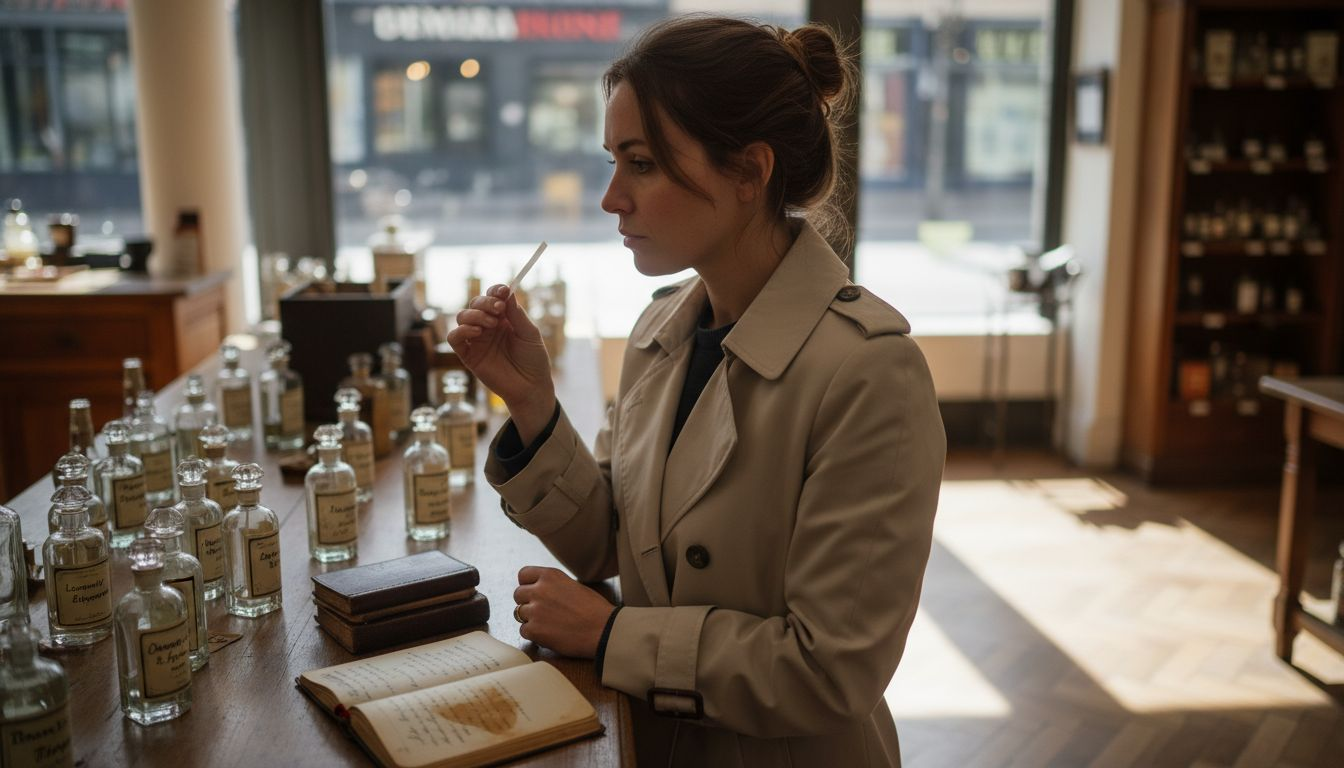
Expert Tip: Always test fragrances directly on your skin and allow at least 30 minutes for complete note development before making a purchasing decision.
Think of the three tiers as jobs rather than ingredients. Each one gets a different amount of time to make its case, and each one is doing something the others can't.
Top notes are the opening pitch: citrus, herbs and light botanical extracts, bright material that evaporates quickly. You get roughly 10-15 minutes of it, which is exactly why the spritz on a shop floor is a terrible basis for a decision. Middle notes, alternatively known as heart notes, arrive as the top dissipates — usually florals and spice — and they bridge the opening burst and the base. That's where the personality lives.
Base notes are the foundation: woods, musks, resins and gourmand elements, heavier molecular compounds that refuse to leave. They anchor everything above them. A good composition doesn't simply stack the three tiers — it hands off between them cleanly, so the drydown still feels like the perfume you started with rather than a stranger.
Pro Tip: When sampling a new fragrance, allow at least 30 minutes of skin contact to experience the complete evolution of its note structure and understand its true character.
Here is a quick comparison of fragrance note characteristics and their influence on scent evolution:
| Note Type | Common Ingredients | Duration on Skin | Role in Scent Development |
|---|---|---|---|
| Top | Citrus, herbs, light florals | 10-15 minutes | Creates first impression |
| Middle | Spices, heavier florals | 3-5 hours | Forms core fragrance character |
| Base | Woods, musks, resins | 6+ hours | Provides depth and longevity |
None of this is standardised, and that's the frustrating part. Skin chemistry decides a great deal — body temperature, natural oils, pH levels and even diet shift how a composition reads by the time it settles.
The opening goes first. Those volatile, lightest molecular compounds flash off within 10-15 minutes, taking the sparkle with them. The heart notes emerge next, blending with your own body scent, and that's the point where two people wearing the same bottle start to diverge from each other.
Then the base settles in. Heavier, more persistent molecular structures stay detectable for several hours and give the fragrance its depth. That last stage is the one worth buying for; everything before it is a trailer. If a scent is thrilling for ten minutes and inert for the following six hours, you've paid for ten minutes.
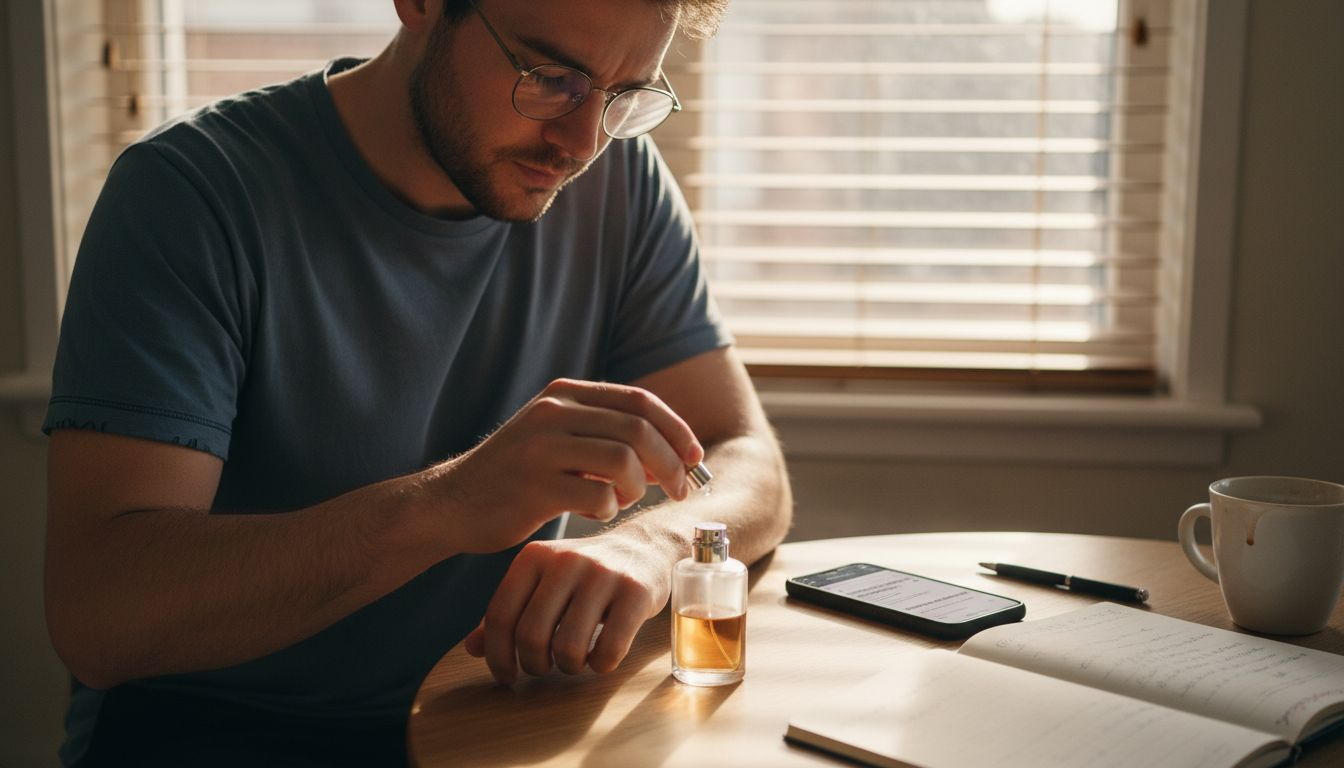
Pro Tip: Apply fragrance to pulse points like wrists and neck, where body heat helps activate and gradually release the perfume's complex note progression.
Below is a summary of key factors influencing how perfume notes evolve on skin:
| Factor | Influence on Fragrance | Impact on Scent Outcome |
|---|---|---|
| Body Temperature | Speeds up evaporation | Changes scent intensity |
| Skin pH | Alters note chemistry | Modifies fragrance balance |
| Natural Oils | Blend with perfume oils | Creates unique scent profile |
| Diet & Environment | Affects skin chemistry | Varies aroma projection |
Note analysis provides a strategic approach to understanding and selecting fragrances by splitting a composition into its layers. Do that and you can predict, roughly, whether you'll still like the thing at hour four — which is the only question that matters.
The three categories carry different weight. Top notes hand you the first impression and last 10-15 minutes. Heart notes hold the core character for around 3-5 hours. Base notes run longest and set what people remember. So read a note list from the bottom up. The base is what you're actually committing to.
After that it's preference, and preference beats theory every time. Some people buy for a bright citrus opening; others only care about a woody base. Season and occasion narrow it further — lighter, more ephemeral notes work brilliantly for daytime and summer wear, while richer note combinations earn their keep at evening events and in winter. That's less a rule than physics: heat drives volatile notes off faster.
Pro Tip: Create a personal fragrance profile by documenting the notes you consistently enjoy, helping you make more targeted and satisfying perfume selections in the future.
Most bad fragrance decisions trace back to one error: judging the whole perfume by its opening. Top notes are a fleeting moment in the composition, and they're the part engineered to charm you at the counter. Everything that defines the scent comes later.
Conditions distort things too. A crowded shop, harsh lighting, or a wrist you've already sprayed with something else will skew what you're smelling. Add skin chemistry — body temperature, natural oils, hormone levels, recent diet — and a single sniff on a single day is thin evidence. Assess more than once, in varied conditions.
The other mistake is impatience. Notes reveal themselves in stages, and a verdict reached three minutes after application tells you nothing worth knowing; allow at least 30-45 minutes of skin contact before you decide anything. Go easy on the trigger as well. Over-application flattens the subtle nuances you're trying to assess, and it makes the fragrance harder to read rather than easier.
Pro Tip: Create a fragrance testing journal to document how different scents evolve on your skin, tracking note progression, longevity, and personal response across various wearing conditions.
Here's the verdict. Notes are worth learning, but they're a shortlisting tool, not a guarantee — the same list can produce two different results on two different people. What I'd recommend is unglamorous and it works: read the base before the top, buy samples rather than bottles, and give each one a proper hour before forming an opinion. That habit will save you more money than any buying guide.
At Fragplace, that's roughly the house approach: detailed note breakdowns, honest reviews from people whose skin chemistry isn't yours, and a community willing to disagree with the marketing copy.
Two things to do next. Join the community at Fragplace and build a scent profile from the notes you keep returning to. Then compare those notes across the popular and niche perfumes on your list — once you know which base notes you trust, the shortlist more or less writes itself.
Aromatic layers within a perfume that evolve over time, classified as top, middle and base notes. Together they make up the scent you actually experience.
They interact with your individual skin chemistry as the perfume develops through the day, which is why the same scent can smell noticeably different from one person to the next.
Because they let you predict where a scent is heading instead of guessing from the opening, and matching notes to your own preferences is the quickest route to fewer wasted purchases.
Top notes typically last 10-15 minutes, middle notes up to 3-5 hours, and base notes can linger for 6 or more hours. The base is the part people remember.