Articles
Get the Fragletter
New fragrance stories and picks in your inbox. Unsubscribe anytime.
New fragrance stories and picks in your inbox. Unsubscribe anytime.
New fragrance stories and picks in your inbox. Unsubscribe anytime.
New fragrance stories and picks in your inbox. Unsubscribe anytime.
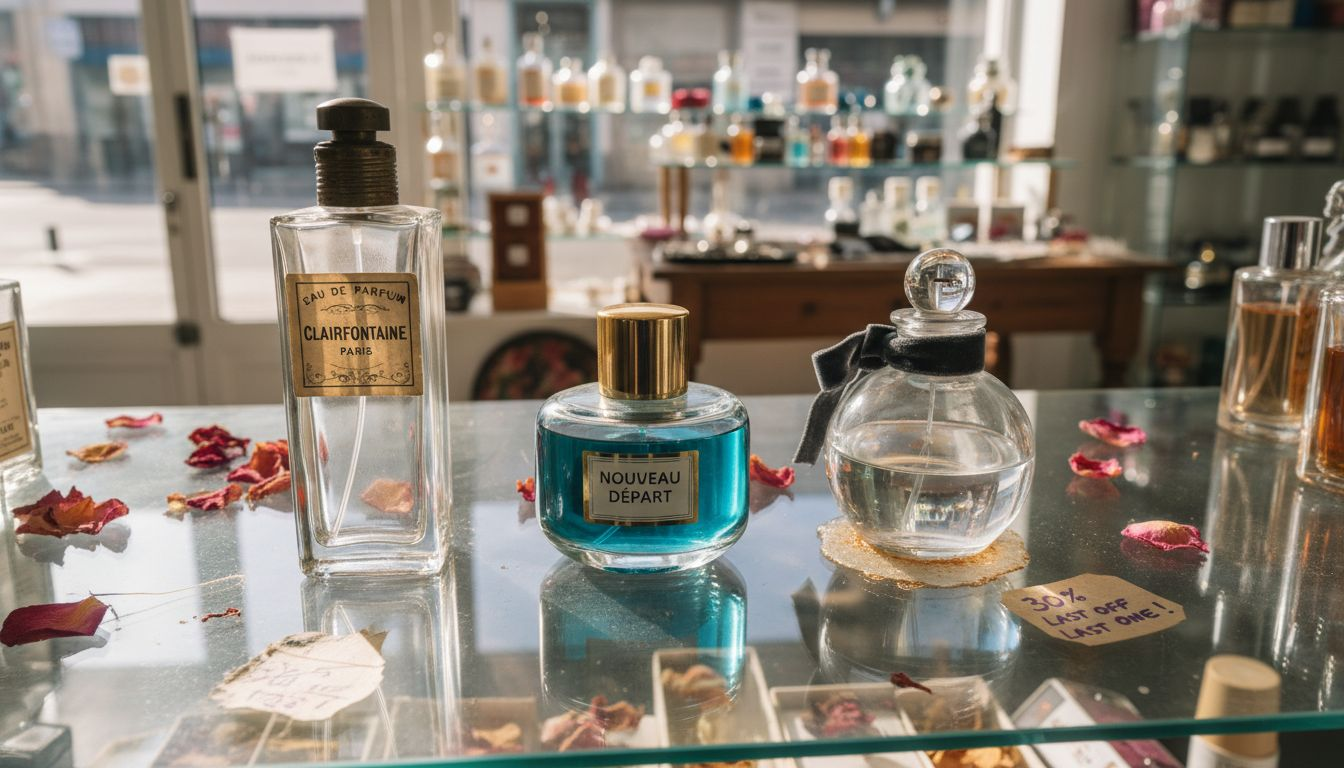
Three bottles, near-identical names, three different colours, and no obvious clue which one you want. Plenty of shoppers write that shelf off as a cash grab, and now and then they're right — but a flanker is a brand-sanctioned variation on a scent's own DNA, not a knockoff. Here's what flankers are, why houses keep making them, how to read the naming, and which ones earn a place in a collection.
| Point | Details |
|---|---|
| Definition | Flanker fragrances) share 70-90% olfactory similarity with originals whilst introducing new scent elements or intensity levels. |
A flanker is a fragrance variation that holds 70-90% olfactory similarity to an original whilst making deliberate changes. That's the whole definition. It isn't an accidental reformulation and it isn't an inspired-by dupe — it's brand-approved, sharing core scent DNA, name elements and packaging aesthetics with its parent.
Siblings, basically. Same bone structure, different temperament. A flanker might push the woody base forward, thin out the top notes for daytime wear, or shift the concentration from eau de toilette to parfum.
Key characteristics that define authentic flankers:
Hold on to the difference between a flanker and a reformulation, because people muddle the two constantly. A reformulation replaces the original formula outright, usually because an ingredient got restricted or someone found a cheaper way to build it. A flanker coexists with the original. One takes something away from you; the other hands you a choice.
"Flanker fragrances share attributes with an original perfume, such as name and bottle design, but feature slightly different scents or concentrations to appeal to varied consumer preferences."
That's the line between a flanker and a counterfeit, or an unrelated scent that just happens to sound familiar. Houses put real resources into these — the good ones honour the original while staking out territory of their own.
A brand-new fragrance is a gamble; a flanker isn't. That's the honest answer to why perfume houses make them, and everything else is detail. A successful original builds brand equity and consumer trust, and the flanker borrows against it.
The maths is hard to argue with. Launching a new fragrance costs millions in development, marketing, and retail positioning. A flanker inherits the name recognition, spends less to get noticed, and keeps the brand's shelf space in your local department store occupied.
Strategic reasons brands produce flankers:
There's a creative case too. Flankers let perfumers run the "what if" they couldn't run the first time: swap a note that didn't fit the original brief, amplify a middle note people latched onto, add a complementary accord, adjust longevity based on wear-test feedback.
Pro Tip: Ask whether a flanker fills a genuine gap in the line or just chases whatever's selling. The good ones solve a specific problem — an office-safe cut of an evening scent, a summer version of something built for January.
That's the version that works for both sides. You get a variation pitched at a situation the original couldn't cover; the brand stays relevant. The cynical read isn't wrong about every release, but it's wrong about the good ones.
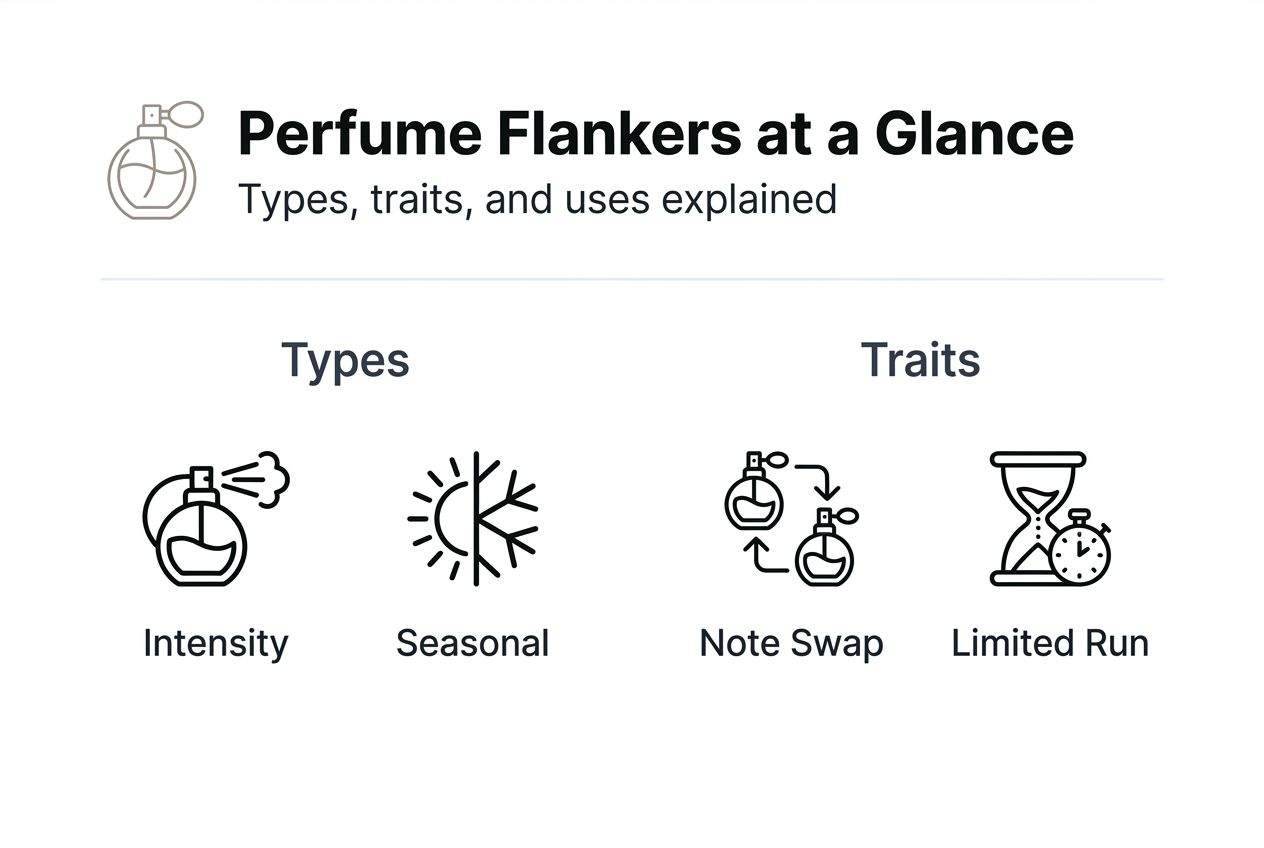
Flanker naming is a rough taxonomy, and learning to read it saves you money. Categories break down by intensity, note substitution, and seasonal or regional adaptation.
Intensity flankers keep the skeleton and turn up the volume. An Intense usually moves from eau de toilette to eau de parfum, which buys longevity and projection. Made for the person who loves the original and wants more of it in the room.
Note substitution flankers are the interesting ones. Swap sandalwood for vetiver, add citrus up top, and a woody oriental reads as a fresh oriental — same architecture, different building. You'll still recognise it. You might not want it.
Industry standard naming conventions signal flanker types:
Seasonal and regional flankers exist because climate and taste aren't universal. Something that sells in cooler European markets may get a tropical-friendly cut for Asian markets, with the heavy base notes pulled back and the bright end pushed forward.
Pro Tip: Names hint at the modification, but they don't promise it. One house's "Sport" leans citrus, another's goes aquatic. Sample before you trust the label.
Sometimes the flanker wins. Dior Homme Intense is the standard example — it amplified the iris and lipstick notes of Dior Homme and built a cult following that rivals the original's acclaim.
Dior Homme Sport went the other way, cutting the powdery elegance with citrus and ginger for people who wanted something they could wear in heat or in motion. Neither replaced the original. All three sit in the same family serving different preferences, which is the strategy working as intended.
Notable flanker success stories:
A few of these eclipse their originals in sales and cultural impact. That happens when a flanker finds something the original left on the table, or simply lands closer to what people want now. Hard to call that marketing filler.
Flankers also keep fragrance families alive across decades. A scent launched in 2010 might pick up flankers in 2015, 2020 and 2026, each one carrying the DNA forward while answering to the taste of its moment. Read as chapters rather than clones, they tell you a lot about the choices made by notable perfumers.
Pro Tip: Sample popular fragrance flankers next to their originals, back to back. That comparison teaches you more in ten minutes than a fortnight of reading note lists.
The big misconception is that flankers are cheap knockoffs. They're not — they come from the same creative teams as the originals, with the same investment in formulation, testing and marketing behind them. Whether that investment produced anything worth buying is a separate question.
The second myth is that flankers are all seasonal releases on their way to discontinuation. Many become permanent line extensions and hold shelf space for years. A handful get popular enough to spawn flankers of their own.
Common misunderstandings about flankers:
The community hasn't settled this argument and probably won't. One camp treats flankers as fresh readings of scents they already love. The other sees proliferation for its own sake, creativity losing to the quarterly numbers.
"Consumer opinions split between viewing flankers as creative reinterpretations that expand choice and seeing them as marketing tools that saturate markets with variations, reflecting ongoing community debates about authenticity."
The argument gets loudest when a house pushes out several flankers a year off one original. Critics say that blurs the brand and confuses buyers. Supporters say variety serves people whose tastes don't match the original. Both have a point, and the answer usually depends on the specific release.
Some flankers build such a distinct identity that arguing over their status is a waste of breath. They're just good perfumes at that stage. Nobody wearing them is thinking about the taxonomy.
For collectors, flankers are the low-risk way to widen a wardrobe. You get a scent tuned to a different occasion, season or mood without gambling on territory you've never smelled before.
They're also a diagnostic. Flankers tell you which part of a scent you actually love. If the citrus opening is the bit you keep chasing and the base sits too heavy, a Sport version pushes those bright top notes forward. If it's the heart you want and you want it for longer, an Intense raises the concentration and the projection.
Practical benefits of flankers for collectors:
Judge a flanker against the original, always. Does it fix something, or does it exist because the marketing calendar had a gap? Some feel essential. Others are the same scent with a different cap and a straight face. You're the one who decides which is which.
Collectors who buy several flankers per original tend to treat them as chapters instead of rivals — different expressions of one theme for different days. Done with a bit of discipline, that gives you range without your collection turning incoherent.
Building a fragrance wardrobe around flankers has a compounding benefit: you learn how a specific house thinks. Once you know how a brand handles its own signatures, you can guess which of its next releases is worth a sample and which one to skip.
There's a wider point too. Flankers show where creative ambition meets commercial reality, and how a beloved scent bends to changing taste without losing its heritage. Understanding that makes you a sharper buyer.
Here's the verdict: buy the flanker when it fixes something specific about the original for you — too heavy, too sweet, too formal for the office — and skip it when the difference is the colour of the juice. Intense versions justify themselves most often, because more concentration is a real change. Anniversary editions justify themselves least.
Fragplace is built for exactly this kind of comparison. Track fragrance families, line variations up side by side, and pull the notes breakdowns, concentration details and community reactions that explain what actually changed between versions.
So do two things with it. Pin down what you think of a flanker versus its original using our review guide, then join discussions and put it to collectors who've spent longer than you have inside that particular fragrance family. Arguments beat assumptions.
A flanker keeps the original's core DNA and adds something or dials the intensity up, giving you a related but separate scent. A reformulation swaps out the formula entirely — usually down to ingredient restrictions or cost — and replaces what was there rather than sitting beside it. That's why collectors happily own a flanker and the original together, and why a reformulation just becomes the new standard for that name, whether they like it or not.
Both, depending on how the release performs. Plenty become permanent line extensions and hold shelf space next to the original for years as core offerings. Others arrive as limited editions tied to a season, an anniversary or a collaboration, engineered for urgency. Brands make the call on market performance, positioning, and whether the variation fills a gap that's going to last.
They let you go deep instead of wide. Buying several flankers of a scent you already love shows you different facets of it and reveals how a house reinterprets its own signatures across occasions and seasons. You end up with range and a coherent personal style at once, plus real expertise in a few fragrance families — which is worth more than a shelf of half-understood bottles.
Usually, since the same brand teams handle formulation standards, ingredient quality and production. But some houses put out budget flankers with simplified formulas and synthetic substitutions to hit a lower price, and those are the ones to watch for. Sample against the original and compare concentration, longevity and how much is going on in the notes — that comparison tells you whether you're looking at equivalent craftsmanship or a cost-reduced version wearing a familiar name.
| Strategic purpose | Flankers diversify fragrance lines to extend product shelf life and reach new market segments without creating entirely new perfumes. |
| Common types | Variations include intensity adjustments, note substitutions, and seasonal adaptations like Intense, Sport, Aqua, and Floral editions. |
| Collector value | Enthusiasts seek flankers to complete fragrance families and explore how brands reinterpret signature scents for different occasions. |
| Flanker type | Characteristics | Common labels | Typical use case |
|---|
| Intensity variations | Amplified concentration or projection | Intense, Extreme, Absolute | Evening wear, colder weather |
| Note substitutions | Key accord replacements | Aqua, Marine, Wood, Leather | Seasonal preferences, style shifts |
| Freshness edits | Lighter, citrus-forward compositions | Sport, Fresh, Summer | Daytime, warm weather, active wear |
| Floral reinterpretations | Enhanced floral notes or new flower accords | Floral, Bloom, Garden | Romantic occasions, spring seasons |
| Limited editions | Time-bound releases with unique twists | Anniversary, Special Edition | Collectors, exclusivity seekers |