Articles
Get the Fragletter
New fragrance stories and picks in your inbox. Unsubscribe anytime.
New fragrance stories and picks in your inbox. Unsubscribe anytime.
New fragrance stories and picks in your inbox. Unsubscribe anytime.
New fragrance stories and picks in your inbox. Unsubscribe anytime.
Most fragrances don't quit on you. You quit on them — dry skin, a spray held too close, a bottle parked somewhere sunny. What follows is the unglamorous maintenance that makes a long-lasting scent possible.
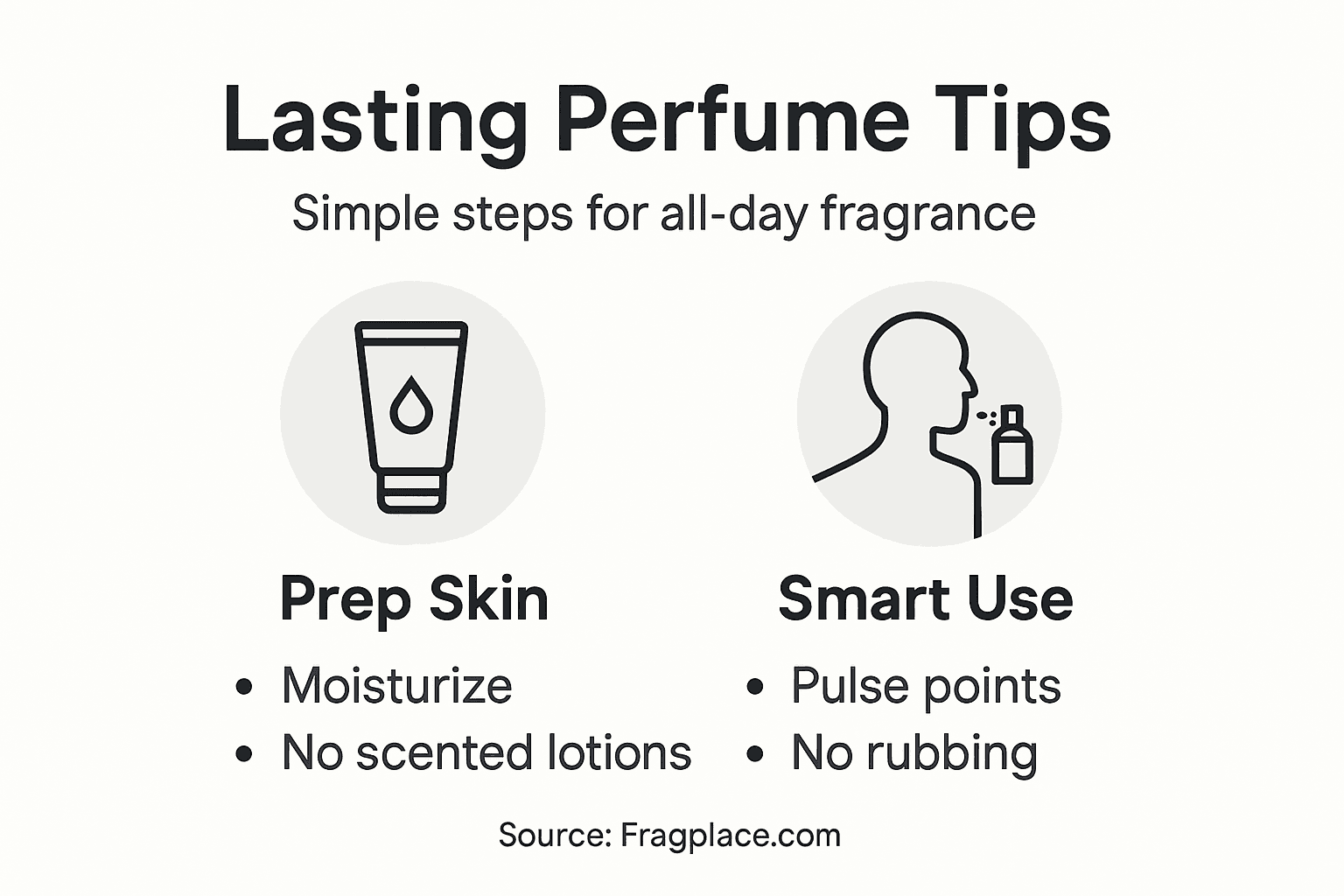
Skin prep is the dullest step here and the one that changes the most. Dry skin drinks perfume and gives almost nothing back, which is a large part of why the same bottle reads as short on one person and generous on another.
Start with a gentle, pH-balanced cleanser that won't strip your natural moisture. Clean skin and stripped skin aren't the same thing, and stripped skin is worse for longevity than skin you simply left alone. Then hydrate — properly, and with something that has no opinion of its own.
After cleansing, follow these essential skin preparation steps:
Dry skin absorbs fragrance faster, so intense hydration is your secret weapon for longer-lasting scent.
Pick an unscented, lightweight moisturiser that absorbs quickly. A heavy scented body cream will argue with your perfume, and it usually wins.
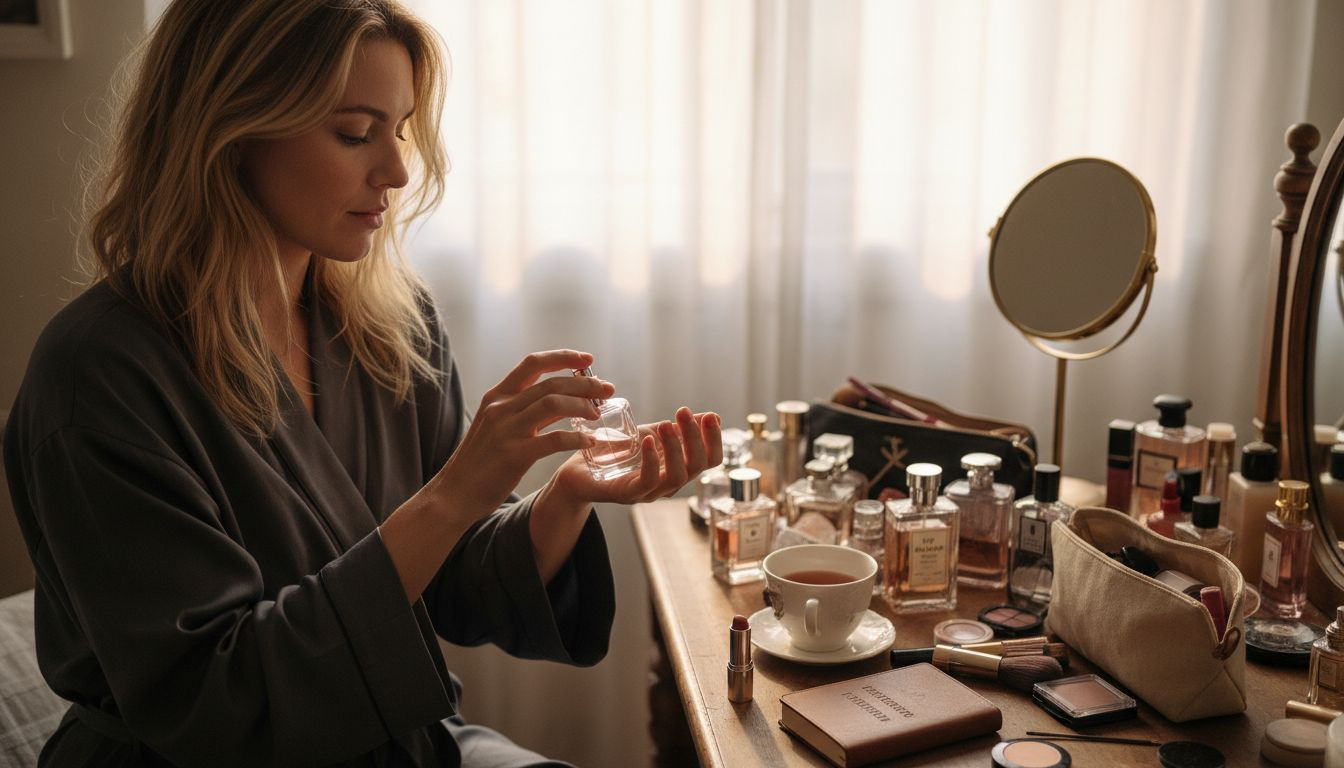
How you spray matters nearly as much as what you spray. Most people are doing at least one of the following wrong.
Hold the bottle 10-15 centimetres from your skin and lay down a light, even mist. Closer than that and you get a wet patch rather than a veil — it saturates one spot, then rushes off.
Target these strategic application points for maximum scent retention:
Spraying from a distance prevents fragrance molecule breakdown and ensures even scent distribution.
Then leave it alone. Rubbing your wrists together is the most common self-inflicted wound in perfume: the friction breaks the fragrance molecules down and speeds up evaporation. Let it air-dry.
Here's how common fragrance application mistakes differ from best-practice techniques:
If you want to push a bottle further, these are worth trying:
Test on a small fabric patch first. Some juices stain, and a pale silk shirt is an expensive way to find that out.
Layering gets sold as a creative exercise. Treat it as an anchoring exercise instead — you're giving a fragrance something to hold onto, not composing a second perfume on top of the first.
That means restraint. The products have to harmonise rather than compete, and two scents you both like separately can still fight on skin.
Consider these strategic layering approaches:
Intelligent fragrance layering builds a complex, multi-dimensional aroma that releases gradually throughout the day.
Begin your layering process with these essential steps:
Test combinations discreetly before you commit to them for a full day. What smells clever on a wrist can read as noise across a room.
The bathroom shelf is where good perfume goes to die. Heat, light and swinging humidity pull a fragrance apart from the inside, and by the time you notice the top notes have gone sour, the damage isn't reversible.
Perfume storage fundamentals come down to keeping your bottles away from the things that break them. Heat, direct sunlight and fluctuating humidity are the three that do the real work.
Create an ideal fragrance storage environment with these key strategies:
Protecting your perfumes from environmental stress ensures their complexity and character remain intact.
If your collection has outgrown a drawer, give it a proper home. Here's what each storage condition actually does:
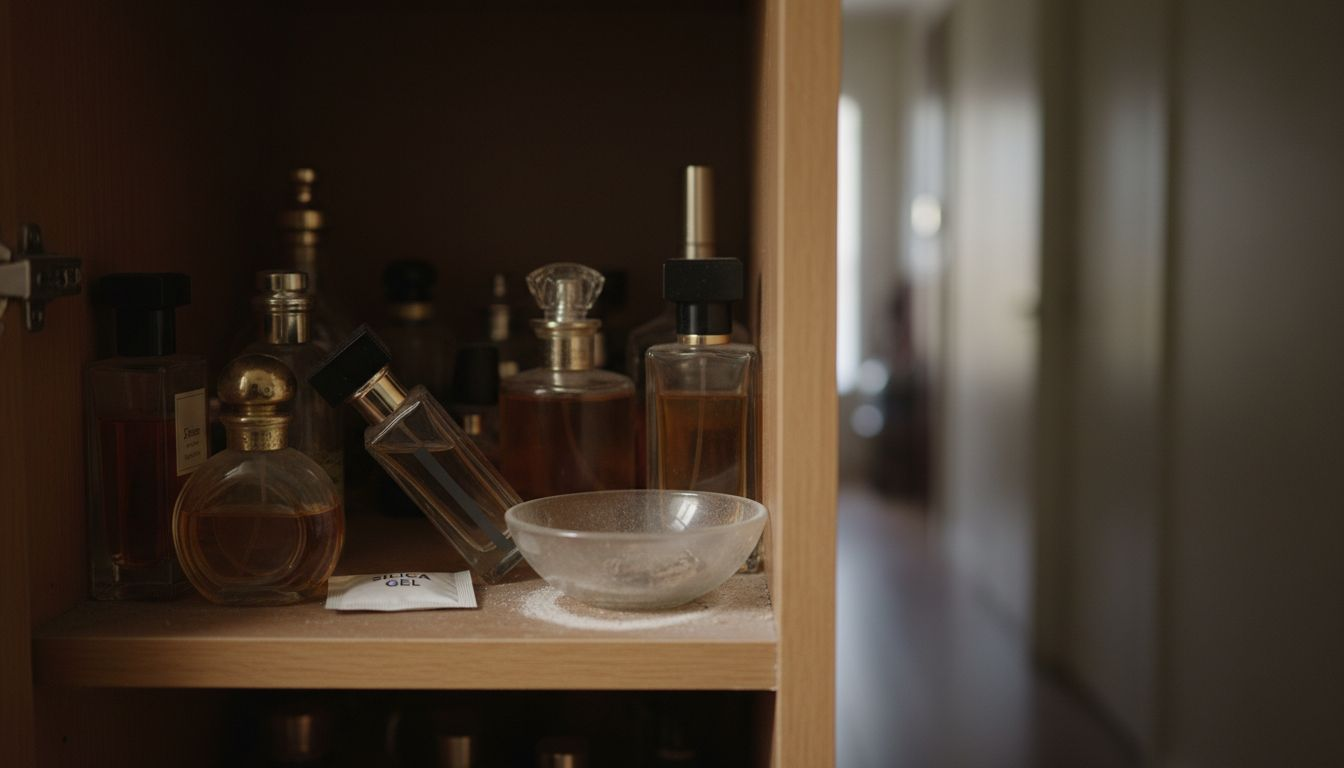
Tuck silica gel packets in with your bottles. They cost nothing and they soak up the moisture that quietly ages a collection.
Sillage — the trail you leave behind — is the one people get wrong in the generous direction. More sprays don't make a fragrance last longer in any meaningful way; they mostly make you the loudest thing in a lift.
Calibrate to the room. A scent that reads as pleasant outdoors can be genuinely oppressive across a meeting table, and the difference is usually one or two sprays.
Consider these strategic sillage adjustment guidelines:
Sillage is an art of subtle projection, not an aggressive assault on others' senses.
Practical steps for sillage monitoring:
Carry a travel atomiser. Topping up lightly at four o'clock beats over-spraying at eight in the morning and hoping it holds.
If you only change one thing, change the skin prep. Hydration on clean, unscented skin does more for longevity than any spraying trick, and it costs you nothing but a minute. Storage is the close second — it won't rescue today's wear, but it decides whether the bottle you love still smells like itself next year. The layering and the pulse-point mapping are refinements on top of those two; useful, but they can't fix a dehydrated wrist or a bottle that's been baking on a windowsill.
So, two things to do next. Read the Perfume storage fundamentals guide and fix where your bottles live this week. Then head to Fragplace.com to dig into detailed fragrance notes, post your own reviews, and compare wear reports with people who take this as seriously as you do.
Hydrate with an unscented moisturiser, concentrating on your pulse points, and let it absorb fully before you spray. Perfume applied over damp or half-absorbed cream never settles properly.
Hold the bottle 10-15 centimetres away and mist evenly across pulse points such as wrists and neck. Don't rub your wrists together afterwards — that friction breaks down the fragrance molecules.
Build from the bottom: unscented body lotion first, then a matching scented body cream, then your primary perfume. The base layers give the fragrance something to grip, which is why the aroma unfolds gradually instead of vanishing.
Cool, dark, dry, and nowhere near a window. Keep bottles upright and in their original packaging where you can — the box is protection, not just presentation.
Start with a minimal application and pay attention to how people respond in different rooms. Fewer sprays in enclosed spaces, more in well-ventilated ones — the number should move with the setting, not stay fixed.
The big one is rubbing your wrists together, which causes faster evaporation. Spray, then let it air-dry on its own.
| Primary Insight | Detailed Explanation |
|---|
| 1. Prepare skin for fragrance | Hydrate with a fragrance-free moisturiser before applying perfume to enhance scent longevity. |
| 2. Apply perfume from a distance | Spray perfume 10-15 centimetres away for even distribution and to prevent molecule breakdown. |
| 3. Use intelligent layering | Combine unscented base products with complementary fragrances to create a long-lasting scent profile. |
| 4. Store perfumes properly | Keep fragrances in cool, dark places to prevent degradation and maintain their quality over time. |
| 5. Manage sillage effectively | Adjust the number of sprays based on your environment to project your fragrance pleasantly and subtly. |
| Aspect | Common Mistake | Best-Practice Approach |
|---|
| Wrist Rubbing | Causes faster evaporation | Allows natural air-drying |
| Spraying Distance | Too close, over-saturates skin | 10-15cm for even distribution |
| Product Layering | Scent clash possible | Harmonised, unscented layers |
| Application Timing | Apply before moisturiser | After full moisturiser absorption |
| Storage Condition | Impact on Perfume | Recommended Practice |
|---|
| Exposure to sunlight | Accelerates scent breakdown | Store away from windows |
| Fluctuating humidity | Shortens fragrance lifespan | Use dehumidifiers if needed |
| High temperatures | Alters fragrance composition | Keep at stable room temperature |
| Upright positioning | Prevents leaks and air ingress | Always store bottles upright |