Articles
Get the Fragletter
New fragrance stories and picks in your inbox. Unsubscribe anytime.
New fragrance stories and picks in your inbox. Unsubscribe anytime.
New fragrance stories and picks in your inbox. Unsubscribe anytime.
New fragrance stories and picks in your inbox. Unsubscribe anytime.
Most beginner fragrance advice is a list of bottles somebody else already loves. The harder question is where to look - which community tells you the truth about a scent, and which one is quietly selling you something. Here's how eight of them actually behave.
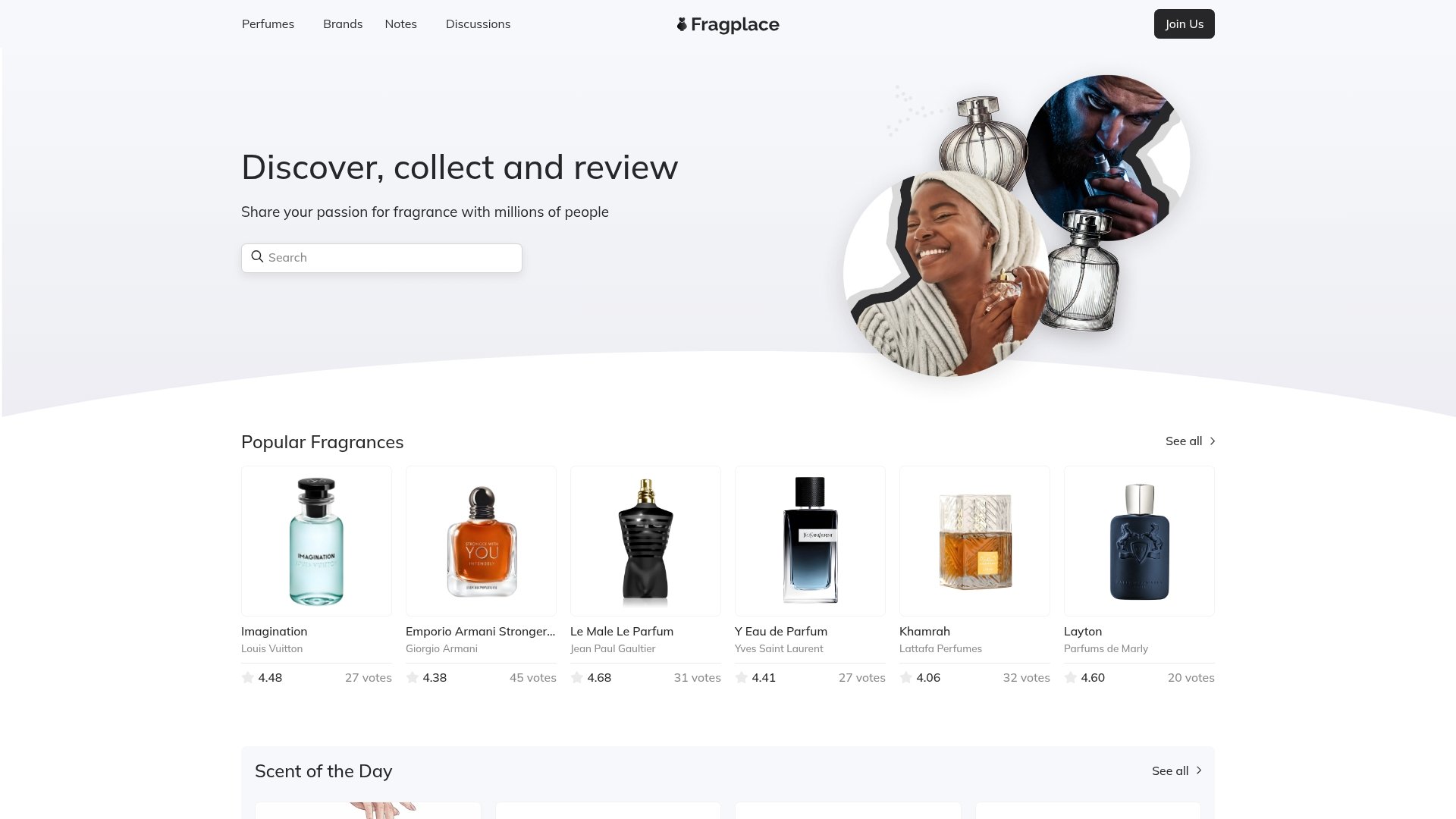
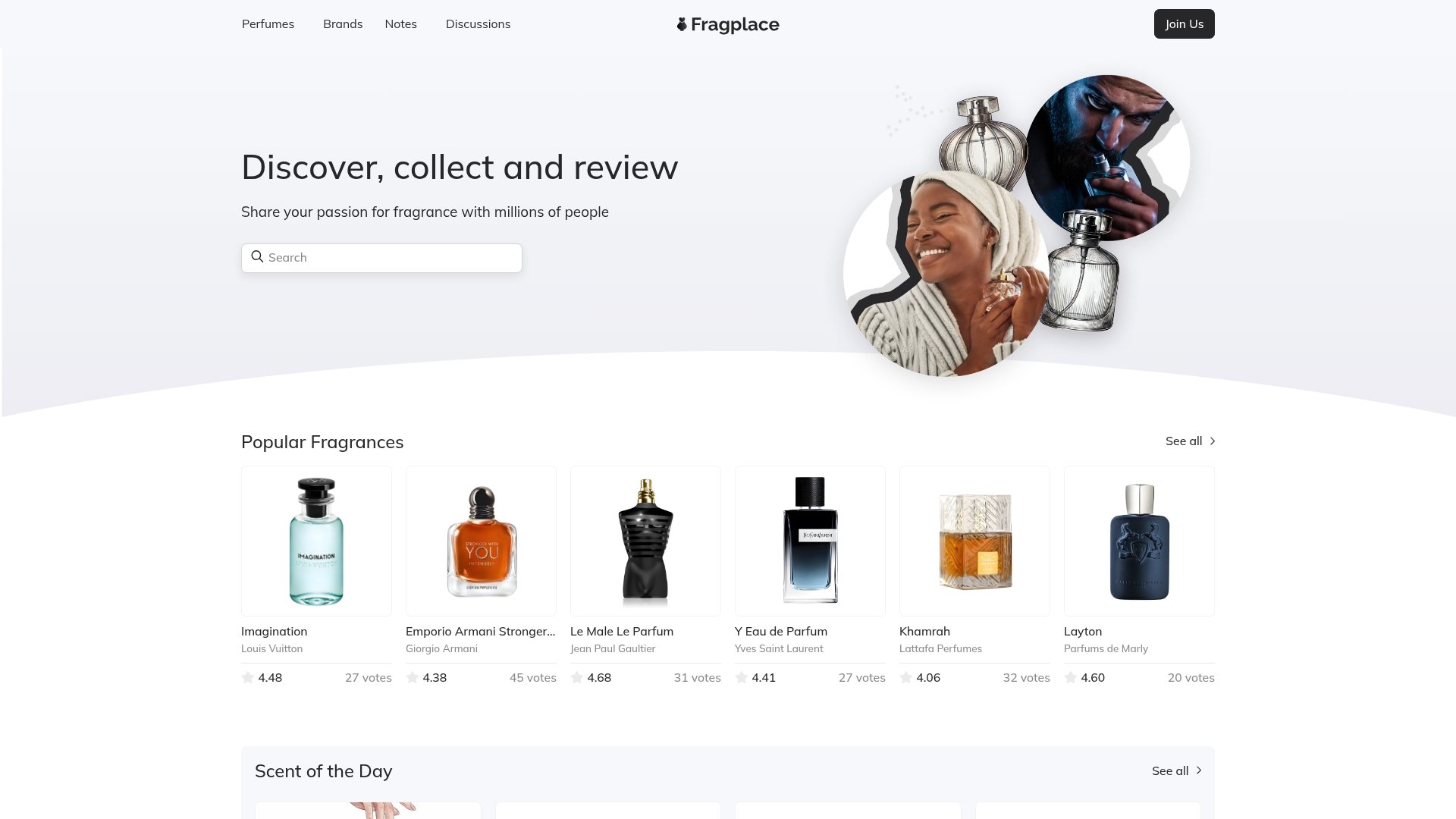
Fragplace is built around a habit rather than a catalogue. You log what you wear on the scent calendar, and over weeks that turns into a record of your own taste, backed by a review hub and educational articles that explain why fragrances behave the way they do. It's a companion for people who want to understand their preferences, not just list their bottles.
Daily scent tracking sits at the centre: log a perfume, and the entries build into a chronological fragrance story, with smart insights surfacing patterns in your wearing habits. Around that sit community reviews and discussions, plus articles, comparison guides and tools for sampling and comparing fragrances. It's multilingual and runs on web, iOS and Android, so your log follows you into a shop.
If you like keeping records, this is built for you. It suits people assembling a collection over months rather than in one panic-buy afternoon, and anyone who wants a second opinion before committing. Casual wearers get recommendations. The obsessives get notes analysis.
Plenty of apps catalogue bottles. Plenty of sites host opinions. Fragplace's argument is that neither is much use alone: you log what you wear, the community reacts, and the articles put those reactions in context. Record, reflect, discuss, learn - that loop is how perfume literacy gets built quickly. The trade-off is deliberate. This leans towards communal discussion and notes analysis rather than a stripped-back inventory, so if all you want is a tidy list of what you own, it's more platform than you need.
Log a month of daily scents on the calendar. Read community reviews on the notes you keep failing to recognise. Sample a recommended eau de parfum using the comparison guides, then buy based on what the smart insights show you actually reach for, rather than what you told yourself you liked.
Fragplace's pricing isn't listed.
Website: https://fragplace.com
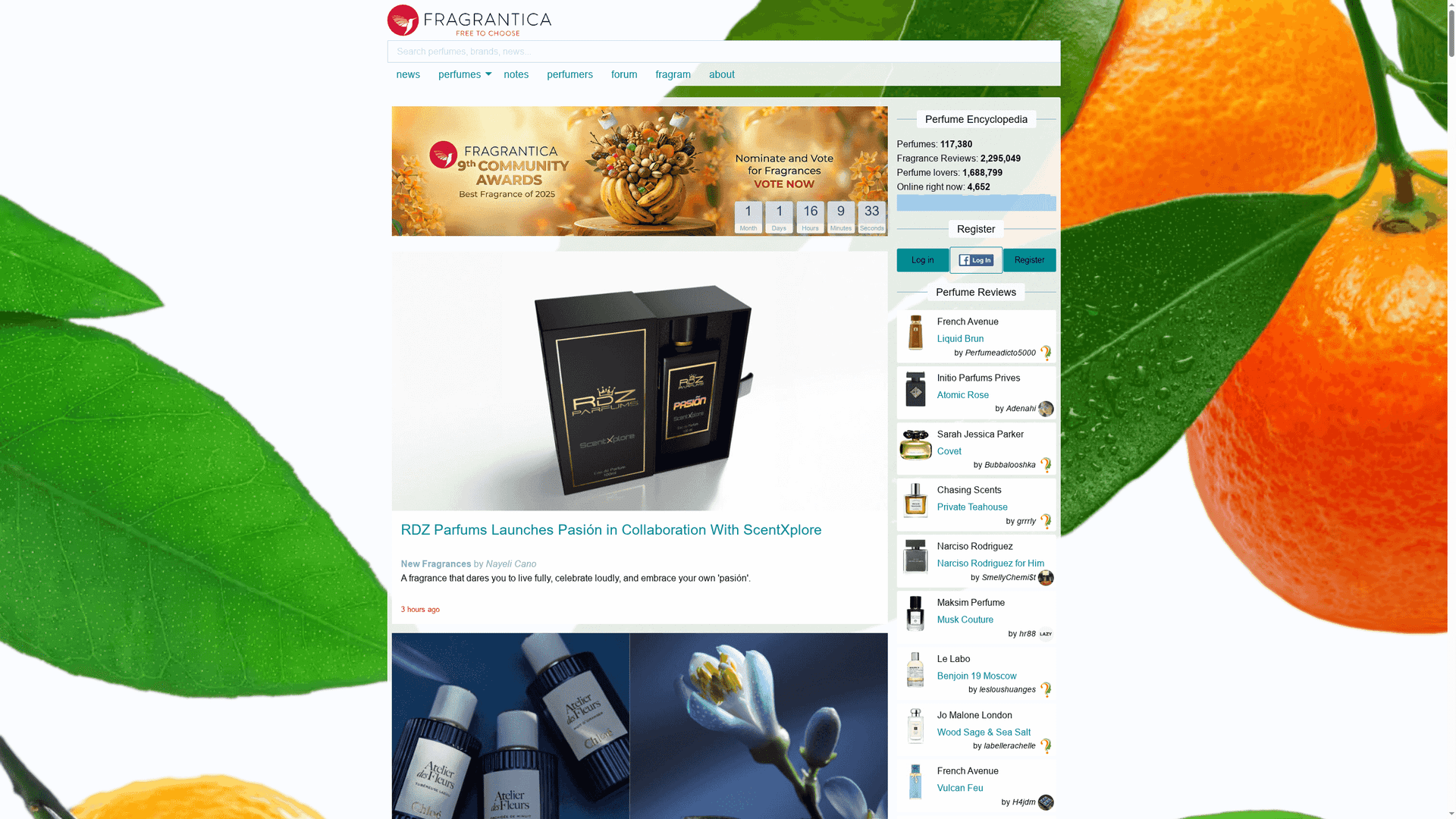
Fragrantica is the reference library, and it behaves like one. The database of perfumes and notes is enormous, the reviews are endless, the news coverage keeps pace with the industry - which is exactly why newcomers bounce off it. Worth the effort if you're prepared to research rather than skim.
The spine is a large database of perfumes and notes. On top of that: reviews with star ratings, a community forum, regular news updates and industry insights, plus coverage of perfume awards and events. Fact and opinion sit side by side, so you can cross-reference notes, follow a perfumer's back catalogue and track what's launching.
Researchers. If you want to compare compositions, read ten impressions before spending money, or keep up with awards and news, it earns its bookmark. If you want a visual-first, lightweight way to shop, you'll find it heavy going.
The database alone would be useful. The opinionated community layered on top is what makes it better: data with argument attached, so you learn how a fragrance is built and how it lands on people.
Cross-check notes and perfumers before a purchase, read several user reviews for practical feedback on longevity and projection, then post a targeted question in the forum. Research, community and news in one tab.
Fragrantica offers free access to its core database and articles, with optional registration required to post in forums and receive personalised content.
Website: https://fragrantica.com
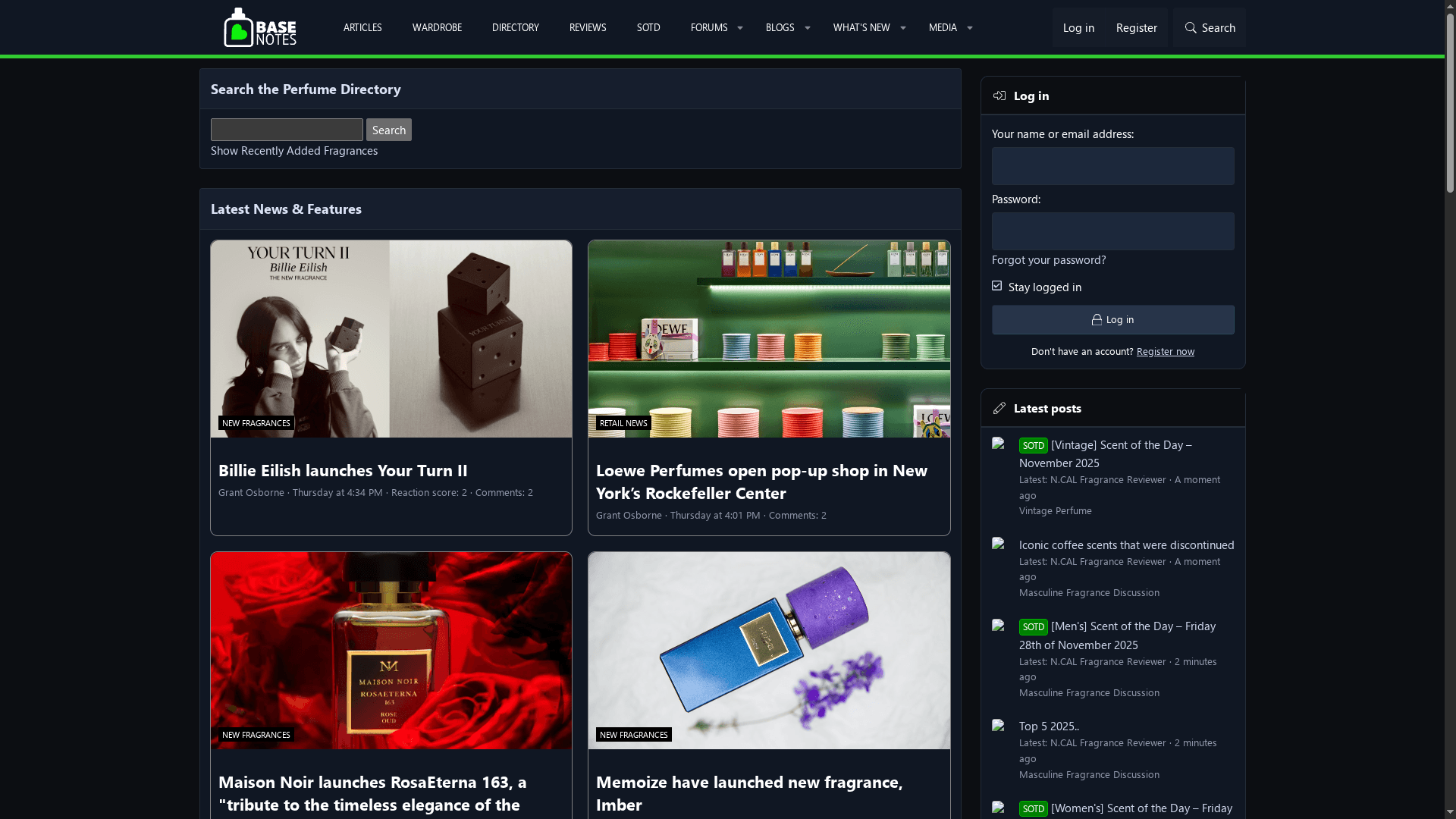
Basenotes has been around long enough to remember the fragrances everyone else has forgotten, and that's its real value. You get a broad perfume directory, active forums and steady industry coverage, all free. The interface shows its age. The knowledge in it doesn't.
A searchable perfume directory sits alongside news, features and industry updates, member blogs, reviews and discussion forums. What sets it apart is the historical and vintage material running next to contemporary launches, so a discontinued bottle gets the same treatment as this month's release. There's little interactive tooling beyond that.
Collectors, long-time enthusiasts and industry insiders who'd rather read the collective than the brand. It's free, which makes it an easy first stop, and it's especially good if your interest runs backwards into vintage rather than forwards into the new.
A broad directory plus a community that keeps adding to it: reviews, historical notes, industry commentary. The result is a living archive, and archives are hard to replicate because they take years to accumulate.
Search the directory for a fragrance, read the user reviews and historical notes, then ask the forums what the reformulation did to it. Industry observers can follow launch news and member reaction as it happens.
Basenotes is free to access and use with no subscription fees, so newcomers can explore its directory and community without financial commitment.
Website: https://basenotes.net
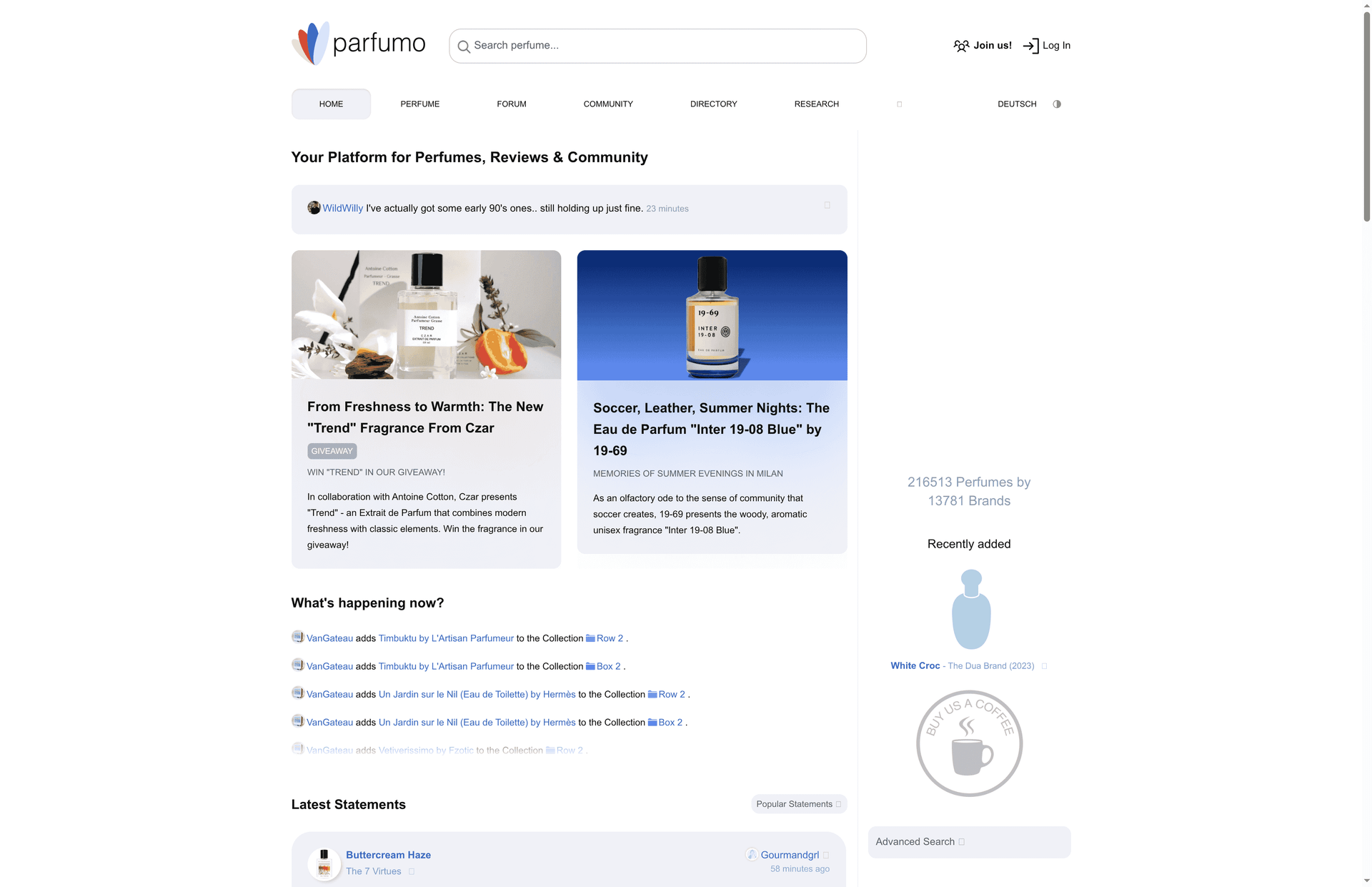
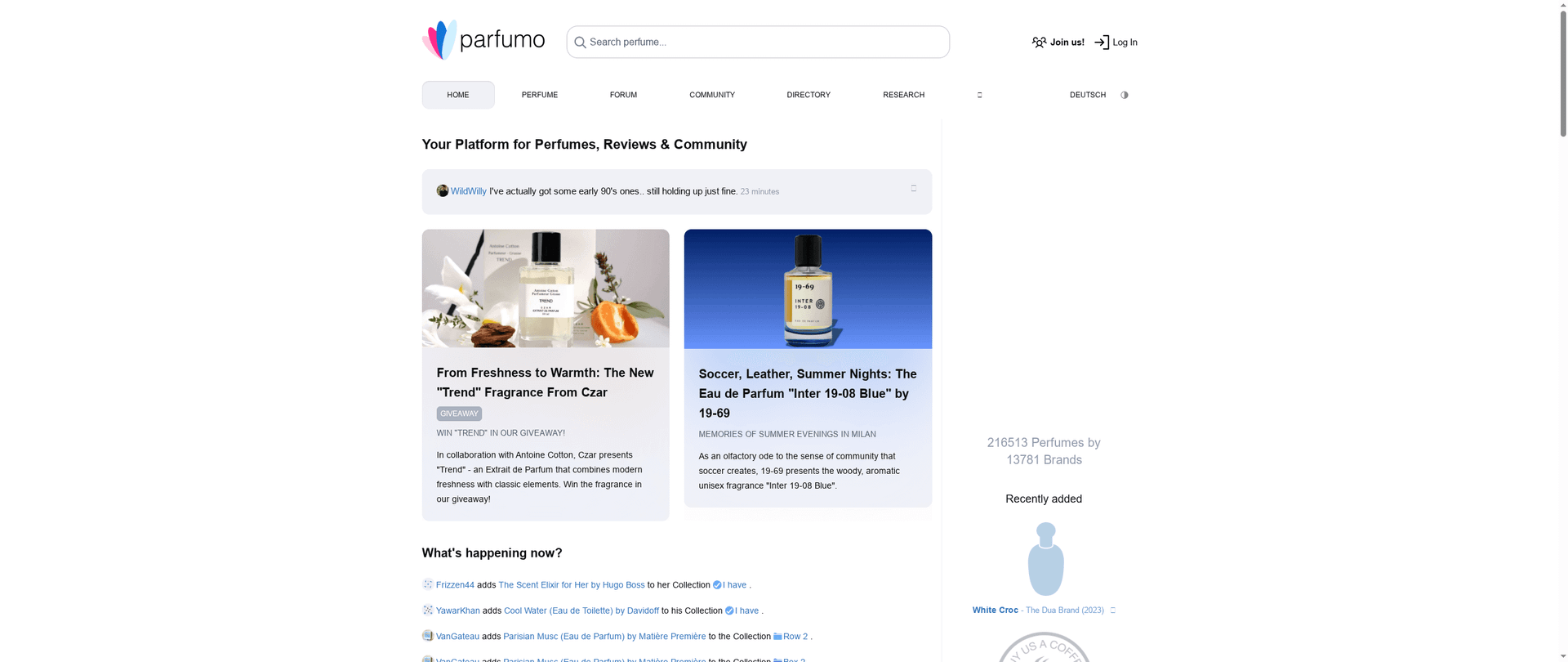
Parfumo's pitch is peer opinion at volume: a comprehensive fragrance database wrapped in active forums, multilingual reviews, news and the occasional giveaway. That's genuinely useful when you're weighing a sample against a full bottle. It's also a website, so it can't help with the one thing that settles most decisions - smelling the thing.
Perfume reviews and ratings, community forums and discussions, fragrance news and blog articles, giveaways and promotions, and a comprehensive database with notes and descriptions. Reviews run in several languages, and community impressions sit next to the factual note breakdowns, so subjective and objective share a screen.
People who research before buying and want company while doing it. If you value peer reviews, editorial commentary and asking questions in forums, this will feel like home. If you trust in-store testing or expert-only critique, treat it as one input among several.
Crowd-sourced experience, factual fragrance data and current news in one multilingual place. The value is in the cross-reference: what the note list promises against what people report getting.
A new release catches your eye and you can't tell whether it's worth a sample. You check ratings, read a few threads on longevity and projection, look at the note breakdown, then enter a giveaway to try it first. Less risk, better decision.
Parfumo is free to access and participate; registration is required for community features and giveaways.
Website: https://parfumo.net
Parfumo turns up twice in this comparison, which is a fair summary of how much beginner conversation runs through it. This is the platform at its most social: reviews, photos, videos, release chatter and giveaways, all free. Expect enthusiasm, and expect the occasional review that's a sentence and a star rating.
Community reviews and discussions sit at the centre, paired with updates on the latest statements and trending topics. The site runs giveaways and promotional events, lists new and notable fragrances, and leans on user-generated reviews, photos and videos. The result is an informal archive of what people think right now.
People who trust the crowd more than the critic. Good if you enjoy browsing photos, reading varied impressions and joining discussions or giveaways. If you want expert-led analysis, treat it as a complement rather than your only source.
The crowd-sourced view: a running chronicle of how fragrances land in everyday life. Reviews, visuals and chatter together give a texture that purely editorial sites rarely manage.
Something catches your eye online. Read several user reviews, scan photos to check packaging or colour, ask a discussion thread about longevity or projection, then enter a giveaway or watch the trending opinion before you sample or buy.
Free to access, with community features available at no cost.
Website: https://parfumo.com
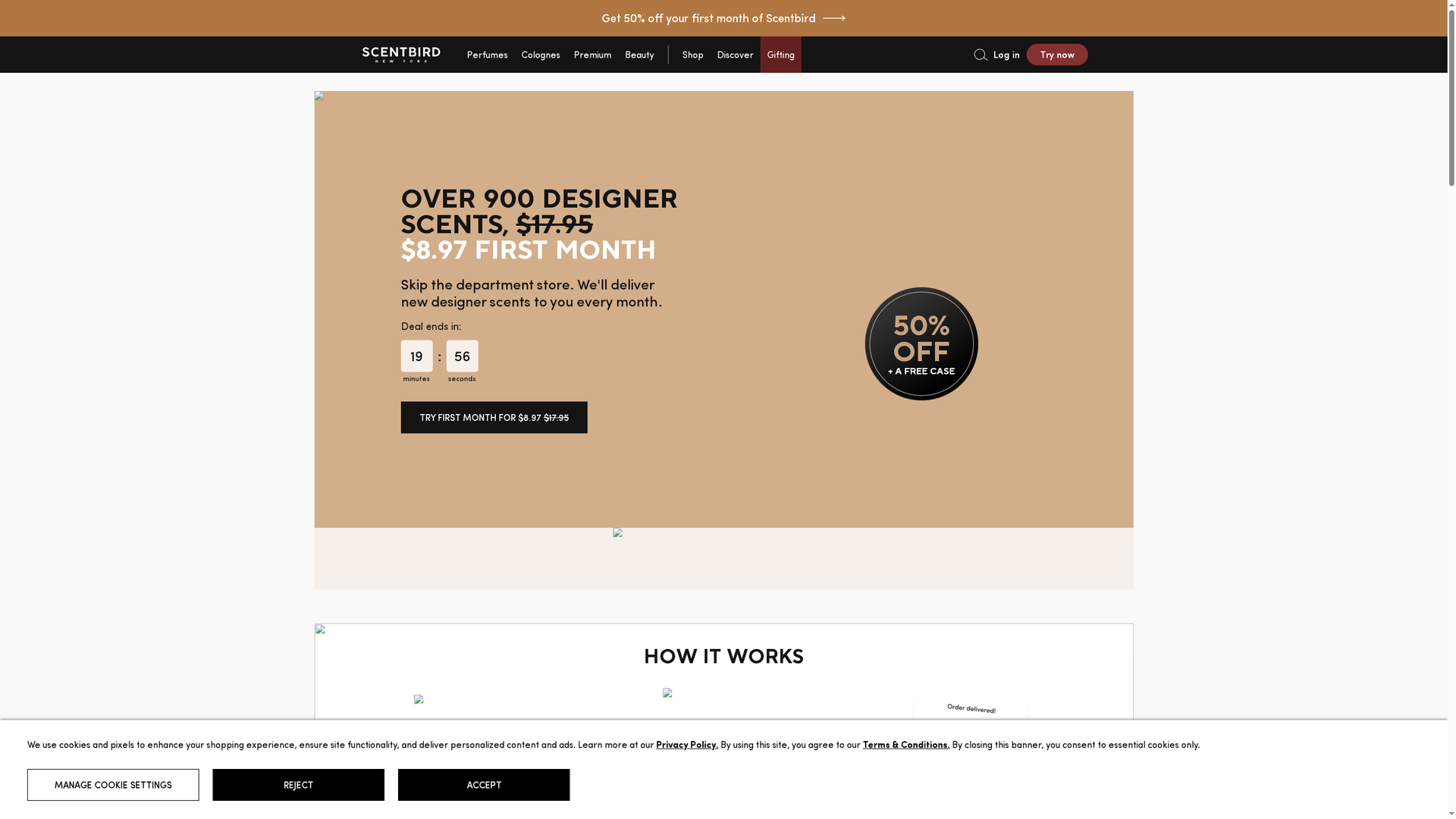
Scentbird solves the beginner's actual problem: you can't know what you like until you've lived with a few, and full bottles are a punishing way to find out. Monthly travel-size designer fragrances, a quiz to narrow the field, and a catalogue of over 900 to choose from. You can skip or cancel at any time, and the first month is priced to get you through the door.
A scent quiz generates personalised suggestions from a library of over 900 designer options, and you pick what arrives each month. Deliveries are travel-size bottles of approximately 120 sprays, designed to last roughly 30 days, with flexible delivery management so you can skip or cancel at any time. New customers get a first month discount from as low as $8.97, with free US shipping on the introductory offer.
Newcomers who want variety without full-bottle prices, frequent travellers who want compact bottles, and gift buyers with someone curious on their list. The appeal is control: you choose, you skip, you stop.
A large designer catalogue, a quiz to guide you and travel sizes to test with. It's low-commitment discovery, which is exactly what the start of this hobby should be.
Take the quiz, get tailored recommendations, choose a fragrance for the month and wear the travel-size bottle for around 30 days. By the end you know whether it deserves a full bottle, which is a far better basis than a blotter in a department store.
First month for $8.97 (regularly $17.95), then a recurring monthly subscription with price varying by choice.
Website: https://scentbird.com
Here's the honest bit: this one isn't about perfume at all. Notes of Berlin is a grassroots collection of user-submitted observations, anecdotes and local commentary about life in the city, and it's charming at that. Read it for Berlin, not for your next bottle.
Community contributions are sorted into clear categories - neighbourhood issues, humour, lost & found, love and general city life - so you can browse whichever facet of everyday Berlin you're after. Commenting and sharing keep conversations going, and frequent fresh submissions keep the topical entries topical. The simplicity is the appeal: quick reads, real voices, categories you can navigate in seconds.
Locals, curious travellers and anyone who wants the city at ground level. If you prefer personality to formal reporting, it works: residents swapping neighbourhood stories, visitors getting a feel for the place before they land.
Authenticity in aggregate. A mosaic of short, user-generated notes that together show what irritates and delights people in Berlin. Less a curated magazine, more a social ledger of small dramas.
Skim it before a short trip to pick up local quirks, current neighbourhood arguments and the anecdotes that make good conversation. If you live there, post a quick lost-and-found notice.
Free to access and browse.
Website: https://notesofberlin.com
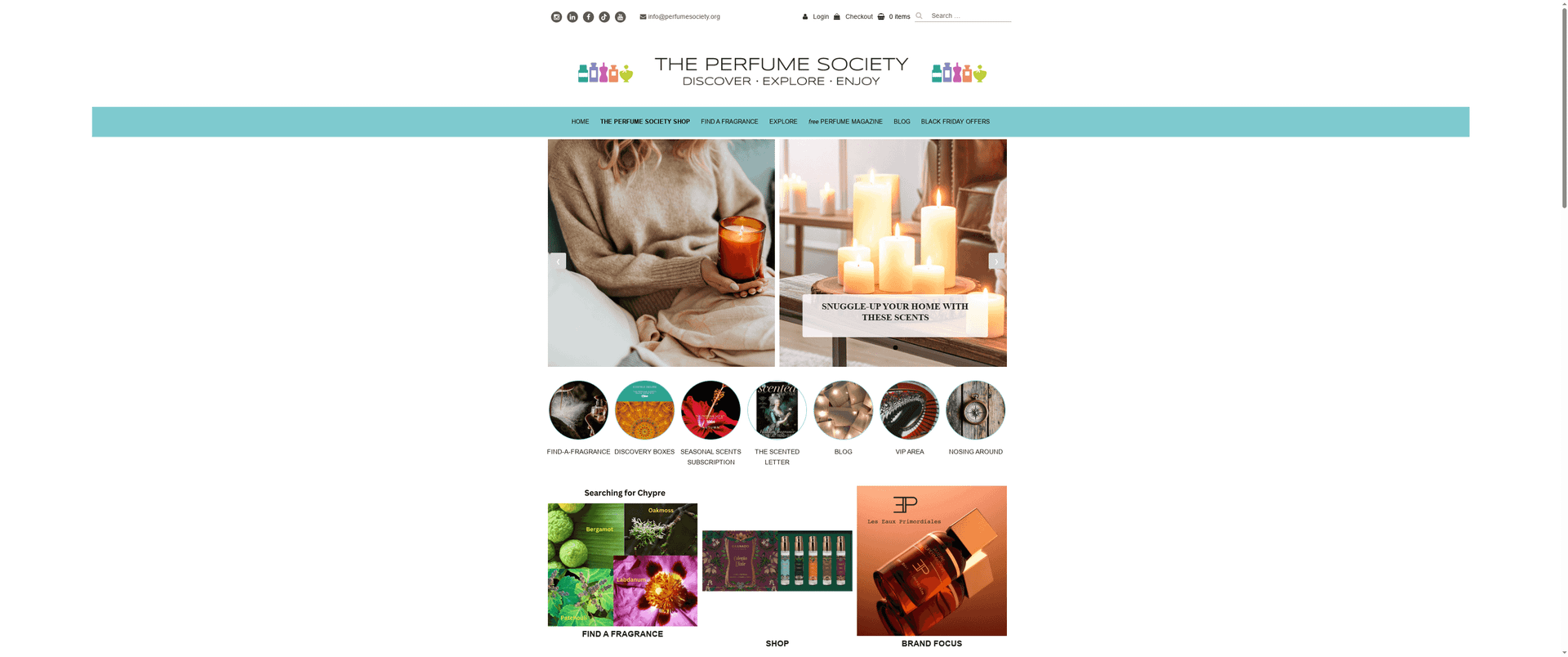
The Perfume Society treats sampling as education, which is the right instinct. Curated discovery boxes and seasonal subscriptions do the choosing for you, and the find-a-fragrance tool narrows things down when you don't yet know what to ask for. If you want structure and regular discounts while you work out your taste, start here.
Perfume discovery boxes and seasonal subscription scents deliver samples to your door. Alongside them sit a find-a-fragrance tool, editorial coverage of the latest launches and magazine subscriptions that go deeper. The site lists exclusive offers and discounts on gifts and experiences, and the organisation keeps an active social presence around promotions and sharing.
Samplers and gift buyers. It suits people who want structured exposure to a spread of scent profiles without a heavy upfront cost, and it's a safer present than picking a bottle for someone whose taste you're guessing at.
Curation first: expertly assembled discovery boxes with editorial context and community interaction around them. That turns sampling into learning rather than trial and error.
Unsure whether a floral-oriental suits you? Take a seasonal box, sample three to five fragrances across a month, check the find-a-fragrance tool and community reviews, then use a promotional discount to buy the winner for yourself or as a gift.
Prices start at around £16.80 for discovery sets and rise to approximately £110 for premium discovery boxes, with special discounts during promotional periods.
Website: https://perfumesociety.org
The short version, side by side: what each platform does, what it costs you, and where it falls down.
The verdict, if you're starting from nothing: spend money on samples and time on a community. Scentbird and The Perfume Society get bottles under your nose cheaply. Fragrantica and Basenotes answer the technical questions. Parfumo tells you what people think this week. What none of them do particularly well is keep a record of you.
That's the gap Fragplace fills. Daily scent tracking logs what you wear, notes analysis surfaces the patterns you'd never spot on your own, and the community is there for the moment a note list stops making sense. Read the reviews, argue with them, and build a fragrance story that's yours rather than an aggregate of other people's. Start at Fragplace community.
Two things to do next. Browse All Fragrances, find something you've been circling for weeks and log your first entry. Then take a position in Fragrance Discussions - the quickest way to learn is to say what you think and let somebody explain why you're wrong.
There isn't one list, and be wary of anyone who hands you one as though taste were settled. Scents that balance freshness with warmth are the forgiving place to start, because they hold up across seasons and situations while you work out what you actually respond to. Use the comparison above to pick a platform, then let your candidates come from people whose reasoning you can read.
Work out your scent families first - floral, fruity, oriental - because that narrows the field faster than anything else. Then spray your candidates on your wrist and leave them for a few hours. The opening is marketing; the drydown is what you'll live with, and whatever you still like at hour three is the one worth considering.
Longevity, sillage (the scent trail) and the overall profile. Skin chemistry shifts all three, so a fragrance everyone raves about can turn flat on you and there's nothing to be done about it. Write your observations down. Memory for smell is worse than you think.
Three to five. Fewer and you've no basis for comparison; more and everything blurs into one sweetish fog. Keep notes on each so the decision is a comparison rather than a mood.
Yes, though it's easier to ruin a good fragrance than improve one. Start with a base scent you already love, then add something complementary on top - a warm orient over a light floral adds depth without fighting it. Go sparingly with the second scent; layering usually fails through excess.
Cool, dark and away from temperature swings, which rules out the bathroom shelf where most people keep them. Hang on to the original boxes too - free protection from light exposure. Juice that's sat in sunlight degrades, and no amount of careful application brings it back.
| Platform | Features | Pros | Cons | Usability & Pricing |
|---|
| Fragplace | Scent calendar, community reviews, articles and guides, multilingual support, mobile availability | Comprehensive tracking, shared experiences, wide accessibility | Pricing not specified | Ideal for tracking and community discussions, available on web, iOS, Android |
| Fragrantica | Comprehensive database, user reviews, news updates, awards and events | Extensive data, active community, regular updates | Overwhelming text layout, complex navigation, registration required | Free access, detailed research focus |
| Basenotes | Perfume directory, forums, industry updates, vintage information | Active community, industry news, historical data | Outdated design, limited tools | Free to use, strong community engagement |
| Parfumo | Reviews and ratings, discussions, giveaways, multilingual platform | Active community, current news, multilingual support | No physical sampling, user content variability | Free access, multilingual community-driven |
| Scentbird | Scent quiz, designer library, flexible subscription | Extensive options, personalized picks, low entry cost | Fragrance-only, subscription fees | Monthly subscription: $8.97 initial, $17.95 regularly |
| The Perfume Society | Discovery boxes, editorial coverage, tailored recommendations, special offers | Variety of samples, strong community, subscription options | No full-size retail, limited ingredient details | Prices start at £16.80, up to £110 for premium boxes |